Feeds:
Posts
Comments

Posts Tagged ‘quilting’

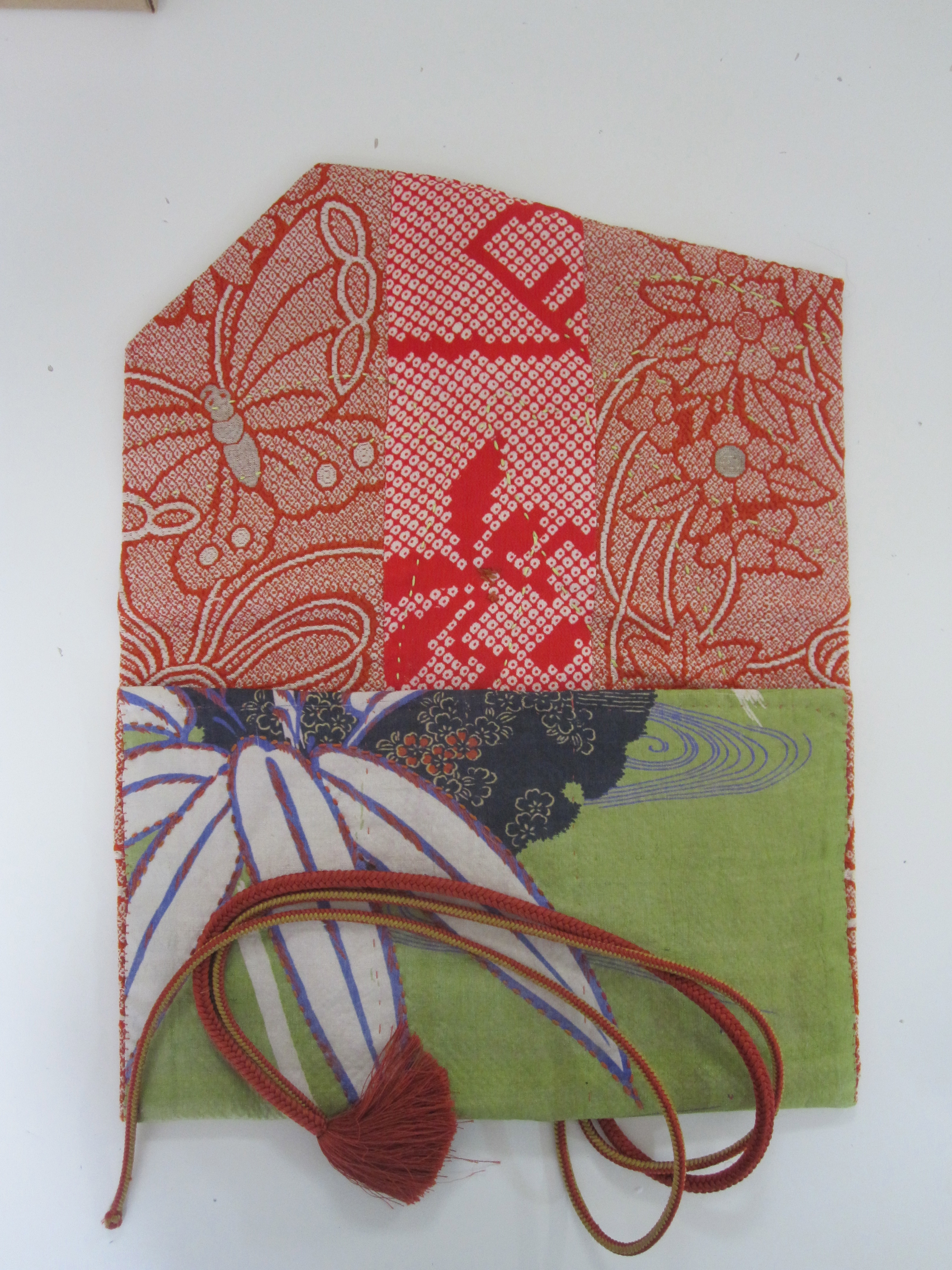
Each year after the ASIJ Quilt is completed, I am left with a crafting hole in my life. Last year, the lovely and talented Erin Leong brought her hand sewn iPad case to one of our last quilting sessions and the oohs and aahs were deafening.

IMG_6119

Using vintage and antique obi, kimono and haori lining fabrics, coupled with obijime as closure ties, she fashioned cases pretty enough to stand on their own as small clutches in addition to their proscribed use.
IMG_6120

We decided to meet and all make a case or two for ourselves. Erin brought a sample that she had just begun (click on photos throughout this post for details). Obi brocades are just thick enough to provide some soft cushioning for electronics and they are just the right width for a standard large iPad. For a Kindle or iPad mini, the width needs to be cut down to fit. Since obi are thick and reinforced inside, she takes them apart to cut the outside layer of the bag. Soft silk, rayon or cotton lining fabric is perfect for the inside.

Each one is simply a long rectangle of fabric, folded in thirds, with two sections sewed together to make the pocket and the third section left free as the flap.

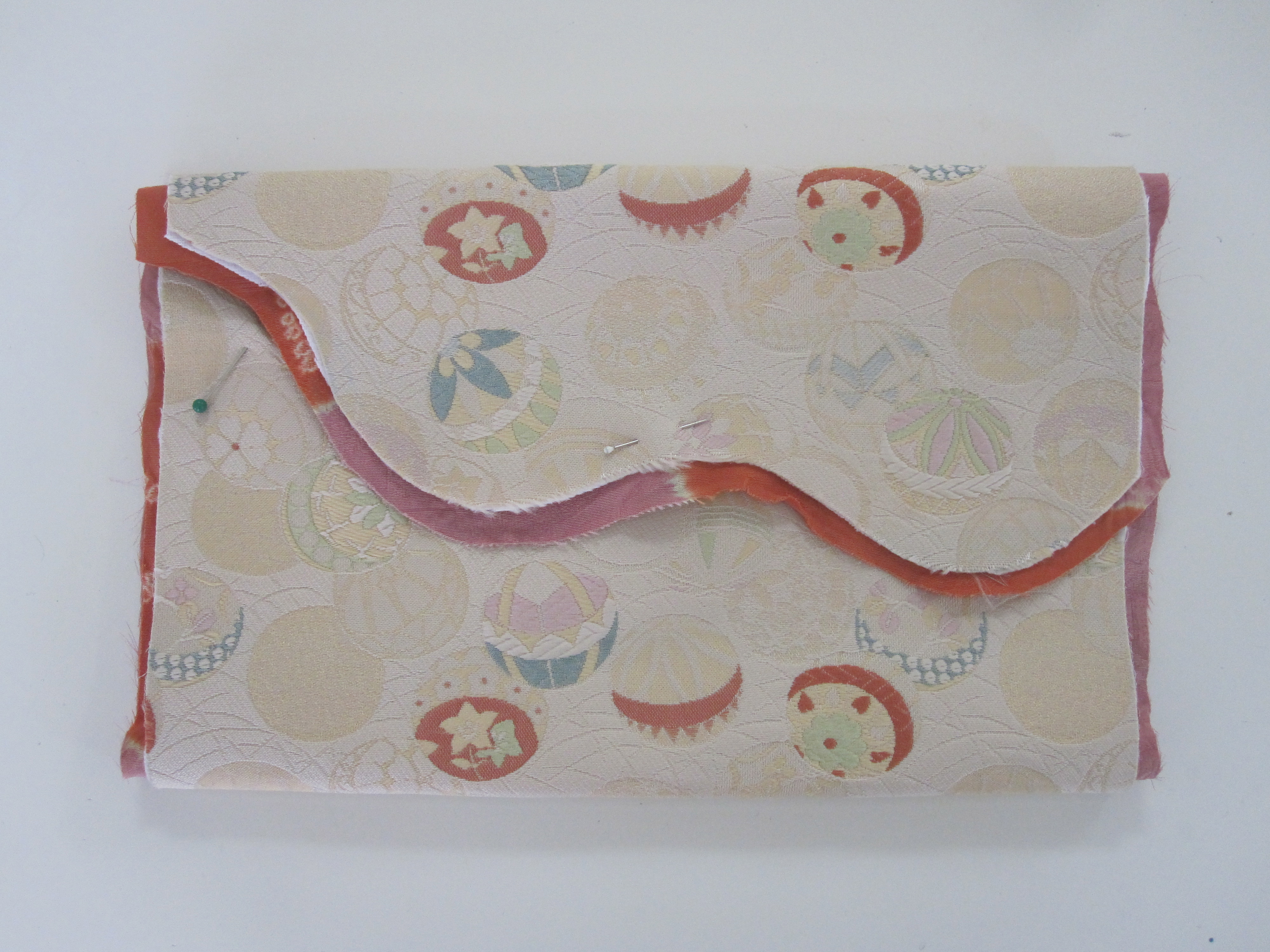
IMG_6124IMG_6123

The play between the colors of the wrapped detail edge of the lining and the obijime, contrasted with the outer obi fabric is what makes these bags so fun to design. Erin has also included a bit of sashiko embroidery on her two bags, giving them extra depth and detail.

IMG_1294

This one was custom sized for a Kindle.
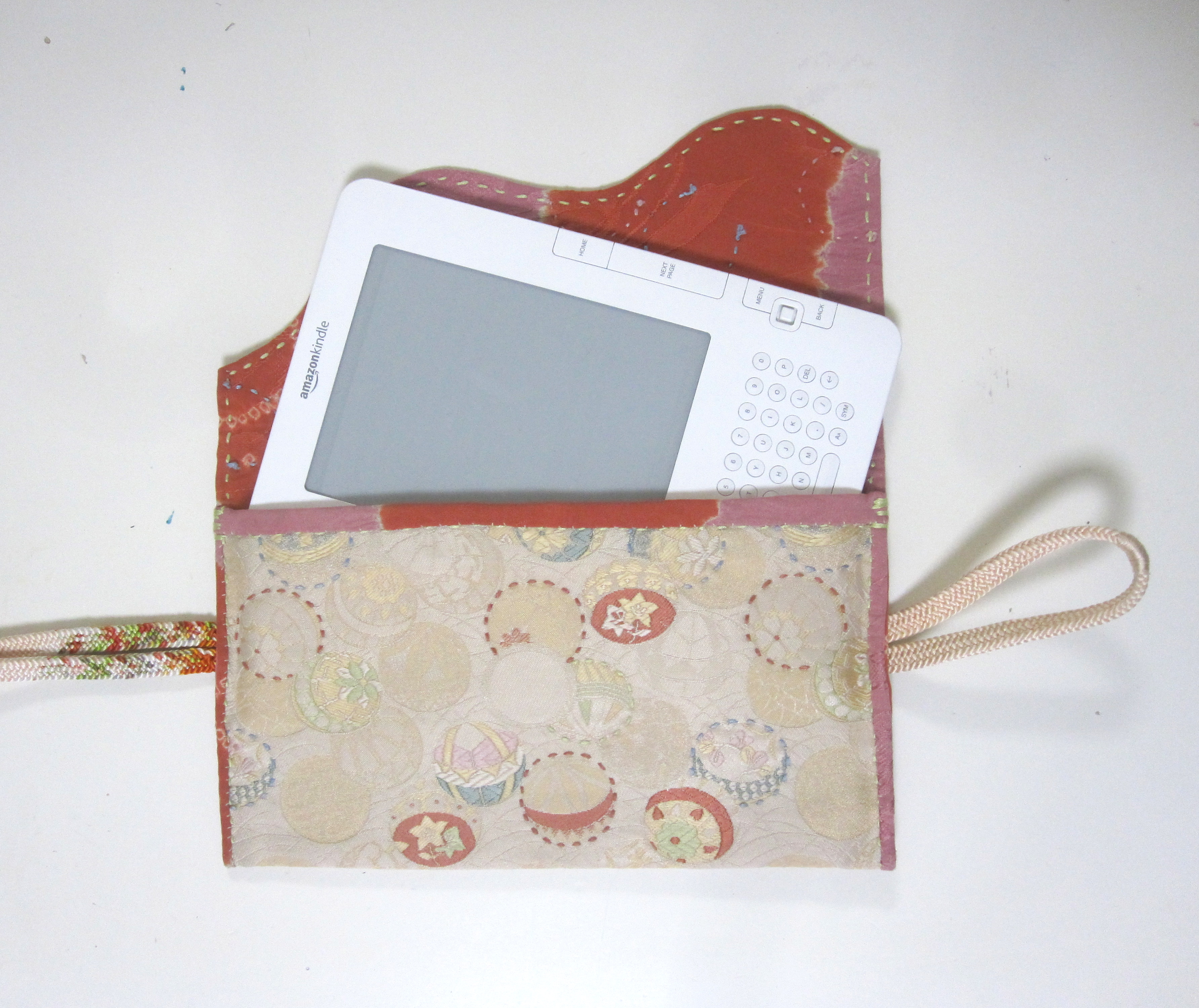
IMG_1298

She and I pooled our stash of non-valuable obi for the group and the creativity began. Combinations were tried out and tested.

IMG_6130IMG_6128

In the end, this traditional brocade on the left looked best paired with the indigo cotton in a stylized bamboo pattern on the right. We decided that a curvy flap went best with the pattern too. If you compare Erin’s two bags above, one has an angular flap, while the other a soft scroll similar to this one.  Aesthetic decisions were left to each person and dependent on the fabric and taste.

The outer fabric is cut to be about half an inch wider on each side than the object you want stored in it. The lining is cut with about an additional quarter-inch seam allowance. If you cut it too big, it is too bulky to sew along the outside edge.  Cut it too narrow and you can’t fold it under to make a clean edge before sewing. There are no exact instructions for this project – it is kinda do as you go.

IMG_6135

This case looked a little blah when finished and closed, so a bright orange obijime and some sashiko stitching were added. You’ll notice that small cases look and work best with the obijime running horizontally, while on the large size it is best vertically.

IMG_1296

Erin’s detail work is lovely – she did all the sashiko stitching on this one.

IMG_1297

This is another that I made and love the play of the watery green lining and the bold mauve obi. The cases are designed to look handmade, and to counteract the formality of this piece I sewed the lining edge with a blanket stitch, done in a very casual style.

IMG_6132IMG_6136

In the end, the case had some issues.  I had decided I wanted the extra thickness of the obi and did not dismantle it.  The net result was that it was almost impossible to get the needle through to sew it. Does that sound familiar? Without Erin’s assistance it would never have been done! As it is quite formal and very pretty, I think it will be kept to use as an evening clutch – I can’t quite see dragging it around as a case.

IMG_1295

Another friend could not resist the idea of making an evening bag and chose a formal silk obi and silk lining that matched and contrasted at the same time.
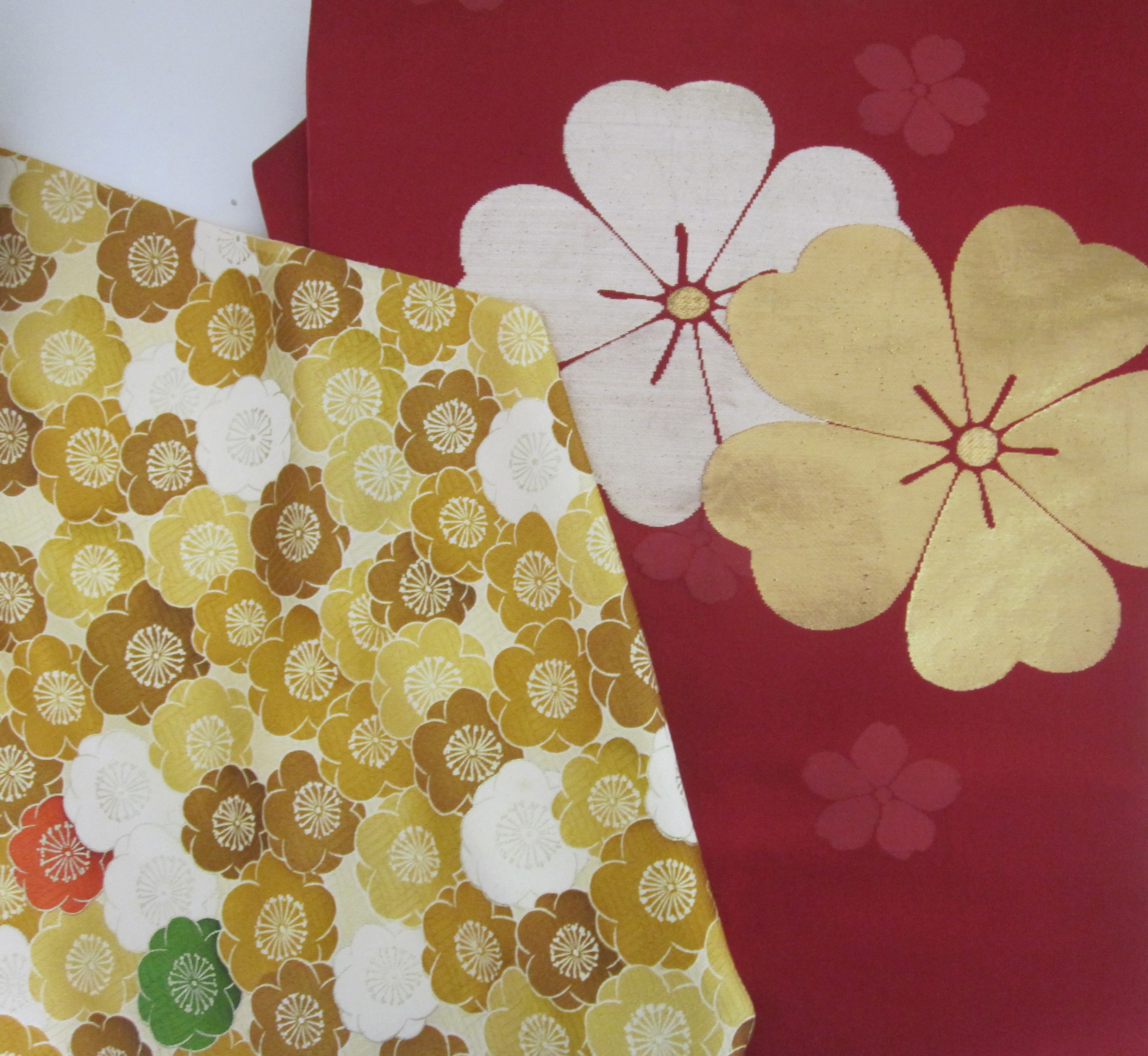
IMG_6126

IMG_6134

She never got around to finding an obijime for it so I believe she simply used a hidden interior fastener. I think that one green flower in the lining is what makes this so perfect and so Japanese!

obi ipad caseobi ipad case inside

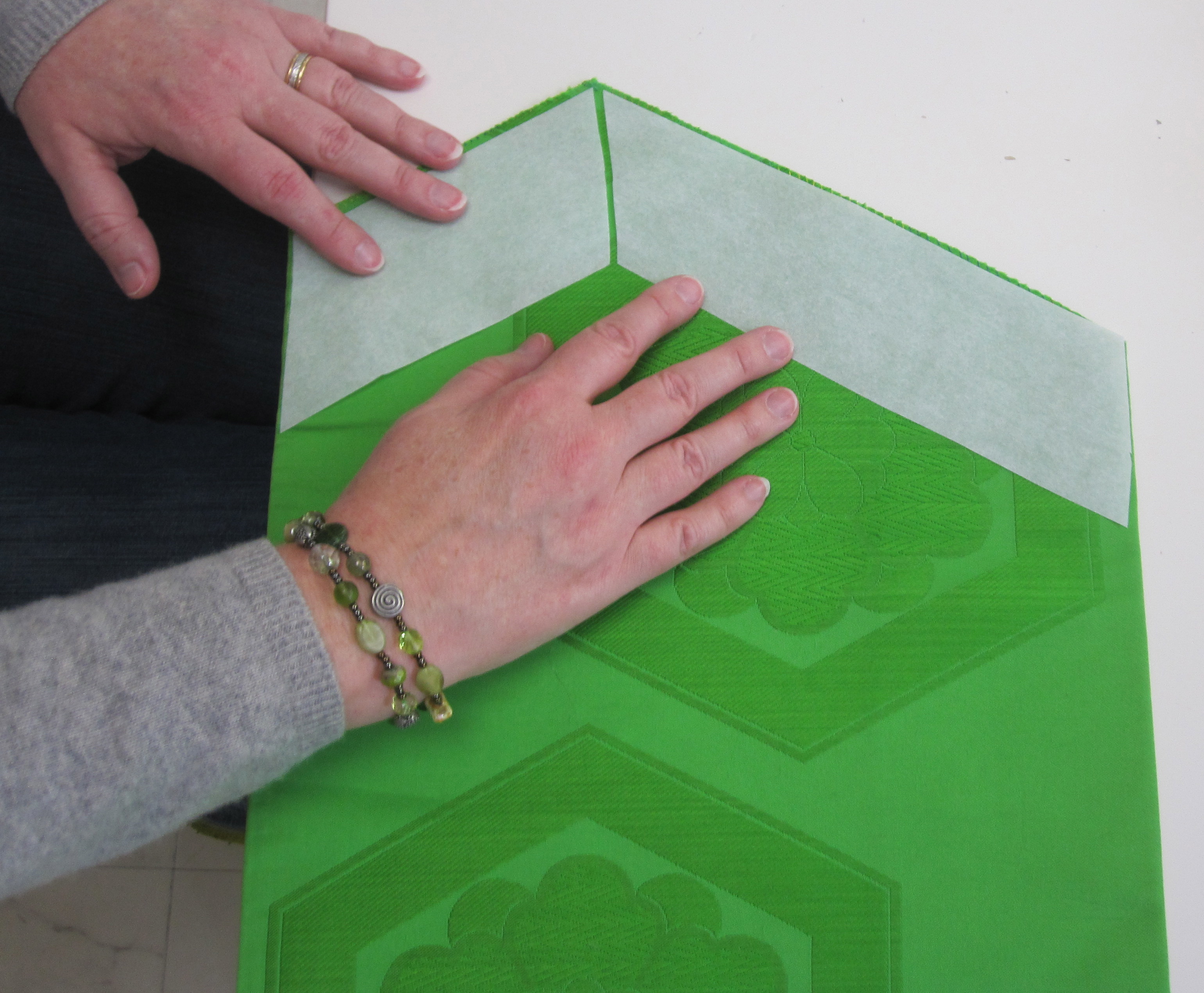
Yet another friend went all green – fancy brocade exterior with silk lining in a realistic bamboo pattern. After taking apart her obi, she found the fabric to be too soft, so she reinforced it with some iron-on interfacing. You can see how each project evolved a bit differently. She also chose to follow the shape of the hexagon in the brocade when cutting the shape of her flap. I’m not sure she has progressed much beyond this point.  Like I said, sewing through obi fabric is a huge pain!
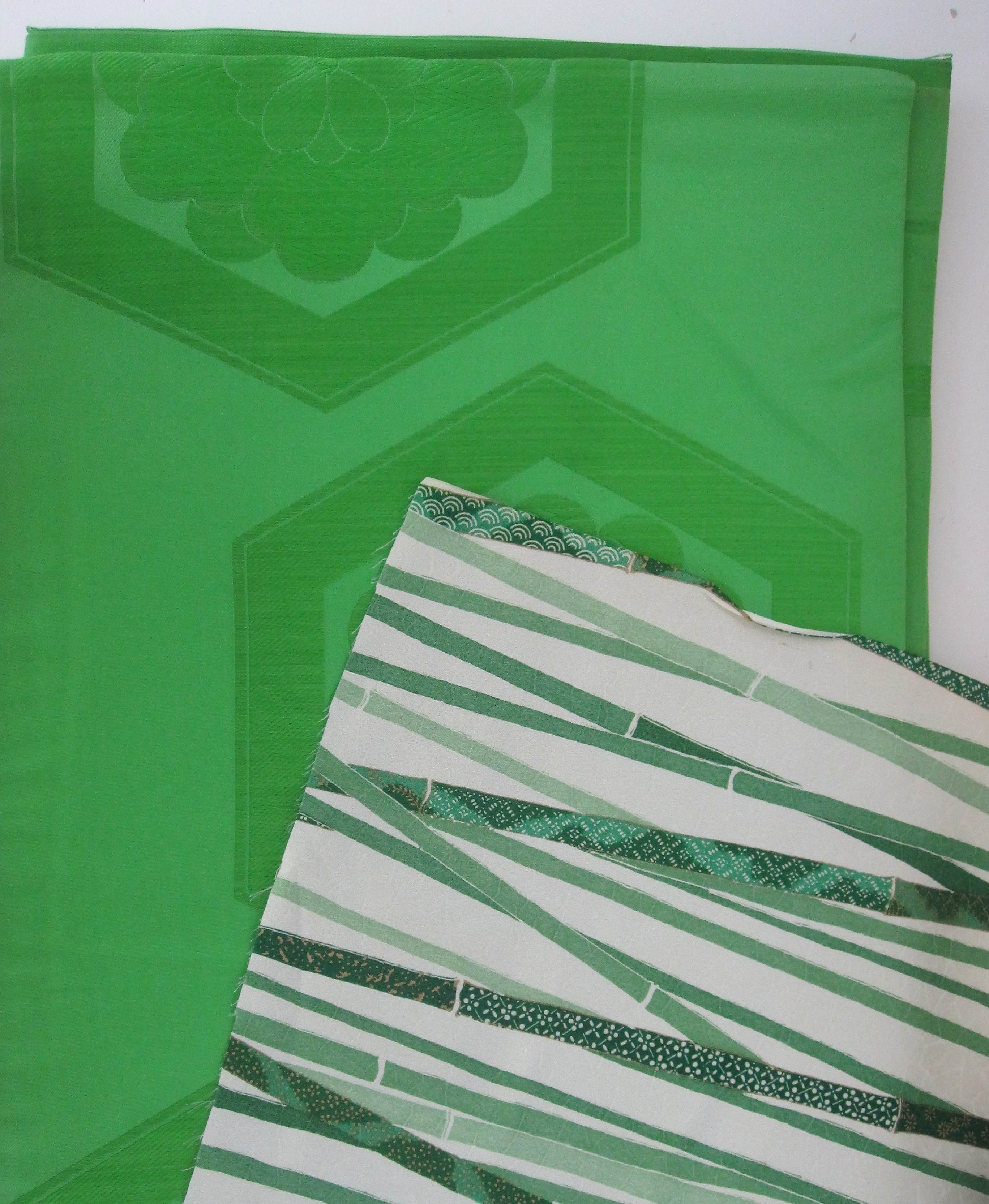
IMG_6125IMG_6133

We are trying to convince Erin to start making these for sale, so if you would be interested, please give a shout out in the comments or send me an email.  They are absolutely gorgeous – the combination of antique and vintage textiles with the hand sewing is so unusual.

Related Posts:

A Not Quite DIY…An Obi and Quilt Block Pillow Tale
The Magpie Gene…Vintage Kimono and Judyth van Amringe
Saving Coral…Finding Treasure in Shrine Sale Junk

About these ads

Read Full Post »

So I’ve been making lots of teasing comments about koi and kasuri lately, with a very good reason. This year, our annual quilt for The American School in Japan Gala fundraiser is a deep indigo pool made of kasuri, with three charming carp frolicking in the rain. Koi are the beloved ornamental varieties of common carp that are kept as pets in ponds and the word koi is itself a homophone for another Japanese word that means “affection” or “love”; koi are therefore symbols of love and friendship in Japan. The name of the quilt, Carpe “Triem”, reminds us to seize the day (or seize the quilt!) and is a play on our trio of friends. Inspiration came in many forms, from modern woodblock prints, like this one, ‘Pillow Talk” by Daniel Kelly

2011 Daniel Kelly prints Pillow Talk

…to ‘Whisper whisper 7′ amongst others from Kaneko Kunio.

Kaneko Kunio Whisper

Koinobori, meaning ‘carp streamer’ in Japanese, are carp-shaped wind socks traditionally flown to celebrate Boy’s Day (now called Children’s Day), which falls on May 5th every year. The carp has become the symbol of Boys’ Day because the Japanese consider it the most spirited of fish—so full of energy and power that it can fight its way up swift-running streams and cascades. Because of its strength and determination to overcome all obstacles, it stands for courage and the ability to attain high goals.

koinobori

We also had high goals for ourselves as quilters, wanting to create a very individual and special quilt while at the same time longing to do another boro (rag) background quilt, featuring vintage indigo textiles, a bit reminiscent of the beloved Dragon quilt of 2007. I was lucky enough to come across a few great pieces of kasuri, the Japanese form of ikat, in which the thread is dyed prior to weaving. Kendra had some other gorgeous pieces in her stash and we were easily able to assemble the patchwork background from a myriad of pieces and patterns.

kasuri quilt background

Using some photos of real koi, Julie drew our koi on graph paper free hand – she is so amazing!

IMG_0597

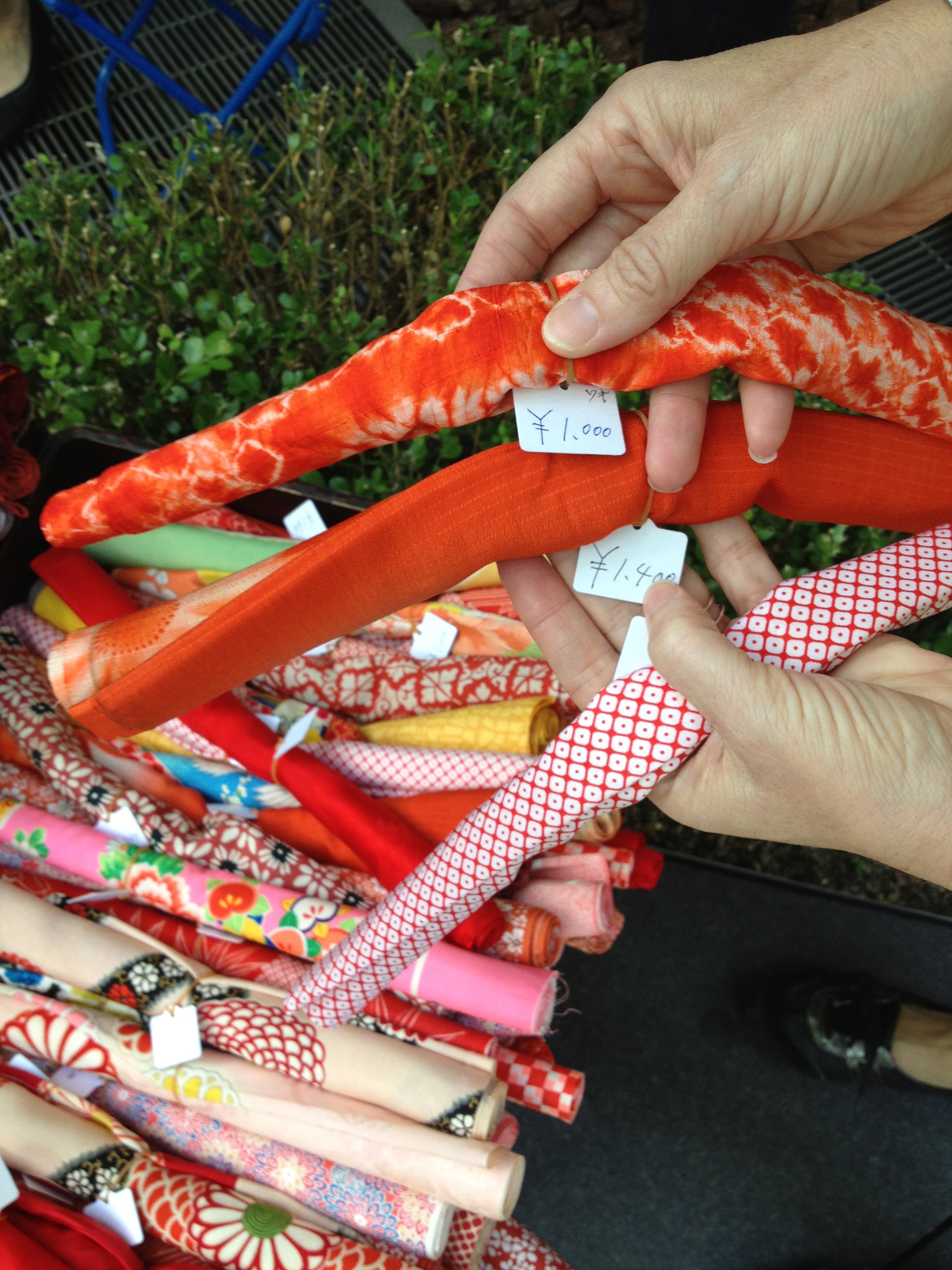
I figured once we were using such gorgeous fabric for the background, there was no chance modern fabric could hold up its head against it. So back out to the shrine sales I went, in search of antique and vintage shibori (Japanese tie-dye), brocades and other silks. While the fabric would be gorgeous I knew the quilters would be hating me a bit as silks are so hard to work with.

orange shiboriorange shibori

The patterns in the shibori was perfect in giving almost a literal effect of scales. And the bold colors – oranges, yellows and golds – against the deep indigo was spectacular. Just trying it out by draping a fish shape had us all excited.

IMG_0535

As we started late this year and the Gala was a week earlier than normal and we planned for the koi to exuberantly overlap the borders, we had to work a bit out-of-order this year and put the borders on early.

IMG_0600

Julie’s husband enlisted the local copy shop to blow up the hand sketched koi, one graph paper square to one inch and we were able to use them as patterns.

IMG_0935

The day we spent cutting the fabrics to create the fish was my favorite quilt day in all nine years I have been working on the ASIJ quilts.

yellow koi

With each fabric we tried to bring out its innate nature…

orange koi fabrics

…and have the details suggest the very details found on the fish.

orange koi

We used iron-on stabilizer to give the pieces some weight and make them opaque.

black white orange koi

We basted the quilt top to a simply patterned dark blue background and placed the fish into their new home in the pond.

basted quilt

As we loved the echo quilting we did last year, we decided to do it again – this time as raindrops on the pond. Here you can see the circles marked out at one inch intervals. If you look closely you can also see the detailed quilting in the fish fins.

echo quilting marking

I just love this detail shot with the shibori circles reading as fish scales and the rain drops quilted into the kasuri.

orange carp 001

The crowning touch was finding a perfect silky orange binding – I don’t know how we got so lucky! Not a perfect frontal photo, but the slight angle brings out the details of the echo quilted raindrops.

2013 ASIJ quilt

This quilt, with its evocative design and meticulous craftsmanship, masterfully captures and conveys our long-lasting affection for Japan.
More in-progress details can be found over at My Quilt Diary and A Quilter By Night.

Related Posts:
Coming Full Circle…A History of the ASIJ Gala Quilt
The ASIJ Quilt…Summer Breezes: Furin in the Rock Garden

Read Full Post »

Once again it is that time of year – The American School in Japan‘s annual Gala Fundraiser – and once again I have had the pleasure of being intimately involved in one of its most special projects, the quilt! Reminiscent of summer breezes in a classic rock garden, this year’s ASIJ Gala quilt features one of the most romantic objects in Japan, the furin, or wind chime, hung outdoors in the summer to ring when it catches even the slightest breeze, refreshing the listener through sound in the midst of hot summer.

To further complement the evocative Japanese theme, we have echo quilted the entire background in the style of the rock garden at Ryoanji Temple in Kyoto.

Based on a design by Japanese master quilter Suzuko Koseki, the quilt features irregular sized blocks, hand sewn in bands, from which the furin hang. Each bell is unique, with its own hand drawn individual pattern.

The detailed tracing and cutting even required headlamps for a few folks!

Fabric selection was a careful and complex process, the balancing of color and pattern the key to the design. We used a wide variety of traditional Japanese prints in cotton and silk which were then hand appliqued.

A close-up of one of the bells, just after being appliqued.

The quilt top with all bells appliqued and embroidered  - ready to have the border added.  Take a close look at each individual bell, fabrics coordinated as a whole for their feeling of shibui, the Japanese aesthetic of simple, subtle, and unobtrusive beauty.

Every step adds so much and the border always makes the quilt feel that much closer to finished. Basting day is always fun as the quilt top goes from being flimsy to having its backing and border.

And here it is – the finished quilt!!!

Also be sure to examine the close-ups of the elaborately detailed rock garden quilted into the background, lovingly stitched by many experienced hands.

Get your bids ready!!!

Julie Fukuda’s blog, My Quilt Diary has more posts with details and photos here, here and here, as does Cynthia Nanto’s A Quilter By Night.

Related Posts:
Coming Full Circle…A History of the ASIJ Gala Quilt

Image Credits: 1. via Yoseido Gallery, 2. via Ohmi Gallery, 3. via Tikotin Museum of Japanese Art, all other photos by me or someone from the quilting group.

Read Full Post »

Lately I seem to be passing up amazing indigo textiles at markets all over town, like this antique katazome futon cover, with scrolling floral and arabesque design.

This giant furoshiki (wrapping cloth) with sashiko stitched corners was purchased by someone else, perhaps at my urging. Am I turning into my grandmother if I am talking to strangers and pushing them to buy things?

And it is fairly rare to see such a fantastic boro futon cover. This one was so artistically patched that I went back and looked at it numerous times before leaving Kawagoe. I am sure purists would decry that tiny bit of red, but I think it is the perfect touch.

My reasoning for not purchasing, besides the usual “I can’t have everything,” is that I am not sure what to do with them. Not usually my problem…

But lately, I have been seeing indigo textiles in design projects everywhere and I have been craving some of that organic deep blue as it has such a cooling effect in warm weather. Many of the textiles in these projects are not Japanese but are instead Indonesian batik or even French Provencal fabrics, but they all have the same visual effect. In the best spaces, textiles from all over the world have been blended together!

I spied what looks to be a Japanese textile thrown over the sofa on the cover of the newest House Beautiful.

April’s Elle Decor featured the Brazilian beach house of designer Sig Bergamin, always a master of the global textile mix. The most unusual fabric placement? The indigo piece on the wall, serving as a backdrop/frame to the painting!

One guest room has beautiful batiks as extra coverlets at the foot of the beds.

Another is such a riot of color, country and pattern all piled on an amazing antique Chinese bed. Click the photo to enlarge and you will see textiles from almost every continent!

Stylist Peter Frank’s house was featured last fall, but I had to include his living room. That perfect blue patchwork pillow, made from antique Japanese textiles, the blue grasscloth on the walls and the amazing 18th century Korean screen, all on a woven paper tatami mat rug from Merida, exude an elegant cool. His entire Hudson Valley house is well worth looking at here.

Interested in cooling down and adding a bit of indigo to your life? I have been cruising the internet for throw pillows and found these made from vintage kimono at Jayson Home & Garden. That might be a good DIY!

Want a bigger swath of blue? Madeline Weinrib, famous for her ikat pillows and Moroccan motif flatweave rugs, also does a denim patchwork line, combining the look of patched Japanese textiles and vintage dhurries.

While we are mentioning Ms. Weinrib, here are a few photos of her New York apartment, resplendent with her textiles and also a great collection of Japanese inban (transfer printed porcelain) and other porcelain.

For those of us in Japan, it is easy to add a bit of indigo to our lives, and what better way to do it than by helping those up north in Tohoku? Amy Katoh’s Azabu Juban shop Blue & White is selling special “Genki Japan” tenugui. The checkerboard motif (remember it here?) is interspersed with encouraging kanji phrases, such as “Let’s Join Hands” and “The Power of Everyone.” All profits from sales will be donated to relief agencies. I think everyone needs one!

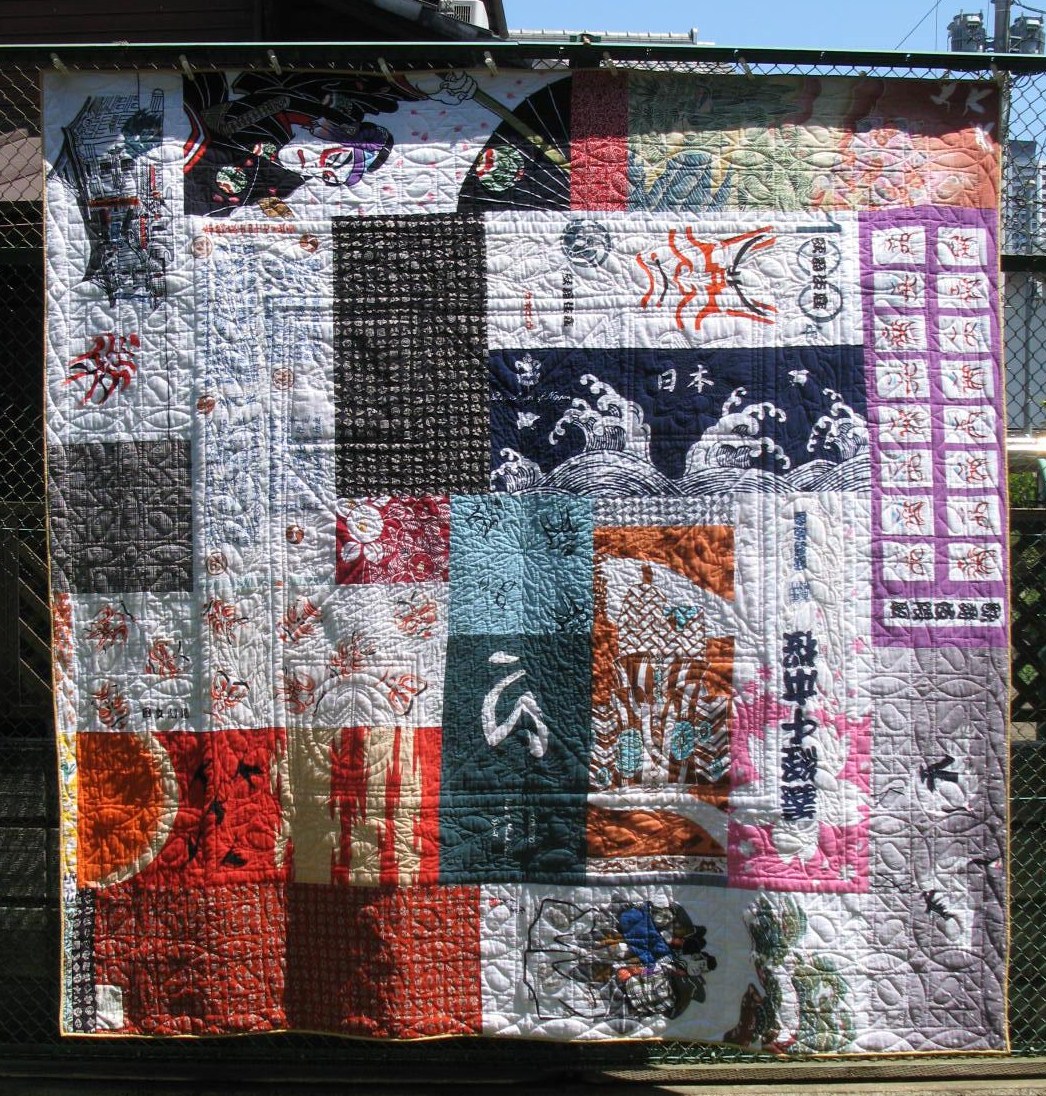
And speaking of tenugui, I promised to devote some time to them in my last post, but my dear friend and quilting master Julie Fukuda has beaten me to it and written a great piece on her blog My Quilt Diary. Take a look! Julie often pieces tenugui to create the backs of her quilts and while it may look random, there is always a masterful artistic hand at work. Julie, don’t be angry with me, but sometimes I love the tenugui backs as much as the amazing quilt fronts!

Which brings me to one last indigo image from recent press – this bedroom in Maine by Tom Scheerer. The quilt on the bed must be American, but it is reminiscent of a patched Japanese textile or even Julie’s tenugui quilt back.

Stay cool wherever you are! And stop in to Blue & White for your “Genki Japan” tenugui!

Image credits: 1-3 & 14. me, 4. House Beautiful June 2011, photo credit: Francesco Lagnese, 5-7. Elle Decor April 2011, photo credit: Simon Upton, 8. House Beautiful October 2010, photo credit: William Abranowicz, 9. Jayson Home & Garden, 10. Madeline Weinrib Atelier, 11-13. Elle Decor December 2008, photo credit: Simon Upton, 15. Julie Fukuda at My Quilt Diary, 16. House Beautiful April 2011, photo credit: Francesco Lagnese.

Read Full Post »

Every year for the past 7 years I have been part of a core team of women who get together to design and hand sew a special quilt for the American School in Japan’s Gala auction. The quilts have been worked on by scores of women (and a few men) over the years and they are always a big hit, both in terms of community spirit and fundraising. This post is an attempt to chronicle the process and history of the quilts as well as celebrate their making.

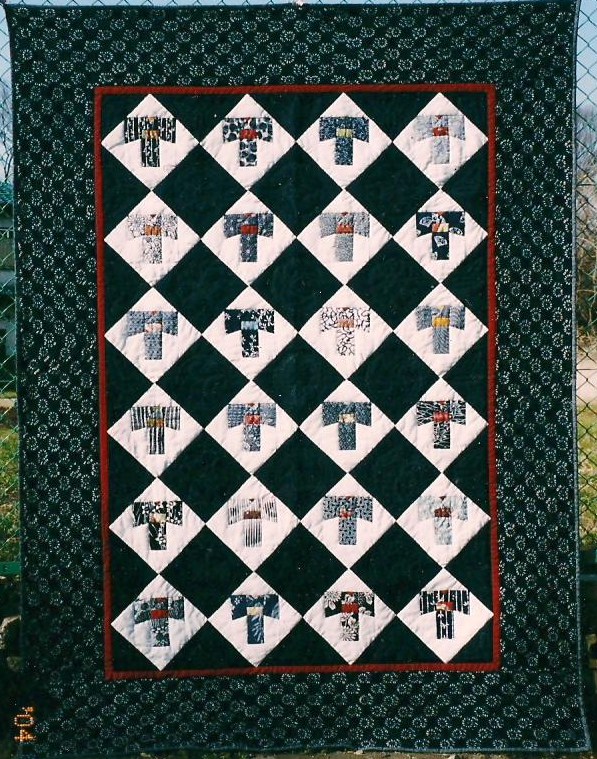
This year’s quilt fits a queen size bed generously. It is composed of yukata pattern blocks, yukata being cotton summer kimono, the traditional Japanese robe.  The alternate navy blue blocks are hand quilted, each with a different kamon (family crest), a device we have used in many of our quilts. Made from the casual blue and white yukata fabric that gives it its name, highlighted with red obi (sashes) and bordered by a blue and white checkerboard, the quilt is a graphic triumph, feeling cool and polished. More details on its making will be found below, after a chronological history of the quilts that came before.

The title of the post, “Coming Full Circle,” refers to the fact that this quilt is an updated version of the very first ASIJ auction quilt. In 2004, before I arrived in Japan, this handmade quilt was made by a group of current students’ moms, including Kendra Morgenstern and master quilter Julie Fukuda, whose kids had graduated from ASIJ many years before. Very few photos exist for this twin size block quilt, also made of yukata patches with alternating quilted kamon patches. This was the first of a series of “American” style quilts, made with “Japanese” fabrics. As this pattern is one of the most charming and nostalgic, we have always wanted to revisit it.

In 2005 I joined the team and we once again made a block quilt, composed of a Japanese motif, the fan. Fans have not traditionally figured in American cotton quilts, but they were popular in Victorian crazy quilts. In our quilt, each fan was composed of a bright Japanese patterned cotton, paired with a complimentary solid in this twin/double size quilt.

Each piece of the fan was “stitched in the ditch,” meaning it was quilted right at the seam’s edge. Sashiko style quilted white lines completed the fans exoskeletons.  The solid navy background was quilted with dark thread in a karakusa (arabesque vine) pattern for a subtle effect.

The border was ingeniously quilted in a scrolling fan pattern, as a compliment to the fans in the center. This was the beginning of our thematic border choices and we always tried to relate the border to the quilt as a whole in all future quilts. I think it is one of the features that makes them so visually satisfying.

In 2006 we decided to make a queen size quilt and enlarged the size of the blocks. The design had some features we had used before, such as blue and white yukata fabrics…

But this quilt added a new skill to the repertoire – applique. Japanese motifs, cut from variety of yukata fabrics were appliqued onto white circles which had in turn been appliqued on navy squares. Alternating blue diamonds were set into a tightly patterned karakusa background and quilted kamon in their centers were planned.

This quilt never started out in the design phase as being an homage to karakusa, but perhaps the background of the fan quilt had subconsciously influenced us. Karakusa is the most quintessential of all Japanese patterns, appearing on everything, but particularly on blue and white china.

Choosing the large-scale white karakusa fabric for the outer border and yet another mid size karakusa for the border edging truly brought this quilt together.

This close detail photo shows all three patterns and the quilted kamon.

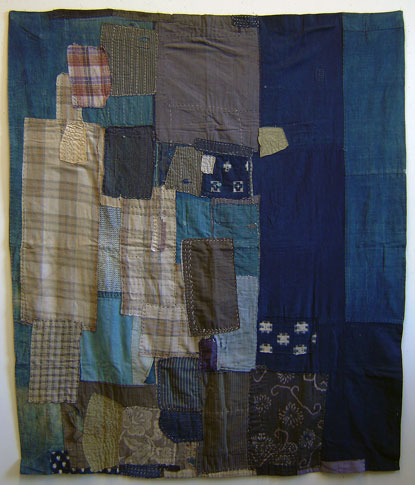
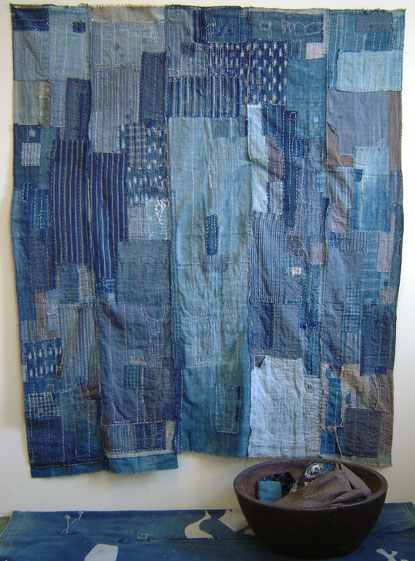
By 2007 we had a hankering to do something different…very different. We had traditionally made typical American-style block quilts, using typical Japanese fabrics. This time we wanted to make a quintessentially Japanese quilt, using antique and vintage fabrics, in an irregular pattern. Vintage Japanese boro textiles such as this futon cover and kotatsugake, provided some of the initial inspiration. A quilt comprised of seemingly random patchwork, highlighting the beauty of the fabric, was our starting point.

This was an early view of the process, which was spontaneous and quite organic.  We gathered everything from vintage kasuri (Japanese style ikat) to modern quilting fabrics. While we were using the color blue again, we were not using pure whites, instead, creamy lights helped add to the vintage feel. When this was shown to the PTA and school director in its early phases, there was a bit of nervousness, but they decided to have faith.

As a nod to the American tradition, we included a few square in a square blocks and strips of flying geese.

Square in a Square Example

Flying Geese Example


The logo for the Gala materials was a dragon and we decided to add to the quilt by overlaying and appliqueing a dragon on the abstract background pattern. In Asian art, mythical dragons traditionally chase a night shining pearl, which we also added. Ironically, dragons are actually a Chinese motif, not a Japanese one.

The final result was another generous queen size quilt and it was a huge success. We appliqued the kanji for dragon in the lower left corner and used a dragon patterned fabric in two colorways for the border.

Our dragon was the classic long scaly shape, with the horns of a deer and the eyes of a demon – at least we tried to make him look unfriendly. He was further spiffed up with golden trapunto stitching.

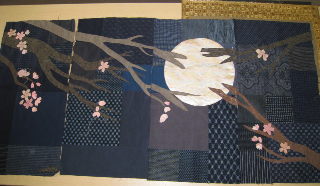
In 2008 there were a number of changes to the Gala auction, one being that the date was moved forward on the calendar significantly, cutting into our working time. Once again, we were interested in a change and decided a smaller wall hanging quilt would be fun and easier. Our inspiration was immediate as the theme for the gala was sakura (cherry blossoms) and we decided to create a traditional byobu, better known in English as a screen.

The design included the all the traditional structures of a screen. It would be made of individual panels, linked and bordered by a brocade and “lacquer” frame (to be made with a dark brown fabric). As it would never be used for sleeping, the wall hanging freed us to use materials that could not be washed, such as antique silks and brocades. For the background we used traditional indigo fabrics laid out in a more regular pattern, but still boro inspired. Branches, petals and the moon would be appliqued and details would be embroidered.

Lighter blues were used under and around the moon, to represent the cast of the moonlight. A softly patterned pinky brocade was used for the moon as it seemed to emit its own light. This luminescence gave a feeling of depth to the quilt. The sakura petals, cut from various fabrics, including antique kimono silks, were hand-appliqued petal by petal onto the quilt — 439 petals in all, and then hand-embroidered. The petal work alone was hundreds of hours of work – so much for an easier quilt.

These photos show the details of the appliqued branches and petals with French knots as the stamens.

The 2009 quilt was another instantaneous choice.  The theme for the year at ASIJ and for the gala was “Going Green” and green we went! This original sketch was dreamed up at the PTA Welcome Coffee at the very beginning of the year! While it looks a bit scribbly, all the major components of the “Four Seasons” quilt are there.

Like the dragon quilt, this one would rely on an irregular patchwork background. Running clockwise around the quilt would be flowers and plants that represented the four seasons.  Instead of traditional flying geese, we dreamed up flying ginkgo leaves. This later sketch shows more of the planned details and decisions.

Using large craft paper we laid out the full size design.

Again, fabric selection was quite spontaneous.

One problem that needed to be solved was how to make a quilt with so much difficult applique work, but still have enough tasks for new members of the group whose sewing skills were more limited. Our solution was to create a border made of strips, inspired by the border on this crazy quilt. This created a lot of cutting and straight sewing for the newer members of the group to work on. We set up a kind of “border bar” where people could choose from a variety of fabrics and start to sew “random” combinations together.

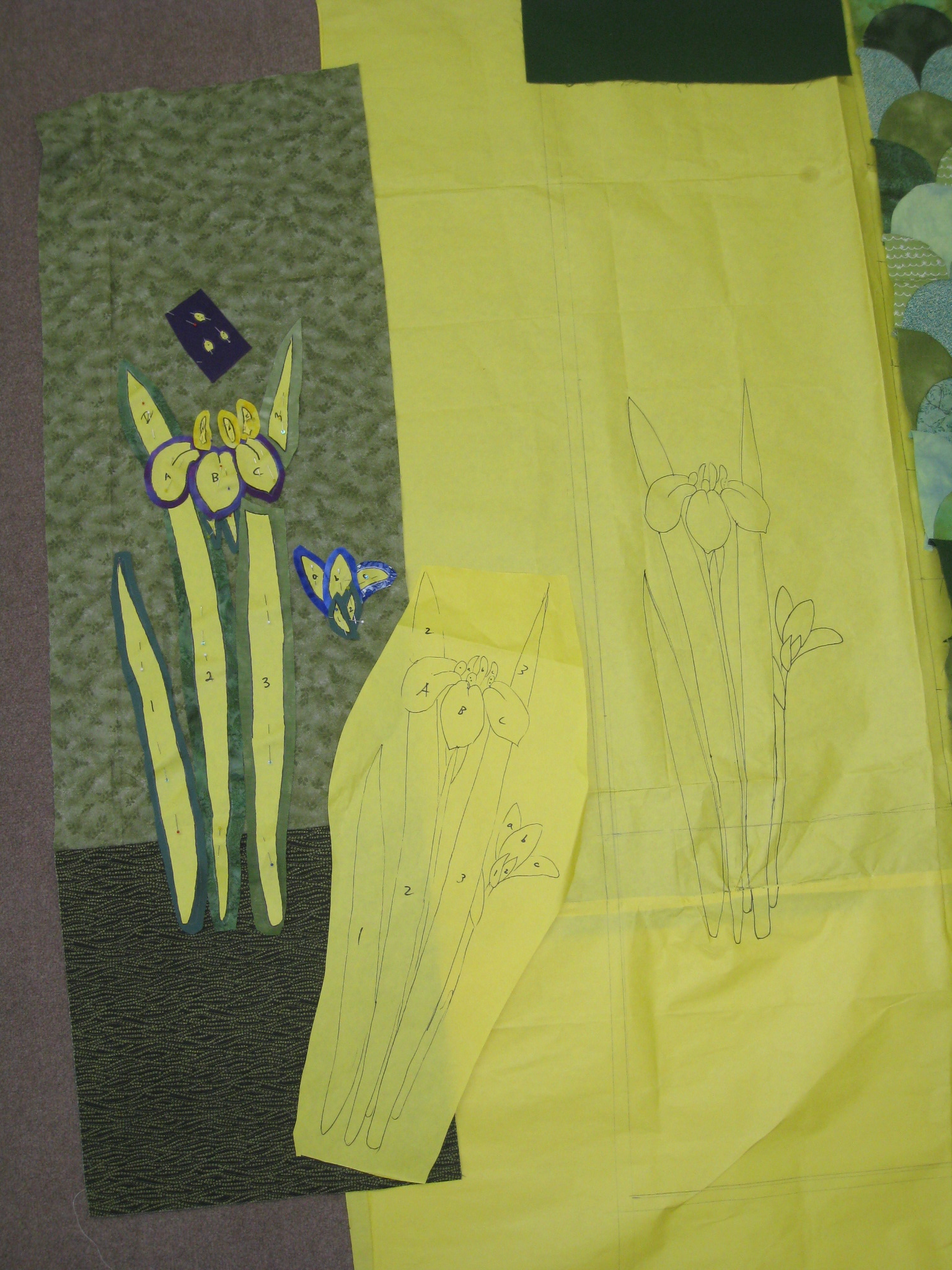
More difficult work included tons of pattern making and many detailed fabric choices for the flowers that then needed to be painstakingly appliqued.

Here you can see the pieces slowly coming together. You will find the auspicious trio of pine, bamboo and plum (sho-chiku-bai), as well as iris, camellia, chrysanthemum, and wisteria.

The fully finished quilt top prior to the borders being added. The changing seasons are emphasized by the colors of the “flying” ginkgo leaves (the symbol of Tokyo) that travel up, around and down the quilt.

Here you can see the quilt basted and ready to be quilted. Basting day is always fun, as many people too afraid to stitch on the quilt for real turn up because they know the basting stitches don’t count and will all be removed.

The final quilt! I am using this angled photo instead of a frontal one as it shows the incredible detailed quilting. We had placed that large plain dark rectangle of green next to the pine in the lower right, hoping to put something scenic like the teahouse in.

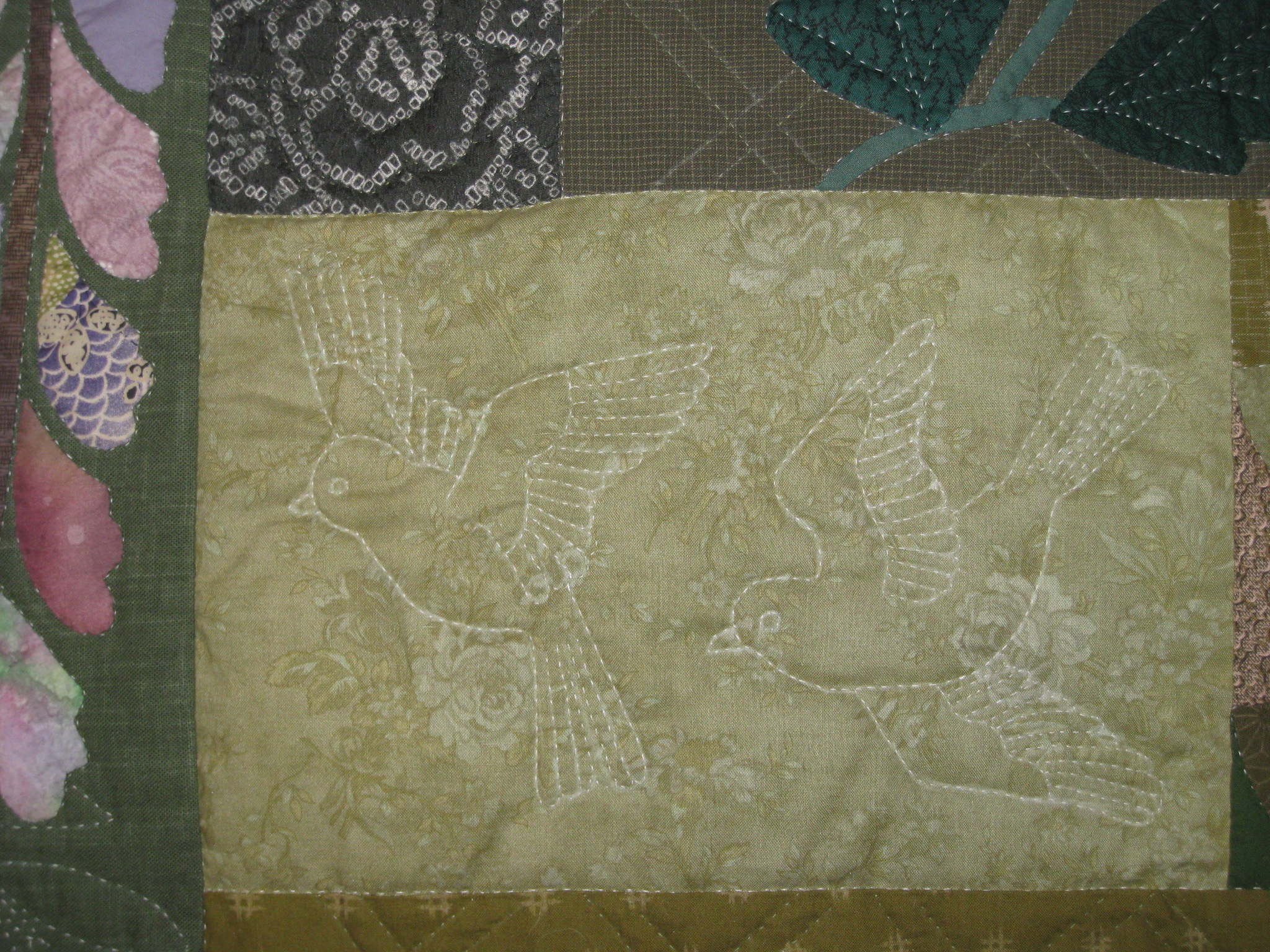
Other gorgeous detail included additional blossoms and branches shadow quilted in, and some special friends like these two darling sparrows. Sitting on the plum branch is a Japanese white-eye (mejiro), a small green friendly bird we often see in Tokyo.  Quilted into the background you will find many surprises such as a pair of mandarin ducks hiding in the waters near the iris. Julie really outdid herself on the quilting.

In our never-ending quest for change, in 2010 we turned back to the idea of an American style patchwork quilt, but this time an optical illusion all-over pattern, often referred to as a kaleidoscope pattern. The theme of the gala was Saturday Night Fever and we saw it as a quilt that danced before your eyes. Made with one hundred octagons of different blue and white fabrics, both antique and new, some of which were used in previous blue and white quilts, and many which were shared from our quilters’ personal collections, all part of the quilting tradition of trading and sharing fabrics.  You will find dragonflies, fans, umbrellas, dragons, butterflies, kamon, and a myriad of other designs. It was inspired by a smaller earlier quilt that Julie had made.

What is so unusual about this pattern is that it looks as if there are circles in the quilt, when actually every piece is straight! The blocks are just octagons, made of alternating dark and light triangles. They are matched to an opposite octagon (light meets dark, and dark meets light) and then linked by a small square (held on an angle like a diamond) made of a medium blue fabric.

In this photo we are getting ready to baste the quilt top to the batting and the backing.

We don’t often photograph the back of the quilt, which is usually a single simple fabric, but in this case we did and it allows us to see the beautiful quality of the hand sewing.  This represents the stitches of multiple volunteers.

This quilt was featured on the blog Quilt Inspiration. They wrote, ”it is one of the most beautiful blue quilts – and kaleidoscope quilts – we’ve seen!” They also specifically complimented the border, a wild yukata fabric pattern of circles, chosen to highlight the circular theme. All the white lines of the circles in the border were individually quilted, and every other single piece was quilted in the ditch.

After six years we decided we wanted to give the yukata quilt another go. People had been clamouring for us to do it again and I had never personally had a chance to work on one. We had many new committee members and everyone was excited by the possibility of improving on a classic.

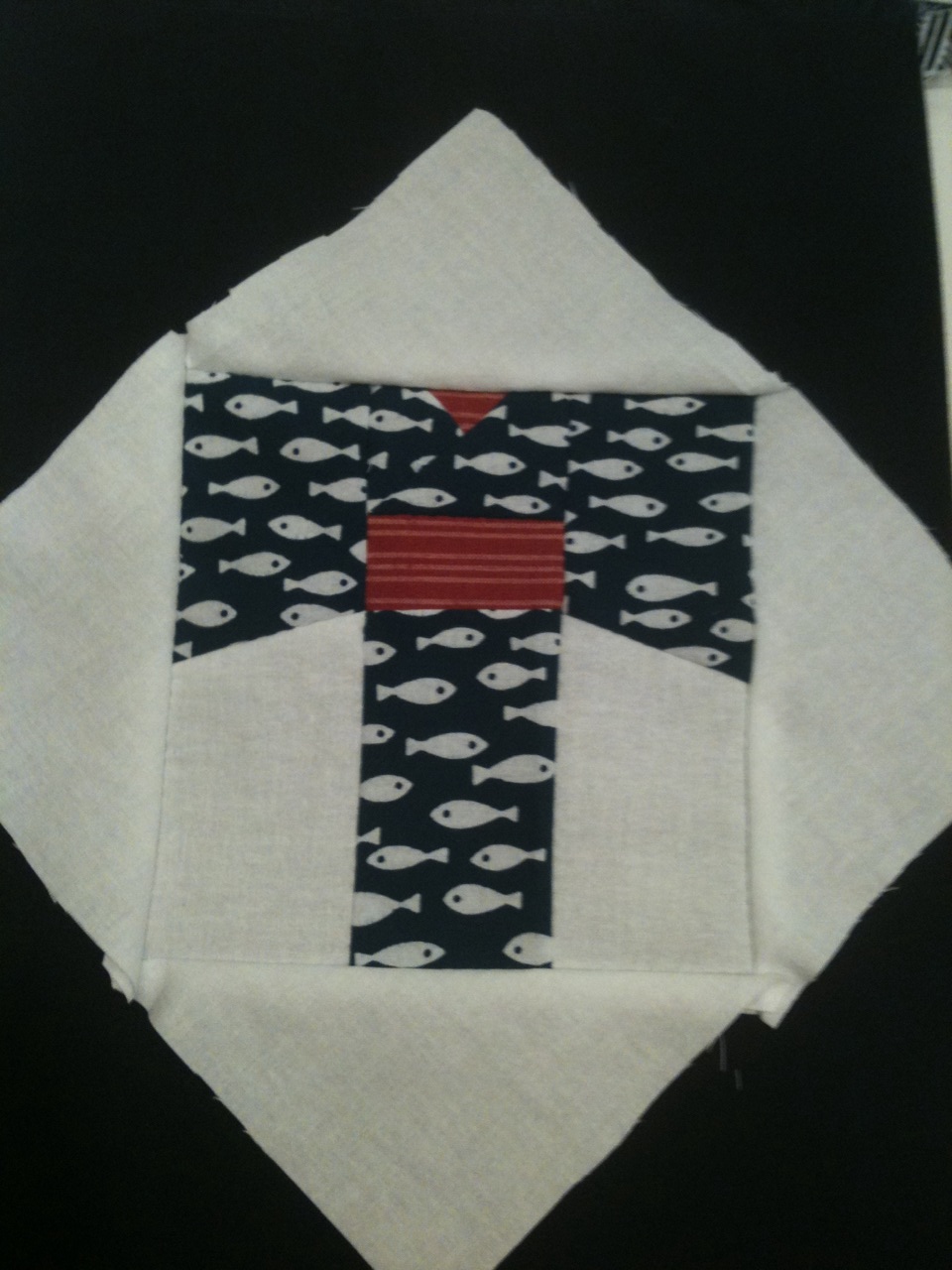
Each blue and white yukata fabric was paired with a contrasting red fabric for its obi. We used templates to cut all 30 yukata, each one being made up of 7 pieces. An additional 6 pieces of white fabric were cut to complete each block. Everything had to be sewn together in the proper order.

Here we have a little more than two-thirds of the yukata blocks finished. We laid them out to be sure we were getting a good balance of combinations – light and dark, linear and pictorial, etc.

To balance all the right angles we chose very rounded kamon and avoided any that felt sharp-edged. Using a kamon dictionary, we blew the individual kamon up on a photocopier and then traced them onto the navy squares.

Once again, our border found our quilt immediately.  We stopped into Blue & White for a look at the yukata fabric and for a chat with Amy Katoh,  its lovely proprietor, and the checkerboard was the perfect graphic counterpart to the square block diamonds. A red inner border, created from a soft homespun looking cloth, was also an obvious choice to pull the red from the obi. If you look very closely at this photo you can see the traced, but not yet quilted kamon.

The final binding went though a few incarnations. First we tried a very narrow dark red binding tape, but it was too shiny and red did not give the closure needed. We thought about adding another yukata fabric to the outside edge, but it competed with the simple graphics of the quilt.  In the end we chose a straightforward navy border and made sure to line up the checkerboard perfectly.

Bamboo leaves are quilted in the outer triangles and ginkgo leaves in the quilt corners. I can’t resist sharing another photo that highlights these amazing quilted kamons…

…and one more close-up.

I think bidding will be active next Saturday night and I am looking forward to it!

A heartfelt thank you goes out to everyone who has ever participated or supported us in any way. These quilts have been labors of love and friendship.

A special thank you goes to Kendra and Julie for their help in preparing this post and for everything else too!

Photo credits are way too hard to sort out, so I am not even going to try. The two boro textiles are from Sri Threads and the Japanese screen photo is from Okura Oriental Art.

Read Full Post »

Follow

Get every new post delivered to your Inbox.

Join 424 other followers

%d bloggers like this: