Feeds:
Posts
Comments

Posts Tagged ‘vignettes’

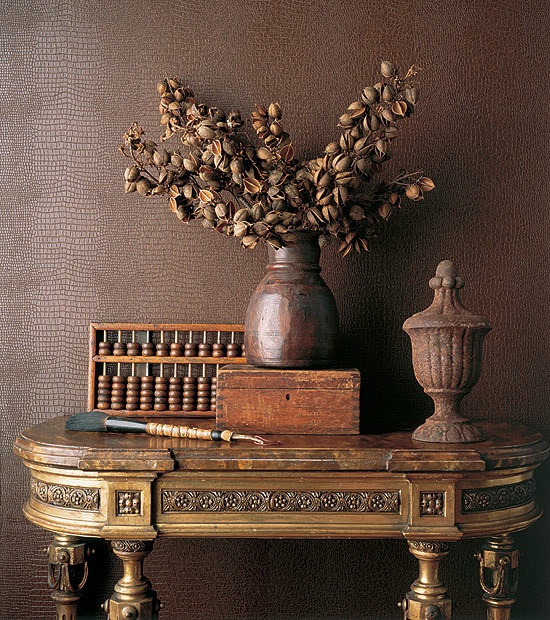
I continue to find much inspiration in the small details from this photo, previously featured here and here. On the side table next to the lamp (and oh how gorgeous and divine is that lamp!) there is a small wooden soroban, better known in English as an abacus. A counting tool still common in Asia, even in the age of electronics, abaci (or abacuses, depending on who you talk to) are still sold and their use is taught in Japanese elementary school.

IMG_1612

Abaci are not unique to Japan and actually were imported from China around 1600 and this one is actually Chinese (so it is really a suanpan). Originally, the upper part of the Japanese abacus had two “heavenly” beads and the lower part five “earth” beads just like this. Around 1850 it was improved and changed to 1 and 5 beads, and then again in 1891 changed to 1 and 4, which continues to be the common modern abacus used in Japan. Personally, I find these dates to be a little rigid and I don’t think they date pieces exactly, but rather roughly.

abacus

Hand colored late 19th-early 20th century photos confirm its use in transactions at all kinds of businesses. I couldn’t resist this kimono shop photo – just look at those amazing rolls of fabric!
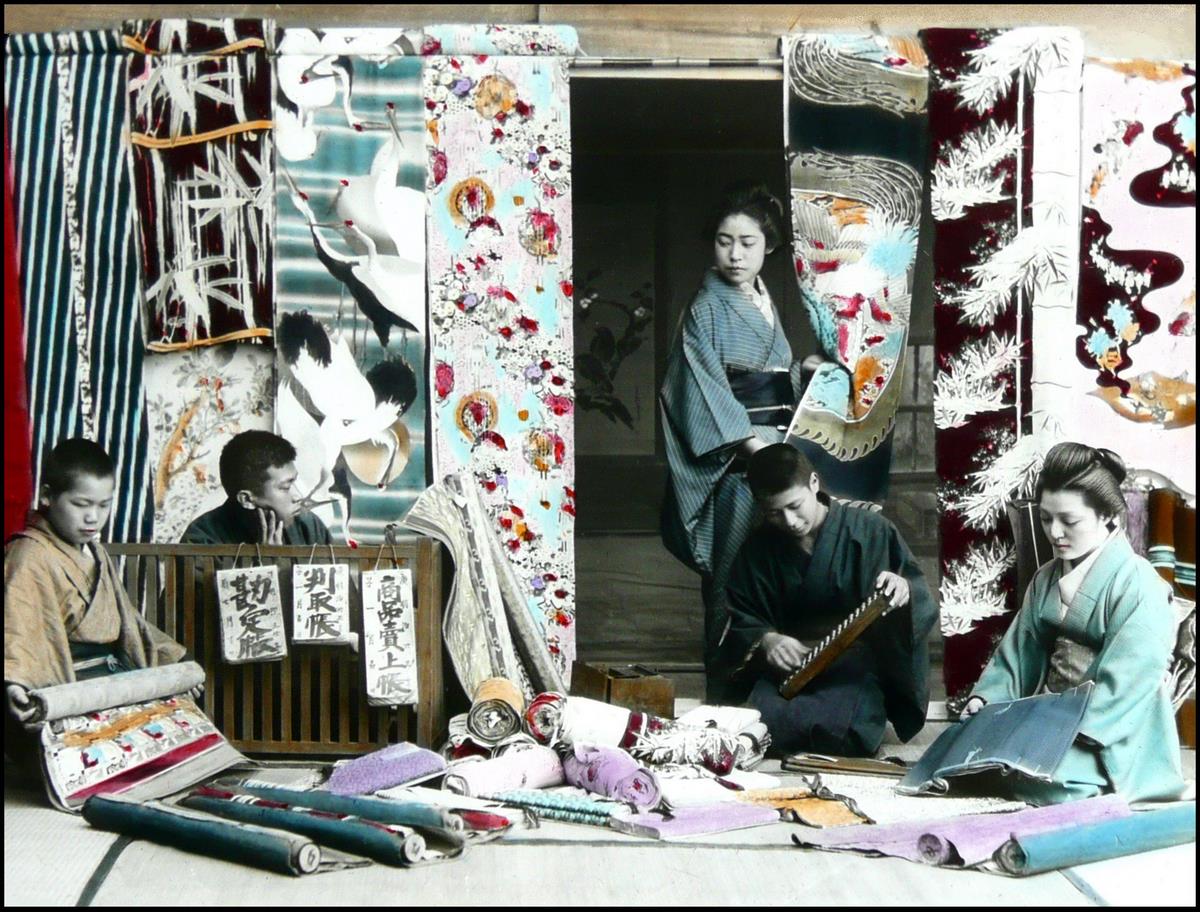
KimonoSilkStoreInOldJapan_ShowsSoroban_1890sGlassSlideOkinawaSobaCollection

Like I said, abaci were used in many countries, and while we are on old photos, here’s one of a young Russian abacus seller. You can see quite clearly the difference in their style – there is no separation of heavenly and earthly beads – and as a result the method of calculation.

russian abacus seller

So do I know how to use one? Of course not! But I think they make charming additions to vignettes in the home.

abacus vignette amanda wright via design sponge abacus vignette via belle brocante abacus vignette via pinterest pinterest.com:pin:575405289860988289:

I see one peeking out from behind the lamp in this project by Lauren Liess.

lauren liess abacus

Even Pottery Barn and CB2 have jumped on the abacus bandwagon, although neither of these are still available.

abacus via FYNCT pottery barncb2 abacus

I run across abaci at the shrine sales quite frequently. I tend to look out for the older or more unusual ones as a general rule.

abacus at nogi shrine sale

I found a particularly giant one designed for classroom teaching or shop use at Kawagoe last spring. It was featured in the article by Lisa Jardine now on the CNN Travel website. The beads are bright yellow to make it easy to see at a distance.

kawagoe----our-haul

In 9 years I have only seen a few of these huge ones, and never outside of Japan, except in this photo of Sibella Court’s Sydney shop The Society. Somehow I’m not surprised she managed to get her hands on one along with many other Japanese goodies.

giant abacus via an indian summer

So I just happened to stumble across two recently – how is that for luck?. You can get a sense of how big these really are by comparing them to the regular sized abacus propped up along the yellow one. It’s interesting that the beads on these teaching abaci stick where you move them to facilitate lessons.

abacus soroban

Tons of potential! I could see the yellow one in a kids room or den, but it is the wooden one which calls my name!

abacus soroban detail

What would you do with one?

My heart goes out to everyone in Boston today. I am counting my blessings and sending out love to all those affected.

Related Posts:
Tokyo Jinja on CNNgo Today
Takamakura…A Geisha’s Hard Night Sleep

Image credits: 1, 10, 13-14. taken by me, 2. via The Slide Rule Museum (gotta love that name!), 3. William Carrick via National Galleries of Scotland, 4. via Design Sponge, 5. via Belle Brocante, 6. via Pinterest, 7. via Pure Style Home, 8. via Pottery Barn, 9. via CB2, 11. Lisa Jardine for CNNgo, 12.The Society via An Indian Summer.

About these ads

Read Full Post »

This is one of those posts in which I could have based entirely on photographs of local collections but unfortunately, everyone’s movers worked way faster than expected and most of my anticipated photos got packed up! But everything in this post, while geared towards styling Japanese vintage and antique accessories holds true for just about anything from anywhere. But don’t expect this post to be exhaustive in topic or example. Obviously I could write ten posts about groupings of blue and white porcelain (just look at this month’s House Beautiful) or Japanese glass fishing floats (and I have in the past here, herehere and here for example) as well as some of the more unusual decorative objects we find regularly in Japan (kashigata, katagami, hagoita, come to mind). The focus of this post is really not what you are displaying, but how. I have a few simple “rules” to go by, nothing particularly original, but if you use these, your displays will be better.

One of my most basic rules is the rule of multiples. You can display a single item of a kind, like this Japanese basket perched above the drinks cabinet…

…but beyond that, with the exception of matched pairs, you need a group a similar objects placed together, like these amazing ikebana (flower arranging) baskets on the side board of an apartment designed by Emily Henderson for Michael Reisz on an episode of HGTV’s Secrets of a Stylist. Like objects should always be grouped tightly together, not placed around a space separate and unlinked from each other. I call this the “anti-pimple” rule of display.

Also demonstrated by these baskets is the rule of odd numbers, with the exception of matched pairs again (more on that later). If at a glance you can instantly count the number of objects in a grouping an odd number will always look better. I am sure there is some organic mathematical or mystical reason for this, depending on your personal perspective, but in this case just take my word for it.

The next rule is is that of varied elevation. If the baskets were just lined up on the sideboard, they would look nowhere near as good as they do with some placed higher on wooden boxes. Even their own variety of height would not achieve the same effect.

The rule of containment is to use a single decorative object such as a tray or bowl to corral another collection. We find these roughly hewn soba bowls at shrine sales all over Japan and they are great for holding collections of glass fishing floats…

…floats plus shells and souvenir rocks (love this idea!)…

…or how about hard to store baseball paraphernalia?

Another rule demonstrated by these bowl displays is to use no more than 3 types of objects and ideally either 1 or 3 (odd numbers again). The grouping of all floats is cohesive, the combo of floats, shells and rocks is cohesive, and the mitts and balls work even though there are only two types of items because one of the mitts is very dark in color and reads as a third type of item. If you put too many kinds of items in the bowl, then it will just look like a bunch of junk.

Here Lauren Liess of Pure Style Home uses her bowl to hold magazines. Isn’t it amazing how attractive even the most mundane items can be when displayed correctly?

Another favorite local collectible I have not yet written about is kokeshi dolls, the simple armless painted wooden dolls which originated in northern Japan, but are now made and sold all over the country. Vintage examples from the last 100 years or so of different varieties are a shrine sale staple. They are charming, and easy to collect.

While cute, it is important to give enough gravitas to their display to keep them from looking insignificant. This grouping is crowded by the other unrelated objects on display…

…in comparison to this grouping, where the dolls have space to breathe and coordinate with the other objects nearby. This collector has also chosen to use the rule of strict palette/shape/style to limit which colors and types she buys to create cohesion through the simple black and red paint, while using a variety of heights to create dynamism in the vignette.

This shelf effectively boxes the collection much in the way the soba bowls did above. The enclosure helps to unify the variety of dolls collected.

And here the kokeshi have been literally “boxed” to create cohesion from their variety. Note this display follows the rule of odd numbers and the rule of varied elevation in a vertical format. I do love these cute washi (Japanese paper) lined boxes – they remind me of this and this. And if you are interested in making these there is a DIY tutorial on Poppy Talk too!

Here we have a beautiful grouping of antique iron teapots, but the collection is not yet complete. Imagine this grouping if you either added one or took one away. Imagine if all the teapots sat at the same height instead of having one raised. The plan for the fifth teapot to complete this vignette is for it to be a larger fairly horizontally volumed one. Perhaps another small kettle stand with shorter legs than the one pictured will also be added.

Summer calls, but I owe you some follow up posts on rule-breaking display, because if there are rules, they must be broken, as well one on matched pairs, which have their own display rules. Watch for upcoming related posts on a basket wall installation I did in Tokyo right before leaving for the summer and in contrast, some tiny decorative items that ingenious friends are putting to good use.

Related Posts:
Vignette Arranging With Shrine Sale Goodies at the Beach House
Ways to Display…Porcelain on Brackets
Mirror, Mirror on the Wall…Vintage Etched and Engraved Plateaus
En Masse…Iron Teapots, Vincente Wolf and the Art of Grouped Displays

Image credits: 1. Cottage Living via Bryn Alexandra, 2-3. via Emily Henderson, photo credit: Mark Champion, 4, 9 & 12. me, 5-6. M. Small, 7. via Pure Style Home, 8. Wendy Withers via Apartment Therapy, photo credit: Bethany Nauert, 10. via Decor Allure, 11. Janis Nicoay via Poppy Talk.

Read Full Post »

Remember this photo? The shelves themselves have since been completed, but I have not been back yet to our beach house to work on the styling. As I was literally walking out the door in December, I threw a few things up there to shoot a vignette for a post, including the French watercolor that inspired the bathroom in the first place, some nicely tarnished brass finds from Singapore, shell and coral collections the girls are gathering, and a shallow patterned kashigata (Japanese sweet mold) that reminded me of starfish and sand dollars.

Here’s a close-up.

Since then I have been gathering inspiration photos to help me crystallize my thinking. There is no one better to turn to for artful display than John Derian and I have long loved this photo with its giant sponge, shells and mercury glass.

A more recent photo from The New Victorian Ruralist is more regimented, but I love the mix of baskets, silver, white ironstone and glass.

And of course I can’t forget the vignette master herself, Joan from For the Love of a House, with this beautiful shelving array from her master bathroom.

All three photos share something in common, which is groupings of like objects contrasted with other groupings in different materials, usually about three kinds, including something natural, something metal and something glass. More than three gets busy and less than three has no animation. Without being too literal about this formula, I would like shells and coral, aged wood and old brass to be part of my display. My recent purchase of more kashigata with shallow relief patterns might just provide the touch I need. What looks to be coral fans is more likely lotus or some other botanical, but to my eye they read like oceanic plants.

I find these circular patterns irresistible too. They are double-sided, with different motifs on the reverse.

I think this classic Japanese pattern of little plover birds with waves is adorable for a beach house!

In addition, I have a friend who has also been buying kashigata with shells and sea life on them for her beach house on Long Island so I am hoping to get a look at them in situ this summer.

As I am not limiting myself to wood, but planning on complementing the unlaquered brass bathroom fittings with some aged brass display items, I was so excited to find this adorable set of brass cookie cutters with scalloped rims and a rolling crimper. Not sure yet whether I plan to use them on the bathroom shelves or save them for the kitchen. Speaking of the kitchen, Camille from The Vintique Object and I have been having fun brainstorming how to improve it without actually spending any money on it. I do eventually plan to renovate the kitchen completely, but in the meantime I want to take the ugly edge off. There will be much more on this project coming later, including the bleak photos of its current state, but one idea I have is to use warm brass and copper to help it along. If you are interested, she and I have a shared Pinterest page going where we exchange photos and ideas. It is such a great way to work with someone long distance!

And I’ve also got boards going for copper and silver on Pinterest, but with my obsession with aged brass, I think I need to start one for that too.

Related Posts:
Renovation Report…”Oldating” the Beach House Bathroom
Summer Simple…Vignettes and the Art of Arranging

Image Credits:1-2, 6-9. me, 3. Martha Stewart Living September 2009, 4. via The New Victorian Ruralist, 5. via For the Love of a House

Read Full Post »

I picked up the August issue of Real Simple and was delighted by these two artfully arranged vignettes.

This lovely mantle reminded me of another I had recently seen…

…Joan’s beautiful summer mantle from for the love of a house

and this one I had recently posted, belonging to Jocie Sinauer of Red Chair Antiques. Both houses are well worth looking at in their entirety.

From there I immediately thought of two of my favorite inspiration photos from Ben Pentreath‘s shop and website.

And I couldn’t resist adding a few more photos saved over the years, posted by others…

…and…

…and this one.

A vintage print, bit of coral or old silver, some white ironstone, softly colored candles and flowers…the subtle glow of light. All speak to me in the bittersweet language of the coming end of summer…

Image credits: 1-2. Real Simple August 2011, photo credit: David Prince, 3. via for the love of a house, 4. Jocie Sinauer of Red Chair Antiques via Design*Sponge, 5-6. via Ben Pentreath, 7. via The City Sage, 8. via French Home, 9. via Habitually Chic.

Read Full Post »

Follow

Get every new post delivered to your Inbox.

Join 406 other followers

%d bloggers like this: