Feeds:
Posts
Comments

Posts Tagged ‘Tom Scheerer’

I was young, newly married, and in need of a table and chairs to serve as both kitchen and dining room table. We had the typical NYC galley kitchen in our apartment in an old 19th century school building. The space had a loft-meets-country feel and I was still pretty firmly embedded in the 19th century Americana that was my original antiques specialty, although my tendency to pull from the Aesthetic Movement was already quite marked. Quite soon after moving in we were driving home from a friend’s house in Connecticut along Route 2 or 202 or something like that, chock-a-block with antique stores along the way, so of course we had to stop. We picked up a few great things that day, including an antique clock case we turned into a medicine cabinet, but the standout find was a bargain set of six black Hitchcock chairs.

hitchcock chairI’ve always had a weakness for Hitchcock chairs, which are so quintessentially American, but also one of the very first mass-produced pieces of furniture ever made in this country. Originally produced during the second quarter of the 19th century by Lambert Hitchcock, a Connecticut cabinetmaker, they are easily identifiable by their black or dark paint, simple Sheraton shape, gold stencilled details and rush or caned seat. It’s estimated that by the late 1820s, Hitchcock’s company was selling over 15,000 chairs per year. After closing in 1852, the company remained out of business for almost a century only to have a resurgence in the second half of the 20th century when the factory was reopened on the ongoing waves of Colonial Revival popularity. I’d date my chairs as vintage – perhaps 1960s or 70s – as the truly antique examples I’ve come across don’t seem like they could hold up to everyday wear and tear.

Once we had the chairs, we needed a table. I knew I wanted something that didn’t match. This doesn’t sound exciting or particularly revolutionary now, but at the time, people were still buying ‘suites’ of furniture, whether matching couches and love seats or entire bedroom and dining ‘sets’. The table had to be practical as my sweet husband was not going to stand for constant coaster/place mat/tablecloth use. The coloring of the rush seats looked great with light woods as did the dark contrasting paint. But the apartment was open like a loft and fairly dressy, so finding the right thing became a bit of a challenge as the obvious choice – a rustic farm table – didn’t seem right.

polaroid of tableDoes anyone else remember the days when the western edge of Bleecker Street was still full of antique stores, before the Marc Jacobsvication of it? There was one great mixed shop called Clary & Co (I think they may be still around on 1st dibs) that I checked in at all the time. Once day I was lucky enough to find this – a finely detailed Danish Victorian scrubbed pine table. I still have the Polaroid (!) they took for me to take home to think about it. If I recall correctly, we tied it to the roof of my parents borrowed station wagon to get it home the ten blocks or so.

We were so excited by the combination but the ultimate vindication came not much later from none other than Thomas O’Brien of Aero Studios when his country house was profiled in the February 1994 House Beautiful. He had Hitchcock chairs (his high school graduation present!) pulled up to a similar pine table. He was even using an antique Empire dresser as a sideboard – as we were and are – my own first ever real antique furniture purchase. He had a glass hurricane lantern hanging above the table, just like we did – although I have to point out that his was nowhere near as beautiful as ours (a Dixie Highway find).

Over the years I started collecting every Hitchcock chair photo I came across. Earlier shots tend to have that more cluttered country feel, but all have a common denominator in that the tables and chairs mix materials successfully, from grey painted wood…

…to white…

…to more pine…

…to speckled paint treatment in a formal dining room…

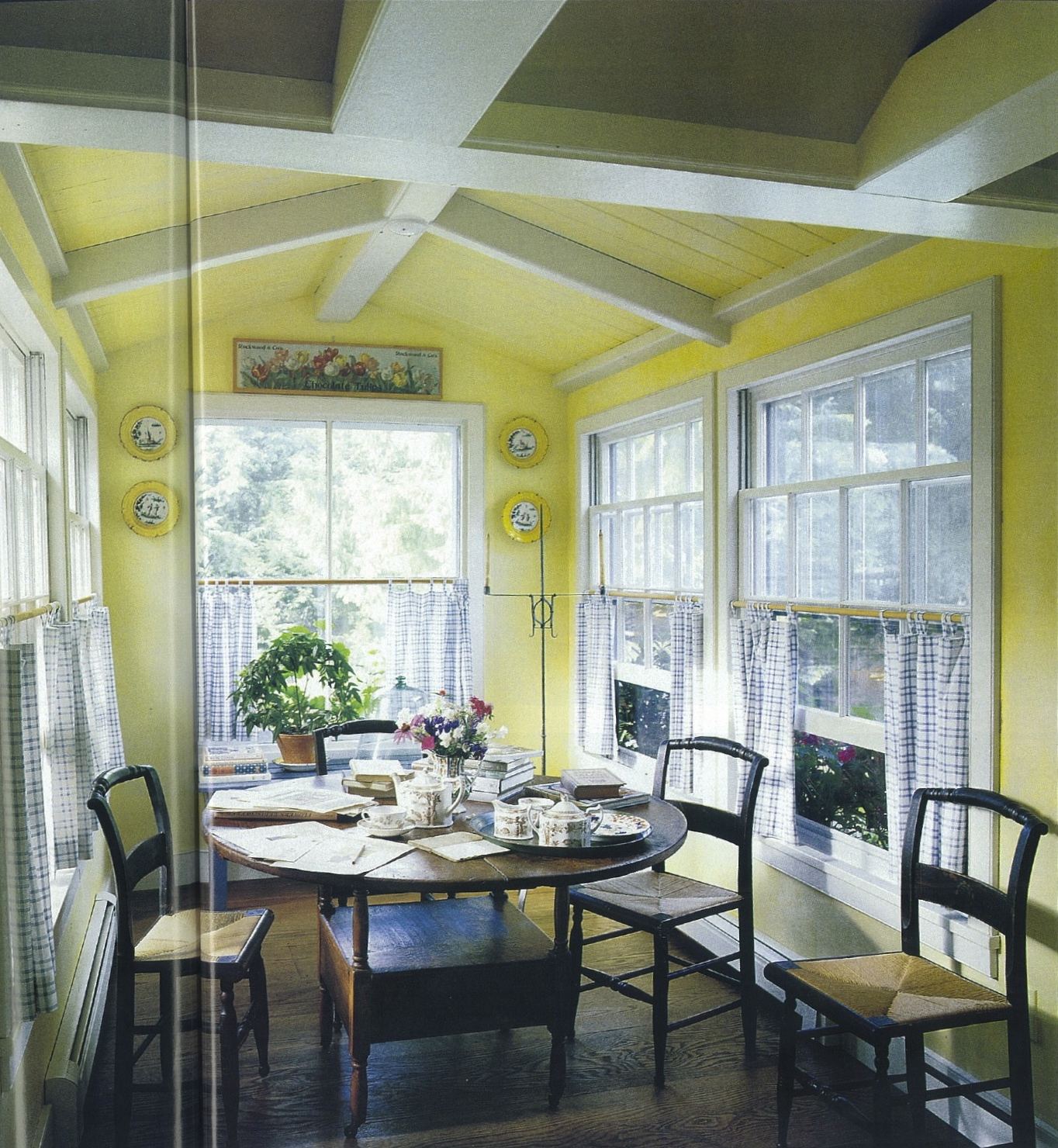
…to cheery cottage sun porch…

…to cosy dining corner.

For all their country coziness, Hitchcock chairs have a very spare silhouette – and much like paper cut silhouettes which are hugely trendy again now – that old-fashioned black profile can really feel modern. So along the way, as tastes changed, designers began to pull on the simple streamlined form of the chairs and highlight that. One of the first to do so was Victoria Hagan, here with a set that have a Washington Vase back shape…

…and again here with a combo of cane and rush seated versions. Both are all about the dark/light contrast and the sculptural shape of the furniture.

Picking up and running with that same idea is architect Gil Schafer, first at his Hudson Valley home Middlefield…

…and later the exact same table and chairs moved to his apartment in New York City. Again note the combination of dark chair and rustic light table.

Schafer uses Hitchcock chairs again in his other residential projects.

A master of that simplified American vernacular, Schafer has an amazing book
The Great American House: Tradition for the Way We Live Now that should not be missed!

Another master at highlighting sculptural antique forms through light and dark is Darryl Carter, using Hitchcock chairs and a bench in this recent room from the June 2012 Elle Decor.

As a testament to their surprising flexibility, they mix with this very modern white table as well.

So this is where I stand. After long daily use, the chairs are dying. The rush seats are breaking and the art of re-rushing does not seem to exist in Japan. The wood frames are getting shaky too. I have been playing musical chairs with the wonkiest ones. And perhaps, just a little bit, I am visually ready for something new and fresh. Now don’t get ahead of yourself, I’m not talking radically new – I don’t think that is where I am heading, but maybe something new antique.

I can’t remember exactly when or where I got the idea of changing the Hitchcock chairs for Thonet style bentwood chairs, another 19th century iconic choice that has such a stylistic yet functional presence. My instincts are that the idea starts with Tom Scheerer‘s influence. His spectacular interiors are littered with different versions of classic Thonet, but he particularly likes to use No. 4, the Cafe Daum chair.

He mixes them with very modern tables extremely well.

The irony of changing to bentwood chairs is that from a historical furniture manufacturing point of view, Hitchcock chairs and Thonet bentwood chairs were almost contemporaries. Michael Thonet set himself up as a cabinetmaker in 1819 and began to experiment with bending wood, ultimately patenting a steam technique around 1840, allowing his chairs to be mass produced.  Both styles of chairs represent a huge departure from the past – economically, socially and stylistically – in that they created affordable, well made, functional pieces that appealed to the new popular taste.

It wasn’t hard to come up with inspiration examples like this similar table to mine mixed with black bentwood in the Scott Weston designed kitchen of Kirstie Clements.

I’ve found numerous examples of black or dark bentwood chairs looking great with casual light wood tables. These aren’t a Thonet style, but I can’t resist including them, because the whole kitchen is so fab.

Here’s another view – I do love this kitchen.

Here a vintage marble-topped wood table and black bentwood chairs anchor a modern space…

Sarah Story bentwood chairs singaporePenthouse

…as they do in this older version of Muriel Brandolini‘s kitchen.

And I don’t want to rule out the idea of color as they look wonderful painted. Perhaps a Prussian Blue?

Kim Raver Bridgehampton dining room In Style 1010

The Conran Shop sells a version of Chair No. 14…

…while Crate & Barrel sells their own version of No. 18.

A great company called Bauhaus 2 Your House sells almost every version of bentwood chair available today and they are all fully licensed.

bauhaus 2 your house bentwood chairs

The problem is that I need the choices to be readily available in Japan. I’ve been keeping my eyes open for modern examples or vintage ones. Geographica along the antiques hub on Meguro-dori has these dark wooden No. 14 chairs available for sale.

One of the advantages of bentwood chairs is that they are open to the mismatched look – you can charmingly mix a variety of the styles.

So another option might be the shrine sales. There is a dealer at the Oedo Market at the International Forum that always has a selection. And I’m seriously loving the idea of a deep Prussian blue which would allow me to unite a disparate set…
bentwood at oedo market

Goodbye Mr. O’Brien? Hello Mr. Scheerer? What do you think?

About these ads

Read Full Post »

Lately I seem to be passing up amazing indigo textiles at markets all over town, like this antique katazome futon cover, with scrolling floral and arabesque design.

This giant furoshiki (wrapping cloth) with sashiko stitched corners was purchased by someone else, perhaps at my urging. Am I turning into my grandmother if I am talking to strangers and pushing them to buy things?

And it is fairly rare to see such a fantastic boro futon cover. This one was so artistically patched that I went back and looked at it numerous times before leaving Kawagoe. I am sure purists would decry that tiny bit of red, but I think it is the perfect touch.

My reasoning for not purchasing, besides the usual “I can’t have everything,” is that I am not sure what to do with them. Not usually my problem…

But lately, I have been seeing indigo textiles in design projects everywhere and I have been craving some of that organic deep blue as it has such a cooling effect in warm weather. Many of the textiles in these projects are not Japanese but are instead Indonesian batik or even French Provencal fabrics, but they all have the same visual effect. In the best spaces, textiles from all over the world have been blended together!

I spied what looks to be a Japanese textile thrown over the sofa on the cover of the newest House Beautiful.

April’s Elle Decor featured the Brazilian beach house of designer Sig Bergamin, always a master of the global textile mix. The most unusual fabric placement? The indigo piece on the wall, serving as a backdrop/frame to the painting!

One guest room has beautiful batiks as extra coverlets at the foot of the beds.

Another is such a riot of color, country and pattern all piled on an amazing antique Chinese bed. Click the photo to enlarge and you will see textiles from almost every continent!

Stylist Peter Frank’s house was featured last fall, but I had to include his living room. That perfect blue patchwork pillow, made from antique Japanese textiles, the blue grasscloth on the walls and the amazing 18th century Korean screen, all on a woven paper tatami mat rug from Merida, exude an elegant cool. His entire Hudson Valley house is well worth looking at here.

Interested in cooling down and adding a bit of indigo to your life? I have been cruising the internet for throw pillows and found these made from vintage kimono at Jayson Home & Garden. That might be a good DIY!

Want a bigger swath of blue? Madeline Weinrib, famous for her ikat pillows and Moroccan motif flatweave rugs, also does a denim patchwork line, combining the look of patched Japanese textiles and vintage dhurries.

While we are mentioning Ms. Weinrib, here are a few photos of her New York apartment, resplendent with her textiles and also a great collection of Japanese inban (transfer printed porcelain) and other porcelain.

For those of us in Japan, it is easy to add a bit of indigo to our lives, and what better way to do it than by helping those up north in Tohoku? Amy Katoh’s Azabu Juban shop Blue & White is selling special “Genki Japan” tenugui. The checkerboard motif (remember it here?) is interspersed with encouraging kanji phrases, such as “Let’s Join Hands” and “The Power of Everyone.” All profits from sales will be donated to relief agencies. I think everyone needs one!

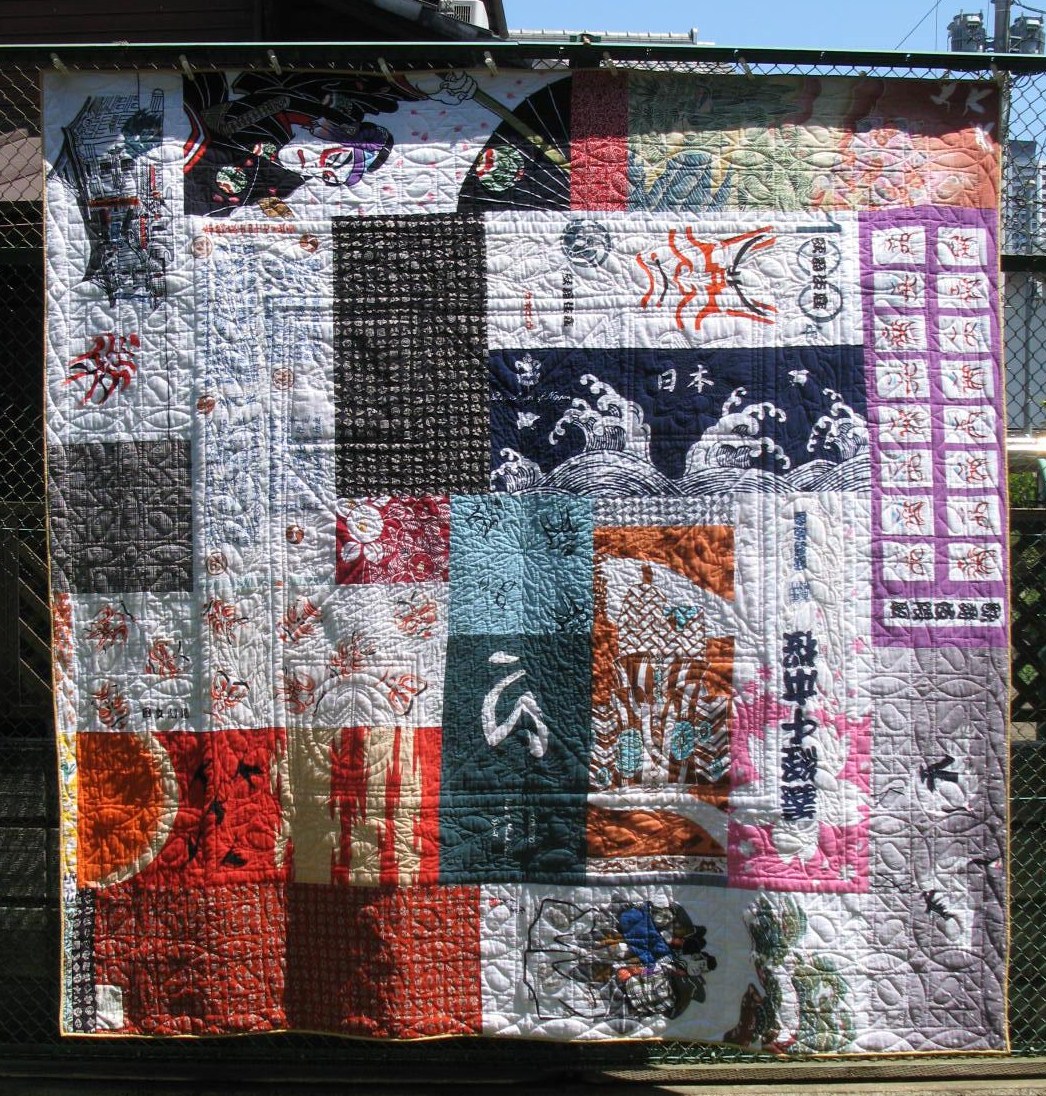
And speaking of tenugui, I promised to devote some time to them in my last post, but my dear friend and quilting master Julie Fukuda has beaten me to it and written a great piece on her blog My Quilt Diary. Take a look! Julie often pieces tenugui to create the backs of her quilts and while it may look random, there is always a masterful artistic hand at work. Julie, don’t be angry with me, but sometimes I love the tenugui backs as much as the amazing quilt fronts!

Which brings me to one last indigo image from recent press – this bedroom in Maine by Tom Scheerer. The quilt on the bed must be American, but it is reminiscent of a patched Japanese textile or even Julie’s tenugui quilt back.

Stay cool wherever you are! And stop in to Blue & White for your “Genki Japan” tenugui!

Image credits: 1-3 & 14. me, 4. House Beautiful June 2011, photo credit: Francesco Lagnese, 5-7. Elle Decor April 2011, photo credit: Simon Upton, 8. House Beautiful October 2010, photo credit: William Abranowicz, 9. Jayson Home & Garden, 10. Madeline Weinrib Atelier, 11-13. Elle Decor December 2008, photo credit: Simon Upton, 15. Julie Fukuda at My Quilt Diary, 16. House Beautiful April 2011, photo credit: Francesco Lagnese.

Read Full Post »

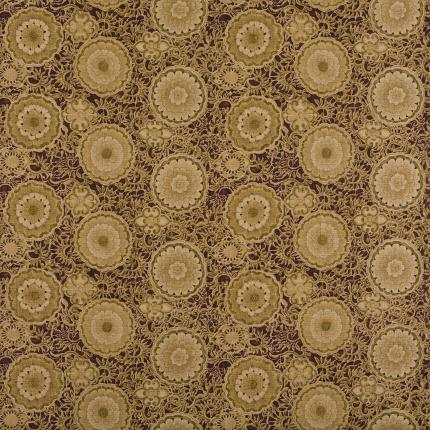
In response to my post in April about R.P. Miller’s new textile line, a reader from Vienna, Austria wrote, “Love this post – and it just so happens that I am looking for Japanese-inspired upholstery fabric – I found a delightful Schumacher fabric called “Katsugi” that I really enjoy because of its rich colors and organic, imperfect design. Can you recommend any other lines?”  So I thought I’d do a quick although not necessarily comprehensive round-up of some of the fabrics I think she might like.

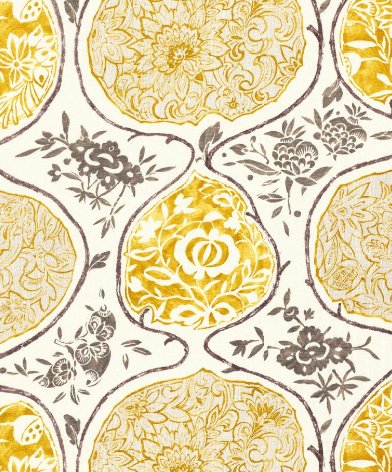
For everyone else, I’ll start with the popular Schumacher linen and cotton blend Katsugi that she mentions, which comes in five colorways.

Don’t be deceived by these swatches. The surprise about Katsugi, and often many other fabrics viewed only in photos, is the scale. If you are imagining the circular patterns are about the size of an apple or the pomegranate they resemble, then you are incorrect.  They are actually unexpectedly large. Designer Tom Scheerer has used this fabric to great effect in numerous projects.

Designer Suzanne Tucker makes a similar, although smaller in scale pattern called Kiku, which means chrysanthemum in Japanese. According to her website, the pattern is reinterpreted from a 19th century Japanese futon cover, with stylized chrysanthemum and lotus roundels and interlocking arabesques on a heavy linen ground.

By the way, there are 11 meters of it available in the sapphire blue on eBay right now for a fantastic price.

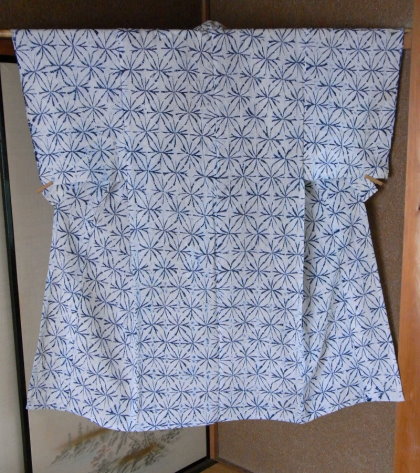
I don’t believe Martyn Lawrence-Bullard’s Kaba Kaba is based on Japanese textiles, but it looks like an elongated version of shippo tsunagi, also known as linked circles or seven treasures pattern. It also looks as if it was made with a traditional paste resist dye technique, even though it is not.

Compare it to this 19th century shibori (tie-dyed) yukata (cotton kimono).

For a sense of scale, you can see it on the pillow here, with two other great fabrics from his line.

As many of you know, I am a total Bennison junkie and have been using their floral linens in my beach house.  While those patterns are their most famous, they also make a number of fabrics based on the karakusa (arabesque vine) pattern. Their “Kasumi” comes small, medium and large in numerous colorways. Unfortunately, none of the photos show the difference in scale, but it is dramatic, with the smallest size being a very fine subtle pattern and the extra-large size making a bold graphic statement.

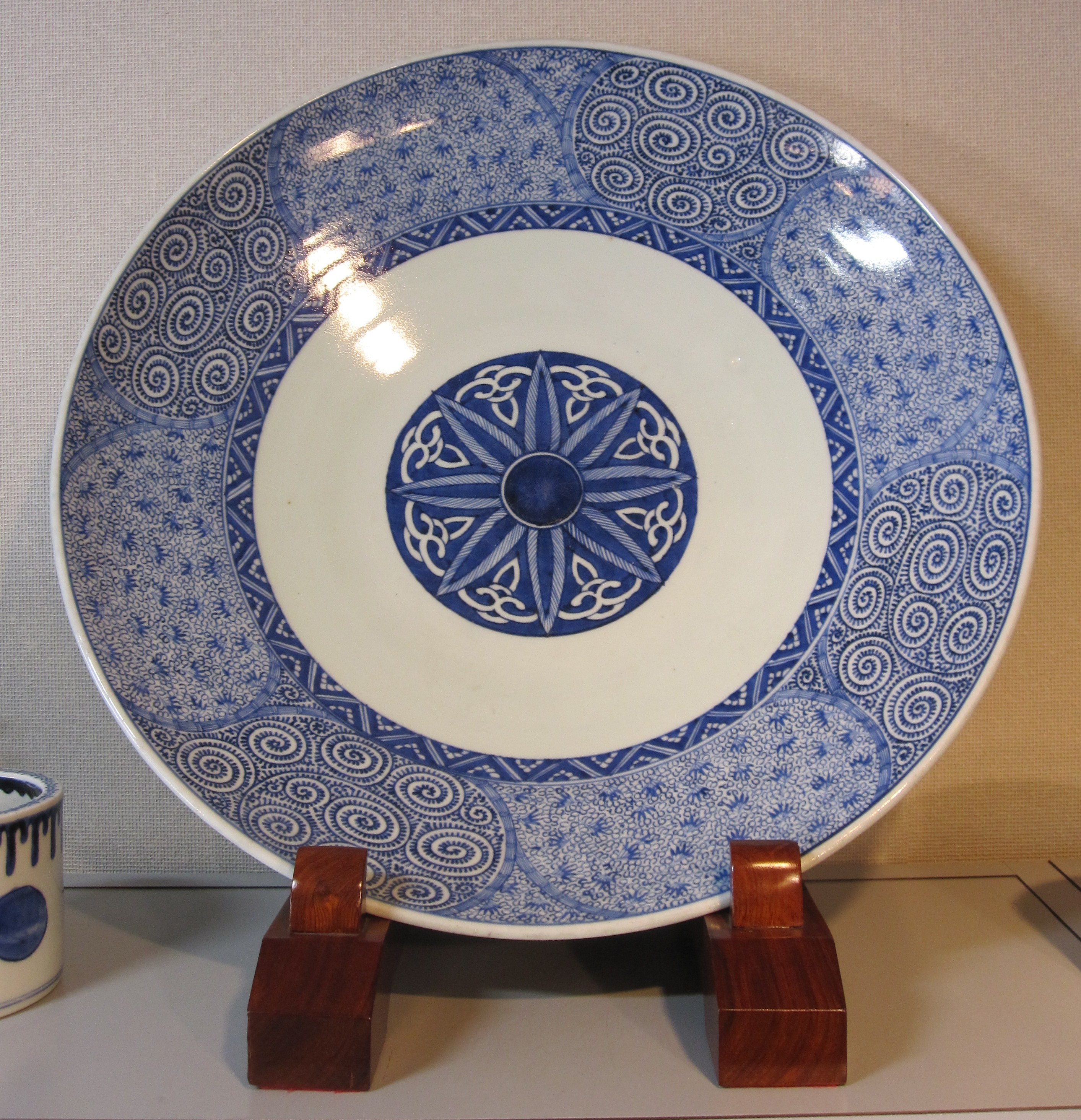
The easiest way to show karakusa patterns is on Japanese porcelain, but it can be found in almost all the decorative arts.

For a quick and easy dose of karakusa-style fabric, one of my favorite home bedding brands, Pine Cone Hill, has a full line of products in their “Scramble” pattern, from duvets to dust ruffles to table napkins, all in a wide variety of colors.

Annie Selke has also issued Scramble as a fabric by the yard available at Calico Corners in five colorways. Here she has used it to upholster chairs in a Cape Cod dining room.

Lisa Fine’s Maharab, shown here in the indigo colorway, and on some cushions that actually look like old-fashioned Japanese futon, is not actually Japanese inspired.

But while the individual motifs are Indian inspired, the overall pattern reminds me of a typical style of Japanese fabric in which multiple stencils are used to make an overlapping collage like pattern.  This fabric is a close-up from a mid-19th century futon cover, made with a rice paste resist method.

Asa no ha, or hemp pattern, is one of the most classic Japanese patterns there is. Ironically, for all that it is so ancient, it looks so modern. Here is it on an early 20th century yukata.

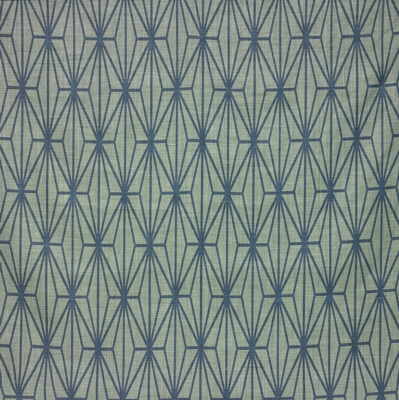
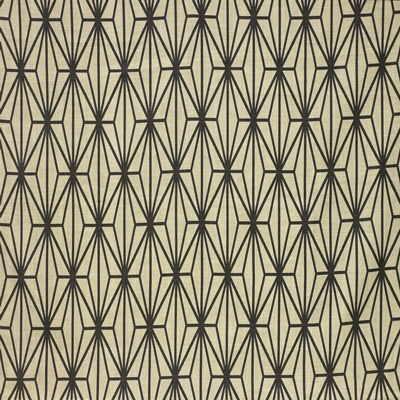
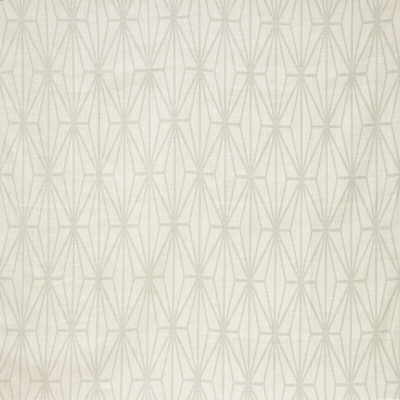
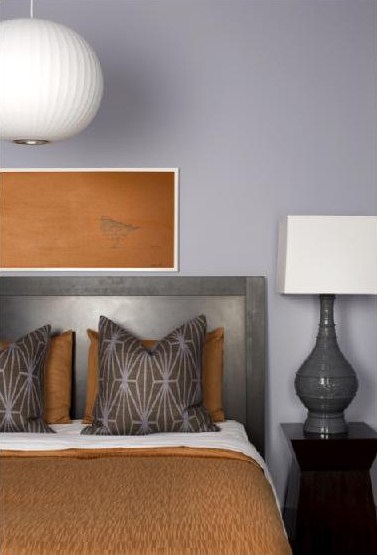
For a truly mod version of asa no ha, look no further that Kelly Wearstler’s fabric line for Groundworks in the Katana pattern, which takes the motif and stretches it to great dynamic effect.

Like some of the other fabrics in the post, the scale is surprisingly large.

Vanderhurd makes an amazing hand-embroidered linen in a hemp pattern called “Grande Etoile,” which comes in numerous colors, not all of which are pictured here, as well as a smaller version called “Petite Etoile.”  


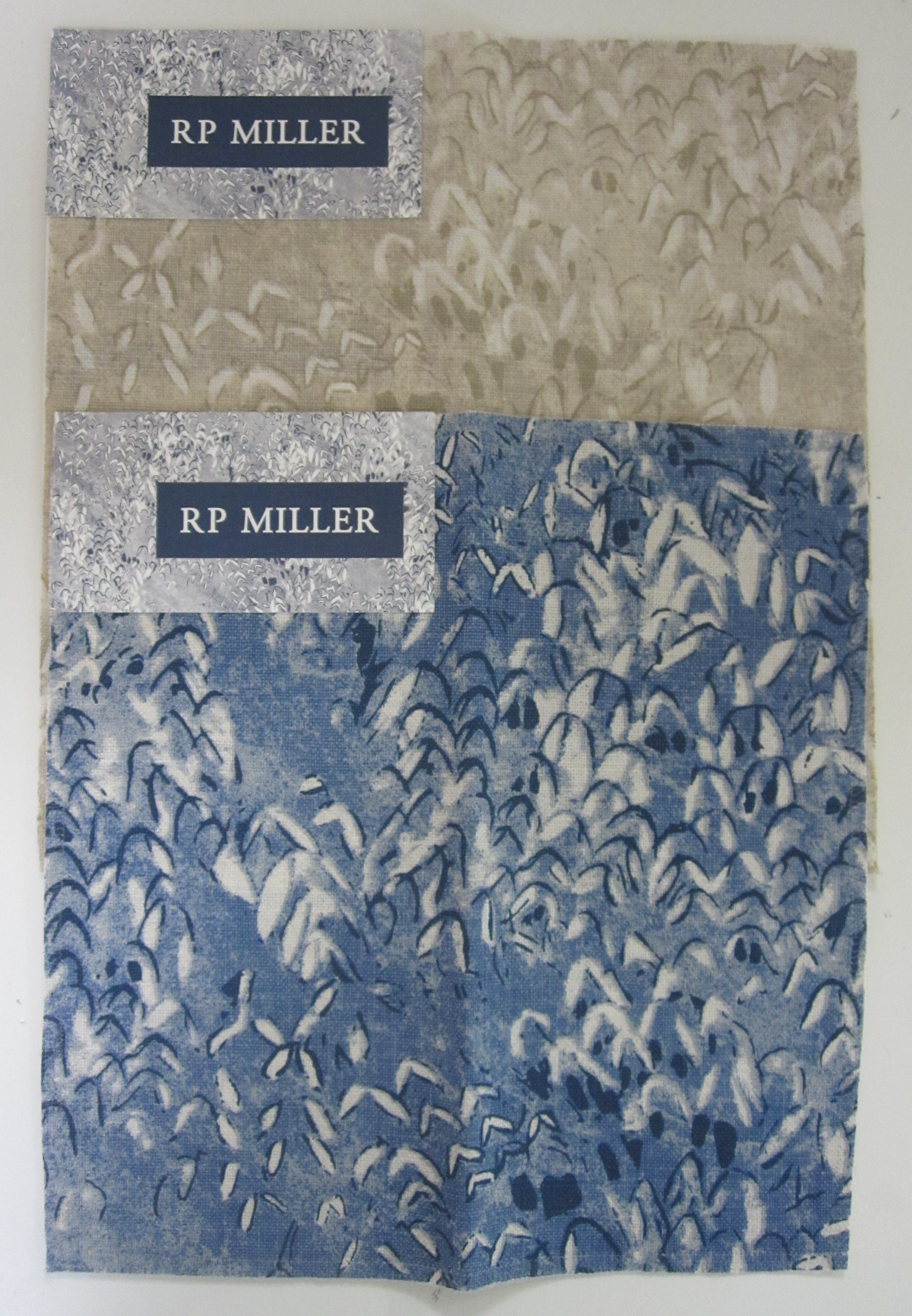
RP Miller’s new hemp pattern fabric has the unusual name of “1509 EB.” I imagine there must be a story behind that somewhere…

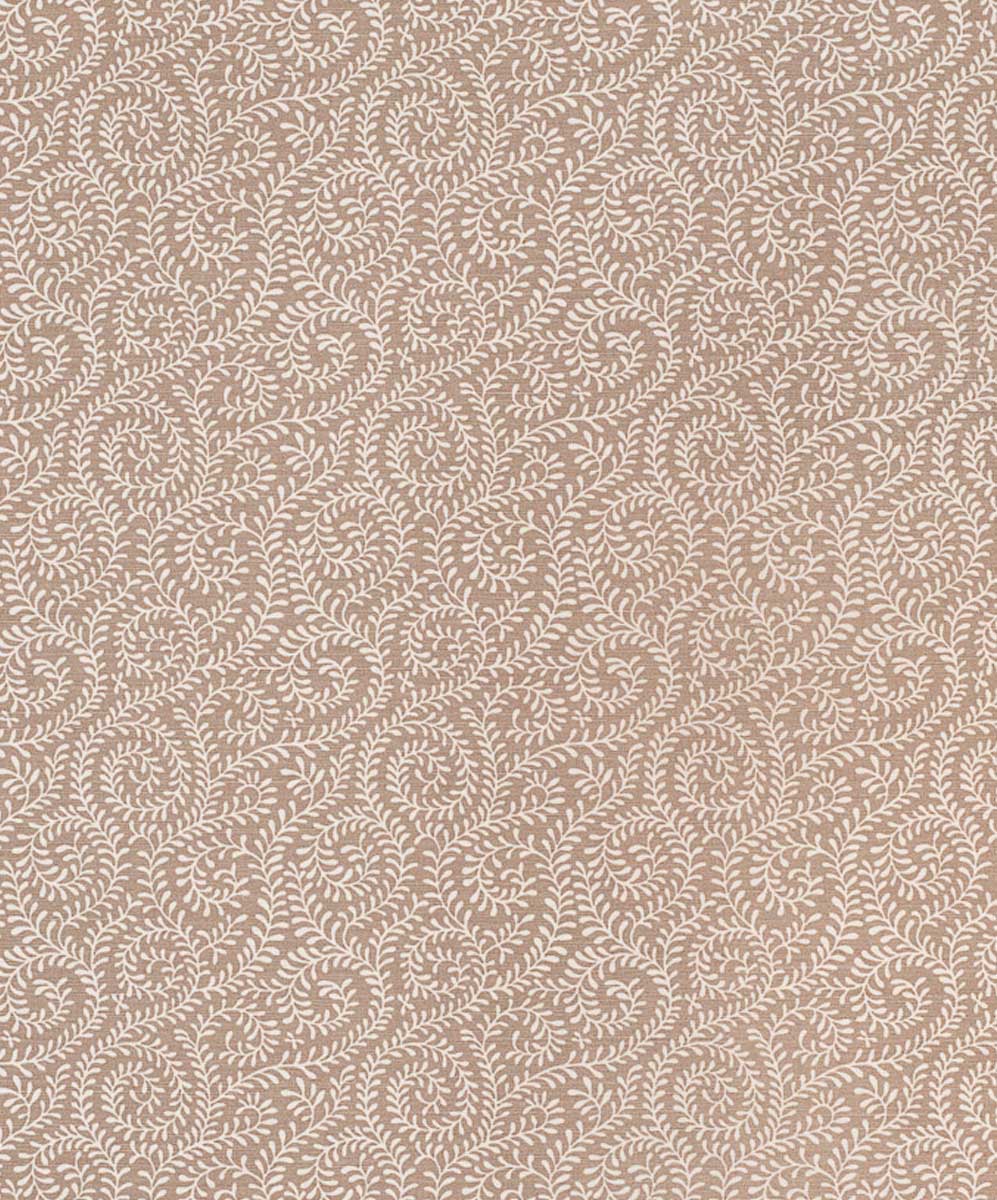
Thanks to the lovely Ariel at Hollywood at Home, I have gotten my hands on some samples from that new line, including a few I did not mention in the last post, such as the large chrysanthemum pattern Mrs. Burnside, the small star pattern Tanabata Night Sky and the delicate and leafy Weymouth place shown here in wheat ind indigo.

The wheat colors were a great surprise, very subtle and satisfying for those who like to work with neutrals.

Chiyo’s Pond, the pattern that looks like flowing water and petals reminds me of typical Okinawan bingata stenciled fabrics.

But my favorite is still the very unusual woodblock print inspired Le Witt Loom. In the wheat colorway if has a faux bois effect while in the indigo and white it is crisp and clean. I can’t think of anything else like it on the market.

For more photos and information on that pattern and the rest of RP Miller’s new line, see my previous post R. P. Miller…New Japanese Inspired Fabrics From Rodman Primack Debut at Hollywood at Home.

All of the photos of antique Japanese textiles came from what looks to be a fantatsic website called narablog, which features wonderful antique textiles, mainly Japanese, many for sale. I really recommend you take a look!  Another fabulous resource for antique Japanese textiles is Sri Threads.

Photo credits for the three Tom Scheerer photos are: 1. Simon Upton, 2. William Waldron, 3. Eric Bowman. Annie Selke dining room from House Beautiful February 2009, photo credit: John Kernick. Kelly Wearstler image via decorpad.

Read Full Post »


Throughout the time I have been away from Japan, I have been thinking a lot about my friends in Ocean Grove whose house burned on the same day as the earthquake hit here. In a town famous for the most ornate Victorians, with gull-wing roofs or turrets, their house, built in 1923, is a simple four-square Victorian with an arts and crafts style front porch, a pair of bay windows and a dormered attic floor. Like its owners, it is a warm and unpretentious house, always filled to the brim with guests, whether sitting on the porch or cramming around the dining room table. My friends have jumped quickly into the rebuilding process, starting to meet with architects, and I am sure they are not planning to build some kind of fancy faux Victorian, but instead an improved version of what they already had. As they start to plan the exterior, I thought it would be fun to help them along in envisioning what the inside might look like. To do so, I am going to be leaning on certain designers heavily, such as Tom Scheerer and Markham Roberts, whose wonderful relaxed beach and vacation houses fit the bill.

The colors of the interiors before revolved around a palette of blue, white and naturals like tan and brown - the colors of the beach, clouds and sky. I can’t see changing that as it fit the house and locale perfectly.  Starting at the arrival point, I am hoping for a similar front porch, with a beadboard ceiling and comfy chairs for happy hour, just as was there before.

One “flaw” of the previous house was the lack of an entryway as the front door opened directly into the living room. Perhaps the new design might make room for one, with space to hang hats and drop beach bags.

The living room had whitewashed paneled walls and I could see using beadboard or horizontal shipboard in rooms throughout the house. Most of the photos following have some, whether on the walls or ceiling. I also love the idea of some grasscloth to add texture. The original living room had a simple painted brick fireplace, a feature I would love to see kept. My friends also like having carpet in the living room, not as usual in a beach house, but actually practical and easy to keep clean.  A patterned one like this one would hide dirt and stains.

Sisal or seagrass would be a reasonable alternative to carpeting too.

Add comfortable upholstered furniture in straight forward shapes and simple bamboo blinds and plain or checked curtains at the windows.

A games table might be a nice feature to sneak in – great for extra diners too! And it is so easy to pick up inexpensive Victorian furniture with great lines along the Jersey shore.

The original dining room was my favorite room in the house with built-in china cabinets with glass doors, the backs of which were painted blue to highlight the contents. Simple Windsor style chairs circled an oval table.  This dining room with its Victorian chairs, white cabinet and painted table is quite similar.

Another view of the same dining room shows a simple Aesthetic Movement settee upholstered in a modern fabric.

Bentwood chairs could be another charming choice and a formica table is always practical, inexpensive and can be custom sized to fit any space.  But the key to this Tom Scheerer room is the scenic wallpaper, made from blowing up vintage images.

He does it again here, with a Nantucket feel and simple Windsor style chairs. My friends have a great Ocean Grove vintage postcard collection – I’d love to make a wallpaper out of one of the cards and use it in the dining room like Tom Scheerer does.

Kitchens are the budget busters of these kinds of projects. I am thinking straightforward white cabinets as it is easy to change the look down the road and a compact cooking area because we all do so much barbecuing.

I love the idea of color on the floor – here the wood is painted blue.

Perhaps the most practical solution in terms of care and cost would be a blue linoleum, much like the one used here. Black and white linoleum squares would be another classic choice.

I’m not sure there would be room for an eat-in table in the kitchen, but a built-in booth like this one…

…or this one, could be great.

One great feature of the old house was a small sun porch off the back. I’d love to see them keep a small space like this.  With so many guests, more bedrooms and more small spaces to get away to are always at a premium.

Bathrooms are super easy! Go with all white fittings and fixtures as they are clean, easy to care for, and always look fresh. Either beadboard with a bit of a country feel…

…or more 1920s. I am sure we could find some old photos like these at Shore Antique Center!

Perk up simple white hexagon tiles and a pedestal sink with broad painted stripes. Easy and inexpensive!

The master bedroom should be relaxed and comfortable, a haven of peace to escape from busy days and the demands of many guests. Beautiful fabrics on an upholstered bed set the mood here…

…and here…

…and here.

Vintage iron beds are also easy to find and have the right period feel. They are great for kids rooms as they are sturdy and easy to make. Love the little painted table here…

…and the painted chair here.

Attic bedrooms tucked under the eaves don’t even need much furniture, just a comfortable bed, some nice linens and a bit of color.

I’ll be curious to see if my vision in any way matches theirs…

Image credits: 1. via K. Woodruff, 2. design by Myra Hoefer in House Beautiful January 2009, 3, 5, 10, 11, 15 and 17. design by Tom Scheerer in House Beautiful August 2008 and April 2011, 4,8,9,16,21 and 23. design by Markham Roberts in House Beautiful August 2006 and October 2008, 6. design by Ashley Whittaker in House Beautiful February 2008, 7. design by Marshall Watson in House Beautiful September 2008, 12. designer unknown in Cottage Homes, 13, 18, 25 and 26. design by Gil Schafer in House Beautiful August 2007, 14 and 19. design by Alex Bates in Country Living June 2010, 20 and 27. design by Leslie Klotz in House Beautiful July 2008, 22. design by Tom Stringer in House Beautiful February 2008, 24. credit unknown.

Read Full Post »

There is nothing like the indecision of a rainy shrine sale day. Will the vendors be there? Is it worth going? This past Thursday was no exception. The eagerly awaited Kawagoe market falls on the 28th of each month and I skipped it last month as it was pouring out (and later heard that no one was there). We had planned to go this month, no matter what.  But as we readied ourselves to leave, it began to rain. Nonetheless, after stalling over yummy breakfast, we set out on the 1 hour drive.

Well, they say “good things come in small packages”.  I wish there was a similar adage for “great bargains come from rainy day shrine sales”. There were only about 20% of the vendors present, everything was covered in plastic tarps with only a few brave customers wandering around - mostly foreigners (the only ones foolish enough to be there). We jumped in and had the best day! Let me show you what I found…

First, this huge turquoise bottle originally used to hold alcohol of some kind. The dealer offered me his “rainy day special price” and I couldn’t resist.

I have long adored the interiors designed by Tom Scheerer, the king of the giant glass bottle. If you page through his portfolio or back issues of shelter magazines, there is not a single project that doesn’t include a gorgeous glass bottle in some way.

Often, the bottles have been converted into lamps.

I was so excited about my bottle, that I was unprepared for what I found next.  I had long admired these Japanese fishing floats in magazines, but never seen one for sale in Japan. I got the large aquamarine one to go with my giant bottle. It has its original net and is in great condition. I had thought they were asking a bit too much for it, but luckily the dealer who sold me the giant bottle came over and got involved.  He convinced them to give me a rainy day special price too!

Japanese glass fishing floats have been used by fishermen here for most of the last century. Floats continue to be in use today, but many have broken off from their nets and surf the Pacific Ocean, sometimes for decades. The floats follow the ocean currents and tend to wash up on shore in Alaska, the Pacific Northwest and islands throughout the region, especially after storms. There are devoted beachcombers who go out and hunt for these treasures, sometimes even flying to a remote area. Take a look at Glass Float Junkie’s blog for more history, information and great photos.

Modern day collectors love them for their decorative possibilities. Thom Filicia hangs three as an accent in a lake house.

Jeffrey Bilhuber has used two as pendants in his adorable Rose Cottage on Nantucket Island. They are like jewelry in the room!

Tom Scheerer has even managed to inspire one into a lamp.

The popular market place has picked up on the trend as well. Pottery Barn had a Japanese float lamp, which is no longer available, but can be found on eBay…

and currently has the giant bottles.

Japanese glass floats have inspired artists as well. Dale Chihuly, the world-renowned glass artist has a series called Niijima Floats.  Around 1990 he visited a glass school on the island and it reminded him of “the Japanese fishing floats, which [he] used to collect on the beach when [he] was a kid in Washington State on the Pacific Ocean.”  Chihuly’s floats can be giant – up to 40 inches in diameter – and brightly colored, but I found these sheer blue ones particularly beautiful.


I haven’t had a chance yet to clean mine up and look for markings. More details to follow, including where I plan on using my finds, but as many of you know, I am renovating a bathroom at my NJ beach house (hint, hint). Other bloggers have written about these floats and I recommend posts at Completely Coastal and Things that Inspire.

I am going to leave you with this most beautiful image. Maybelline Te of Frou La La took this photo of the loggia at a friend’s house in the Philippines just resplendent with hanging floats.

Wow!

Image credits: 1 & 4. me, 2, 3 & 7. Tom Scheerer, 2. photo credit: Pieter Estersohn, 3 & 7. photo credit: Simon Upton, 5. Thom Filicia,  6. Jeffrey Bihuber in Architectural Digest, September 2003, photo credit: Peter Vanderwarker, 8 & 9. Pottery Barn, 10. Dale Chihuly, 11. Maybelline Te

Read Full Post »

Follow

Get every new post delivered to your Inbox.

Join 405 other followers

%d bloggers like this: