Feeds:
Posts
Comments

Posts Tagged ‘silver’

As always, a bittersweet moment as we depart one home for another. This post is really for me, to remind myself that while I didn’t do anywhere near as much work on the house as I’d planned, I did get some things accomplished in addition to finishing the bathroom (almost). And as I head back to Tokyo, I know I’ll need little reminders of our beach house goodness for sustenance.

First up, the Sonoma bookcase all filled up (mostly). I have never been as happy with a mass retailer/catalog item as I have been with this one from Ballard Designs. And I am not the only one liking it as yet again I have spotted a pair of them in a high-end design, this time the Nate Berkus designed brownstone for Katie Lee. They really are versatile and great value for the money.

My girls scoured the attic for my gardening books and we added a few other vintage wooden delivery boxes gleaned here and there. And I still cannot believe the way the television fits – as if it was custom made for it.

The bottom section has been filled out since my post on hiding all the cords and the electronic components are basically unnoticeable. I need a few more good coffee table size books which I may have to steal from my shelves in Tokyo this winter.

The top is filled with pretties, gardening books and good reads.

Added some special Japanese details to the downstairs bath, including fishing floats…

…and a big collection of kashigata that look like coral patterns on the ledge above the built-ins.

Didn’t hang any of my lovely Japanese hanga (modern woodblock prints) above the sideboard, but the longer they stayed leaning there, the more I liked them just like that. And I had planned to have the big wire basket full of dried hydrangeas by now, but no matter what I did, I failed on that front. If anyone out there knows the trick to drying them, please let me in on the secret!
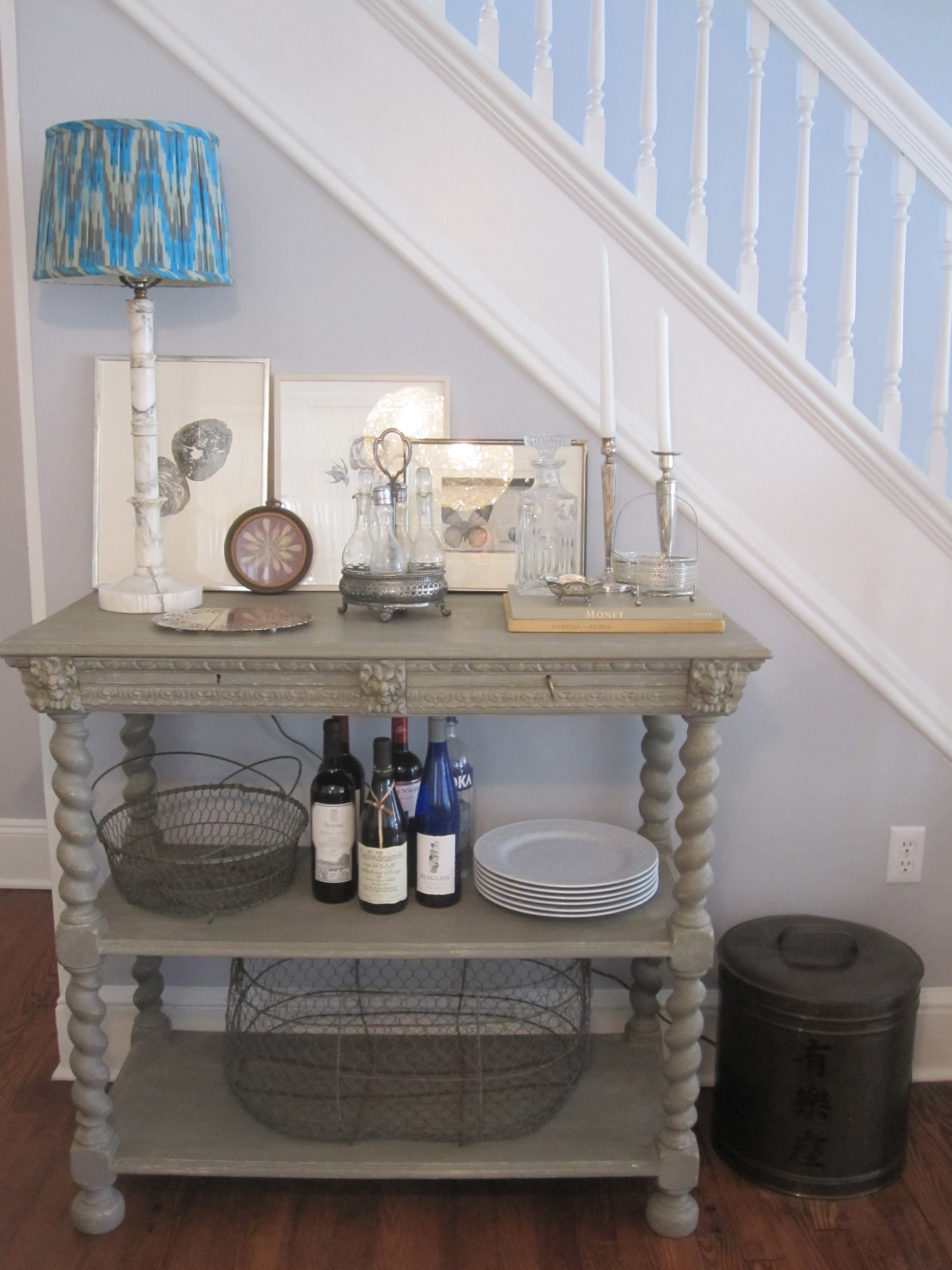
I tried early in the summer and filled it with blooms, but they just shriveled and rotted – no drying! So sad, because they were so pretty!

Close-up you can see my $2.50 William Yeoward-esque decanter – garage sales were very very good to me this summer.

You’ll notice you never heard anything about the kitchen. The truth is that with kids and constant house guests the DIYs are hard to get to.  But my palette of cream and white, with texture and mixed metals remains unchanged. Tried the water technique for drying hydrangeas too, but it didn’t work much better.

I always find the stained glass door in the dining room ironic, because I had already picked the color palette based in some part on my Aesthetic Movement transferware even before seeing it, and it could not have been more perfect. Most of the stained glass in houses around town is combinations of bright red, blue and yellow. Obviously this was my destiny house.

A few gifts and trips to the Ladies Auxiliary book sale filled out this little bookshelf at the top of the stairs. The larger artwork is a 19th century Japanese land contract that I bought for the equivalent of a dollar at the Tomioka Hachiman shrine sale and framed. Sharp eyes will recognize a few other Tokyo treasures.

Little girls grow up so fast…

…the bigger girls too. So luckily both of their rooms are close to complete.

The search for master bedroom night tables continues. I had seen some cute scalloped ones here and here, so I picked up this pair for $50, thinking I would paint them. But they are still too low and very blocky and square - the lamp on the stacked books looks cute for styling, but is actually like that for night time reading practicality. The only real decorating mistake of the summer.

More etched mirrors made their way to the wall…

…the Louis XVI-style oval from the bathroom has a great new spot, better suited than its old one, mimicking a favorite Charlotte Moss dresser and mirror combo. As for the lack of lampshades here and in other photos, still waiting on my custom ones after a year, but that is its own story. Just try to imagining one on this lamp made with green marbelized paper, meant to look like malachite…

…and the French chaise found its perfect fabric – a European style ikat from Lee Jofa called Lambelet Stripe, picked up here for a song.

Nothing big changed in the guest room, just a sweet little chair…

…and some sweet little welcoming details, like these vintage wooden shoe lasts and child’s slate.

And someone wrote to ask about the upstairs hall bath which I never mention, because it came to me pretty spot on. Just a coat or two of Farrow & Ball Chinese Blue and it was good to go! Maybe some artwork needed?

Well goodbye New Jersey summer! Hello Tokyo! I can hear the shrine sales beckoning…

About these ads

Read Full Post »

Expat circles here in Tokyo are all abuzz about a new jewelry artist named Lynn Cooper and her line of handmade silver charms, as are her growing base of Etsy customers too. Kanoa Pure Silver, romantically named after the Hawaiian word for wanderer, is the name of her new company and fast becoming the sayonara gift of choice!

Cooper makes all her charms by hand using gin nendo, a malleable silver clay, and her techniques include hand hammering and texturing, stamping and carving. Each and every piece is physically individual, even when using the same stamp, as the hand work creates slight variations. She burnishes them to have an aged glow, with oxidation left in the crevices, giving them a feeling of age.

Her goal is not only to make fine jewelry, but to create a talisman for each wearer. So in that sense each grouping is emotionally different – perhaps representing the shared experience of a gift giver, the memory of an adventure or a connection to a culture different from one’s own.

Before we launch into all her lovely work, I must show you her ship-shape (no pun intended!) colorful work space. She has all the tools of her trade at hands reach, displayed with other sentimental objects. And look how she has chosen to use her vintage enameled laundry hanger – part lamp shade, part display rack.

The kamon stamps are the same vintage ones spied at the Setagaya Boro-ichi. And talk about re-purposing! The black cubbies are actually the old telephone cubby holders from the American Embassy that she spray painted and lined with washi paper. Reminds me of another great display case I have written about before.

Cooper uses the kamon stamps to make her larger charms which can stand alone on a chain or cord.

Her other technique involves hand carving her own blocks, often including a kanji, in this case tomodachi – the word for friend – on a cherry blossom. She adds vintage beads sourced from shrine sales and other semi-precious stones too.

Nostalgic images, an onigiri (rice ball) and Mt. Fuji, are also popular.

I just love the little stone lantern and teapot on this grouping. Customers can mix and match their own charms and beads and she can even custom carve (when she isn’t crazy busy) a specific image. She’s not limited to Japanese icons either!

Here’s my own little cute grouping – those who know me well will not be at all surprised about the accent beading color!

And last night I got this charm – another one featuring the tomodachi kanji- from a friend to add to my collection. You can really see the woodblock-like carving on these kanji charms.

Lynn’s packaging for gifts is also just adorable, she has such an eye for colors – like the card above using two contrasting traditional Japanese patterns, or her standard gift box, shown below.

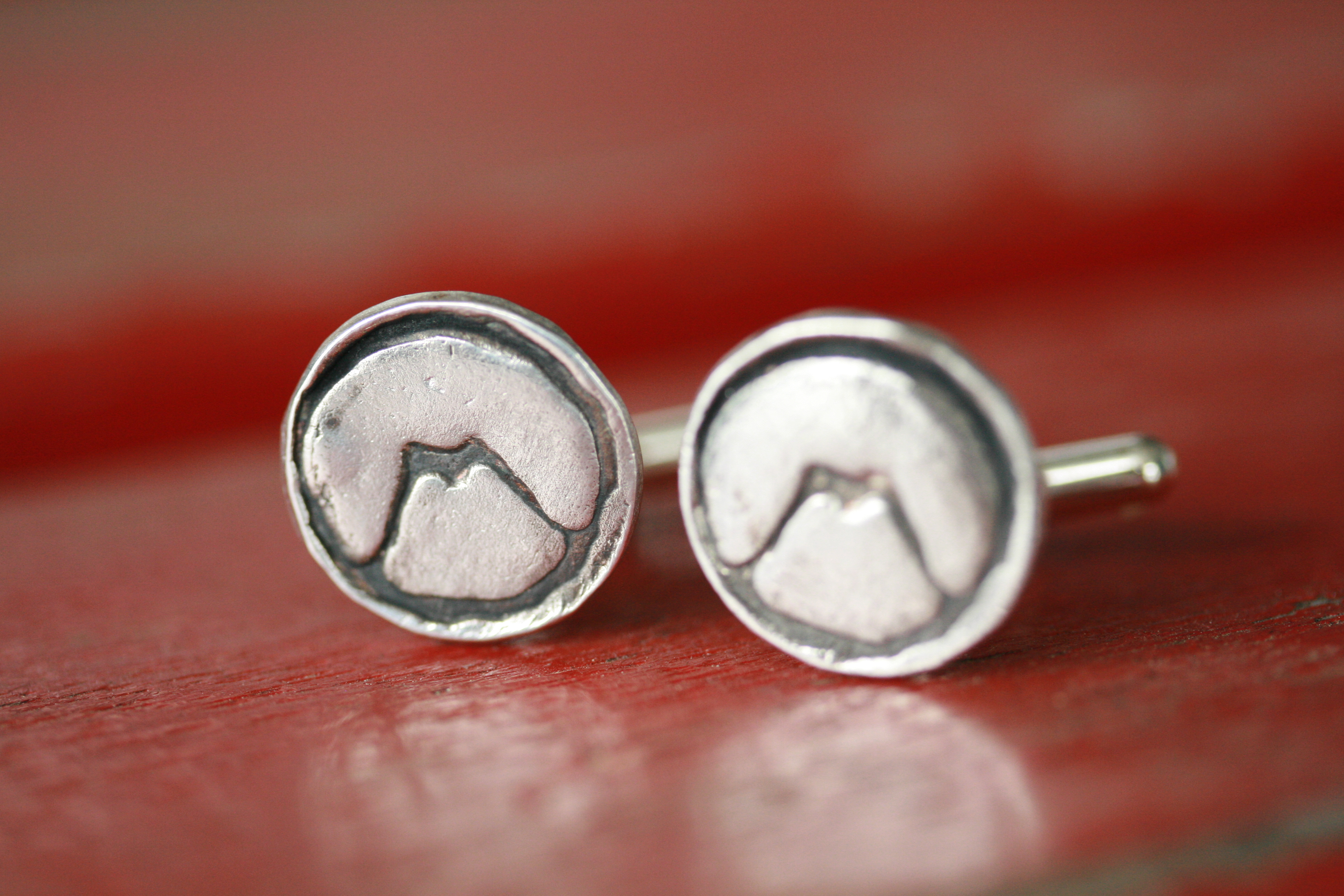
And if you think only ladies can get in the fun, think again! With Father’s Day coming up, she also has gifts for men, like these fun cufflinks. Inspired by everything from katagami to woodblock prints, they allow your menfolk to wear their hearts on their sleeves.

You can contact Lynn directly on Luckycheri@gmail.com or visit her Etsy shop. You can also follow her on Facebook too. Thanks to Lynn Cooper for all her spectacular photos!

Read Full Post »

As I type that title, I feel as if I have written something heretical. You see, my original specialty is antique silver and the hours, multiplied by years, over which I have polished, and polished again, my inventory or my own collection, seem to add up to an eternity. Considering my expertise, its amazing that I don’t write about it more, and perhaps that is something that needs to change. Photographing silver has its own difficulties, so that may be what has put me off. But while there is nothing like the gleam of well polished antique silver – it has a buttery texture all its own – the idea of allowing non-valuable pieces to tarnish and patinate has been taking hold in both my mind and the collective design unconscious for quite some time now. And remember, as tarnish is destructive in the long-term, I think it is important to differentiate between important pieces and those that have little intrinsic value beyond their decorative appeal, like those in the photos below.

Tarnished silver seems to work best with a decor style I’ll call “simple rustic warmth”, illustrated perfectly in these 2 photos by Blayne Beecham. Instead of the more typical china plates, old trays have been stacked as a wall display.

Other details include wood, the more rough and natural the better, furniture with spare lines and luminescent light. Thanks to Donna at A Perfect Gray, where I first saw these posted.

The same idea is at play in this promotional style photo for the new Tresham line of vintage/rustic style vanity and toilet from Kohler.

White paint over wood and other vintage accessories add to the look. Love that repurposed window as cupboard door!

Again, the interplay between beautiful light, white and wood colored accessories in the baskets and birdcages.

This staged display is even more literal with the trays hung on an old wood fence.

These pieces might actually be pewter, but the dark moodiness sings in this photo, so I couldn’t help but include it.

Here Debbie Dusenberry mixes silver platters with other aged items…

…and again here, from Brooke Giannetti, with vintage pocket watches and leather books that stand in for wood.

Heather Bullard takes such gorgeous photos! This one elevates everyday kitchen utensils to an amazing vignette by sorting and storing them in vintage silver trophy cups.

It works equally well in the bathroom too!

Related Posts
Birds and Bamboo…Japonesque Sterling Silver Patterns of the 1870s

Image Credits: 1-2 & 9. via A Perfect Gray, photo credit: Blayne Beecham, 3. Lonny September/October 2011, 3a-3b. via Skonahem, 4. via Jennifer Rizzo, 5. via Martha Stewart Living, 6. Debbie Dusenberry in Better Homes and Gardens, December 2009, 7. via Velvet & Linen, 8. via Heather Bullard.

Read Full Post »

My neighbor E. knocked on my door early this morning and offered me a little antiquer’s crack cocaine…a low entry number to an estate sale at a big house a few blocks away. Rumour had it that it was chock-full of furniture, books, memorabilia and a few generations of general accumulation. With four floors to cover, I was hoping for some great scores. While US flea markets are akin to shrine sales, I don’t think the estate sale has a comparable entity in Japan. And speaking of items made for the export market the other day, I was hopeful there might be some lurking in the 100+ years of stuff.

Unfortunately there was no luck on the Asian goods. As you might expect, the house was full of heavy Victorian furniture, like this massive Renaissance Revival bookcase and velvet covered chair.

Less expected perhaps, although less so on reflection, was this. Need a buffalo head anyone?

Most of the more valuable items were traditional antiques. There were a few tables covered in Wedgwood Jasperware, including this rare domed cheese dish. There were many other tables full of crystal and china.

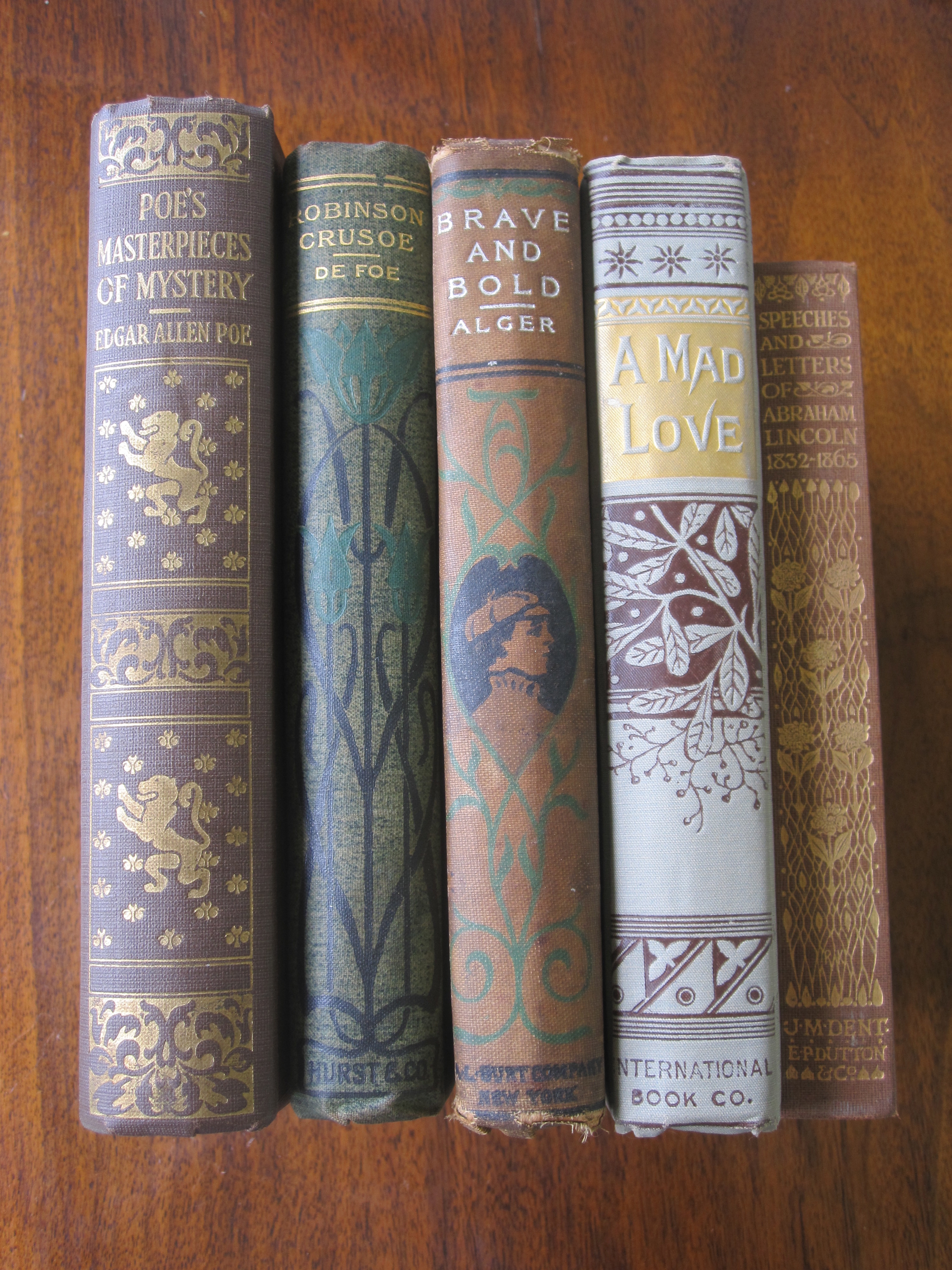
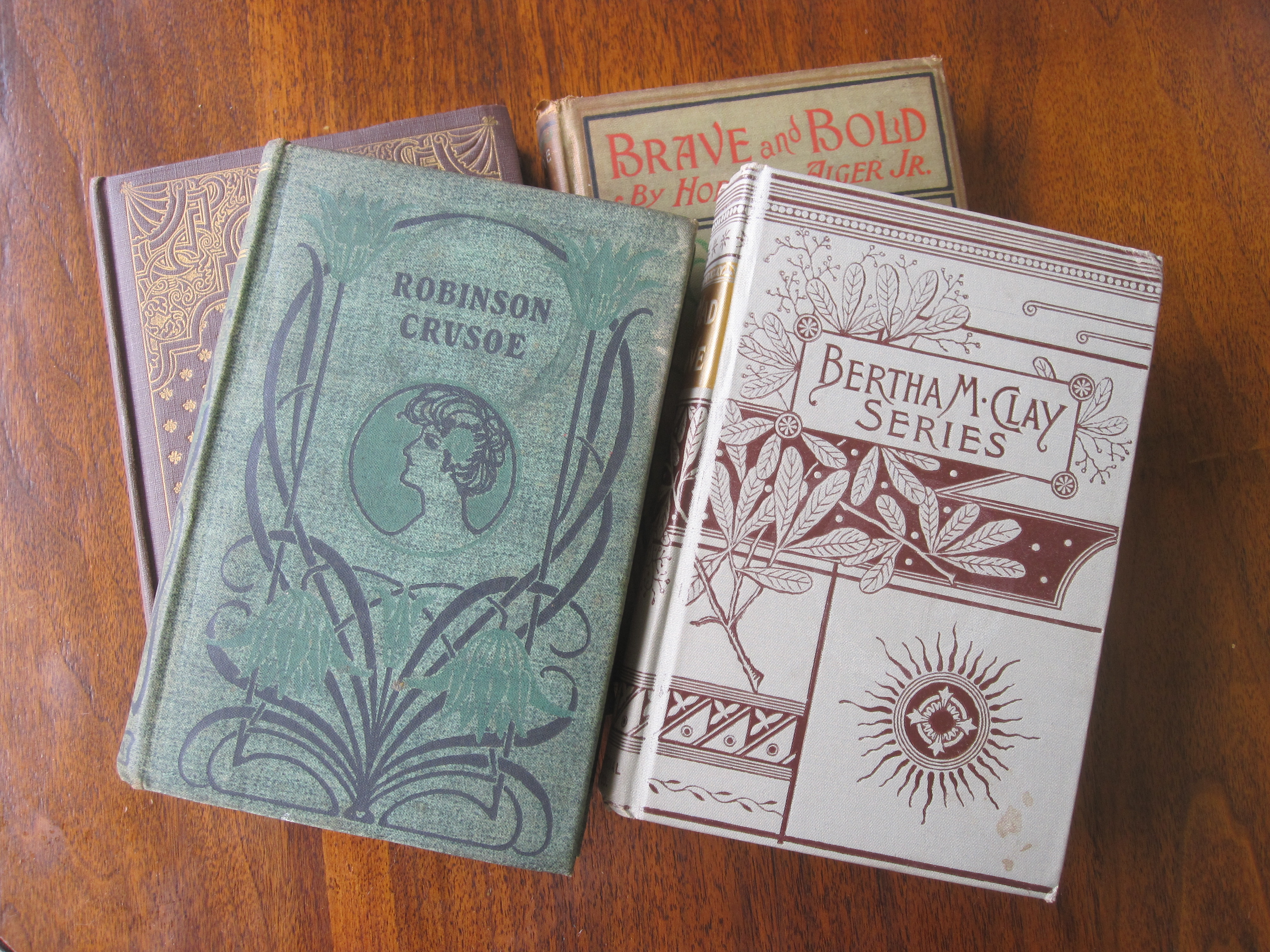
All of those giant bookcases were full of books. Even though I have taught my daughters not to judge a book by its cover, I am definitely weighing books for their physical appearance these days. I want my bookshelf here in Ocean Grove, which I have yet to find by the way, to be visually beautiful. That being said, I don’t want a bunch of fake things picked just for their appearance so I do try to pick up classics and others things that sound like they might be interesting to page through. I am sure my husband will be excited by Speeches and Letters of Abraham Lincoln.

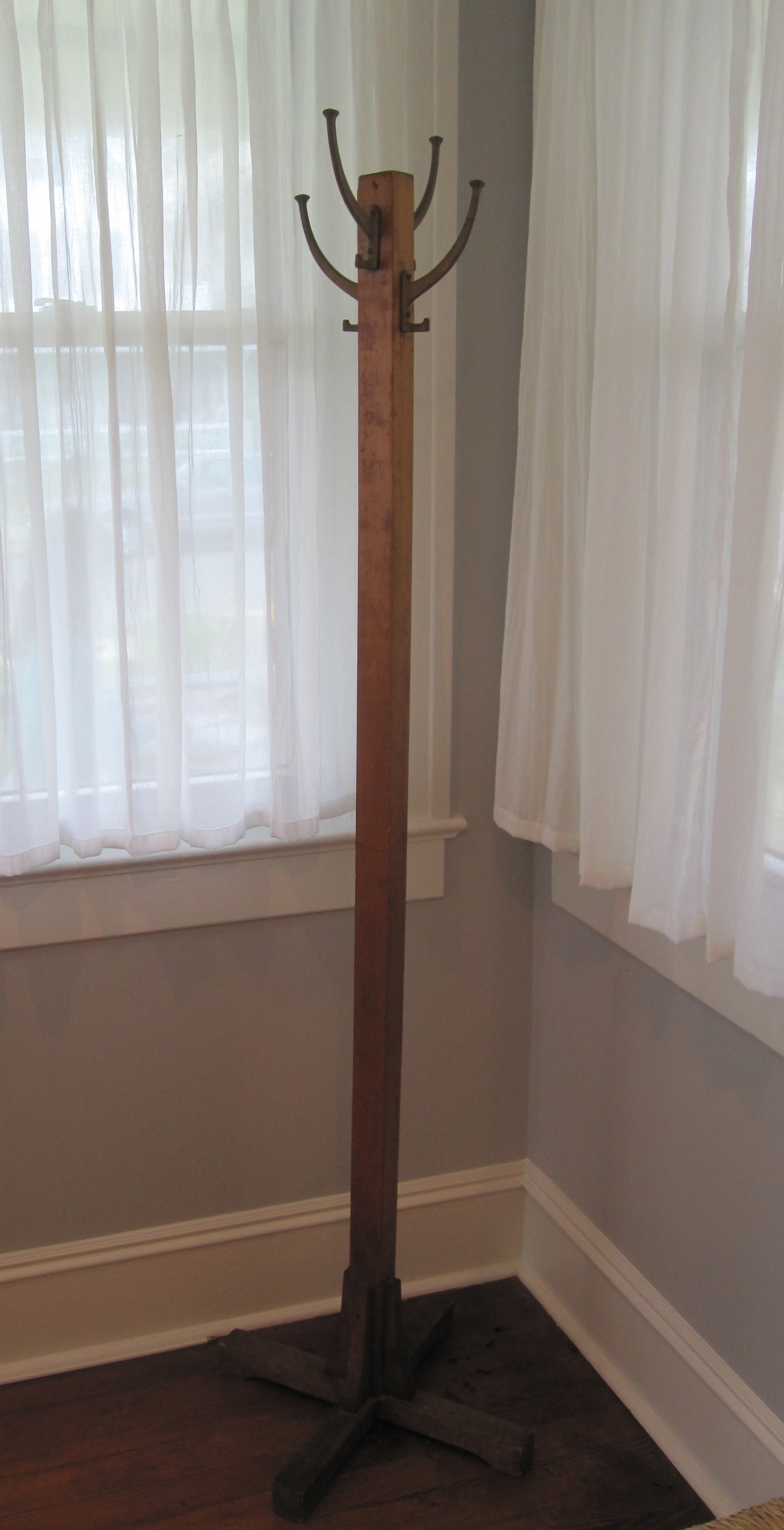
My house has no coat closet in the front so I have been keeping an eye open for a coat/hat rack. I had been thinking about a Thonet bentwood style, but stumbled across this simple Mission oak one at the sale. I think it will do to hold an occasional sweater and sun hats, if only it would warm up and stop raining, that is.


I also picked up a little silver plate and glass condiment basket to add to my bits and bobs of antique silver. There is nothing like the patina of old silver.

And no groaning, those of you who are bored with this topic, but for those who aren’t, I got this mid size glass fishing float for ten bucks. You know how sad I was to leave my big ones behind in Tokyo, but I think I can ft this one into my tiny bathroom. To give a sense of its relative size, I have put a few of my tiny ones into the photo. Still searching for the perfect basket or container for those, so styled photos yet to come!


Rumour has it everything will be half price tomorrow. Let me know if you want me to run back and get the buffalo head!

Read Full Post »

1878 Gorham Advertisement in the Jeweler's Circle of "Decorated Spoonware" in the Japanese Style

Tiffany has emerged triumphant as the most important American silver company today, but in the late 19th century they held equal court with other silversmiths such as Gorham, Whiting, and Wendt. By the late 1860s, all were creating numerous silver patterns and holloware pieces to follow the changing fads in American decorative arts — what is amazing is how quickly they adapted to each and every new trend. One of the most influential to sweep the nation was Japanese style and the silver makers were quick to follow.

I recently had the pleasure of re-examining a collection of John Wendt’s 1872 ”Bird” pattern that I worked to assemble a number of years ago. This Japonesque pattern has a bamboo stem running up a simply shaped handle, with a swooping or plunging bird amidst assorted flora. If you look at the handles in the photos below, you can see that the bird varies from piece to piece.  This was a very popular device in the Victorian era, called a “multi-motif” pattern. All teaspoons would be the same, but they would differ from the forks, from the knives, from the serving pieces, etc.

Ah, those serving pieces! The Victorians were not content with the “Five Piece Hostess Set” that comes with modern silverware. They had servers and individual place pieces for every food imaginable! There were three sizes of soup spoons – bouillon, cream and gumbo. Oyster forks, asparagus tongs, nut picks, cheese scoops, macaroni servers and Saratoga chip servers were all required. New technology in food storage and preparation made exotic foods available to the wealthy and having the right silver to serve it with demonstrated status to guests. Ice cream, which requires cold storage, was a newly available luxury and had its own special forks and spoons and elaborate servers, like this ice cream slice below.

In addition to the pattern on the handle, fancy servers would often have details etched or engraved on the blade. It is well worth clicking the photo above, and the pie server below, to see the wonderful Japoneseque engraving.

Sometimes, customers made bad choices as they could customize their purchases. The berry spoon below ia a bit of a hodge-podge as it was ordered with an Egyptian revival shaped bowl (the Victorians were not just influenced by Japanese design, they were interested in anywhere exotic and new to them) but with traditional rococo engraving.  Definitely not as seamlessly beautiful as the two pieces above.

One charming aspect of collecting antique silver is the monograms and commemorations engraved in spaces on either the front or back, depending on the style of the pattern.  Wendt’s “Bird” has space on the back, as this youth knife monogrammed “Frank” shows.

This large ladle was a silver anniversary present, engraved with the date February 2, 1853-1878.

Most likely “Bird” was not designed by John Wendt, as he sold his share of the company to his partner Bernard Beiderhase by 1871. But looking at Tiffany’s “Japanese” pattern sugar sifter below, do you think Mr. Beiderhase was creative in his design? Tiffany did not, and sued for design patent infringement.

To add to the confusion, Whiting entered the fray with their 1874 “Japanese” pattern.

All three patterns were multi-motif and all had realistically depicted birds, flowers and grasses. Tiffany’s pattern had reeds or grasses growing up the handle, as opposed to bamboo. And what about Gorham, you may ask? They too had a multi-motif pattern called “Japanese”, but took a very different design approach, although the birds and bamboo are still there on some of the pieces.

Seeing these extremely similar patterns together gives a real sense of how popular the Japanese aesthetic was. But like all trends, it fell out of favor and went relatively unnoticed for decades. Prices on today’s antique silver market once again show how highly Japonesque design is valued.

If you are interested in silver I highly recommend Charles Venable’s absolutely gorgeous book Silver in America: 1840-1940 A Century of Splendor. There is a fantastic “Bird” macaroni server on page 138. And for more on these patterns, see D. Albert Soeffing’s “The Battle of the Bird: An Investigation of the Bird /Japanese Patterns of the 1870s” in Silver Magazine Nov/Dec 1995.

Interested in the Japanese influence on Western decorative arts? See an earlier post Japan-a-mania…Cracked Ice and Crazy Quilts. The knife handle on Wendt “Bird” has a cracked ice pattern at the juncture point which can be seen on both the youth knife and the ice cream slice.

Many thanks to the silver collector who allowed me to photograph the collection.

Image credits: 1. reproduced in Silver Magazine May/June 1990, 2-8. me, 9-12 Romance With Silver, all items currently available for sale,

Read Full Post »

In a post on John Saladino last week I talked about mon or kamon, the heraldic crests of Japan.  As they are so prevalent in Japanese design, I thought it would be interesting to showcase some of the variety found. In general, they are stylized symmetrical patterns or small pictures placed inside a roundel.  They have a long history in Japan, used first by the aristocratic classes and later by the public at large. You can read more about them here

The 16 petal chrysanthemum is the kamon of the Emperor of Japan and its use by others was prohibited by law. Chrysanthemums with fewer petals could be used though. 

You still see many examples of this Imperial crest.  Here it is atop a torii gate.

One of the original uses of kamon related to war. They were placed on standards to identify troops in a  battle.  Here is a modern-day version – a Japanese battleship adorned with an imperial kamon. 


You can find kamon everywhere in Japanese antiques and decorative arts. 

The antique indigo cloth above has a traditional wisteria design with a kanji in the center. It is set against a background of sashiko embroidered traditional patterns. 


You can see a few historic kamon on this resist-dyed textile including the kamon of Tokugawa, the shogun who unified Japan. It has three wild ginger leaves set in the circle. 

Another common kamon is the butterfly – it is a good non-symmetrical figural example. 

In this brightly colored vintage kimono you can see many of the same kamon as on the indigo cloth above, including the Tokugawa (wild ginger leaves) kamon and the pine. 


This small silver toothpick holder has two kamon – an ume (plum) blossom and a tachibana (wild orange). 


While some items are decorated with actual kamon, others are often covered with simple patterns and scenes within the roundels, which are simply called mon. Notice here how the mon are actually etched realistic looking flowers in the rounds and not stylized representations like the kamon above. The design and form make me think that perhaps this Meiji period silver jewelry box was made for export. I was very tempted to buy it (inside it has three gorgeous dark lacquer drawers) but it was out of the price range for a casual impulse buy. 

Particularly in porcelain, you see many simplified and stylized (and plain old “made-up”) patterns. 


Here again we see fanciful designs in the circles, scattered all over this Imari pot. This kind of patterning is a favorite of mine – I think you can see why I called it “the polka dots of Japan”. I have a memory of two massive urns with a similar mon pattern placed near the entry to the Ralph Lauren store in the Rhinelander Mansion. I wonder if they are still there? 

Mon and kamon are seen not only in decorative arts, but in product branding and logos. Two of my favorites below: 


The retired logo of Japan Airlines is a crane kamon. What a graceful and beautiful logo and a shame that they changed it to this


And now for the cutest part of the post! Shu Uemura launched their wonderful cleansing oil in an adorable modern Harajuku version of kamon. Sadly, they are no longer available but I bet that the bottles and containers are probably wildly collectible on eBay.  Take a moment and compare these girls to the mon pattern on the silver jewelry box….

Image Credits:1-3 tamamushi; 4,6,9-13 me; 5,7 & 8 Japanese Free Clip Art; 14. Japan Probe; 15. Shu Uemura

Read Full Post »

Follow

Get every new post delivered to your Inbox.

Join 405 other followers

%d bloggers like this: