Feeds:
Posts
Comments

Posts Tagged ‘imari’

Seto jubako

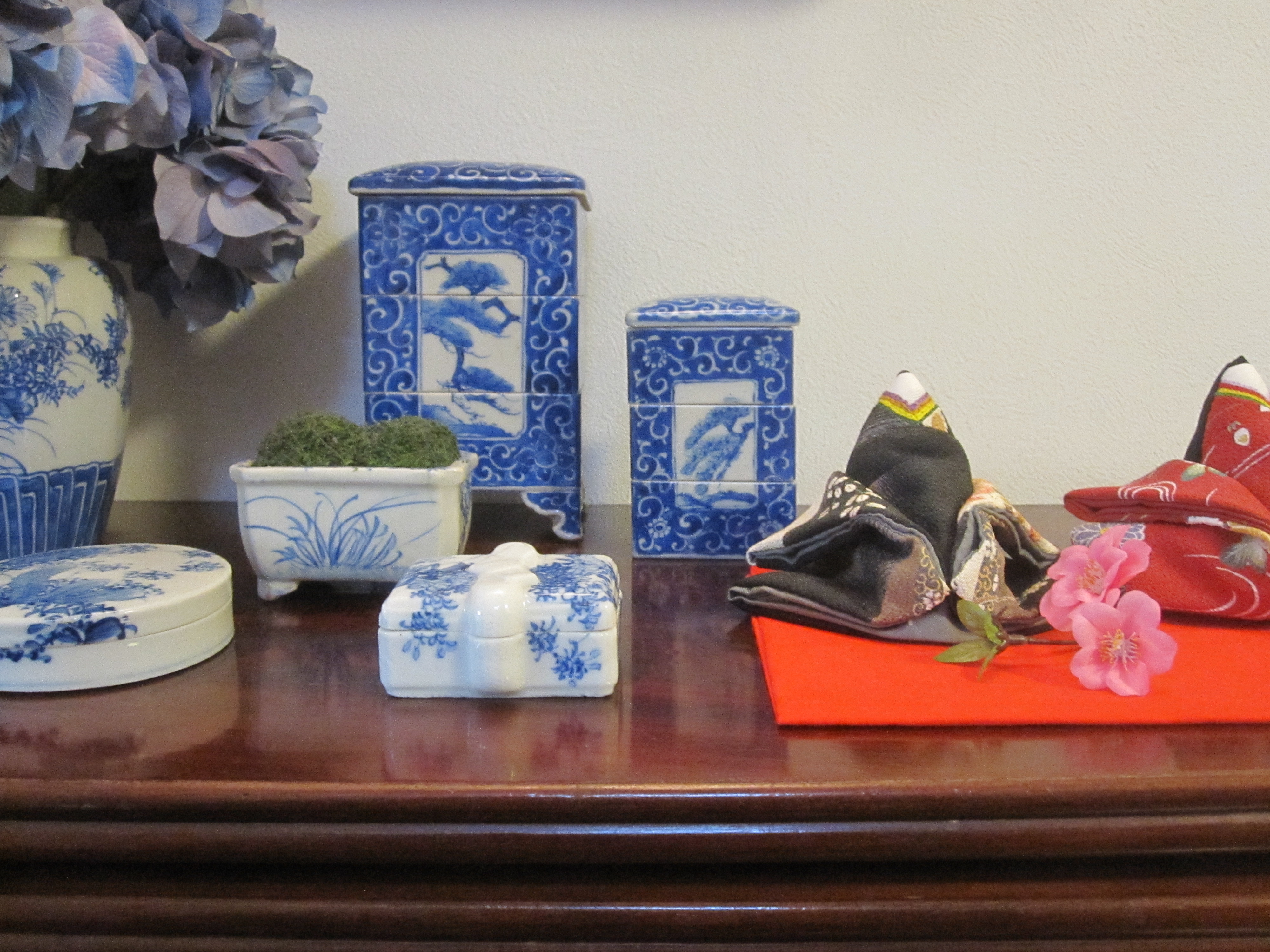
An absolute favorite of mine, porcelain jubako, stacked tiered food boxes, are harder to come across than more standard porcelain shapes such as plates and bowls. That being true, it hasn’t kept me from accumulating quite a few and helping others do the same. I always refer to them as jubako, but it may be that the porcelain ones should be called danju, while the lacquer ones are officially jubako. Shrine sale dealers call them jubako, so for now I will use the terms interchangeably. Personally I’ve never put food in mine. Instead I like to use them for trinkets on night stands, spices in the kitchen and anywhere you need to stash some small valuables.

In my entryway they hold extra keys to the house and car, buttons and hooks that have fallen off jackets and other odds and ends. Mine are unusual in that they are square, much less common than round ones, and the larger one has lovely scrolled feet. The bright cobalt and densely pigmented karakusa (scrolling arabesque pattern) are typical of Seto porcelain, and although purchased at very different times, seem to have been painted by the same artist.  I have enough Seto ware these days that I can see the hand of distinct artists on certain pieces. As for the cloth dolls on the right, they have their own extraordinary tale to tell and will be featured in an upcoming post for Hinamatsuri or Girls Day.

Seto jubako

Over the years I have helped to put together numerous collections.  It seems once bitten by the jubako bug that one is never enough. They look wonderful grouped together or mixed in with other porcelain. It’s always important to vary shapes and heights as well as the density of pigment and painted motif. This collection of five hand painted Imari jubako has a lovely balance of stylized and naturalistic motifs.

Imari jubako

This collection is used in the bathroom to hold cotton balls, Q-tips, make-up, make-up brushes and jewelry. Again note the variety of height, shape and painting style. The three outer cases are inban, Japanese transferware, while the two center ones are painted in a naturalistic style.

jubako

This trio represents three very different styles and eras and you can see those differences reflected clearly in the various shades of blue pigment.

jubako2

Here jubako are mixed with two geisha pillows, the porcelain neck rests used for preserving elaborate coiffures when lying down. I think there will have to be a post on those in the near future too.

jubako and geisha pillow

Blue and white jubako aren’t the only porcelain types out there.  I have a weakness for the prettily painted Kutani ones. This style of Kutani ware isn’t the densely pigmented and almost brocaded paint commonly associated with the best pieces from that region. (It occurs to me that I have never properly written about Kutani porcelain, so that will be added to my check list for spring.) Instead, they have a soft painterly naturalistic style.  The little sake cup warmer in the center makes a great votive candle holder.

kutani jubako

For all the thousands of ginger jars we see each month in the design press, I have almost never seen jubako featured, other than this one in John Anderson’s New York home.

jubako John Anderson

But recently I spied a lacquer one in this Vincente Wolf designed apartment on the January cover of AD – you can just see it on the table in the center of the room. While I am drawn to the porcelain jubako, the most common material they are made of is lacquer and examples of antique and new ones can be found everywhere.

architectural-digest-january-2013

They are used for traditional osechi ryori (New Year’s food) which is served room temperature in the layered lacquered boxes. For more details on the food in this photo check out Savory Japan.

osechi2012.21

The contents and the containers are things of beauty both!

About these ads

Read Full Post »

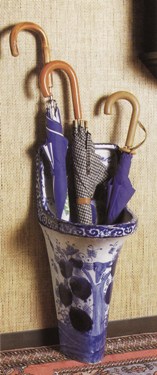
So, if a picture paints a thousand words, what does this one paint for you? Do you see antique blue and white porcelain umbrella stands and plant holders? Or do you see three squatty potties and two urinals? If you chose the latter, then you have chosen correctly. Antique blue and white toilets called benki were popular in the late Meiji and Showa periods, often installed in fine ryokan (inns) or wealthier people’s homes. Fairly rare as singletons, to see an entire collection of five all together is almost unheard of, but this dealer at Kawagoe shrine sale last month bucked the odds. I assume he salvaged them all at one place, perhaps as an old building was being torn down.

Most of these painted pieces are in the Seto style, my favorite, although some seem to be Imari as well. And they were definitely produced on some kind of large organized scale as I have noticed there are only a few basic shapes and patterns that are repeated in all the ones I have seen.  The toilets tend to be rectangular, with a squared off front or oval, with a rounded front. The rims always have a tiny detailed painted pattern, quite often traditional karakusa (scrolling arabesque), while the under hood area has a large bunch of flowers.

The urinals fall into one of two categories, either the more tubular umbrella stand shape on the right or the more cornucopia shaped one laying on the ground on the left. Older examples, both of the toilet and the urinals, like the one I saw before here, are hand painted, while the later versions are often more heavily transfer printed.

Somushi Tea House in Kyoto looks as if it has been around for ever, but actually was renovated to look old. To give it that Meiji feel they installed vintage bathroom fixtures. If you were at all confused about how this functioned as a toilet, here’s your answer. And note how similar this one is to two of the toilets above.

On the left is the urinal at Somushi which is more of a cornucopia shape and looks like an earlier hand painted Seto piece. The photo on the right is not as finely painted and looks to be Imari, but it is quite similar to the one laying on the left in the Kawagoe photo above. Umbrella stands seem to be the standard use du jour of retired urinals. The toilets make good planters and I have even seen one turned vertically and used as a garden fountain.

Now for those of you who don’t know, there is complicated toilet etiquette in Japan. In addition to taking off your shoes upon entering any home and putting on slippers, there are special separate toilet slippers kept inside the bathroom. Normally these are ordinary slippers, but I have actually seen painted porcelain ones on a few occasions, out in the markets that is, not in someone’s home. Were these really worn? Or are they just ornamental? I’m not sure, but I didn’t buy this pair last May because their condition wasn’t great. I think they’d make a witty addition to a vignette.

I have seen a few other pairs in my travels and they have always been similar to these, with that distinct feathery Seto style painting.

Without any formal knowledge on the subject, my instincts tell me that the idea for the painted fixtures comes straight from the West. It was not unusual to have painted and transfer printed toilets in the 19th century, like these Victorian versions from Great Britain. There was a tremendous amount of cross-fertilization in the porcelain industry going on in the late 19th century, with ideas, motifs and techniques (such as transfer printing) winging their way back and forth.

And the title of this post? It roughly translates as “feels good toilet,” but maybe “looks good toilet” would be even better. And I know my Japanese grammar isn’t actually correct, but I couldn’t resist the rhyme…

Related Posts:
Made for Export and in My Basement…Seto Porcelain Garden Stool
Shop Talk…Discovering Antique Treasures in Nishi-Ogikubo

Read Full Post »

Today was slim on the ground for shrine sales being the second Sunday of the month, but Tomioka Hachiman did not disappoint. It was a day full of friends from out-of-town and extraordinary porcelain, including a few cute and very atypical Japanese pieces bought for the beach house. The small green iris pickle dish will be perfect on the dresser or night table in the beach house guest room for holding jewelry and other trinkets.

It reminded me of the Korin Ogata screens and the garden at the Nezu Museum.

The small Imari-meets-lustreware dish has all the pretty colors in the downstairs rooms of the beach house. Don’t know how I’ll be using it – perhaps as part of a wall display, perhaps on a stack of books on the coffee table to hold olive and cherry pits.

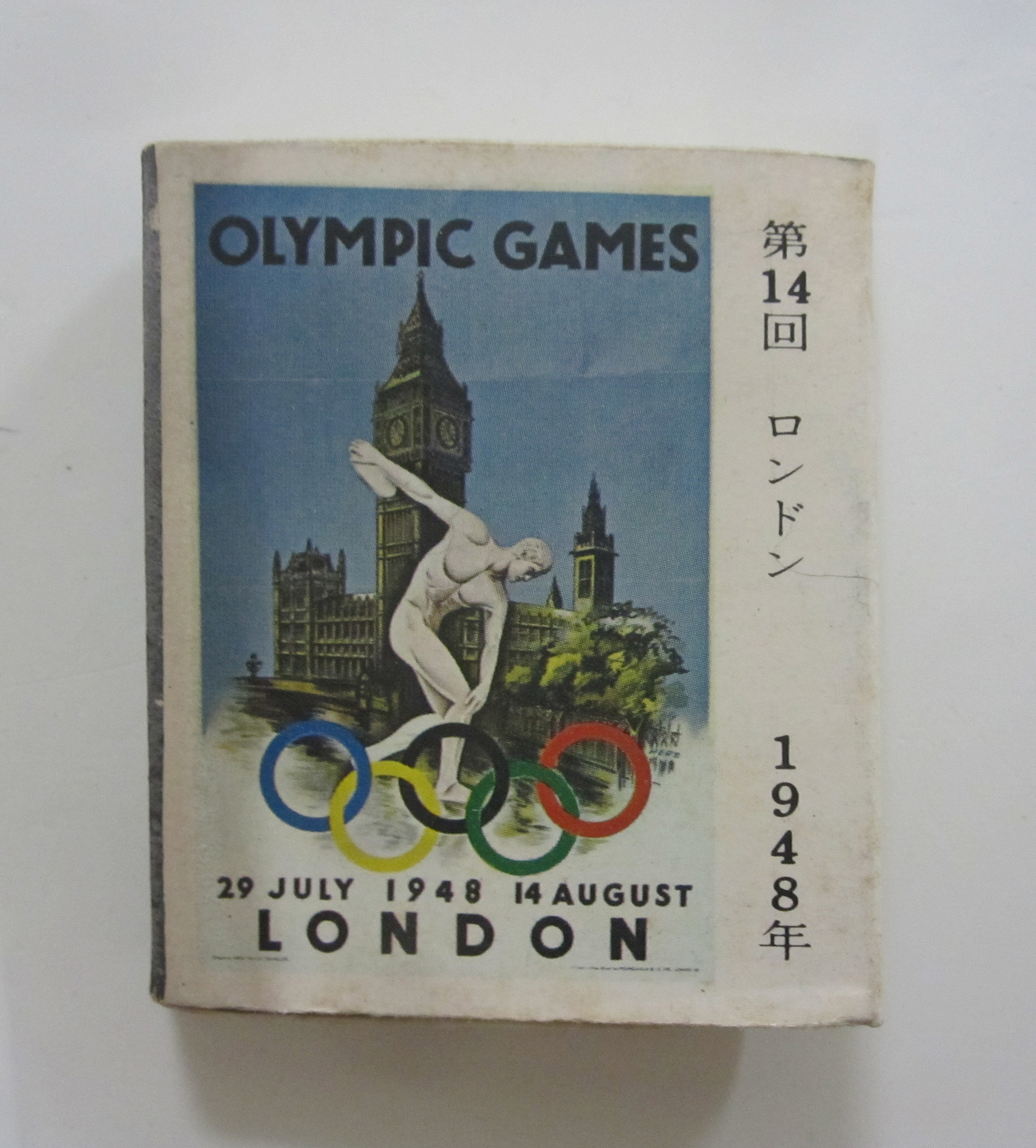
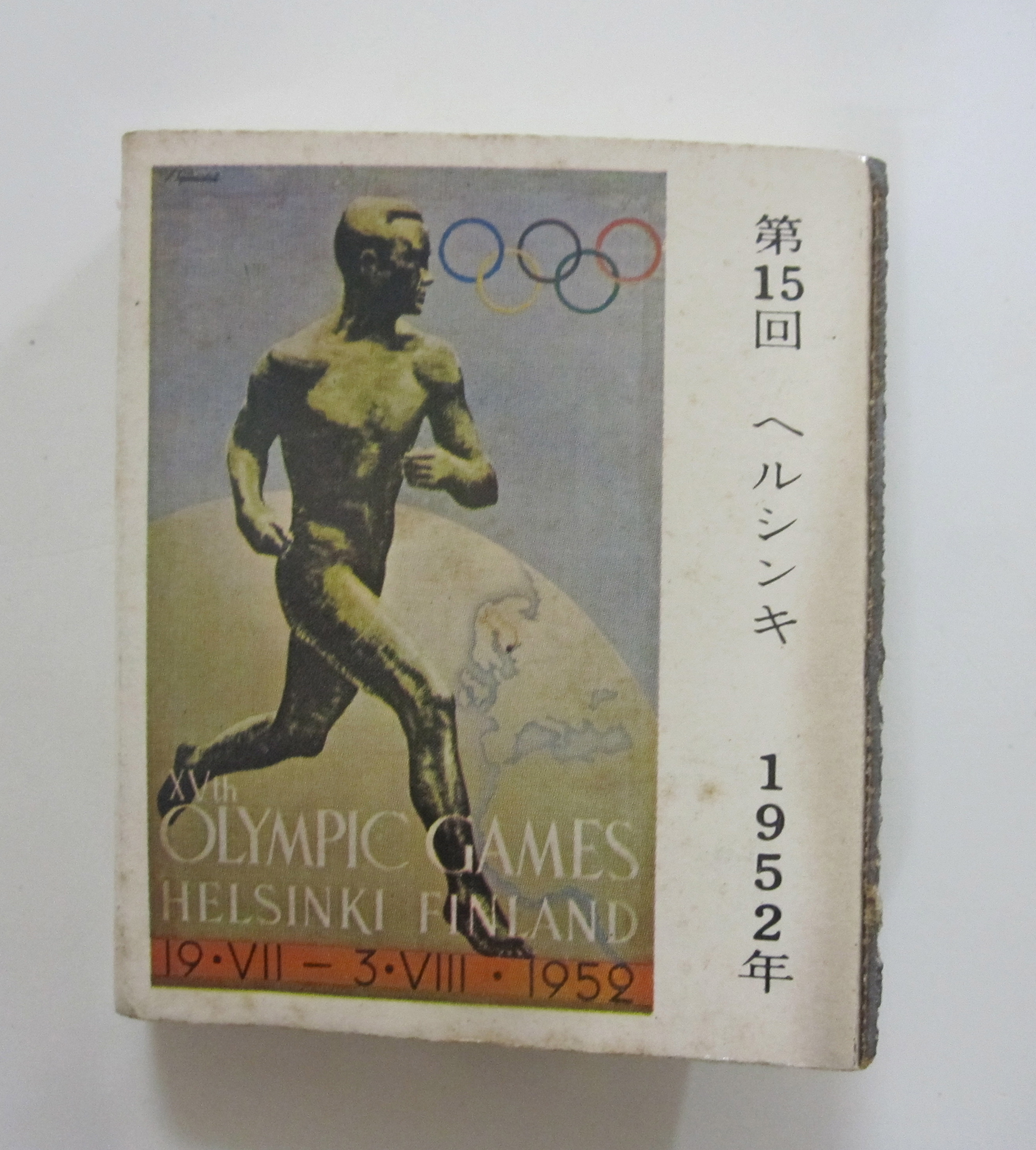
But the person who had the most fun today was my elder daughter who happened upon a stall selling vintage matchbooks from the 1930s-1950s. We have often seen matchbox covers mounted on pages, but not often the entire matchboxes. The dealer had hundreds of them in three big boxes and she spent significant time sorting through them and putting together a charming collection which we plan to place in a shadow box frame. You’ll note her signature colors of lavender and blue.

The story comes as she was choosing her boxes. Much to her chagrin, another man came up behind and offered to buy zenbu – everything – from the dealer. It hadn’t occurred to us and we were immediately sad to see the entire collection go! Luckily, the dealer offered us a few as “service” gifts for making a purchase before he sold off the boxes. We managed to grab a few historical gems.

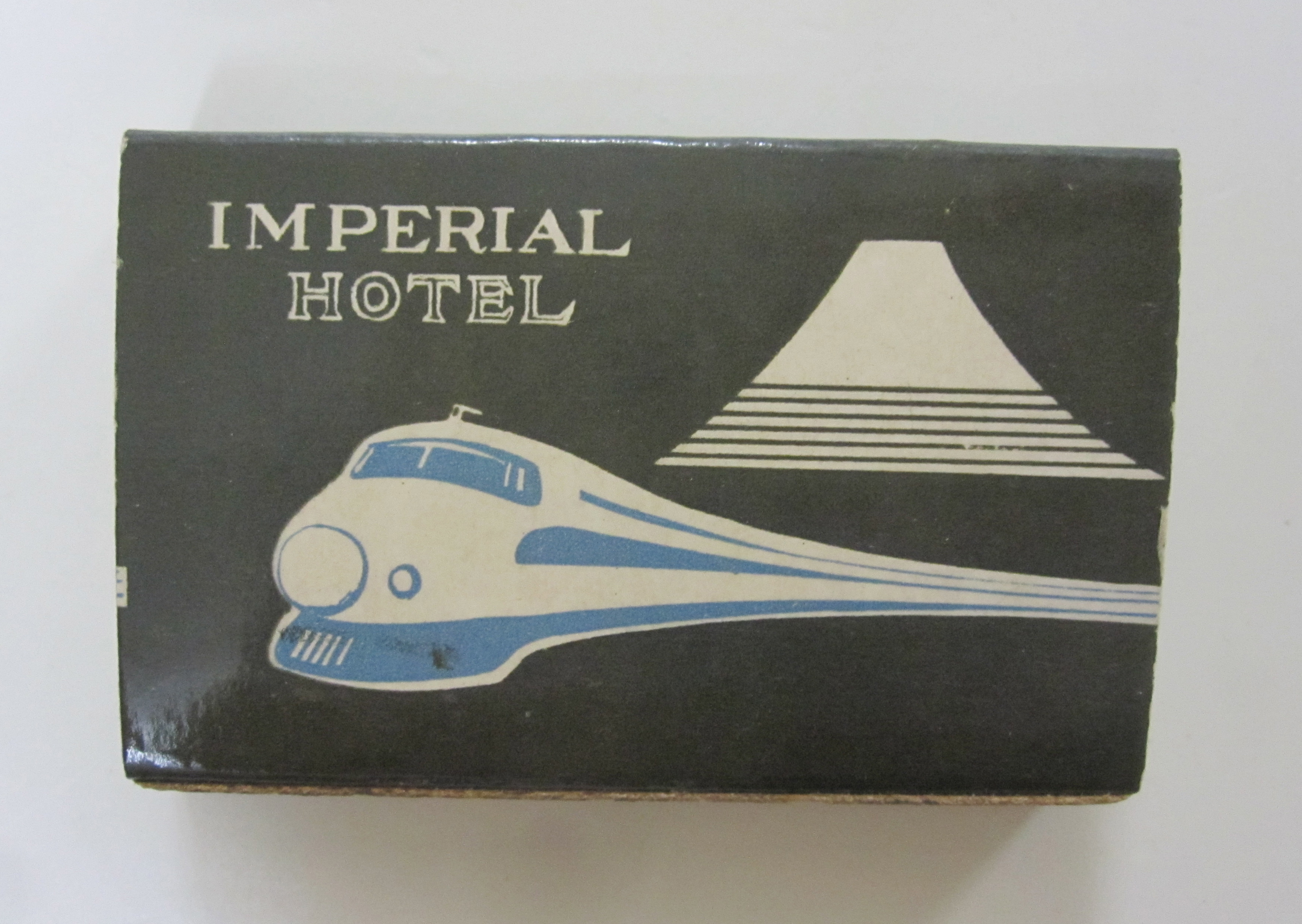
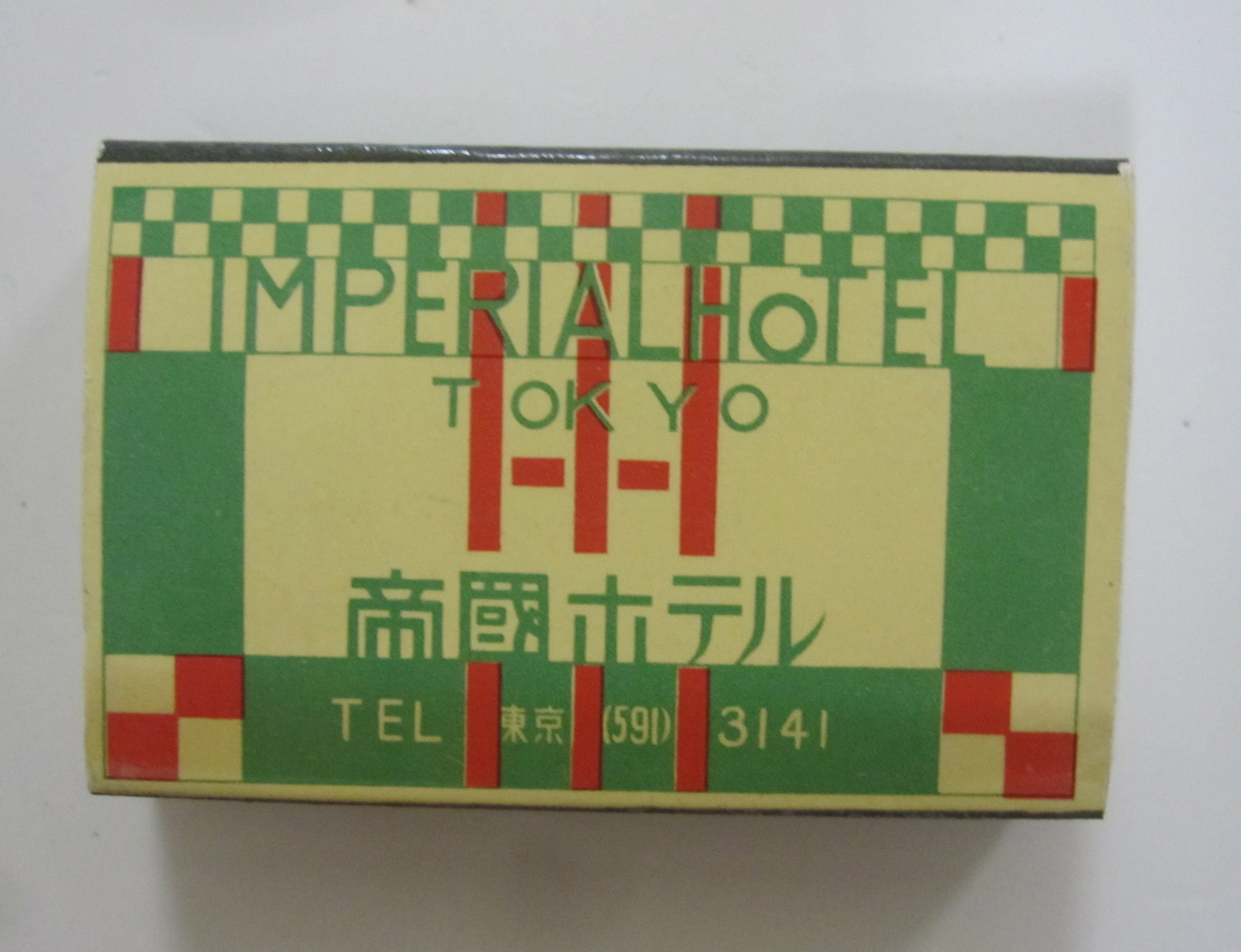
The first matchbox, dated 1939, features Frank Lloyd Wright’s famous Imperial Hotel, with its stylized logo on one side and Mt. Fuji and an early version of the Shinkansen (bullet train) on the other.

Finished in 1923, the hotel was one of Wright’s masterpieces, famously surviving the Great Kanto Earthquake that year, and in use as the premier Tokyo hotel until 1968 when it was deemed outdated and tragically torn down.

The other matchbox could not have been more timely, featuring the 1948 London Olympics on one side and the 1952 Helsinki Olympics on the other.

Wondering what they might fetch among collectors. Ebay maybe?

Image Credits:  Iris photo by Joseph Keating, via Atsuko & Joe, Imperial Hotel postcard via Old Tokyo, all other photos by me.

Read Full Post »

I am a bit of a porcelain proselytizer, particularly of the blue and white variety. My faith lies firmly with the clear blue cobalt of Japanese Seto porcelain, and its more sophisticated cousin Imari, but I am open to decorating with blue and white of any kind, may it be Chinese, Dutch Delftware, English Staffordshire or any other. I preach the gospel often and have converted many to its charms. Sometimes my difficulty lies in convincing others of the true neutrality of blue and white and the undeniable truth that it can work with any color decor and any style of furnishings.

Having had this post living in my queue for months, adding a photo to it every now and then, I’d like to finally share a visual rainbow of the possibilities of color with blue and white porcelain. There are certain designers who could furnish the full spectrum on their own, but I have attempted to present a variety of styles and suppliers. For the most part, I have limited myself to porcelain from Asia and homes from America as it would be easy to trot out the stately homes of Europe and their incredible collections, but not that diverse.

Red – Mary McDonald

Orange – Mary McDonald

Yellow – Christopher Spitzmiller

Chartreuse Green – Markham Roberts

Hunter Green – Jeffrey Bilhuber

Laquered Cobalt Blue – Miles Redd

Blue Venetian Plaster – Allison Caccoma

Pale Blue – Milly de Cabrol

Lavender – Aerin Lauder

Pink – Mary McDonald

Brown – Ned Marshall

Grey - Grant Gibson

White and Modern -Kristen Buckingham

Rustic Elegance- Cathy Kincaid

Classic – Miles Redd

Glamorous – Daniel Romualdez

Have I converted you?

Read Full Post »

To help out all my Sunday church-going readers I have been wanting to report favorably on the second Saturday of the month shrine sale at Gokoku-ji. I don’t have it on my “official” shrine sale page because I don’t like to recommend anything that might be disappointing and while it has been good in the past, I tend to find it unreliable now, both in terms of schedule and quality/quantity of  dealers and merchandise. Today wasn’t much different from that assessment – only about a dozen vendors. Now, we all know that Nogi Shrine only ever has about that many dealers at best, but they are all top quality.  The goods today were more junk shop and imports from China than real antiques, so if you live in the nearby Mejiro neighborhood or on the Yurakucho line, it might be worth stopping by. I am not sure I would have anyone travel there, although that being said, it only took me 15 minutes driving from my house on the Shuto.

Just because it wasn’t the best market doesn’t mean there weren’t things to be found.  My subconscious has been making itself heard lately by pointing me towards medium-sized unusually shaped Imari plates. I think it wants them for first course or lunch settings. I have been resisting, on the grounds that I don’t need them, but today brought two examples.

The first was eye-catching, but…

… it was the second set that was breathtaking.

If you do go and the market turns out to be lousy or unexpectedly cancelled, the Temple complex, situated up on a hill and surrounded by substantial grounds, is beautiful and well-worth visiting.  Built in 1681 by the 5th Tokugawa Shogun at the request of his mother, it has survived earthquakes, fires, and WWII, and the main temple is designated an important cultural property of Japan. Today they had a special flower arranging exhibit on the grounds and in the main sanctuary. Take note of the unusually colored sudare.

Unfortunately for me, my practical conscious mind ruled out and I didn’t buy that second set of plates. I am now mooning over the photo at home, so if anyone sees them tomorrow or next week at a different market, please feel free to let me know!

Read Full Post »

As a follow-up to yesterday’s post on antiquing in Nishi-Ogikubo, I wanted to devote a little more airtime to a wonderful shop, selling mainly porcelain, called Les Yeux Noirs. Owner Haruko Hasegawa has assembled one of the prettiest and most cohesive collections of antique Japanese porcelain that I have seen. She seems to buy and stock nothing ordinary – everything felt special and unusual, whether it was the motif, the shape or the pattern.

One of the things I really liked about the shop was the diversity of styles and periods and therefore prices.  While she had her very valuable Edo period karakusa (Chinese winding grass or arabesque) pattern pieces locked in a cabinet, she also had the largest most diverse collection of inban (transfer printed porcelain) I have come across. As mentioned earlier, mass-produced transfer printing did not become popular in Japan until the Meiji period, even though it had been produced extensively in the West for more than 100 years prior. In transfer printing, a pre-made image is inked with dye and then pressed against a blank surface. The dye is “transferred” (thus the name) and the item is then fired in the kiln. There is none of the hand-painting that you find on all the other types of antique porcelain. But the transfer prints have their own distinct charm and a following. At shrine sales you can often see piles of these small round plates, in a few basic patterns. Hasegawa-san had an extraordinary display with great depth and variety. They are great fun to collect – often being more affordable that other porcelain – and wonderful to mix and match.

Take a close look at this scenic, almost map-like plate and the charming momiji (maple leaf) patterned covered bowls. Both are fairly rare shapes for transfer printed pieces.

We had great fun arranging pieces into groups, perhaps for wall display. Looking closely you’ll see everything from wisteria to peach to our good friends sho-chiku-bai (pine, bamboo, plum). Quite a few of these patterns were new to me.

On the opposite side of the shop prices went up, with gorgeous pieces of Imari, like these giant display plates. Don’t let the small photos fool you – they are enormous - and would be a real focus in any room. There were also lots of  hard to find small hibachi – great for little planters.

There is also a branch of Les Yeux Noirs in the lovely mountain town of Karuizawa.  That shop is open from April 20 – May 25 and again from July 20 – November 25.  What is currently unclear to me is whether or not that means the Nishi-Ogikubo shop is closed during that period. I’ll update that here as soon as I have an answer.

The most difficult part about traveling to Les Yeux Noirs is that they are open tokidoki (sometimes) from roughly 12 p.m. until 6:30 p.m. It might be best to call ahead.  But well worth the effort!

  • Les Yeux Noirs, 4-1-22 Nishi Ogikubo: telephone 03-3395-5509
  • Les Yeux Noirs, Karuizawa: telephone 0267-42-1534

For more on antiques in Nishi-Ogikubo see Shop Talk…Discovering Antique Treasures in Nishi-Ogikubo.

Read Full Post »

While not quite on par with Dixie Highway, relaxed Nishi-Ogikubo in Tokyo’s western suburbs has a grouping of 60+ antique and vintage shops gathered near the train station. Situated along the Chuo line, Nishi-Ogikubo (nicknamed Nishiogi) was a counterculture hotbed in the 1960s, then receded from notice, only to become popular in recent years as the “slow life” movement has gained steam in Japan. It seems like just the kind of place one would find a collection of quirky and individualistic antique shops.

Conveniently, a free map of the stores is available right in front of the koban (police box) on the left side of the station right outside the North Exit. The map seems fairly current but things can change overnight, so think of it only as a basic guide. Most stores do not open before 12p.m., they all seem to have variable hit-or-miss opening days, and there is not much spoken English to be had, but it is a lovely way to while away an afternoon. Hopefully this post will help steer you in the direction of the best shops!

Organized into four zones, NE, NW, SE and SW on the map, I’ll say right off the bat that the South side of the station has much less to offer than the North side, and can be skipped entirely when pressed for time. The NW zone is by far the best for traditional antiques, so I will start the tour headed in that direction, counter-clockwise around the rough rectangle the walking tour makes.  The shops are numbered numerically on the listing pages, but do not always appear in numeric order on the map.

Actually the first few shops don’t even seem to be listed on the map. After peeking in grape, a small but charming vintage kimono shop with two other locations in the area, our first stop is not Japanese at all. Filled to the brim with lanterns, poufs, silvered mirrors and embroidered slippers, Morocco Marché is one-stop shopping for adding a bit of middle-eastern flair to your decor.

Weaving up and down the small side streets along the main road, we pass a few small shops, including Baby Doll (#60), which is not open, but full of antique and vintage toys and dolls. Moving back towards the main road we come to Les Yeux Noirs (#42), the unquestionable star of the tour, deserving its own individual post (coming tomorrow). Owner Haruko Hasegawa has one of the best eyes I have seen for choosing unusual and rare pieces of porcelain. We were very excited and spent a long time (and quite a bit of money) in her shop. If you are interested in porcelain, this is one of the main attractions and it is well worth the train ride for this store alone.

As we continue along the main road we pass mood (#45), full of groovy 60′s looking used goods. We try to stop into Quilt & Old Textiles (#44) way hidden in a back lane, but they are closed – perhaps to go to the Tokyo International Great Quilt Festival. At the turn in the main road, we come to Kido Airku (#59), a great mixed shop full of smaller tansu, porcelain, textiles and odd and ends. Unusual things there include vintage spool threads, great for using as plant stands or display props. A collection of old iron tea kettles looks great on these.

Some modern shibori dyed textiles.

One of the most interesting finds for me personally were wood blocks, used to print patterns on textiles. I have been scouring eBay for Indian wood blocks for a DIY project I am planning this summer, but hadn’t considered using Japanese ones.  Frankly, I hadn’t realized that in addition to all the stencils, tie-dying and resist techniques used here, that wood blocks are too.  Definitely something to look into more.

Numbers 48,49 and 54 were all the same named shop, Antiques Jikoh, with mainly used modern furniture. The branch at the #49 location was full of heavy oak Victorian and Arts & Crafts era furniture.

My friend H spotted a gorgeous blue and white porcelain “umbrella stand” that she loved there. I was so sorry to have to let her know it was actually a late 19th century urinal. Needless to say, she could not look past its original use.

The next two shops were eureka! moments for me. I have been searching for the perfect vintage milk glass ceiling fixture for the bathroom in the beach house, passing up many individual pieces at shrine sales. Imagine my delight at stumbling across the Teardrop Club (#53). I’ll be dragging my patient husband back there soon. If you too are interested, please note they are open 12-6 and not on Wednesday. More photos here and here.

Rakuda (#51) which means camel, also had numerous vintage light fixtures in addition to ranma (transom) panels, old doors, stained glass and cut glass…

Turning the corner right after Rakuda completes the NW zone. The tour continues east, crossing a small river. Other than the charming Le Midi (#37) full of imports from the South of France, not much else was open. Any visit to Nishi-Ogikubo comes with that risk.

Continuing to the next major intersection the tour turns right to head south back to the station. Most of the shops along this NE section seem to specialize in vintage clothing and used goods. Perhaps because we were getting hungry, they didn’t hold our attention. In the grand tradition of antiquing outside of Tokyo, we ate Indian food for lunch at Ganesha Ghar, right near #31 and the bridge over the river on the map. As would be expected, it was packed! And following shortly thereafter was Amy’s Bakeshop, which billed itself as “NY Style Sweets & Things”. Of course we had to stop!

If you arrive hungry, it might be easiest to head the opposite direction (clockwise from the station) and eat first as shops don’t open until lunch time or afterwards.

We skimmed the shops listed on the map on the South side, but many were closed, perhaps permanently. None stood out this visit but perhaps they merit a second chance.

Nishi-Ogikubo is very easy to get to and quite close to central Tokyo. It is only 16 minutes from Shinjuku and 18 minutes from Yoyogi on the Sobu Chuo line. Taking the Toei Oedo line from Azabu Juban and changing at Yoyogi took a total of 32 minutes. I’d love to hear from anyone who goes, especially if you discover a gem I haven’t mentioned. Happy hunting!

Read Full Post »

Sho-Chiku-Bai. If that name doesn’t sound Japanese to you, then you have a good ear, as it is actually the Chinese reading of the Kanji characters 松竹梅. In Japanese, they are read matsu (pine), take (bamboo) and ume (plum) and they form a threesome as one of the most popular decorative motifs the “Three Friends of Winter,” representing promise and good fortune. Together, they stand for the scholarly ideals of pure spirit (plum), longevity (pine) and flexibility (bamboo).

One of the most common places to find them is on Japanese porcelain, often in a very stylized form, so that you might not even notice they are there. This old Imari pattern is extremely common and at first glance there is no real sign of any botanical motifs.

When you look closely at the design in the round, the two trunks of the pine and the plum and the bamboo pole become visible. This central motif has been repeated on versions of this pattern for centuries and continues to be very collectible.

I’d say about a third of the traditional polychrome Imari patterns with a central roundel have our three friends in the center. Close-ups of the photos highlight the details and the difference between the blue underglaze and the enamel and gold overglaze.

So similar to the one above, yet oh so different!

Notice the different manner of painting the pine on this dish – the spiky needle style instead of the puffy bush style.

The Three Friends of Winter are also a common motif on Japanese transfer printed blue and white porcelain. Transfer printing was invented in England in 1756 and is commonly associated with the Staffordshire potteries and the classic “Blue Willow” pattern. This process was developed as an inexpensive way to recreate the characteristics of the hand painted underglaze blue ceramics of China and Japan. Ironically, transfer printing does not become popular in Japan until the late 19th century, but modern-day markets abound with transfer printed pieces that show it eventually did. Often very inexpensive, they are a great purchase as they have more character than modern blue and white. Patterns are often standardized (like this stylized Sho-Chiku-Bai dish) so collecting a particular one is easy – or they are fun to mix and match.

This small covered dish is also transfer printed, with the plum and bamboo encased in fans (a common design device) and the pine in snow, represented by the ruffled circle surrounding it.

This small dish has a naturalistic rendering.

The Three Friend of Winter are not limited to porcelain. They can be found on lacquer…

…and here is a set of three kashigata (sweets molds) in the motif.

This paste-resist dyed indigo cloth takes a different approach, blending the naturalistic pine and plum with the stylized kamon for bamboo. The process is called tsutsugaki (literally, tube drawing) as rice paste is squeezed from a tube to draw the design, much like a giant crayon. The cloth is subsequently dyed and then the rice paste is washed off. This antique futon cover dates to the late 19th century.

Same for this one.

A more formal version can be found on this brocade fukusa. Popularized in the Edo period, a fukusa was used to “wrap” a formal or important gift by being draped over the box or tray on which it was presented. The Three Friends are a very common motif on fukusa as they represent such good wishes to the recipient as well as the New Year.

Speaking of important gifts, how about this set of watches from Vacheron Constantin? They have paired up with Zohiko, a 300+ year old lacquer maker in Kyoto to create these limited edition maki-e (literally, sprinkled picture) timepieces, embellished with Sho-Chiku-Bai. I am not sure what you do with three and at $335,000 for the set, I don’t think I’ll be getting them anytime soon. But interesting, desu ne (isn’t it)?

All of these example came from the Antique Jamboree held at Tokyo Big Sight the weekend of January 8-9th. And for more on the symbolism of these three friends, see Kadomatsu…A Traditional Welcome for the New Year.

Image credits: All images by Jacqueline Wein except Blue Willow platter: marks4antiques.com, and Vacheron Constantin watches: via House of Pens

Read Full Post »

I have had a half written post called “Can Imari’s Reputation Be Resuscitated” sitting around in my drafts folder for weeks and now it is time to bring it out, rewrite it, and change its title to the one above. I am not talking about the simpler blue and white underglaze only Imari (which has never gone “out” of style), but instead Ko-Imari (old Imari), the polychrome and gold in-your-face with color Imari. Sometimes accused of being “old-fashioned” and “traditional,” I think it is finally having a well deserved revival in modern settings.

Let’s be clear – People are still collecting Imari, beautiful pieces are in demand and it is often featured in classic interiors. Some designers have been using it all along. You can often catch a glimpse of a piece in a Michael Smith interior. I am referring to using Imari in a new way by pairing it with unexpected partners.

This is the more “expected” model of porcelain display – a bit hard to pull off  if you don’t have a grand country manor with generations of accumulation and original paneling.


First to catch my eye was the October 2010 House Beautiful apartment of Nancy Tilghman designed by Daniel Sachs. Amidst the ethnic mixed but modern living room of this Park Avenue apartment sits an Imari bowl on a side table, filled with citrus fruit. Underneath the same table stands a large Satsuma urn (which is basically the same thing for my intents and purposes here in this post).

Then there was the Eddie Ross Thanksgiving tablescape in the October/November issue of Lonny Magazine which featured Imari plates and serving pieces that I wrote about in my last post.  The color and design of the decor took its cues from the vibrant colors in the Imari, but what makes it unusual is the unexpected combinations Ross uses. While a crystal chandelier is an expected pairing, rustic wooden beams are not.

The beginning of November brought this Miles Redd designed bedroom featured in New York Magazine. I believe I spy a large Imari charger from John Rosselli above the closet door in the riotously colored bedroom designed for David Keiser.

This third week of November brought the Wendy Haworth Tastemaker Sale on One Kings Lane. She had a number of Imari dishes and bowls listed. All sold out immediately!

I’d love to hear from you with your ideas on how you have or would use your Imari. And don’t limit it to that….What other design ideas or decorative items have you “resuscitated”?

Image Credits: 1. The World of Interiors, February 2009, 2. House Beautiful, October 2010, photo credit: Ngoc Minh Ngo, 3. Lonny Magazine October/November 2010, 4. New York Magazine, November 7, 2010, photo credit: Thomas Loof/Art Department, 5. One Kings Lane

Read Full Post »

I have always thought that polychrome Imari porcelain sets a stunning table for the winter holidays. Stylist and flea market guru Eddie Ross agrees in this month’s issue of Lonny Magazine. He uses a mix of antique Imari plates with some great do-it-yourself projects to set a lovely Thanksgiving table. The usual Imari colorway of orangey red, mixed with the cobalt underglaze, and highlighted by greens and yellows is perfect for Thanksgiving – and can be pulled out again at Christmas. 

Ross says “The key is restraint. You don’t want a floral fabric and a floral china.” I am not sure I’d call this a restrained table setting, but that is exactly why it is so fabulous.  He loves to mix color and pattern in every way he can. 

Sweet Mizue Sasa, proprietor of Okura Oriental Art, let me have fun playing with antique Imari plates and serving pieces at her shop. I layered Imari on Imari, but it works with the calm obi table runner and the simple floral arrangement. I think it would also be lovely paired with simple white dishes on a deep orange cloth. A great feature of Imari porcelain is that you can mix and match all kinds of pieces and patterns (and I have even squeezed in a tiny orange-red sake cup) and it looks great together. And mixing is almost always necessary as most “sets” in Japan are sold in groups of 5 (as the number 4 is unlucky).  You can change the look and feel of your table simply by highlighting a different color - for instance, playing up the blue instead. 


Imagine your turkey and mashed potatoes served on these giant beauties…

Dish your stuffing out of this fluted bowl…

Thanks to Sasa-san and her assistant Eiko for this post. Watch for an upcoming “Shop Talk” about Okura.

Image credits: 1-3 Lonny Magazine October/November 2010, 4-6 me, courtesy of Okura Oriental Art.

Read Full Post »

Older Posts »

Follow

Get every new post delivered to your Inbox.

Join 405 other followers

%d bloggers like this: