Feeds:
Posts
Comments

Posts Tagged ‘flea market’

I am always asked what the best thing is to buy at a shrine sale. Indigo textiles – shibori, boro, katazome? Porcelain – Imari, Kutani, Seto? Bamboo and wood – baskets, ikanbari vases, kashigata? The assumption is always that something quintessentially Japanese is the real deal, the real steal. But the truth can be quite different. Textiles are often very expensive and for porcelain you need to really understand what you are looking at. The bamboo and wood items are easy to come by and can almost become commodities. Personally, I think art is the best bargain at the market.

1000 yen is about 10 dollars, but as the yen doesn’t go as far, it feels like only a couple of bucks. I often go through the art stacks with an eye for anything charming – Japanese provenance is not necessary – and an ear for prices. Lately I’ve been lucky, finding works on paper and canvas for about 1000 yen. Many even come in just the right frames, or ones that can be painted or spruced up. Come take a quick tour with me through my latest discoveries…

A charming French watercolor in an aged gold frame just needed to be opened and cleaned and freshened up with a colored mat.

IMG_3340

A typical modern Japanese woodblock print had a water damaged back and mat, and even a little water damage on the print, but nothing that showed when rematted.

IMG_3336

It’s the dotted trees with just a suggestion of cherry blossoms that sold me on this one.

IMG_3338

An acrylic on canvas with more charm than mastery but nice color.

IMG_3351

Sweet daisies in the oval, always a nice shape variation for an art wall. My youngest daughter claimed this one immediately.

IMG_3353

And this weekend’s find is my favorite. This oil painting of pansies was in a big ugly frame, but I took it out and love the casual look of just the canvas on the stretcher. (And psst, truthfully, it was a bit more than 1000 yen).

IMG_3293

You’ve seen other shrine sale art finds of mine here and here (although the butterflies weren’t 1000 yen, yet certainly a bargain), but I am not the only one to find them.  Here are some great 1000 yen finds made by readers and friends…

A 1958 Oil of St. Paul’s Cathedral in London, probably painted by a local returning from vacation – the signature is a Japanese name. I often come across European scenes, particularly London or Paris, painted in all kinds of styles.

photo

I’ve gone out of my way to show fairly non-traditional items, but you can occasionally luck into some typical Japanese art such as ukiyo-e, scrolls and katagami for bargain prices. This huge shodo (Japanese calligraphy) painting was a steal at 1000 yen. It had quite a bit of water damage which was basically erased with a damp cloth and some dish soap at home. The dramatic kanji is hito or person.

photo

To be honest, sometimes I can clean them up myself, but other times I invest a few more yen and have my local framer (he makes house calls!) do it.

I’d love to see and hear about your art bargains!

About these ads

Read Full Post »

Today was slim on the ground for shrine sales being the second Sunday of the month, but Tomioka Hachiman did not disappoint. It was a day full of friends from out-of-town and extraordinary porcelain, including a few cute and very atypical Japanese pieces bought for the beach house. The small green iris pickle dish will be perfect on the dresser or night table in the beach house guest room for holding jewelry and other trinkets.

It reminded me of the Korin Ogata screens and the garden at the Nezu Museum.

The small Imari-meets-lustreware dish has all the pretty colors in the downstairs rooms of the beach house. Don’t know how I’ll be using it – perhaps as part of a wall display, perhaps on a stack of books on the coffee table to hold olive and cherry pits.

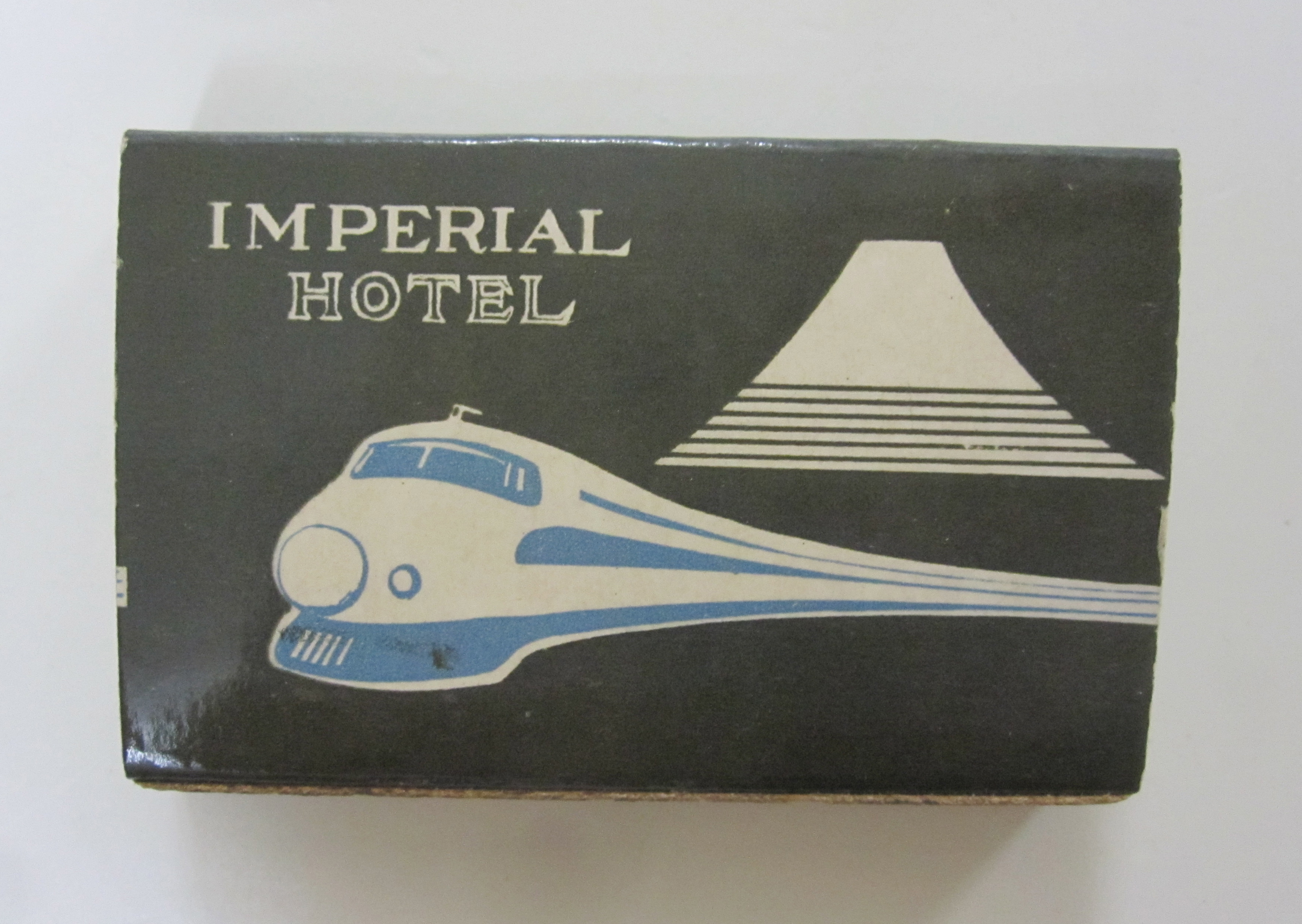
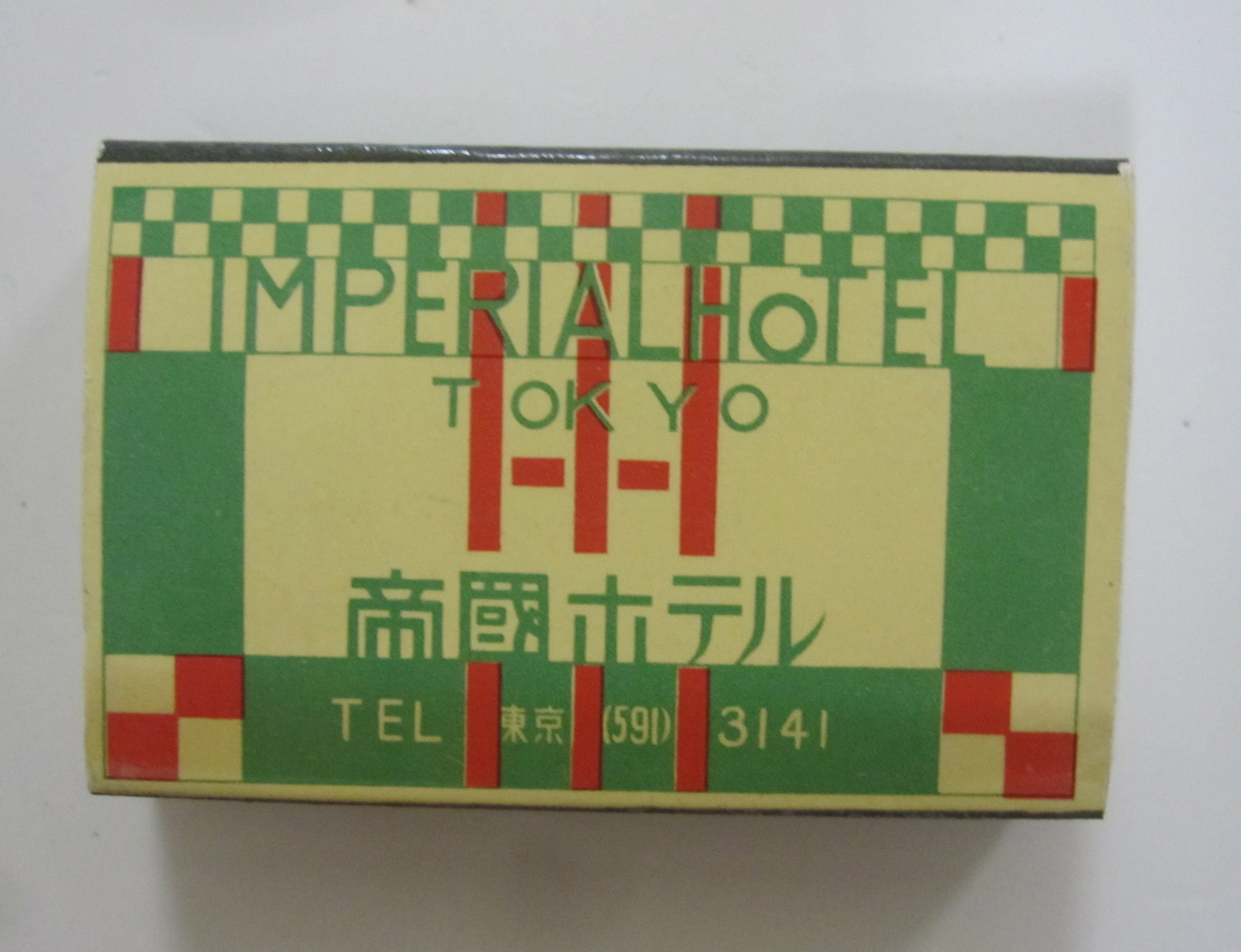
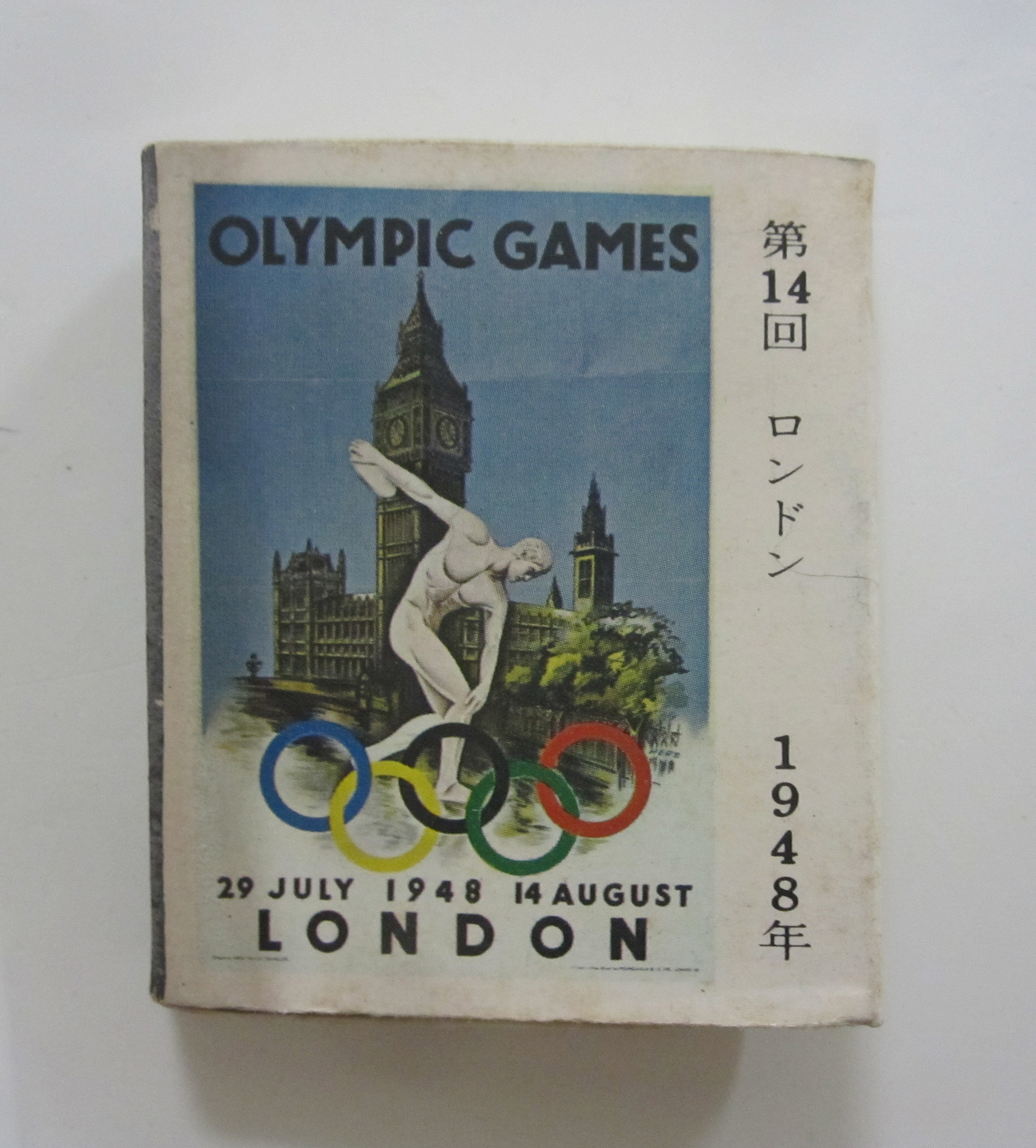
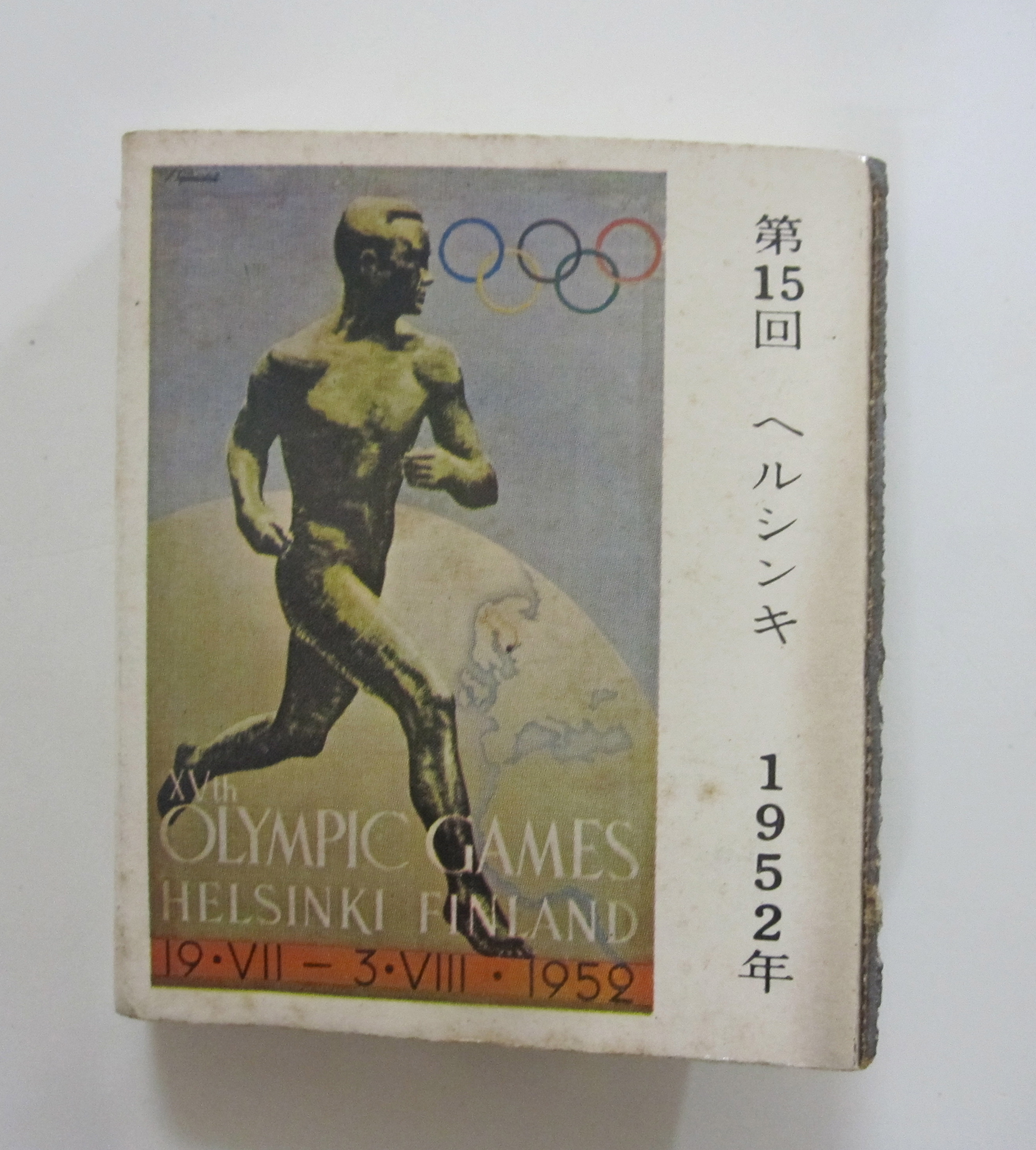
But the person who had the most fun today was my elder daughter who happened upon a stall selling vintage matchbooks from the 1930s-1950s. We have often seen matchbox covers mounted on pages, but not often the entire matchboxes. The dealer had hundreds of them in three big boxes and she spent significant time sorting through them and putting together a charming collection which we plan to place in a shadow box frame. You’ll note her signature colors of lavender and blue.

The story comes as she was choosing her boxes. Much to her chagrin, another man came up behind and offered to buy zenbu – everything – from the dealer. It hadn’t occurred to us and we were immediately sad to see the entire collection go! Luckily, the dealer offered us a few as “service” gifts for making a purchase before he sold off the boxes. We managed to grab a few historical gems.

The first matchbox, dated 1939, features Frank Lloyd Wright’s famous Imperial Hotel, with its stylized logo on one side and Mt. Fuji and an early version of the Shinkansen (bullet train) on the other.

Finished in 1923, the hotel was one of Wright’s masterpieces, famously surviving the Great Kanto Earthquake that year, and in use as the premier Tokyo hotel until 1968 when it was deemed outdated and tragically torn down.

The other matchbox could not have been more timely, featuring the 1948 London Olympics on one side and the 1952 Helsinki Olympics on the other.

Wondering what they might fetch among collectors. Ebay maybe?

Image Credits:  Iris photo by Joseph Keating, via Atsuko & Joe, Imperial Hotel postcard via Old Tokyo, all other photos by me.

Read Full Post »

Goodbye ephemera and katagami lady…

Goodbye military paraphenalia guy…

Goodbye excellent porcelain dealers…

Goodbye senbei canister guy (although I don’t have your photo I know I will still see you at Kawagoe)…

Today was a gorgeous Mother’s Day, but unfortunately the closing day of an historic shrine sale at Nogi Shrine. It had dwindled to no more than about 8 antique dealers, but excellent dealers they were. My very first shrine sale experience was there and my first post ever featured it too. It was the place the Lalique lamp was bought out from under me when I turned my head. It was so close by and easy to pop into and always yielded some good treasure – I don’t think I ever left empty handed.

Word is afoot of a new sale starting up soon and close by. I’ll keep you all informed when I have fully scouted the details. Until then have a moment of silence with me at the passing of this institution.

Related Posts:
Nogizaka…A Good Place to Start
The End of an Era…Togo Shrine Sale Ends

Read Full Post »

Each year for the past 434, a market has been held in the Setagaya neighborhood of Tokyo on December 15th & 16th and again on January 15th & 16th. With over 750 vendors selling everything from apparel to electronics to antiques, things both old and new, as well as food stalls, flowers, and just about anything else you might imagine, the market defines what a “flea market,” as opposed to a “shrine sale” is in Japan. Called the Boroichi, or rag market, there is much to buy beyond rags, although trade in vintage and antique textiles continues to be one of its main draws.

The prices on vintage kimono and obi are unsurpassed, as demonstrated by the free-for-all at this stall selling obi for 500 yen.

New indigo dyed textiles and clothing is also available.

Perhaps my favorite thing was this dealer selling Japanese kamon (family crest) stamps. Easy to pick one up and use it to customize your correspondence, regardless of whether or not you actually have a family crest.

I also loved all the handmade housewares and baskets.

I made a few good finds, including some antique blue and white porcelain platters and interesting textiles. But by far the find of the day belonged to my sweet husband. He picked up a fancy brand, gortex coat with zip-out fleece, list priced here at 68,000yen and found on google in the USA for about $550, for all of 13,000yen. And as a result, it made him perfectly happy to carry my packages!

There is still time to visit tomorrow! Maybe it won’t be so terribly crowded on a weekday…

For more on the history of the Setagaya Boroichi, directions and maps, take a look at this 2009 article in The Japan Times or the Time Out Tokyo listing.

Read Full Post »

The large spark of interest created by Yamamura’s suitcase and story (screenplay anyone?) have pushed me to continue on in my investigations. While I have sorted out the large label (Dairen Mansyu Hotel in Manchuria) and medium label (Onnuri Ryokan in Seoul, Korea) on this side of the suitcase, the only challenge that remained was the smallest label on the bottom in this photo. Further research (with great help from my reader Mary) reveals it to be a Japanese owned ryokan that was popular in Shanghai in the between-the-war period. The kanji escaped me, but not her –  常盤館 – and we think it is pronounced Tokiwakan. No photos of it from the period, or any additional labels, but the building is still standing in China and here is how it looks today. I don’t find it hard to close my eyes and imagine a more glamorous past life for the run down structure – actually all of the old foreign areas of Shanghai still feel like a movie set to me.

To do a truly thorough job of exploring Yamamura-san’s travels, it seemed that we needed to track down each and every hotel, so the next challenge was the other label on the right hand side of this photo. While the label says Japan Hotel in English, the kanji identifies it as the Fusokan or Fusangkuan in Beijing.

Yamamura’s label is pretty tame, but here are two jazzier examples.

An undated photo of the Fusokan reveals multiple forms of transportation, from autos to rickshaws. My guess is early 1930s, right around the time Yamamura may have stayed there.

Finding this hotel advertising flyer, with its drawing of the Temple of Heaven, seems to confirm its nearby location.

Mary also discovered that Japanese short story writer Ryunosuke Akutagawa stayed at the Fusokan for about a month in 1921.

The label on the left in my original photo (which I am showing once again above as this all starts to get a bit confusing) says Shenyo Hotel Mubuden, and I had hypothesized in my original post that perhaps it was an alternate spelling for Mukden in Manchuria. I continue to believe they are the same place, perhaps one is a regional name and the other the city. The kanji can also be read as Hoten, making this the Shenyo or Shinyo Hotel, as seen in these alternative labels below.

These great labels came from another collector’s suitcase, and if your Japanese is good, you can read more about them here.

This photo shows Hoten in Manchuria, called Shenyang today in China, around 1931.

While we are still on this side of the suitcase, let’s finish by showing a great view of the Anto Hotel (the middle sticker). I had a view of it from the train station in the original post, but you can really see the size and the art deco grandeur of it here…

…and the strength of the Japanese presence in Manchuria made so perfectly clear by this card – sakura season!!!!!

So we know Yamamura made his way around China, including Manchuria, Shanghai, and Beijing, as well as Seoul, Korea. The one clue I still haven’t acted upon is the fairly modern meishi (business card) in the luggage tag. It is newer than the suitcase and has a different family name and an address in Osaka, but still the possibility to reveal more about our mysterious Mr. Yamamura.

Again, thanks to Mary and as always, my sweet husband, without whom this post could not have been written. If there was ever anything to give that kick I am needing to work on my kanji, this might be it!

Quickly before I go to publish – I saw this set of 3 vintage leather suitcases in a design store today in New Jersey. A perfectly proportioned stack, with a price tag to match, but no back story. Nonetheless, I was tempted…

Related Posts:
If Only This Suitcase Could Talk
Research From a Reader…More On Yamamura-san’s Suitcase

Image credits: 1,3, 8 & 15. me, 2. The Weblog With Osaka Dialect, 4-7. The World of Hotel Label, 9-11. paperlabel.blog, 12. eurodollers flickr, 13-14. International Center for Chinese Studies

Read Full Post »

While we are chatting about my recent brass finds, let’s look back at another cute vintage brass item sourced from a Tokyo area shrine sale. Remember this guy found here last spring?

Well, he is now cleaned up a bit and safely ensconced here in my living room, having become an extremely useful addition to our household, a perfect spot to rest a book or cup of tea and serving as extra seating in a party pinch.

This is a slightly different style of “Identify This” post as I am honestly the one looking for help figuring out the origins of this small brass stool or table. I had not seen one before mine, but this summer at Calypso Home in NYC they had a larger and brand new side table sized one in the shop. No one there had any insight into the history of its style.

I have only ever seen one featured in a home design spread.

(Addendum: On a funny note, it was only after I received the Katie Ridder book I wrote about in my last post that I realized I had just shown another photo featuring not one, but two of these stools in one of her interiors! There is a shiny brass one adjacent to each the chairs in the photo.)

So without much to go on, I dived in to my usual research sources…Currently, there are a few available on 1stdibs right now, including this one from Belvair

and this pair from lawson-fenning. Both are simply identified as 1960s vintage brass drum stools or tables and are priced at $325-365 each.

Adam Bram Straus just had one for sale in his Tastemaker Tag Sale on OKL too. It and the one directly above on the left look the most like mine, although mine is in better condition than either of them and none have the repeated concentric circles on the seat/tabletop.

Less expensive new ones, which honestly have inferiors lines, seem readily available, like this one from Cyan Design for $247.

They even come in other finishes, such as aged bronze or this fancy polished nickel from Arteriors, the most expensive of the bunch at $458 for the small size and over $1000 for the side table size.

But I haven’t been able to find any additional information, or even proof that these are 1960s designs. One source suggested they are Italian, another art deco, but I don’t see any evidence of either, other than the usual problem in which someone wrote it on the internet once, so now everyone quotes it like it is true. For my eye, they have a real campaign furniture look, but as they don’t actually fold up or disassemble easily, that is not it either.

So I open it to you my readers – any theories or clues on origin, time period or even additional photos of these in use? I’d love any ideas, speculative or fact-based….And most of all, I wonder how it ended up in Japan?

Read Full Post »

I’ll be updating the Shrine Sale tab on the blog, but I wanted to catch all my readers and let them know that the Oedo Antique Market held on the grounds of the International Forum will be on hiatus due to renovations through February of 2012. The first market next year is expected to be held on Sunday, March 4, 2012. I’ll keep you up to date on the situation as it unfolds.

Other news includes the annual sale at Kanarusha, a fantastic Japanese antique store out near The American School in Japan. More information can be found here, in a previous post, and here, on their website. If you liked my last post on tansu, now might be the time to get one!

Read Full Post »

The Oedo Antiques Market is a jewel. While it lacks the charm of being on the grounds of a temple or shrine, it makes up for it by being held in the shady courtyard of the Tokyo International Forum at the convenient junction point of Hibiya, Marounouchi and Yurakacho. While it tends to be higher along the antiques food chain and thus higher priced than a conventional shrine sale, it makes up for it by having some of the best quality merchandise to be found. Held on the first and third Sundays of the month, and the fifth Sunday is there is one (like there will be this October), it is one of the most pleasant antiquing experiences to be had in Tokyo.

Luckily for me, Peri Wolfman of Wolfman-Gold & Good fame was in town visiting her niece, my friend D. For more on Peri, see my previous post. This past Sunday I took them to shop the Oedo market and we all had a wonderful time and bought lots of goodies. The entire day was colored by Peri’s aura, meaning it was black and white. We looked at and bought nothing frou-frou or fancy. No blue and white porcelain, nothing gilded. Everything was simple, streamlined, functional and lovely because of it. I did mean to take so many more photos chronicling the day. Photos of what we looked at, what we liked, you name it.  But sometimes you have to live just to live, not live to blog, and Sunday was such a day. I was too engaged to even remember to pull out my camera half the time, so I can only show you a record of what we actually bought.

First up were these bowls by ceramicist Ando Masanobu. As I am not familiar with his work, I did a little research and found this description in the online edition of Kateigaho magazine (which you should be reading if you are at all interested in Japanese arts and culture). ”Perhaps the most fitting description of his pottery, reflecting a balance of sensibility and philosophy, is the word refinement. The striking forms of his solid white or black semi-matte vessels bear minimal ornamentation.”  No way to say it better than that. I do wonder how these bowls ended up down in Tokyo, but the karma was perfect because they were meant for Peri. As a pair, they also display one of her golden rules, which is never buy ”onesies”. Multiples are king!

Ando also runs a gallery called Momogusa in an old minka (farmhouse) that he moved to in Tajimi and rebuilt. Besides his own work he exhibits ceramics, glass, washi, textiles, and so on by other artists. Looks like it is worth a visit!


These were quintessential Peri – a group of Edo period pottery stacking bowls – albeit the largest one was the size of a golf ball. Scale is hard to show in this kind of close-up but consider the grain of the matting underneath and it gives you a sense of their tiny-ness. Peri is currently developing a line of tableware for Restoration Hardware –  the reason for her visit – and stacking items are definitely a part of it.

We almost overlooked the military dealer – you know the one who has all the Japanese army uniforms and sometimes other creepy stuff – there is always one like that at every market. Luckily these caught our eye and we stopped. These are old mess hall dishes made of white ironstone from the days before plastic. The small deep bowl is meant for tea.

And of course it wouldn’t be Peri without some white ironstone pitchers.  These look French, but the marks are actually Japanese. Wonderful shapes! And shown perched on one of a pair of rustic children’s chairs bought too.

We both got amazing little black and white woodblock prints. One for her…

…and one for me.

These metal clip on sconces may not look like much here, but let me tell you they are dynamite! Painted green metal with wonderful patina and best of all, they don’t require any holes drilled to hang them (which is a big issue in Japanese rentals, let me tell you). Just clip ‘em where you want ‘em.

Imagine them like these in this dreamy Jill Brinson designed bedroom.

Simple bargain frames made of sakura (cherry) and bamboo came home with us too. Peri thought the speckled paper under the glass of the rectangular one was so pretty it could be used as a tray instead.

Peri is all about storage (just peek back at that Oprah magazine article) and both D and I got some of these charming vintage apothecary drawers to stack on my desk and in her entryway.

What a great day! Peri looking fabulous in her usual black and white while I look as goofy and over excited in this photo as I felt.

Oh, and last but not least, I need to report that the marble-topped pastry table in Peri’s earlier kitchens was sold along with the house…

Read Full Post »

Gasp! I thought September 16th was my one year blogging anniversary, but I was wrong. It was the 12th of September and I missed it! I guess I could cheat and back date this post, but to keep my journalistic integrity, I won’t. We’ll just have to celebrate a few days late!

Since I started out at Nogi Shrine, what better way than to commemorate with a few sparkling jewels seen there this past Sunday? Some of my favorite finds are the humblest of objects, like these Taisho era shoyu (soy sauce) bottles.  The disposables of their day, they had no particular value and were simply a method for delivering a product. Fast forward 80-90 years and now they are collectible!

A favorite dealer had basically assembled a complete collection and had I wanted one instantaneously, it was there for the purchasing. While I am often featuring glass in all forms on the blog, what makes these bottles particularly special is their rare glass screw tops.  I had bought a huge green bottle at Kawagoe last spring simply because I was so in love with that screw top. It seems amazing to me that they have lasted in perfect working condition.  These two blue-green ones were my favorites – I love the art deco detailing.

Making beauty from everyday objects like these is something Amy Merrick does particularly well. In addition to drooling over her spectacular flower arrangements, I have followed her posts about found glass and ceramics from Dead Horse Bay in New York. I would love to go junk collecting there but never have the time when I am back in the US. Her collection of found bottles on an antique spool thread display shelf is stunning. To see more of her work, you must go take a look at Amy’s gorgeous new website.

Dealers in Tokyo do a great job of presenting their glass wares, often grouping them by color like these at the Azabu Juban Saturday market.

And this summer I snapped this photo at Lakeview Antiques in Bolton Landing, NY, where they arranged their glass by color and style. I think Ball canning jars like those on the second shelf are some of the most multi-functional and inexpensive vintage glass around. They come in different sizes and colors, display beautifully and have many uses. My friend K used them as vases for a summer night party – nothing simpler or prettier! I just wish I had a photo to show…

…kinda like this.

And Joni just posted this kitchen by Susie Bohnsack over at Cote de Texas. Note how the old turqouise seltzer bottles positively glow like jewels in the backlit cabinet!

If you are interested in glass bottle collecting, Martha Stewart Living recently featured an outstanding article naming and dating different bottle types.

Photo credits: 1-2, 4-5. me, 3. Amy Merrick via An Apple a Day, 6. via Covet Living, 7. Susie Bohnsack/Pearhouse Design via Cote de Texas

Read Full Post »

Jet lag always knocks me for a loop. Not so much physically – as a mom I have gotten used to sleep deprivation – but emotionally. The point of transition from my one life to my other is always a bit rocky. And invariably I forget each time that the previous change caused me any anxiety, imagining it to have been seamless. As I creakily fold myself back into my Tokyo routine, my husband reminds me of how discomfited I was upon arrival in New Jersey at the beginning of the summer. I find it hard to believe, but know it to be true and can even read the proof here. And so I know this state of “in between” shall also pass. My blog seems to share this schizophrenic life with me as I tend to write about that which is around me. Luckily, the wonderful Kawagoe shrine sale, held on the grounds of the Narita-san Betsu-in temple on the 28th of each month, welcomed me back with open arms. Filled to the brim with goodies like always, I was particularly struck by the proliferation of antique and vintage iron teapots.

Kawagoe is well known for its great metalwork antiques, although the best dealer of them has been supplanted by new bathrooms, arguably a reasonable trade-off although I wish they had relocated him elsewhere in the market.  If anyone has seen him (the guy that was always in the front corner), please let me know!

The iron braziers and kettle stands are lovely in their own right.

You can always count on finding teapots at Kawagoe – this photo was taken last October and I could easily add more from other previous visits. Not sure who the red superhero guys are….

Whenever I see vintage Japanese teapots I think immediately of designer Vincente Wolf, one of the great masters of display, especially of weaving in Asian artifacts to his interiors. His love of travel permeates his work as does his photographer’s eye. In addition to 30+ years as a designer, he also has a showroom with an eponymous furniture line, antiques and decorative objects from around the world and a blog. He was the designer who showed me early on that a mass grouping of similar objects will always trump a scattered display. His are so successful because they activate his otherwise pure and spare rooms, creating unexpected focal points. The vignette below, from an apartment he designed featured in a 1995 Metropolitan Home, was a keeper in my inspiration files. As I left to live in Hong Kong less that two years later, it was highly influential to my own collecting habits.

In more recent designs, Wolf tends to mount individual objects on simple metal stands to great effect. For sale at the VW Home showroom, Wolf has ingeniously hung similar Chinese water vessels on stands.

Kawagoe yielded more items than just teapots that reminded me of Wolf’s designs. Also having great visual impact possibilities were these spool thread gears. Lying in the box they don’t look all that impressive, but mounted on stands or hung on a wall they would be stunning.

Wolf uses a pair of large gears hung on the wall in this room…

…and often uses other kinds of antique discs to make truly effective tableaux.

Another great accent are these roof tile caps found regularly at Kawagoe…

…and elsewhere.

They would look great displayed in a similar fashion to these finials.

Throughout his designs he uses all kinds of objects grouped together, from Buddhist stupas like these on the table…

…to Victorian door knockers shaped like hands elegantly arranged on a tray.

And while I have never seen Vincente Wolf use them in a display (although they certainly do look great en masse), there were also many small Japanese fishing floats for sale at Kawagoe this past weekend. Which of course brings me to my next order of business…

As for my previous identify this post, there were 4 correct answers! The item pictured is a kenzan used in the Japanese art of flower arranging called ikebana. In English we would call it a frog! Since I don’t know how to use that blogger give-away random selector, you will have to trust me as I do it the old-fashioned way and put the four names in a hat and choose one. (Rustling noise of paper) And the winner of a pair of small glass fishing floats is Julie Fukuda! Thanks everyone for your great guesses!

Having just taken a break from this post to skype with my best friend back in the States, I am reminded, by contrast, of how easy we modern-day expatriates actually have it. Instantaneous email, cheap telephone rates – through our computers we can shrink the world to the size of a pea. I think about the adventurers who left their homes through the centuries, not knowing if they would ever return or see family and friends again. For all of my whining above, I know that will never be an issue and that through my writing I am getting to share moments in my life and inspirations with those I love even when they may be far away.

Image credits: 1-4, 7, 10-11, 15-18. me, 5. Metropolitan Home November/December 1995, photo credit: Simon Watson, 6. via VW Home, 8-9, 12-13. via Vincente Wolf’s blog, 14. Metropolitan Home December 2007, photo credit: Vincente Wolf.

Read Full Post »

Older Posts »

Follow

Get every new post delivered to your Inbox.

Join 424 other followers

%d bloggers like this: