Feeds:
Posts
Comments

Posts Tagged ‘fabric’

So I am continuing to love Instagram as it allows me to post shrine sale finds and other interesting items on a real-time basis which is just so satisfying. For those of you who have not taken the leap, I’ve been finding some great treasures for myself recently and I’d love to share them. My blue-green glass addiction is unabated and I found this chubby sake bottle last week.  The two “ears” on either side of the bottle neck would have had a handle running through them originally. I think this one is perfectly shaped to be a lamp, but in the meantime, I will allow him to just hang out with his friends.

blue green sake bottle for lamp

Speaking of lamps, this sake jug with its flowers, unusual in that most rustic jugs just have a manufacturer’s name or mark painted on them like these, is also a wonderful shape for a lamp.

flowered sake jug

I love its implied relation to an American classic, the stoneware jug. It took the floral decoration on it to make me see it that way.

Somerset Potters stoneware jug

Actual lamps have been another find, although I know I paid more than I should have for this purpley-indigo beauty. I have wanted a tiny task lamp for my desk at the beach house and looked everywhere the last two summers for one with no luck.

blue work lamp

It will be absolutely perfect up here, so I had to have it.

hydrangeas in transferware bowl

I also couldn’t resist this minty green metal storage box. Don’t know what it is for or where exactly it will go, but I am sure I will find a place!

vintage metal box mint green

My lavender and blue dreams continue, with the markets fully supporting them. Lavender is not a typical color in Japanese textiles – it really is rare to see it – but I found an extraordinary lavender and blue tsutusgaki furoshiki (a traditional wrapping cloth made with a hand drawn rice paste resist technique) with a soft shibori faded background. I was having trouble convincing myself to buy it (“Do I really need it?”) when I realized I had an item stalker. You know what that is, someone who has spotted something you are looking at and decided they want it, so they follow you around the booth hoping you will put it down so they can grab it. An item stalker always helps to force a purchase!

IMG_2366

Since then I’ve found a length of typical shibori (Japanese tie-dye), but in lavender and blue.

lavender shibori

While I’m at it, here’s another really pretty and detailed piece…

blue shibori

…and did someone say pop of color? Obviously May Daouk‘s living room is still on my mind when you look at these colors together.

pink shibori

My spate of finding incredible Japanese prints – impeccably framed no less – at Kawagoe continues unabated. These small lithographs aren’t stand out pieces alone, but as part of a larger gallery wall, I know they will be fantastic.

IMG_2531

I am not familiar with the artist and haven’t had time yet to research it, but I do love them.

IMG_2533

So have you made any great finds recently? I’d love to hear about them!

Related Posts:
Shrine Sale Stories…Yamamoto’s Steamer Trunk
Shrine Sale Stories…My French Moderne Bar Cart
Shrine Sale Stories…Vintage Matchboxes, Frank Lloyd Wright’s Imperial Hotel and The 1948 London Olympics

About these ads

Read Full Post »

An object becomes so much more interesting when a little bit of history is revealed.
- Zak Profera

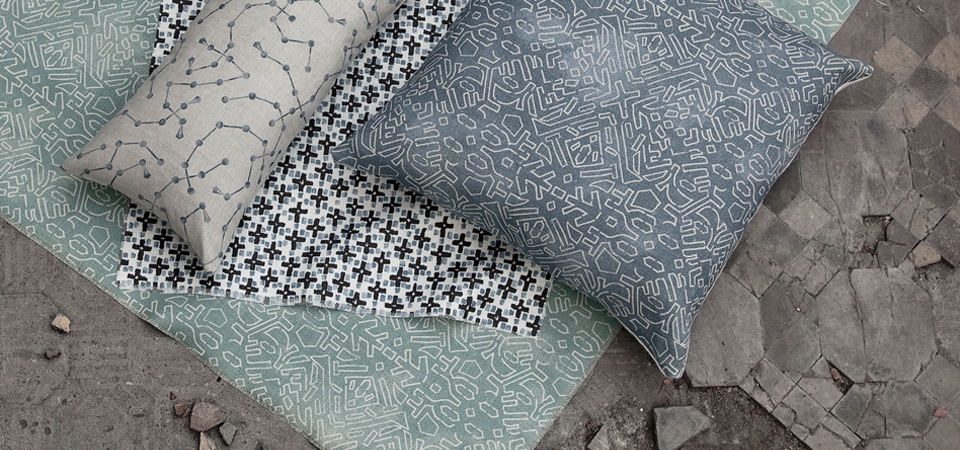
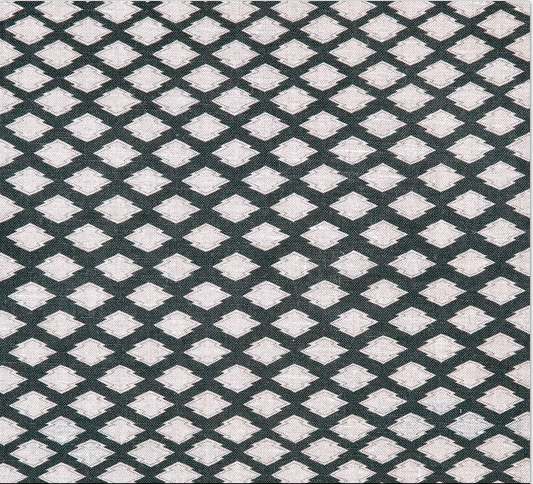
Like “You had me at hello” in Jerry Maguire, Zak Profera’s new textile line ZAK + FOX had me at the quote above and the photo below. Printed on Belgian linen using water-based inks, Profera has created a versatile new line of interiors fabrics with global inspiration. In particular, a few of the patterns have their roots in Japanese symbols and motifs, which I find particularly appealing. In celebration of his launch, Zak is offering the long bolster pillow on the left in the photo below as my first official giveaway. Entering is easy – the details can be found at the end of this post.

JINGASA

The pillow is made of Jingasa fabric in the snow colorway and reads to me as a modern stylized form of karakusa, the scrolling arabesque vine pattern seen over and over again in Japanese decorative arts. The word jingasa refers to the iron helmets that were used by Edo period soldiers and I managed to find an image of one, complete with karakusa pattern, even before reading Zak’s own personal inspiration for it.

According to Zak, Jingasa ”is an abstract, all over composition that was inspired by a crest seen on an antique helmet.  I think I was romanced by the idea of some lone wanderer, so in a way the motif could be seen as marking points on a map or a trail to follow.  The blade-style point gives it a bit of a masculine edge and removes it from just feeling like a bunch of polka dots, though I wanted to keep an “artist’s hand” in the pattern by using watery line-work and giving it an inky tone-on-tone effect.”

MATSU

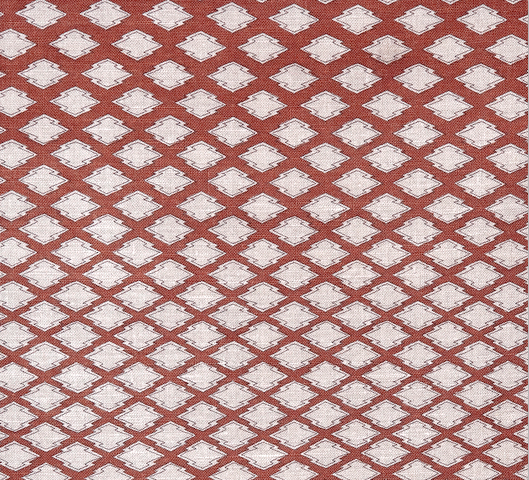
Next up is his Matsu pattern which is a classic interpretation of pine, or in this case matsukawa bishi, pine bark. This stylized version of pine is seen everywhere, from kamon

…to tsuba (sword guards).

Zak ”loves the simplicity of the pine bark motif and wanted to use it in a way that felt modern and different.  I spotted a kimono with a dense repeat of flowers that started at the shoulders and drifted downward in an airy pattern; with this concept in mind, “Matsu” became an energetic pattern with an almost ombre-like effect to it. Some have told me it feels a bit like snakeskin (and I agree) but I think the minimalistic nature of the motif keeps it timeless and not trendy.”

TAKIGAWA

Takigawa translates to “waterfall and river” or more loosely as “rapids,” an apt name for this asymmetric stripe. For me, it is the least literal in its Japanese influence and instead reminds me of an antique Indian dhurrie rug.

Takigawa is Profera’s “version of the traditional stripe and uses a style of repeat seen in many Japanese textiles.  I wanted to simplify the pattern by keeping the natural linen exposed—it gives it a raw edge that feels untouched, and at the same time it’s super modern.  Depending on the color selected, it can feel tailored or relaxed — a quality that I love.  I’ve seen it in a few different colors now as I work with other designers to create custom colors for projects and it’s definitely one of the most versatile patterns in the collection; it works just as well in a beach house as it does in a New York City loft.” Personally, I think the exact same thing can be said about a dhurrie rug too!

I can’t resist showing this photo from ZAK + FOX’s beautiful photo shoot at Temple Court in New York City.

An amazing 1883 building that has fallen into the very best kind of decay (original details protected for decades by ugly drywall) Temple Court has become the stuff of urban legend and high-end modeling jobs and is supposedly going to be restored as a hotel. Right now it would make the perfect interior setting for filming Ransom Riggs’ Miss Peregrine’s Home for Peculiar Children. For more on Temple Court, there is a wonderful article in The New York Times.

KATAGAMI

His Katagami fabric is a bit of a pun, considering that katagami stencils are used to make Japanese textiles. Is Katagami made with a katagami? No, but fun thinking about it in a loop.

In writing about his inspiration, Profera “became totally infatuated with these stencils, not necessarily the “traditional” ones with recognizable patterns but more so by the abstract, almost tribal patterns that felt a bit unplaceable — not quite bullet-point “Japanese”.  This pattern uses one of the more unique antique stencils I stumbled upon, though quite edited with selections changed and redrawn to feel more composed and harmonious.”

His description reminded me of the unusual stencils in this amazing interior by Steven Gambrel, shown here before.

While I love all the patterns, my personal favorites are Jingasa and Takigawa in the plum colorway. Those of you who know me can’t possibly be surprised by that.

Pillows or cushion to contrast with my Bennison floral in the front entry at the beach?

And for all you Japanese motif junkies out there I have been meaning to mention Snow, Wave, Pine: Traditional Patterns in Japanese Design for ages. It is a beautiful tome, cataloging patterns by category and illustrating them with examples of the finest decorative arts.

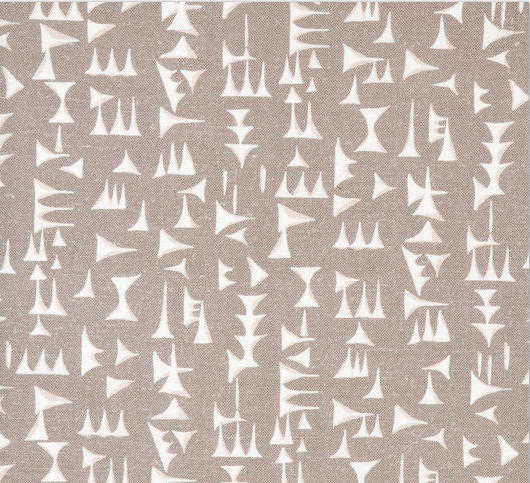
There are also six other patterns – Volubilis, Plus, Karun, Palma, Nimrud, and Postage – in numerous colors in the new ZAK + FOX line, all well worth checking out. Which brings us back to the fun part…the giveaway!

THE GIVEAWAY

You can be the owner of this lovely 11 x 22 inch feather and down filled bolster made of Jingasa fabric in the snow colorway. The pillow is that wonderful long shape that looks perfect in a grouping on a couch, as a lumbar pillow on an armchair or anchoring bed pillows.

As for the details  - it is easy. Simply leave a comment on my post telling me which is your favorite pattern (or frankly, any comment) and then click over to the ZAK + FOX website and join Zak’s mailing list (he promises not to barrage you with emails) by entering your email address in the field in the upper right corner of the home page. We will take entries for a week, until 6pm EST, Wednesday, March 28. One entry per person, although I am tempted to beg someone to enter for me. So unfair that in good sportsmanship I cannot enter myself!!

Related Posts:
More on Mon…The Polka Dots of Japan
R. P. Miller…New Japanese Inspired Fabrics From Rodman Primack Debut at Hollywood at Home
Japanese-Inspired Fabric Follow-Up…Katsugi, Kiku, Kasumi, Kaba Kaba, Katana and More
Katagami…Perfect Thank You Present Found
Sho-Chiku-Bai…The Three Friends of Winter: Pine, Bamboo and Plum

Read Full Post »

I know it is the thing to do at this time of year, but I am not really one for making public New Years’ resolutions. What I do know for sure is that I have loved blogging and plan on continuing full force. I have relished the writing and the learning of new things. I have enjoyed making new friends and reconnecting with old ones. Every comment and email has made me feel part of a greater whole. Revisiting ideas and items that I haven’t thought about in years has been rejuvenating.

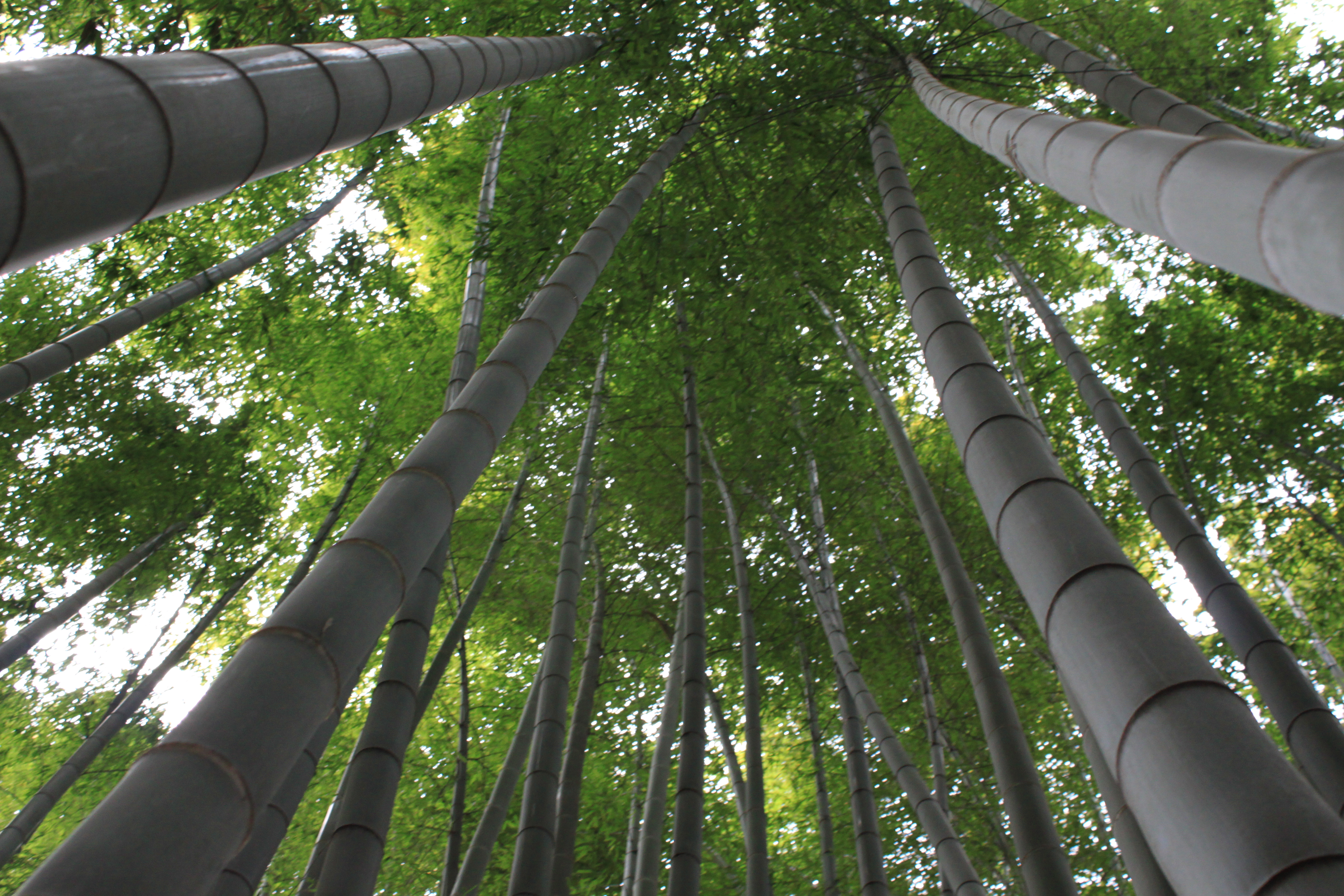
January 2011 will be bamboo month here at Tokyo Jinja, both in topic and spirit. Traditional Japanese still place pairs of kadomatsu made of bamboo and pine in front of their house during New Years for luck and good fortune.

Kadomatsu on my neighbor's gate out my front window

Bamboo symbolizes strength, endurance and resilience as it bends readily but doesn’t break easily. It is also one of the fastest growing plants in the world making it an environmentally sustainable and attractive building material. Bamboo, along with pine and plum blossom, represents one of the “Three Friends of Winter” as a design motif on everything from textiles to gardens. So watch for posts on these subjects as well as 19th century faux bamboo furniture, Aesthetic Movement silver patterns, contemporary bamboo art from Japanese masters, green room inspiration, ikkanbari from artist Lisa George of Paper Glue Bamboo and more.

My Own Starter Buddha

New Year’s at The New York Times brought a great essay on the back page of the magazine entitled ”Starter Buddha,’” adapted from Susan Conley’s new memoir “The Foremost Good Fortune,” which is being published next month. The essay is a pitch perfect piece on buying a “fake” buddha in a big Beijing flea market. The book also looks like a must read, especially for those of us living the expat life in Asia as it tells the tale of their family’s move from Maine to China in 2008 and her subsequent battle with cancer. On the eve of a new year, it is always good to be reminded of and thankful for the gift of good health. I’ll also be headed to Hong Kong this winter, so I’ll finally be answering some of your questions on how to know if something is “real” or “fake” as I tackle the Chinese antique stores and markets.

I want to recommend an outing to the Setagaya Boro-ichi (rag fair) on January 15th and 16th. Held in one form or another for over 400 years and now every December and January on those dates, it is a great traditional market experience.  For more details and information, take a look at this article in The Japan Times. I will also be updating the “Shrine Sale” tag at the top of the blog to have current information for winter and spring events, and introducing some new sales and antique shows.

I have heard from a lot of you that you like some of the more personal posts and updates on our renovation and decoration. In that spirit, I want to share an exciting idea for the entrance area to the beach house. Under the window, in this empty space, we knew we wanted a bench of some sort to sit and put on shoes as well as to pull up to the dining table when we have many guests (my table has 12 leaves and can open to almost the full length of the dining room/living room). In the summer the front door on the left of the photo is always open, so we don’t think much about this space, but this winter, with the door closed, it really functioned as part of the living room.

As I was flying back to Tokyo on Monday, I picked up the February issue of House Beautiful with this charming bench by Alexandra Angle on the front cover. A bench like this is the perfect solution. We are now so Japanese that we never (and will never again) wear shoes in the house.  The design of this bench, with the bar on the bottom, gives us a place to tuck shoes in, keeping them less visible and neat. The other great take-way from the photo is the loose pillows that make it a comfortable place to sit, as if it was a small settee, without having a permanent back. So it can function as a bench, as a couch, and I could even see the girls stretching out here to read.

I have five yards of this adorable Cowtan & Tout Kemerton Check (another great eBay find) that is perfect to upholster it in.

And I could use my last piece of my beloved Bennison Faded Floral that I have been saving for a pillow.

So my dear readers, thank you for your support and encouragement. I would love to hear what you would like to see me write about this year, whether it be questions you want answered or features you’d like to see more of. And please keep those comments and emails coming!

Image credits: 1. A.N. Hudson, 2-4, 6. me, 5. House Beautiful February 2011 photo credit: Victoria Pearson, 7. Bennison

Read Full Post »

“Why does everything have to be so perfect? Nothing in real life is, you know.”
Min Hogg

Thanks to An Aesthete’s Lament for the quote above, but I do believe Min Hogg’s new line of wallpapers and fabrics is absolutely perfect.

First, this photo caught my eye because I have been thinking about using antique porcelain in the bathroom. But the wallpaper held it and sent me looking for more!

Sea Antler Blue on White

This particular pattern comes in other colorways including the White on Pigeon Grey below and White on Pigeon Pink.  I am obsessed with any color with the word pigeon in it – as they are always perfect softly grayed colors.

Sea Antler White on Pigeon Grey

And I have to include this quintessentially English room – it comes alive with its sea feather patterned wallpaper.

Sea Feather Stripe, pink and grey

As many of you know, I am in the thick of a bathroom renovation in our beach house in New Jersey. It is a late 19th century Victorian cottage and the bathroom fittings are simple and white. I had been planning on using Farrow & Ball’s Pale Powder on the walls, but now I might be headed in a different direction….towards Min! Add my blue-green glass and the coral I found in Guam this weekend and I am done!

I could post them all, but there are too many colors and patterns.  They can also be printed on fabric and custom colored. But best of all, the prices are extremely reasonable!

For those of you who may not know who she is, Min Hogg was the founder and editor-in-chief of The World of Interiors for over 20 years. I look forward to reading that magazine like none of the other interiors publications as it often surprises but never bores me. It is exciting to see this new venture of hers!

My original obsession with coral and sea feather prints comes from early 19th century transferware. But this past year I have been turning to this photo from Ben Pentreath’s London shop again and again for inspiration in decorating my beach house. So I jumped over to check his website…

and this is the current post I found there!

Take a look at his website, or better yet, visit the shop on Rugby Street in London like I did last May!

Image credits: 1-11 via Min Hogg, 12-13 via Ben Pentreath

Read Full Post »

Follow

Get every new post delivered to your Inbox.

Join 423 other followers

%d bloggers like this: