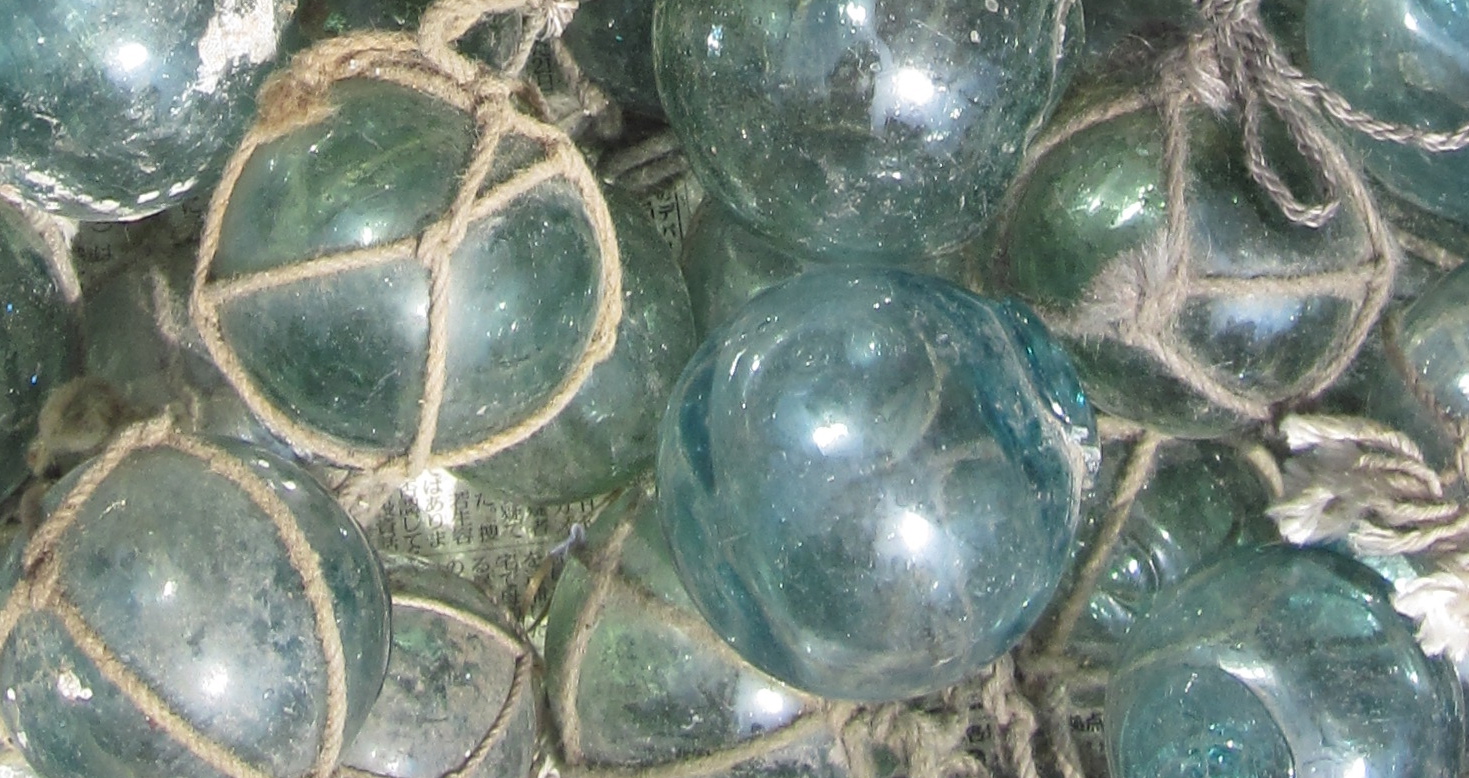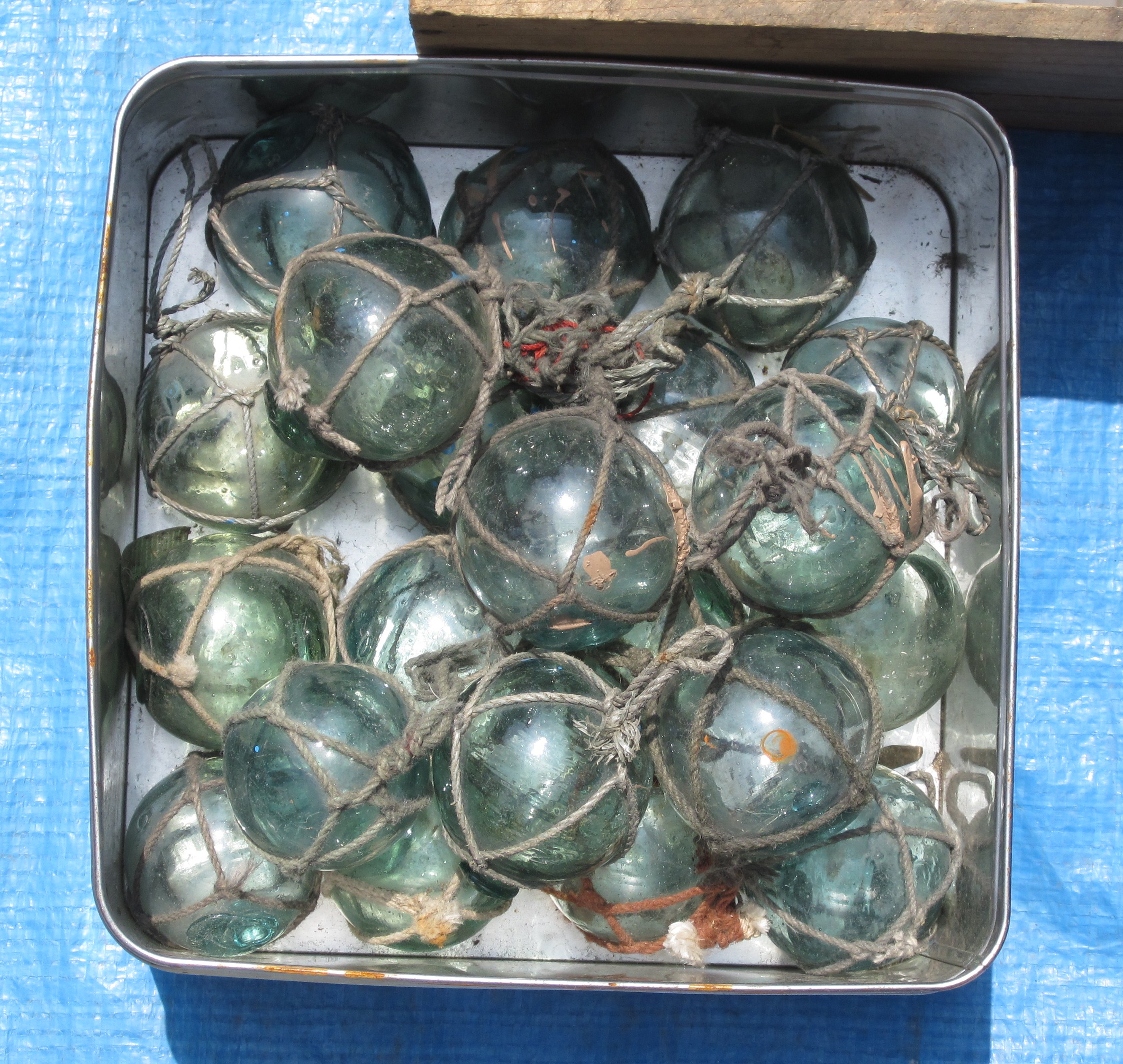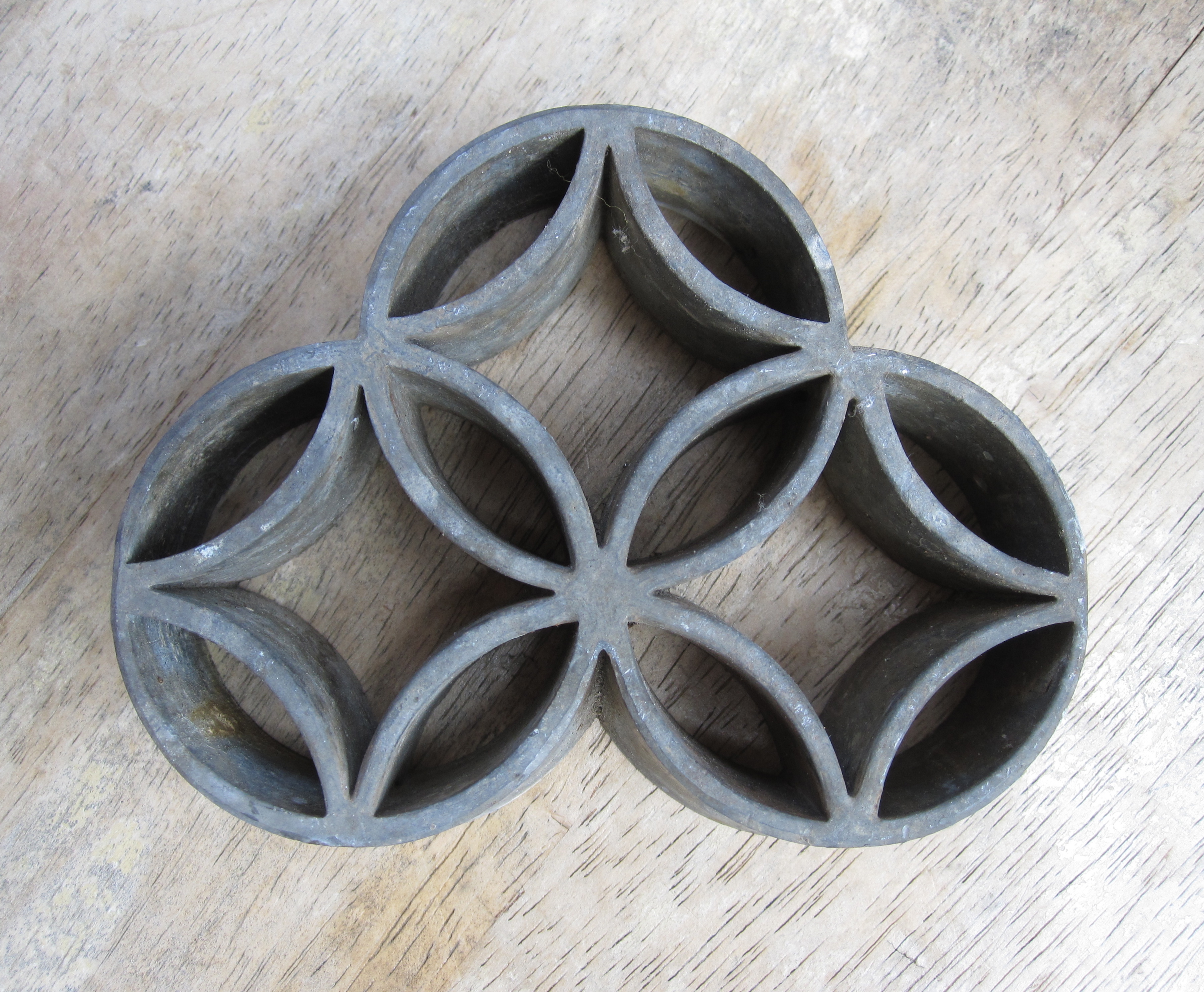
This is one of those posts in which I could have based entirely on photographs of local collections but unfortunately, everyone’s movers worked way faster than expected and most of my anticipated photos got packed up! But everything in this post, while geared towards styling Japanese vintage and antique accessories holds true for just about anything from anywhere. But don’t expect this post to be exhaustive in topic or example. Obviously I could write ten posts about groupings of blue and white porcelain (just look at this month’s House Beautiful) or Japanese glass fishing floats (and I have in the past here, here, here and here for example) as well as some of the more unusual decorative objects we find regularly in Japan (kashigata, katagami, hagoita, come to mind). The focus of this post is really not what you are displaying, but how. I have a few simple “rules” to go by, nothing particularly original, but if you use these, your displays will be better.
One of my most basic rules is the rule of multiples. You can display a single item of a kind, like this Japanese basket perched above the drinks cabinet…

…but beyond that, with the exception of matched pairs, you need a group a similar objects placed together, like these amazing ikebana (flower arranging) baskets on the side board of an apartment designed by Emily Henderson for Michael Reisz on an episode of HGTV’s Secrets of a Stylist. Like objects should always be grouped tightly together, not placed around a space separate and unlinked from each other. I call this the “anti-pimple” rule of display.

Also demonstrated by these baskets is the rule of odd numbers, with the exception of matched pairs again (more on that later). If at a glance you can instantly count the number of objects in a grouping an odd number will always look better. I am sure there is some organic mathematical or mystical reason for this, depending on your personal perspective, but in this case just take my word for it.
The next rule is is that of varied elevation. If the baskets were just lined up on the sideboard, they would look nowhere near as good as they do with some placed higher on wooden boxes. Even their own variety of height would not achieve the same effect.

The rule of containment is to use a single decorative object such as a tray or bowl to corral another collection. We find these roughly hewn soba bowls at shrine sales all over Japan and they are great for holding collections of glass fishing floats…

…floats plus shells and souvenir rocks (love this idea!)…

…or how about hard to store baseball paraphernalia?

Another rule demonstrated by these bowl displays is to use no more than 3 types of objects and ideally either 1 or 3 (odd numbers again). The grouping of all floats is cohesive, the combo of floats, shells and rocks is cohesive, and the mitts and balls work even though there are only two types of items because one of the mitts is very dark in color and reads as a third type of item. If you put too many kinds of items in the bowl, then it will just look like a bunch of junk.
Here Lauren Liess of Pure Style Home uses her bowl to hold magazines. Isn’t it amazing how attractive even the most mundane items can be when displayed correctly?

Another favorite local collectible I have not yet written about is kokeshi dolls, the simple armless painted wooden dolls which originated in northern Japan, but are now made and sold all over the country. Vintage examples from the last 100 years or so of different varieties are a shrine sale staple. They are charming, and easy to collect.
While cute, it is important to give enough gravitas to their display to keep them from looking insignificant. This grouping is crowded by the other unrelated objects on display…

…in comparison to this grouping, where the dolls have space to breathe and coordinate with the other objects nearby. This collector has also chosen to use the rule of strict palette/shape/style to limit which colors and types she buys to create cohesion through the simple black and red paint, while using a variety of heights to create dynamism in the vignette.

This shelf effectively boxes the collection much in the way the soba bowls did above. The enclosure helps to unify the variety of dolls collected.

And here the kokeshi have been literally “boxed” to create cohesion from their variety. Note this display follows the rule of odd numbers and the rule of varied elevation in a vertical format. I do love these cute washi (Japanese paper) lined boxes – they remind me of this and this. And if you are interested in making these there is a DIY tutorial on Poppy Talk too!

Here we have a beautiful grouping of antique iron teapots, but the collection is not yet complete. Imagine this grouping if you either added one or took one away. Imagine if all the teapots sat at the same height instead of having one raised. The plan for the fifth teapot to complete this vignette is for it to be a larger fairly horizontally volumed one. Perhaps another small kettle stand with shorter legs than the one pictured will also be added.

Summer calls, but I owe you some follow up posts on rule-breaking display, because if there are rules, they must be broken, as well one on matched pairs, which have their own display rules. Watch for upcoming related posts on a basket wall installation I did in Tokyo right before leaving for the summer and in contrast, some tiny decorative items that ingenious friends are putting to good use.
Related Posts:
Vignette Arranging With Shrine Sale Goodies at the Beach House
Ways to Display…Porcelain on Brackets
Mirror, Mirror on the Wall…Vintage Etched and Engraved Plateaus
En Masse…Iron Teapots, Vincente Wolf and the Art of Grouped Displays
Image credits: 1. Cottage Living via Bryn Alexandra, 2-3. via Emily Henderson, photo credit: Mark Champion, 4, 9 & 12. me, 5-6. M. Small, 7. via Pure Style Home, 8. Wendy Withers via Apartment Therapy, photo credit: Bethany Nauert, 10. via Decor Allure, 11. Janis Nicoay via Poppy Talk.