Feeds:
Posts
Comments

Archive for the ‘Gardens’ Category

spare pale botanicals

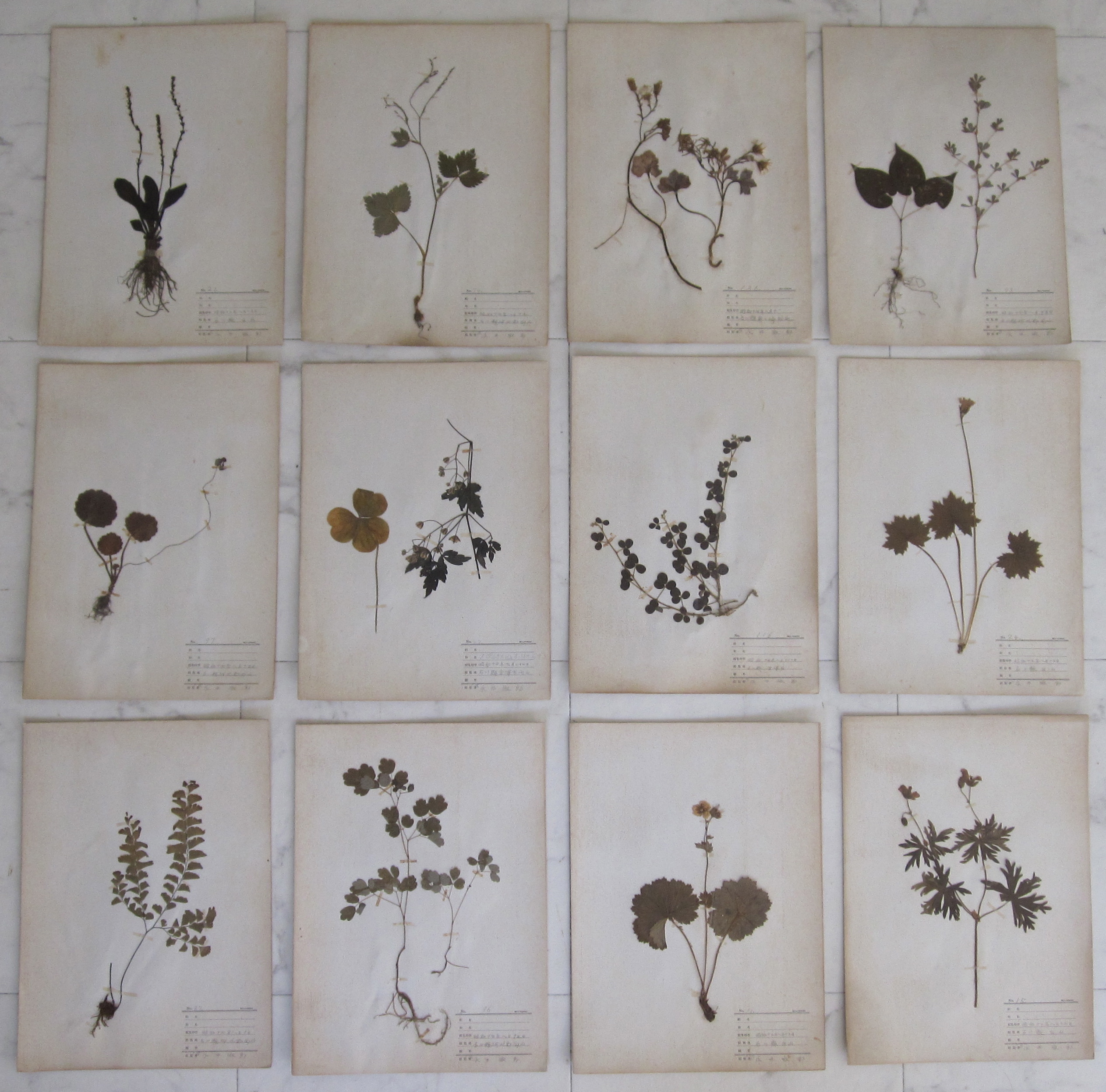
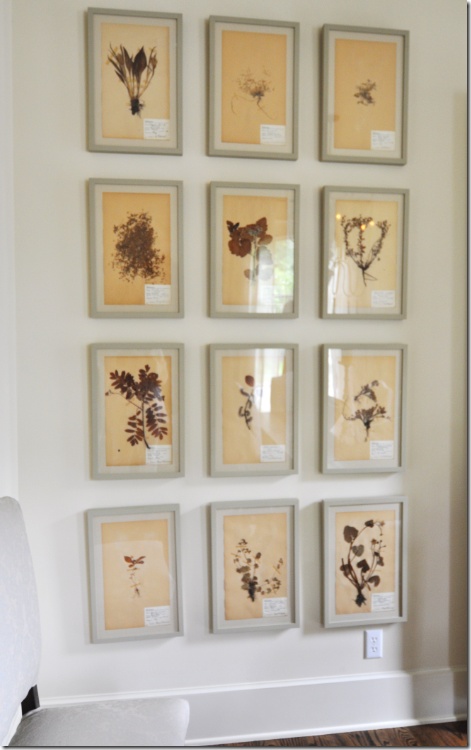
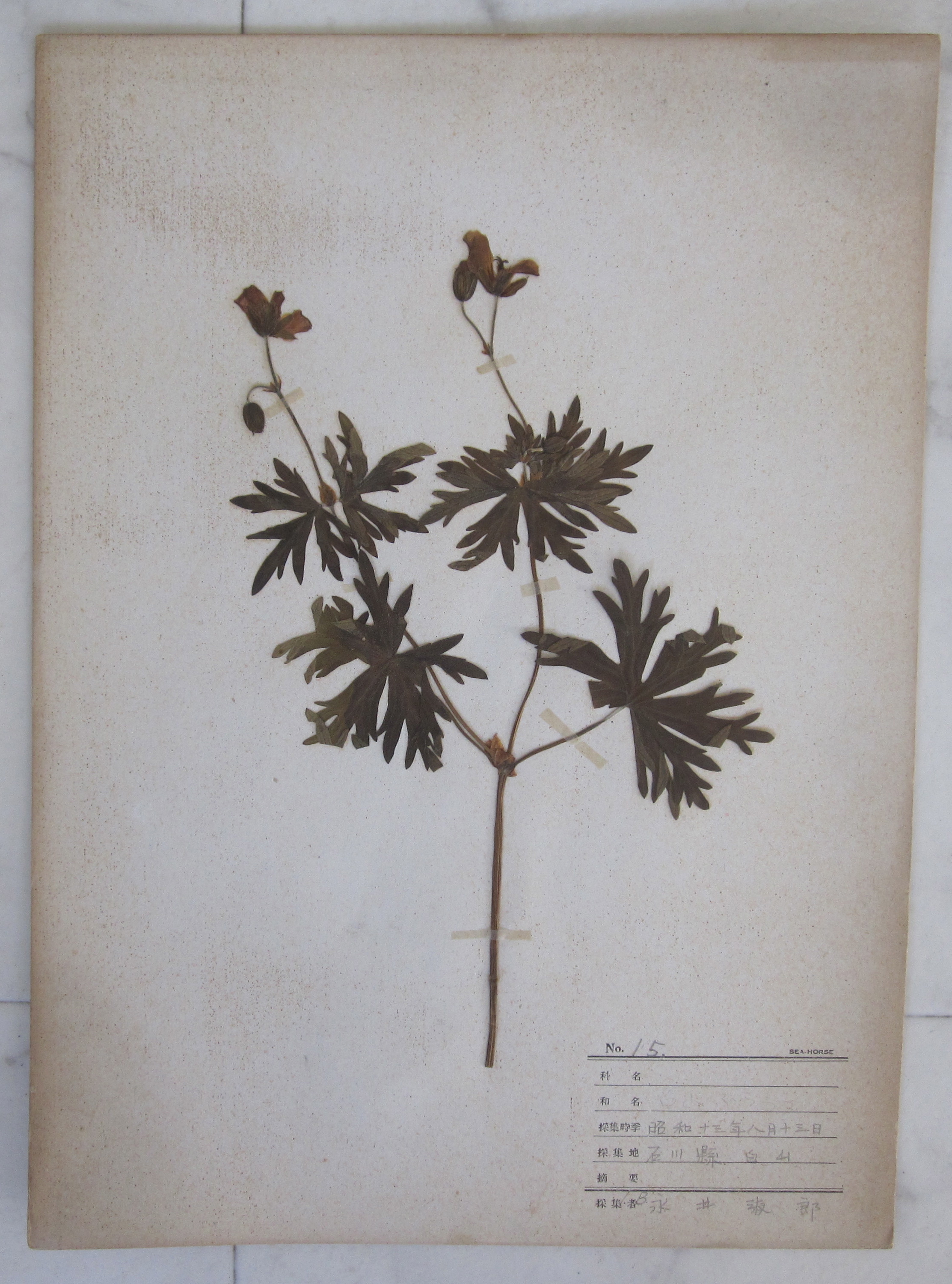
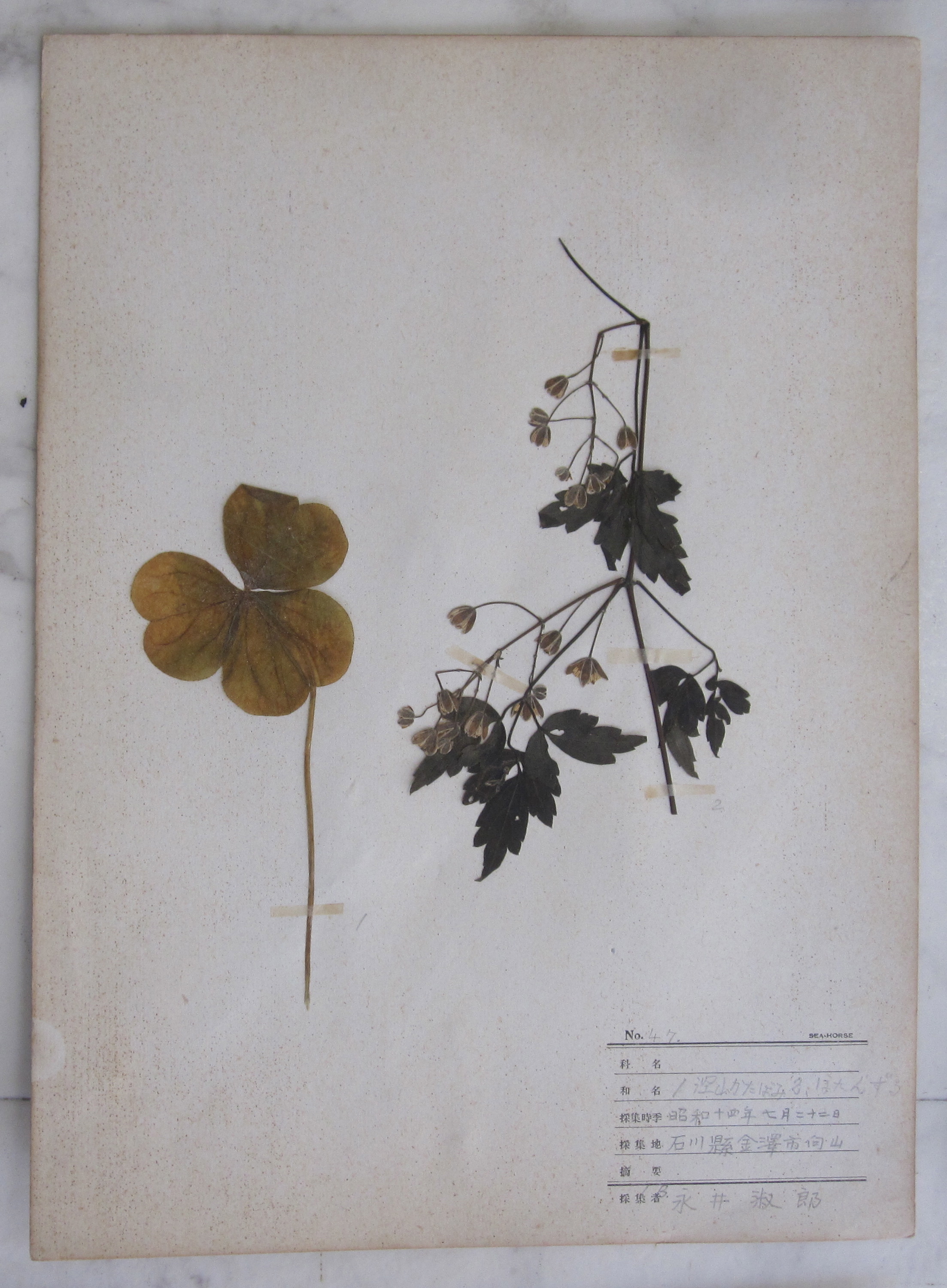
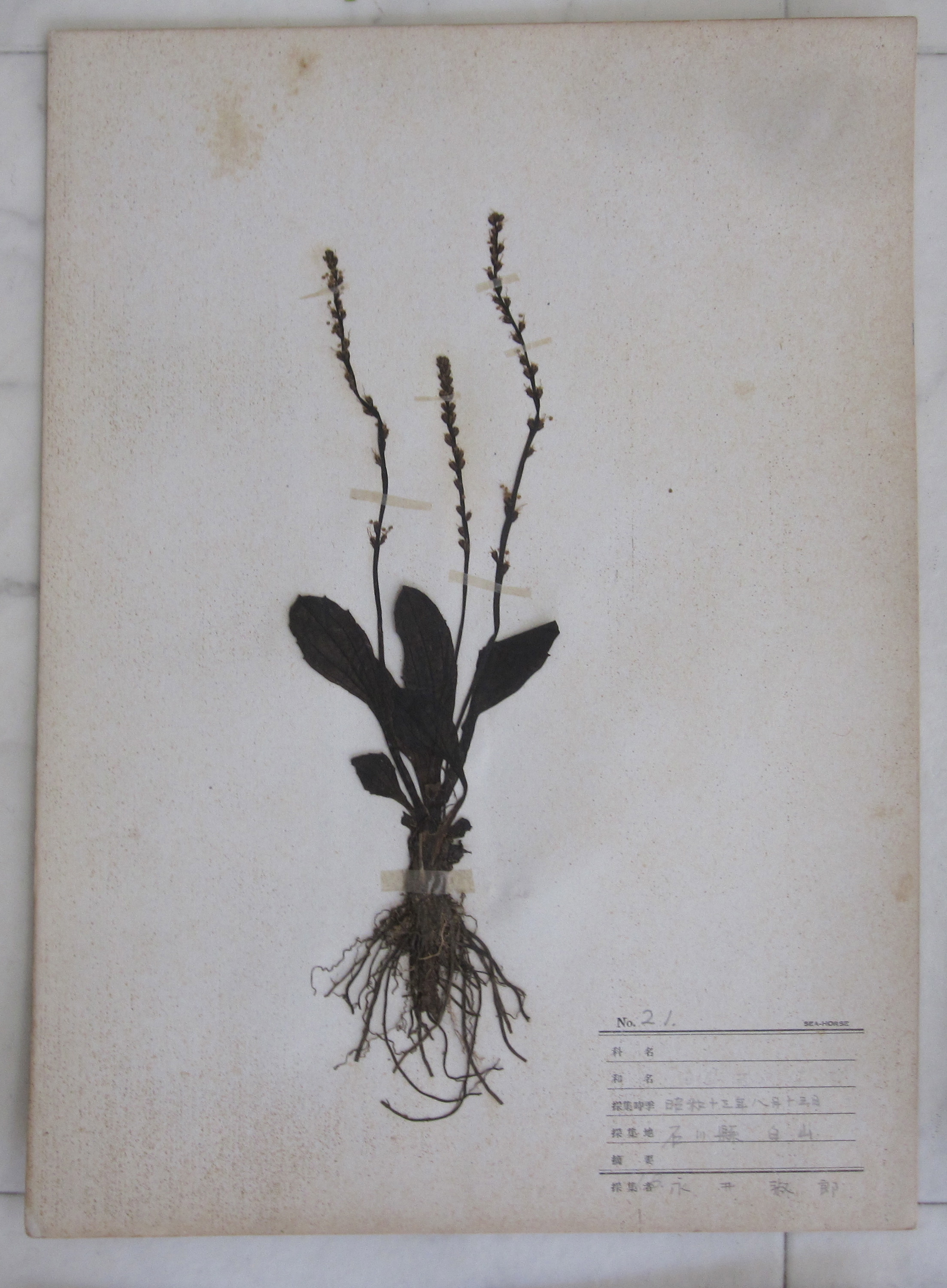
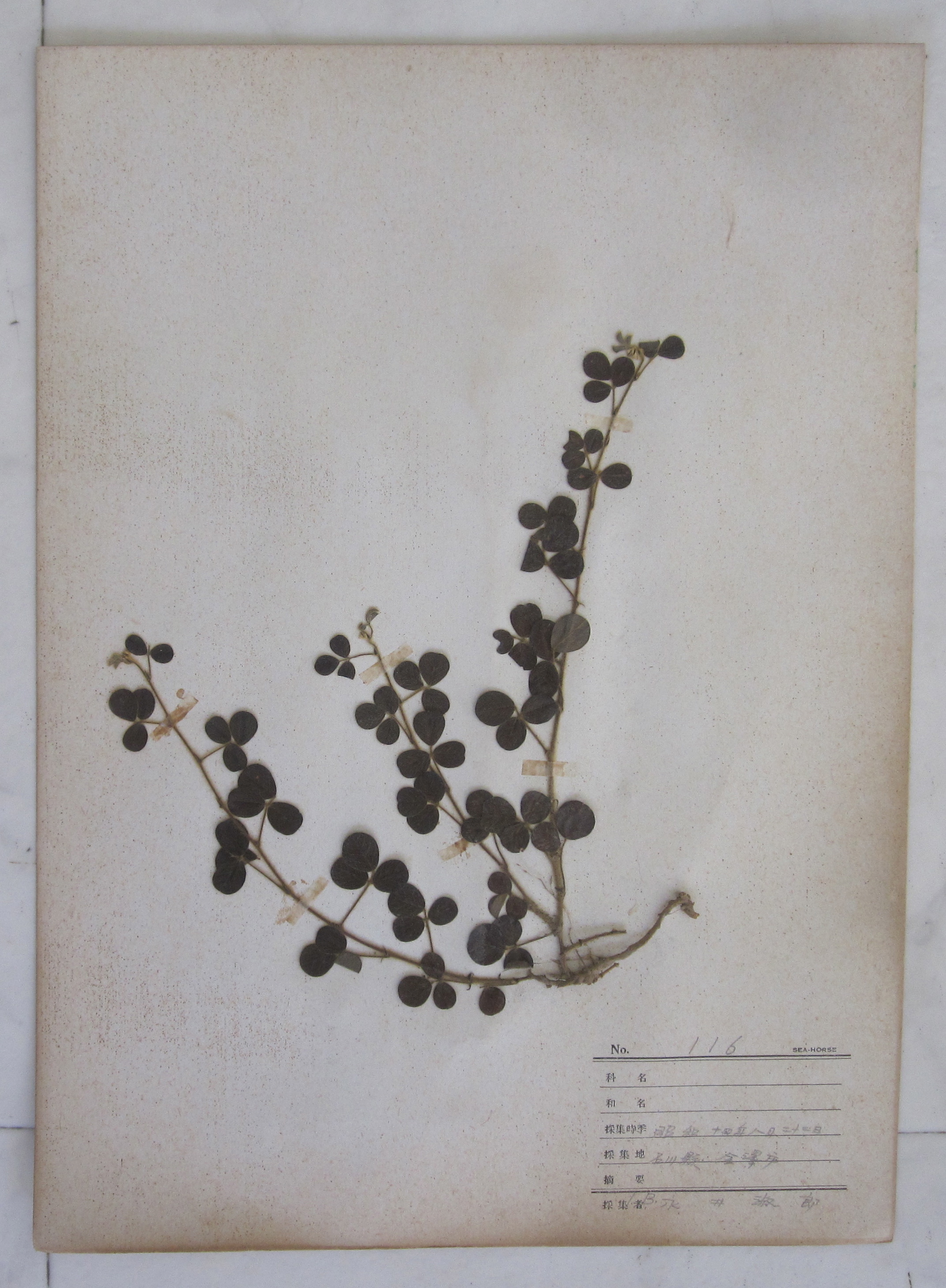
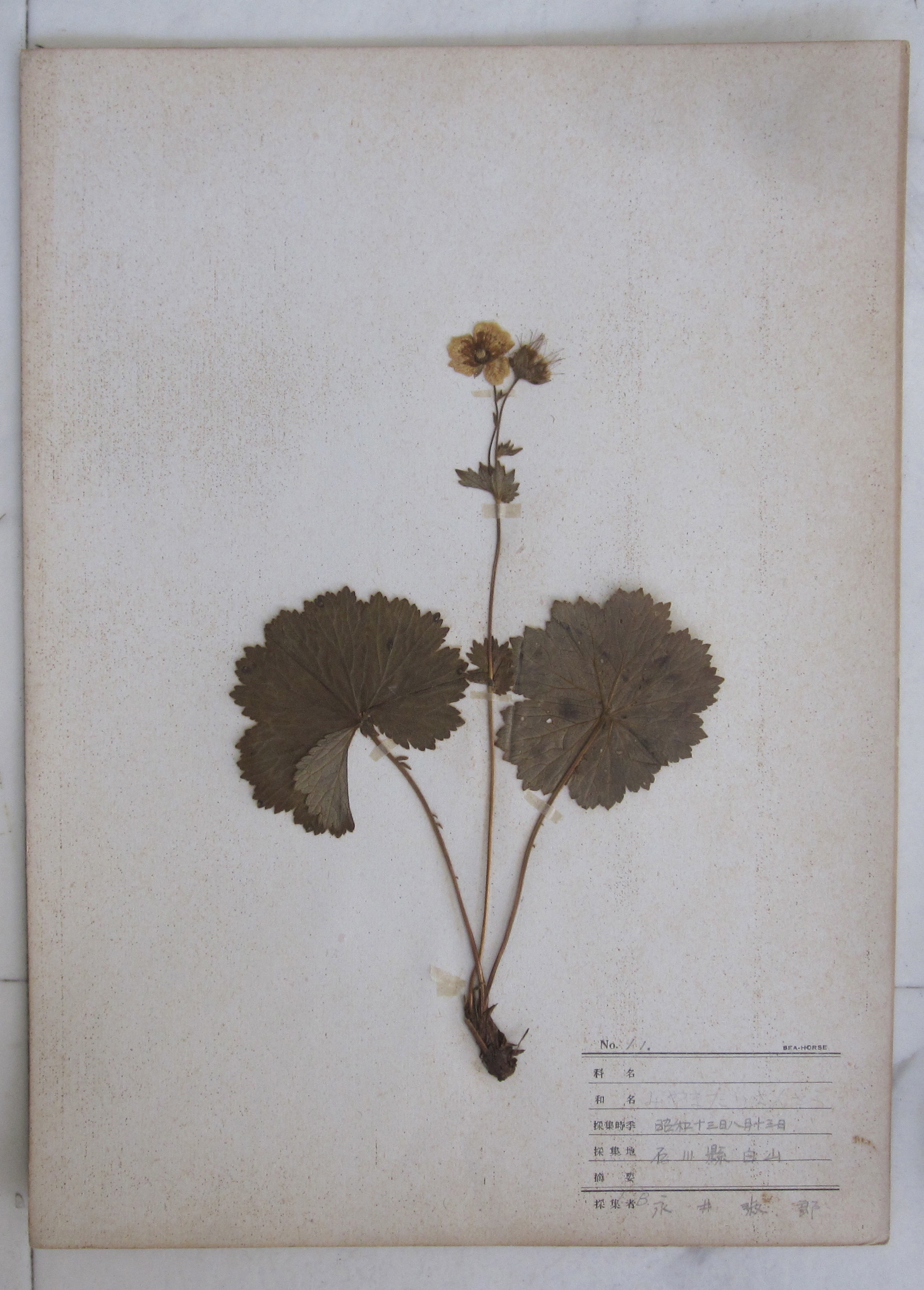
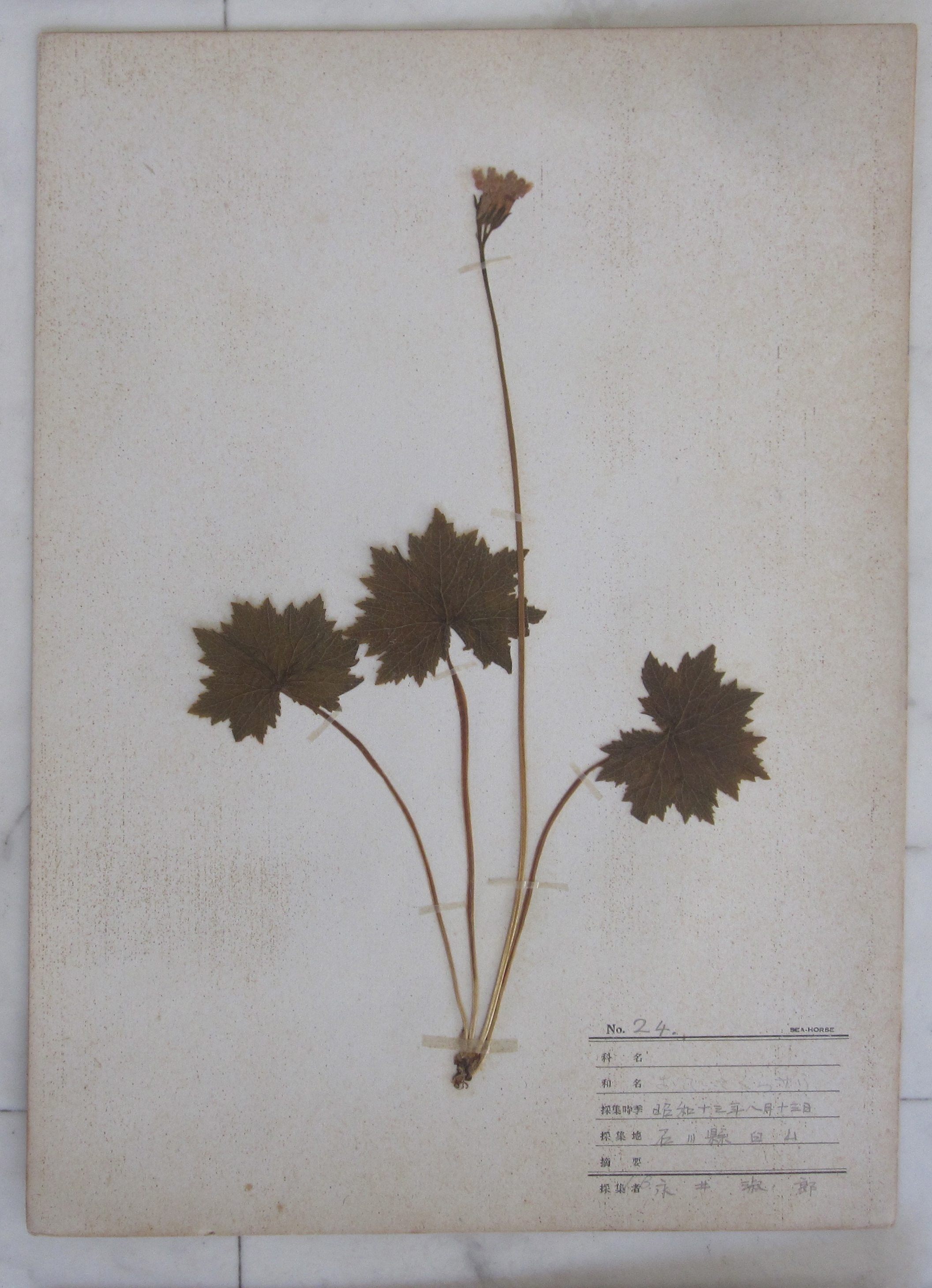
Finding fabulous non-Japanese items, particularly French ones, seems to be a recent theme with me.  So imagine my surprise when I stumbled across these amazing herbiers (pressed and labeled botanicals) recently at a tiny Japanese antique store miles and miles away from Tokyo. Used as scientific tools in many countries for hundreds of years, they are quintessentially French to my mind, although I have also seen many Scandinavian examples. So my surprise continued when I looked closely and discovered that these are actually Japanese, from 1939!

herbiers group

I only bought 12 of them, thinking it a good number that works either 3×4 or 4×3…

herbiers 3x4

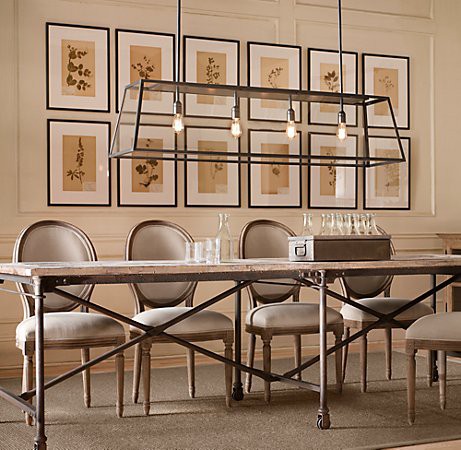
…or even 2 rows of 6, either horizontal or vertical.

herbiers 2x6

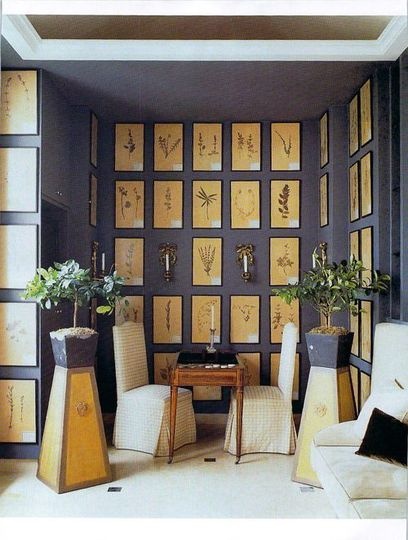
I picked out some of my favorites from the three binders, but I am thinking that perhaps I need to go back and buy them all. They can look amazing in a huge massed display.

huge displey of herbiers against dark paint

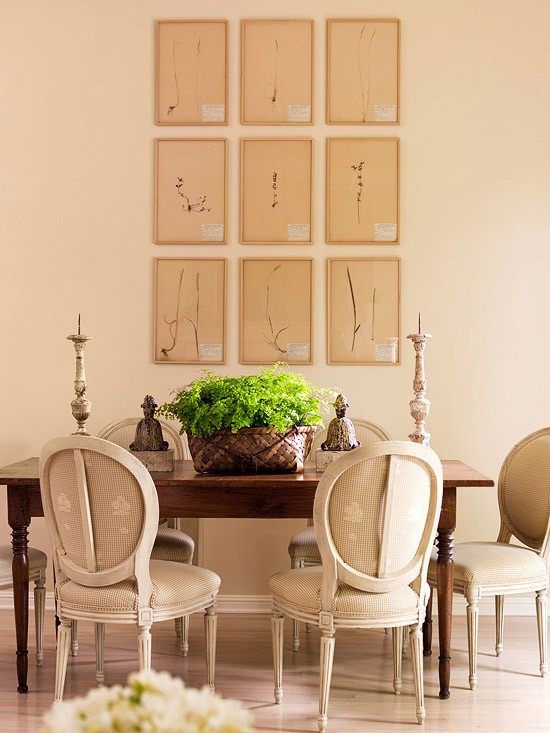
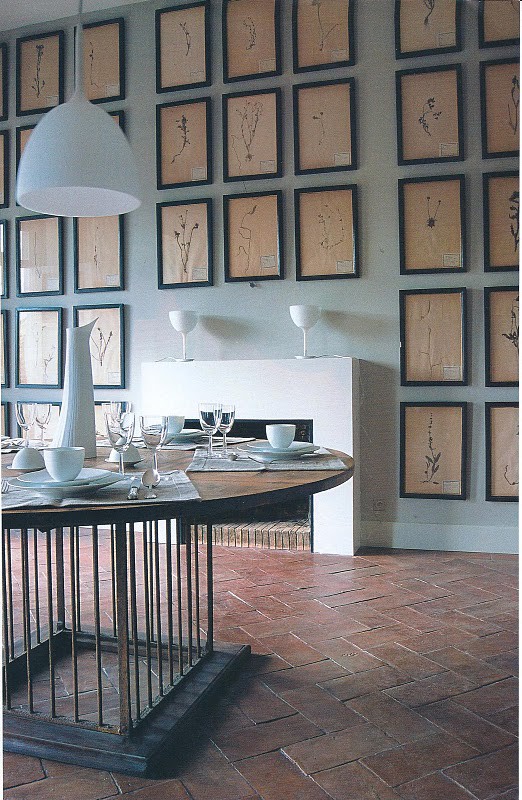
Note how different they look with dark frames against colored walls.

herbiers with black frames against blue

Some, like the oxalis, I can identify by sight, while others will need translation. The paper is lightly foxed, but I think the patina only adds to their charm. I can’t resist showing them each in close-up – how many can you identify?

IMG_0486 IMG_0487 IMG_0489 IMG_0490 IMG_0491 IMG_0492 IMG_0493 IMG_0494 IMG_0495 IMG_0496 IMG_0497 IMG_0498

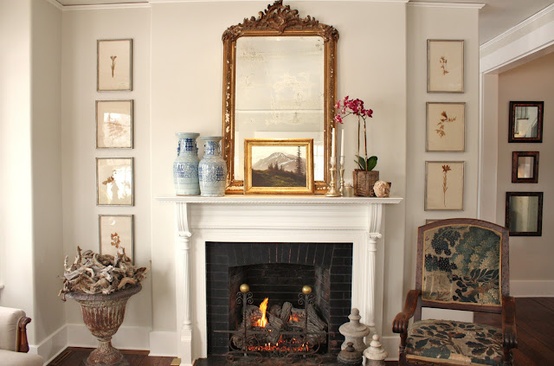
Many views of pressed botanicals can be found in the homes of great bloggers, from Brooke

Brooke Gianetti master bath herbiers

…to Joan.

herbiers joan

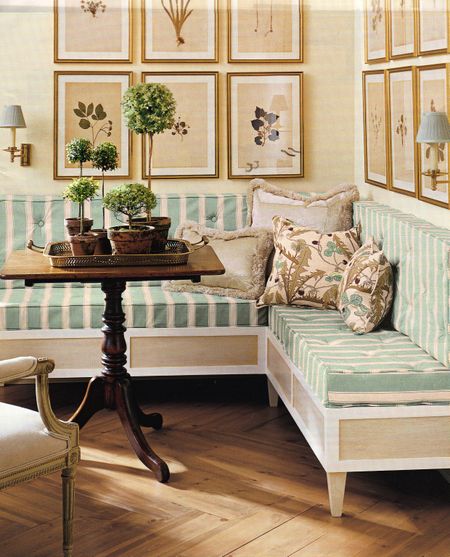
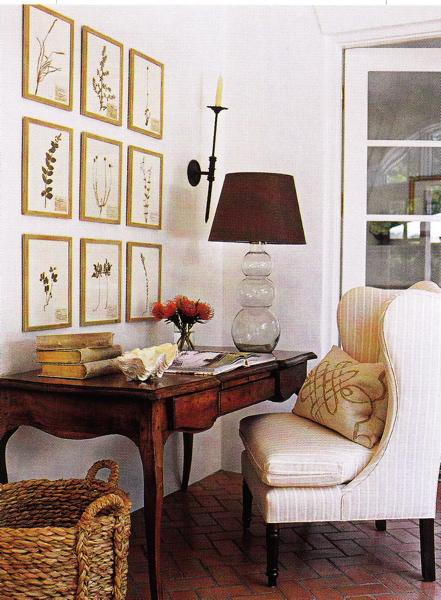
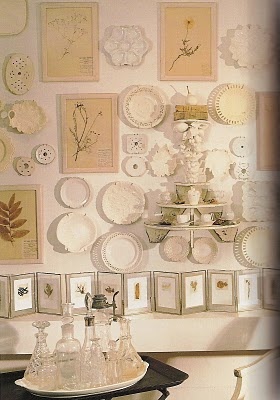
Hugely trendy in decor right now, I already had a Pinterest page devoted to them with some of my favorite images and different ways to frame them.

MSL banquette Kime herbiers

botanicals over desk

herbiers plus creamware

Take a look here for more images and the photo credits. I’ll let you know if I go back and get them all!

Related Posts:
Tussle at the Antique Jamboree…or the Never Wait Rule

About these ads

Read Full Post »

So I can’t resist doing a little copy-cat post thanks to Steve over at The Urban Cottage. I have already been crowing about my “Endless Summer” hydrangeas – the name is enough to hook you line and sinker – but the colors and the incredible growth after just one year have me completely ensnared!

From planting last June:

To this June:

The variation of color and hue from flower to flower – heck, within each flower – is spectacular. I know I used a hydrangea prep fertilizer before I planted them, but I can’t remember what it was. I’ll ask my neighbor who gave it to me and post it in the comments.

Obviously, I have brought them indoors as they are divine…

…but I can’t bring myself to cut more than the stragglers yet as they really make the cottage come alive.

Since this photo was taken, a dark, almost black hollyhock has been planted at the end of the left row and one of the best rose climbers there is – Eden – on the right side.

Steve had been so kind to offer me dark-colored hollyhock seeds in response to my comment about his, but I got incredibly lucky at Sickles Market in Little Silver yesterday. I cannot recommend them highly enough as the selection and service was by far the best I have experienced in a long time.

I’m linking up with Jane’s Small But Charming Flower in the House Party. Stop over to see everyone else’s flowers too!

Read Full Post »

While Dalia was off visiting the Mashiko Pottery Festival last week and checking on post-earthquake progress there, I was busy visiting Kimiake and Shin-ichi Higuchi, two of the world’s foremost Pâte de Verre glass artists up at their newly rebuilt studio at the northern end of Nikko National Park. As you might recall from a previous post, much of the Higuchis’ studio and about 40% of their artwork had been destroyed in the Great East Japan Earthquake. The weekend of November 5-6 was their joyous open house – a celebration of their rebuilding and faith in going forward – and we were lucky enough to be invited. Ironically, they had set up their entire exhibit by Thursday afternoon the 3rd, only for there to be a fairly strong quake that evening, which many of my local readers will remember. For safety, they took everything back down and only put it in place just before the weekend open house.

Simple linked buildings flooded with light house their bedroom, living quarters and studio, all surrounding their gorgeous garden which is the main source of inspiration for their work as well as much of their actual food. Upon arrival we were greeted by giant cabbage leaves spread about the grass. They were so life-like, we weren’t sure if they were glass or not!

Everything in the studio was back to being ship-shape and orderly. The rows and bins of glass powders and frits were a modern installation all their own. In the spirit of recycling, all the broken glass works are being ground down and re-used.

We got to see their process from sketch…

…to detail demonstration…

…to finished installation.

Their renderings of the everyday vegetables and flowers around them are so life-like as to almost be surreal. The asparagus looked so delicious that I was ready to pick it up and eat it.

The bearded irises were amazing.

Color and detail, here on a cyclamen panel…

…and here on a trumpet vine.

The little boxes and vessels made me swoon – I wanted this little sakura box…

…or the wisteria.

Some boxes had secret surprises inside.

Can you see the snail and the water droplet on the hydrangea leaf?

I don’t often include pictures of my kids on the blog, but here she provides a sense of scale. Keep in mind she just turned 8. Largest glass cabbage known to man – perhaps the original was the largest ever grown too.

Speaking of the girls, the younger ones had a ball catching praying mantids in the garden. They strongly suggested that Shin-ichi remake his praying mantis sculpture which had been broken in the earthquake.

And the pièce de résistance, which I cannot resist showing is this…

…their bathroom counter, covered in glass roses, and even including clear glass water drops and a few small insects.

Warm thanks to the Higuchis for hosting us and to Debra for introducing us!!

The previous week, Keiko Iishi, a former assistant to the Higuchis during a Corning Museum of Glass education program and a glass blowing artist in her own right, held a charming solo exhibit in a small Ginza gallery. She had been so disheartened by the loss of family and friends in the earthquake and subsequent tsunami that she had planned to cancel this long-awaited show. With strong encouragement from her supporters, she decided to go forward and it was a treat of color and pattern.

Having just made butterbeer with my elder daughter and her friends, the piece in the center rear, entitled “Honeydukes,” caught my eye. Keiko, a huge Harry Potter fan, said I was one of the only ones to get the reference.

Congratulations to Keiko on a very successful exhibition!

The net result of viewing all this modern glass art? I think we might need to sign up for classes at Hot Sand on the Asbury Park boardwalk this summer.

Read Full Post »

It all started during a visit to a friend’s place in Lake George. In talking about rebuilding her lake house (more on that later), we looked through photos of her sister’s place on Shelter Island. Leslie Hoffman, my friend’s sister, has built an extraordinary sustainable house there and the photo below caught my particular attention. She is waiting for her deck to age to the color of an antique galvanized coal bucket. Read more about her living laboratory for sustainable principles here or follow her on Facebook.

I couldn’t shake that image of the old galvanized metal bucket – the color and texture had captivated me. Later that same visit I was reminded at Lakeview Antiques in Bolton Landing…

Returning south to New Jersey, my interest was unabated…

Culminating in the most amazing find…

The logo makes me think I have made a great discovery. I don’t know much about Pennsylvania Railroad memorabilia, but I am sure someone else out there does. I’ll report back when I know more.

In the meantime, how should I use it?

To hold shoes near the entryway?

For a huge floral arrangement à la Rebecca Cole?

If not flowers, maybe plants? Or perhaps as a giant ice bucket for cooling summer beverages?

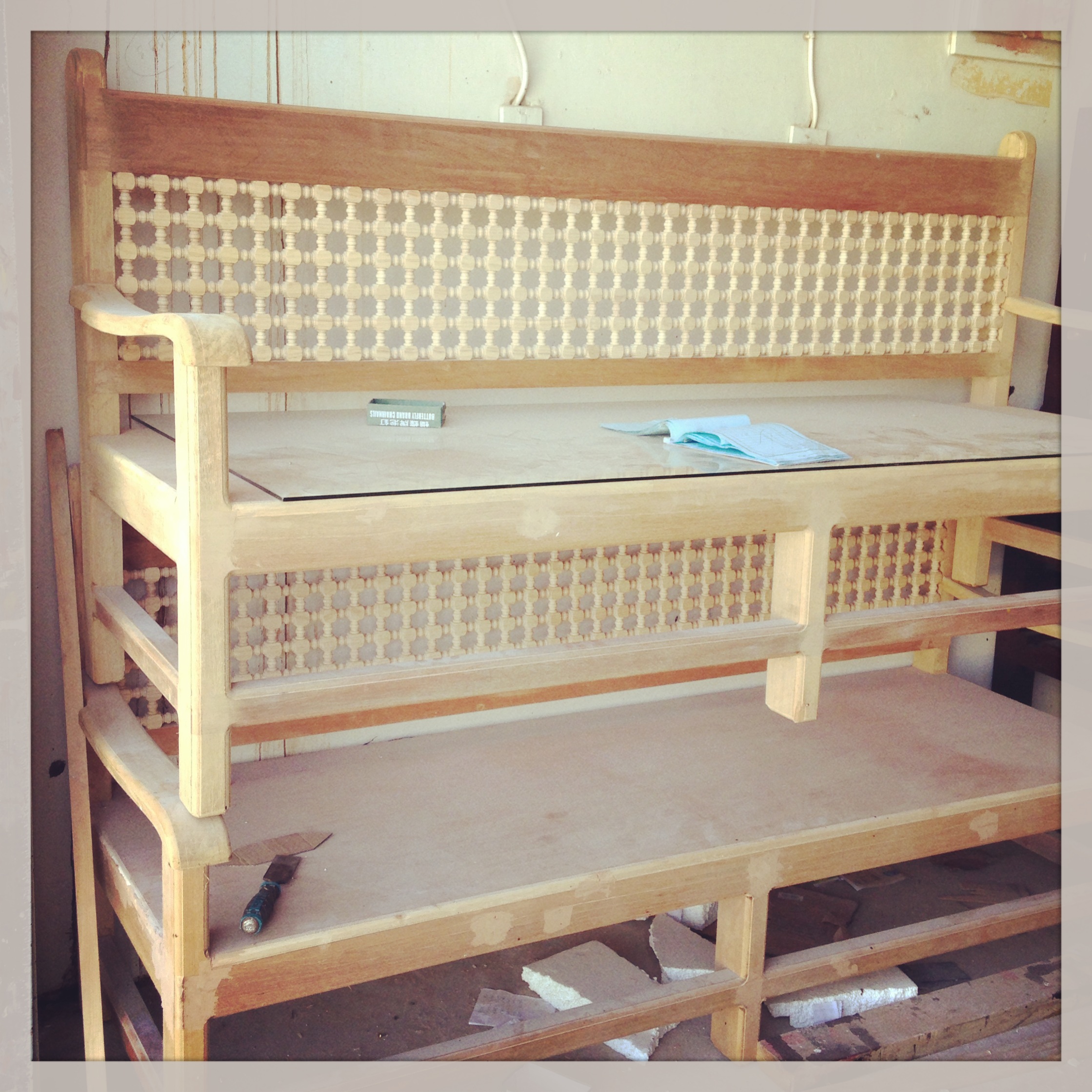
This just in…I am thinking it might look best atop my newest find – this china cabinet. And if I win the Annie Sloan Chalk Paint giveaway over at From the Right Bank, I’ll have just what I need to paint it! Stay tuned for more on this fixer-upper…

Image credits: 1. via Gimme Shelter, 2-6 & 10. me, 7. Martha Stewart Living, 8. Rebecca Cole Designs, 9. Pottery Barn

Read Full Post »

Can one plant make a room? I think so…

No Victorian house is compete with out a Nephrolepis exalta, better known as the Boston fern. One of the most popular houseplants of that era, they seem to be making a comeback these days and perhaps never lost their popularity as a hanging basket on covered porches. Adding one to my home has been a priority from the very beginning, but what I needed was some kind of plant stand to give it a visual lift.

Now I have shown photos of vintage itomaki (Japanese thread spools) on this blog before.

And if you find it hard to imagine how one was used, here is an actual example of a thread spool on its winder.

But it wasn’t until I stumbled across this big six spoke spool just before leaving Tokyo for the summer that I had the epiphany of using it for my still to be purchased Boston fern. I also bought a smaller one to use as a counterpoint accent, perhaps without any plant on it all, like in the very top photo.

Both had interesting burned in markings that I haven’t had time to investigate. Unfortunately, they don’t show with a plant on top.

For me, I think my fern obsession started with this photo of Chessy Rayner‘s Southampton beach house. Living for over 20 years in my tear sheets, for me it has always represented the perfect summer house. The casual choice and arrangement of furniture and objects is everything a beach house should be. Over the years, I can remember so many bad “Before & After” spreads, particularly in Architectural Digest, where they would take a simple beach house and throw away all the wicker and bring in contemporary furniture.

But it was the image of a single Boston fern that I carried most strongly in my memory  - not the furniture – and so I am actually surprised to see that there are a few other plants, such as the pair of Hibiscus standards in the room.

A more recent photo with a similar plant vibe, Joanna Madden’s Point Pleasant beach house would fall flat without its single Boston fern adding a bit of color to her carefully curated all white room. Only about 20 minutes south of here, her home shop Summerhouse nestles in among all the Point Pleasant antique stores I keep writing about.

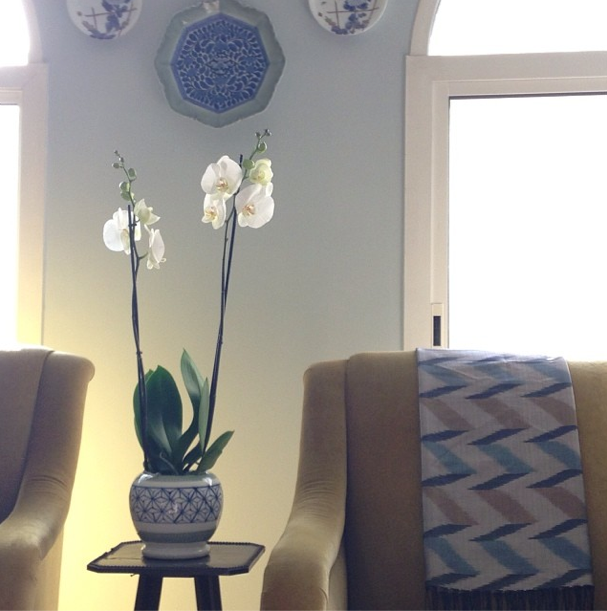
So I have added my fern and now I needed an entry bench. Remember this Alexandra Angle bench from here? It has been my main inspiration. And an orchid, not a fern, adds the needed touch of green.

I am trying to content myself with an inexpensive version of the above – a Dorchester Bench from Ballard Designs. I haven’t yet made a cushion for it in my lovely Kemerton Check from Cowtan & Tout, but you can get the general idea. I am loving the vertical accent the coat rack adds to the room, but it is the Boston fern that makes the vignette.

But at the same time, I think I might want a fully upholstered settee in that wonderful fabric. Obviously this entry hall is much more spacious, but I wonder if comfy seating might make more sense.


And notice the single green boxwood in the planter. Not a Boston fern, but kinda the same idea..

Image Credits: 1-5 & 9. me, 6.Elle Decor September 1990, photo credit: Karen Radkai, 7.Country Living February 2011 photo credit: Bjorn Wallander, 8. House Beautiful February 2011 photo credit: Victoria Pearson, 10. I know this is House Beautiful, but I just can’t remember the credit. Please let me know if you know it.

Read Full Post »

I am dreaming of swaying poles and rustling leaves and the deep but soft grey green of a bamboo forest. I have dug deep into the inspiration files as this is not an everyday kind of color, but when it works, it is spectacular!
It is no accident that many of the following images are from British magazines or are attempting to create an English feel as this seems like such a quintessentially Anglo color.  Suzanne Slesin’s library/dining room may be in New York City, but the light fixture, chairs and glass doors give the room an “English library atmosphere”. Combining the dining room, which tends to get little use, with a library is such a typical NYC trick, but one that would be useful anywhere. Books are always the best decoration!
This library, painted Farrow & Ball’s ‘Sutcliffe Green’ is in England, on the Norfolk/Suffolk border to be exact. Called Blo’ Norton Hall, it is the home of Charles and Rachel Morris. The cozy room occasionally serves as the dining room too. I love the white slips on the chairs and the thick white molding with the rich green paint.

Yet another library, this one by Martyn Lawrence-Bullard, is a favorite of mine.  Too many black and white photos hung together can be stark, but these are set off so perfectly by the green wall and the unusual green Persian carpet. The warm golden-hued Biedermeier desk and chairs provide just the right contrast.

It’s hard for a room to go bad with a wall of french doors and transoms, and this eclectic beauty doesn’t disappoint. I imagine it to be as pleasant to sit here in the summer as it is cozy in the winter, with the great mix of textures and textiles. Unfortunately I have no idea who designed this room – please let me know if you do!

This is an image I have been holding on to for years and it continues to inspire me.  Calling the look “Swamp Palazzo,” interior designer Rosemary James has packed her tiny New Orleans house with amazing French furniture. The dining room is painted a shade she calls “Empire Green.” I love the simplicity of the bare plank floors and the perfect lines of the furniture paired with the opulence of the silver and mirrored cabinetry. The rest of the house is equally charming, including the pale lilac bedroom which will have to wait for a future post.

This dining room by Gregga Jordan Smieszny is renovated in a “twenties rendition of Adam style.” Beautifully proportioned but a little formal for my taste, I couldn’t help but include it as it has bamboo wallpaper, Asian porcelain and those yummy velvet chairs.

There are few people more elegant than Carolina Herrera and her interiors are a reflection of her persona as she designs them herself. The painted Italian chairs make me swoon and the whole room feels like an extension of the garden.

Green kitchens are unusual, although there have been some very bright, very contemporary ones featured lately (Miles Redd anyone?). This English country kitchen in Brynderw Manor has such a casually assembled feel, with mismatched cabinets and chairs, blue and white transferware and those fabulous Majolica dishes on the table.

Compared with the manor house above, this kitchen, with its rustic beams and cheery toile curtains, feels like a country cottage. Again, I wish I had more information and details on location and designer.

This Hamptons (as in Long Island, not England) bedroom looks like it might be right upstairs from that kitchen! Designed by Fox-Nahem, it has just the right ingredients for a summer house - spool bed, striped linens, and airy voile curtains.

One of my bedroom fantasies is a tented room. This Paris apartment has trompe-l’oeil wallpaper to replace a real tent (which gathered too much dust). With the craze for all things Indian and Moroccan unabated, expect to see more of these!

This pretty, pretty bedroom was designed by Renzo Mongiardino for Contessa Christiana Brandolini (a sister of the late industrialist Gianni Agnelli). Somehow I am crazy for any decor that has anything to do with the Agnellis, and I think it is his doing! Click here to read more on this legendary designer.

Is it cheating to add garden rooms to a post on the color green? I don’t think I care. The Paris garden of Pierre Bergé is simply divine…

…as is the conservatory dining room of Robert Kime. I want to have a party under that Venetian chandelier and all those paper lanterns.

For more green (of a very different shade), check out Habitually Chic’s post Green is Good. And thanks to her for the Carolina Herrera photo as I couldn’t get mine to scan properly!

Image credits are sketchy on this post as many of the photos were torn from old magazines with no further information recorded.  Please let me know if you have any dates/names, etc. 1. House & Garden, December 1996, British House & Garden, June 2009, 3. Martyn Lawrence-Bullard, 4. unknown, probably House & Garden, 5. The New York Times Magazine, March 17, 1996, photo credit: Antoine Bootz, 6. Architectural Digest, date unknown, 7. House & Garden, November 1999, 8. unknown, probably British House & Garden, 9. Elle Decor, date unknown, 10. designed by Fox-Nahem, publication unknown, 11. Domino, February 2008, photo credit: Miguel Flores-Vianna, 12. unknown, probably House & Garden, 13. House & Garden, date unknown, 14. Architectural Digest, January 1995, photo credit: Derry Moore.

Read Full Post »

After a friendly complaint about the paltry kadomatsu (literally, gate pine) on yesterdays’ post, I took my camera with me today. Pairs of kadomatsu, flanking the entrance to homes or businesses, have been ensuring a fresh start to the New Year with their auspicious symbolism for over 400 years. Matsu (pine) is the most important component, signifying longevity as the pine tree is long-lived. Take (bamboo) represents strength and prosperity, as it grows straight and strong. Ume (plum blossom) is sometimes added, symbolizing endurance, hope and constancy, as it is the first flower to bloom after winter. Chrysanthemum (signifying perfection, wealth and truth) and other flowers are sometimes added too. The arrangement is bound in rice straw and sometimes zig-zag heisoku (Shinto sacred papers) are tied on too. Officially, there should be 3 pieces of bamboo, cut on an angle to allow the spirits to enter, and all facing different directions to ward off evil spirits, but as you can see, florists take quite a bit of artistic license. I am not sure what the oranges signify (perhaps a sweet year?), but please let me know if you do.


And the pièce de résistance

Read Full Post »

Follow

Get every new post delivered to your Inbox.

Join 405 other followers

%d bloggers like this: