Feeds:
Posts
Comments

Archive for June, 2012

So I can’t resist doing a little copy-cat post thanks to Steve over at The Urban Cottage. I have already been crowing about my “Endless Summer” hydrangeas – the name is enough to hook you line and sinker – but the colors and the incredible growth after just one year have me completely ensnared!

From planting last June:

To this June:

The variation of color and hue from flower to flower – heck, within each flower – is spectacular. I know I used a hydrangea prep fertilizer before I planted them, but I can’t remember what it was. I’ll ask my neighbor who gave it to me and post it in the comments.

Obviously, I have brought them indoors as they are divine…

…but I can’t bring myself to cut more than the stragglers yet as they really make the cottage come alive.

Since this photo was taken, a dark, almost black hollyhock has been planted at the end of the left row and one of the best rose climbers there is – Eden – on the right side.

Steve had been so kind to offer me dark-colored hollyhock seeds in response to my comment about his, but I got incredibly lucky at Sickles Market in Little Silver yesterday. I cannot recommend them highly enough as the selection and service was by far the best I have experienced in a long time.

I’m linking up with Jane’s Small But Charming Flower in the House Party. Stop over to see everyone else’s flowers too!

About these ads

Read Full Post »

OK, I actually wanted to call this post “I’m A Genius” but out of love my best friend wouldn’t let me. Do you know when you are so excited about the smallest accomplishment that you want to crow about it ridiculously? Home almost two weeks, I still feel sluggish and am beating myself up for not getting more done at the house. The truth is that the more you near completion, the harder it is to find and finish those details, as in, “will I ever have night tables in my bedroom?” because they need to be such a specific height and size and work with everything else in the room.

So my moment of joy comes from a good idea mixed with some luck. I am slowly organizing and styling the Sonoma bookcase in the TV room that I wrote about previously here. One conundrum concerned the cable box, DVD player, modem and the millions, yes millions, of cords that connect them all (which are even worse than they look here). As you can see in the photo below, even stacked one on the other, the components look skimpy and the cords are an eyesore. I had thought of hiding the players in a basket, but the remotes don’t work.

Yesterday I made the rounds at all my Point Pleasant antique shops and found this vintage delivery box, much like the one I featured here last year, but larger, at what I believe was the Summerhouse booth of Joanna Madden, who I wrote about here last summer. I forgot to take a photo of her display at Canvas House Antiques, but it was just what you might expect – peely paint furniture and glass bottles, lots of charm and patina. An idea of how to use the box was forming in my mind, but I wasn’t sure if it could be done. I stopped off at the local hardware store for some twist ties – no black, only green gardening ones which will have to do right now – and set to work.

Voila! How fabulous is this? The box was just the right size to sit the cable box on top of the open side. This gives the electronic components enough vertical lift that they fill the shelf space nicely (and keeps the “Fancy Print Butter” label right side up). Better yet, all the power cords have been bundled inside the box at the back. The ones stretching down from the TV have been tied to the iron X bar that supports the shelves – I’ll need to improve on those but I was in a hurry.  I plan on disguising the modem on the shelf below with a storage basket on one side and some large books on the other, or perhaps I will stumble across some other fun and funky object.

I promise the whole bookcase soon. I just have to get to the Ladies Auxiliary Book Sale next week to beef up on my reading material!

Related Posts:
A Television Solution From My Notting Hill and Ballard Designs
Living Large in Small Spaces…FDR, Home Relief and Cream Cheese Boxes at the Tenement Museum of New York

Read Full Post »

As a quick follow-up to my post on styling rules and accessories, I just realized I never included the adult party favors from my daughter’s Bat Mitzvah! At a shrine sale this spring I had found a set of karuta, antique game pieces in which a half of a poem was painted on a small wooden tile and the other half painted on a different one. The goal of the game is to pair up all the poems.

Obviously my predominantly English-speaking crowd wasn’t going to be able to do that, but I thought they looked lovely as part of the table setting and would make a sweet souvenir for people to take home. Not the best photo as this was before the lights were dimmed and you can’t see the lovely painting on the lanterns, but look here for more party details.

What has been really fun is seeing the ways in which people have used them once they got them home. One friend has placed hers in a glass bowl in her entryway, along with some woven straw balls and palm fronds. The natural textures and colors are complimentary and the placement with larger objects in a contained space keeps them from getting lost, both literally and figuratively. Note too, the rule of three holds here as well.

Another friend took hers, added some shells and bits of broken pottery, and framed them in a shadow box which now resides on the counter of her friend’s sushi bar. Again, containing small decoratives in an enclosed space helps to highlight them and limiting the variety of objects to three creates the correct balance.

Other friends have them displayed in a witty take on size – big, medium and small. Can you see a pair of them in this photo? Probably not, but I can’t resist showing you the long view, with the amazing antique map of Japan that I found for them.

Here they are close-up, topping a stack of books, which again serves to highlight and corral them.

I still have some left over. Suggestions on how to use them?

Related Posts:
Sayonara Series…Styling Rules and Japanese Accessories
A Little Bat Mitzvah Inspiration…Sakura Season in Japan
A Little Bat Mitzvah Inspiration…Yoko Ono’s Wish Tree

Read Full Post »

This is one of those posts in which I could have based entirely on photographs of local collections but unfortunately, everyone’s movers worked way faster than expected and most of my anticipated photos got packed up! But everything in this post, while geared towards styling Japanese vintage and antique accessories holds true for just about anything from anywhere. But don’t expect this post to be exhaustive in topic or example. Obviously I could write ten posts about groupings of blue and white porcelain (just look at this month’s House Beautiful) or Japanese glass fishing floats (and I have in the past here, herehere and here for example) as well as some of the more unusual decorative objects we find regularly in Japan (kashigata, katagami, hagoita, come to mind). The focus of this post is really not what you are displaying, but how. I have a few simple “rules” to go by, nothing particularly original, but if you use these, your displays will be better.

One of my most basic rules is the rule of multiples. You can display a single item of a kind, like this Japanese basket perched above the drinks cabinet…

…but beyond that, with the exception of matched pairs, you need a group a similar objects placed together, like these amazing ikebana (flower arranging) baskets on the side board of an apartment designed by Emily Henderson for Michael Reisz on an episode of HGTV’s Secrets of a Stylist. Like objects should always be grouped tightly together, not placed around a space separate and unlinked from each other. I call this the “anti-pimple” rule of display.

Also demonstrated by these baskets is the rule of odd numbers, with the exception of matched pairs again (more on that later). If at a glance you can instantly count the number of objects in a grouping an odd number will always look better. I am sure there is some organic mathematical or mystical reason for this, depending on your personal perspective, but in this case just take my word for it.

The next rule is is that of varied elevation. If the baskets were just lined up on the sideboard, they would look nowhere near as good as they do with some placed higher on wooden boxes. Even their own variety of height would not achieve the same effect.

The rule of containment is to use a single decorative object such as a tray or bowl to corral another collection. We find these roughly hewn soba bowls at shrine sales all over Japan and they are great for holding collections of glass fishing floats…

…floats plus shells and souvenir rocks (love this idea!)…

…or how about hard to store baseball paraphernalia?

Another rule demonstrated by these bowl displays is to use no more than 3 types of objects and ideally either 1 or 3 (odd numbers again). The grouping of all floats is cohesive, the combo of floats, shells and rocks is cohesive, and the mitts and balls work even though there are only two types of items because one of the mitts is very dark in color and reads as a third type of item. If you put too many kinds of items in the bowl, then it will just look like a bunch of junk.

Here Lauren Liess of Pure Style Home uses her bowl to hold magazines. Isn’t it amazing how attractive even the most mundane items can be when displayed correctly?

Another favorite local collectible I have not yet written about is kokeshi dolls, the simple armless painted wooden dolls which originated in northern Japan, but are now made and sold all over the country. Vintage examples from the last 100 years or so of different varieties are a shrine sale staple. They are charming, and easy to collect.

While cute, it is important to give enough gravitas to their display to keep them from looking insignificant. This grouping is crowded by the other unrelated objects on display…

…in comparison to this grouping, where the dolls have space to breathe and coordinate with the other objects nearby. This collector has also chosen to use the rule of strict palette/shape/style to limit which colors and types she buys to create cohesion through the simple black and red paint, while using a variety of heights to create dynamism in the vignette.

This shelf effectively boxes the collection much in the way the soba bowls did above. The enclosure helps to unify the variety of dolls collected.

And here the kokeshi have been literally “boxed” to create cohesion from their variety. Note this display follows the rule of odd numbers and the rule of varied elevation in a vertical format. I do love these cute washi (Japanese paper) lined boxes – they remind me of this and this. And if you are interested in making these there is a DIY tutorial on Poppy Talk too!

Here we have a beautiful grouping of antique iron teapots, but the collection is not yet complete. Imagine this grouping if you either added one or took one away. Imagine if all the teapots sat at the same height instead of having one raised. The plan for the fifth teapot to complete this vignette is for it to be a larger fairly horizontally volumed one. Perhaps another small kettle stand with shorter legs than the one pictured will also be added.

Summer calls, but I owe you some follow up posts on rule-breaking display, because if there are rules, they must be broken, as well one on matched pairs, which have their own display rules. Watch for upcoming related posts on a basket wall installation I did in Tokyo right before leaving for the summer and in contrast, some tiny decorative items that ingenious friends are putting to good use.

Related Posts:
Vignette Arranging With Shrine Sale Goodies at the Beach House
Ways to Display…Porcelain on Brackets
Mirror, Mirror on the Wall…Vintage Etched and Engraved Plateaus
En Masse…Iron Teapots, Vincente Wolf and the Art of Grouped Displays

Image credits: 1. Cottage Living via Bryn Alexandra, 2-3. via Emily Henderson, photo credit: Mark Champion, 4, 9 & 12. me, 5-6. M. Small, 7. via Pure Style Home, 8. Wendy Withers via Apartment Therapy, photo credit: Bethany Nauert, 10. via Decor Allure, 11. Janis Nicoay via Poppy Talk.

Read Full Post »

Exciting news here at Tokyo Jinja! Anthony Joh of Tokyo Podcast was lovely enough to feature me on his newest Podcast! While there is nothing worse than listening to a recording of your own voice, it really was exciting to do a live interview. I am the appetizer to a longer feature about Bobby Judo and his cooking show on Japanese television, but I come first in the Podcast, so please take a moment to listen to it by clicking here. There are MP3 and iTunes links as well.

I don’t often write about the technical side of blogging, but it is one that I am increasingly thinking about.  I’d really love to escape this standard WordPress template I have been using for many reasons, the first being that I hate clicking into another blog using the exact same one. It denigrates the quality of what I am working so hard to achieve. But I do love the easy format provided by the WordPress platform and my html skills are definitely not ready to do it on my own! So if anyone out there knows a graphic designer well versed in creating blogs and websites, I’d love to hear about them.

Another reason I am interested in spreading my wings is so that I can consider advertising. Most of the other design blogs are on Blogger, the Google platform, which has built-in advertising available. WordPress just started their own automated ads, called AdSense about a month ago and I signed on as an early user. How many of you have noticed that my new posts have an ad box at the end? What do you think? Does it bother you? If you think about how much time and effort I exert on this blog I think you would agree that earning some money from it would be reasonable. I know some bloggers believe it can compromise their journalistic integrity, but if the ads are selected by some computer algorithm, how would that be the case? In all honesty, I think ads for apartments in Japan and language lessons (which is what has been springing up on my site) are not geared to my target audience and I cannot imagine that any of my readers have been clicking them.  I think this is borne out by the fact that I earned $6.71 from them last month.

I would like to think about taking individual ads from sponsors on related themes and have actually been contacted by antique dealers and others about advertising. For example, take a look at the ads in Joni‘s left side bar and you will see what I mean. That kind of advertising seems to make more sense, but as it stands now, it is not possible in the WordPress platform I am using. On the other hand, the push from sponsors to feature their products in posts might be just the kind of compromise I am not willing to make.

I have also been recently contacted by MyCityAntiquing.org a Wiki project aimed at creating a comprehensive worldwide directory of antique shops and market places. I really love the idea of all that information gathered under one roof so I have gone ahead and linked some of the articles they requested. Take a look at the bottom of this post to see the “Featured Review” button and let me know what you think! There is even an iPhone app with built-in GPS, which seems like an amazing tool for travel.

I know everyone is busy with summer, but I’d love comments and suggestions, including negative ones about the advertising or anything else, as I consider what direction Tokyo Jinja should head in. I’ve received some wonderful personal emails from readers in the last months and I think of this blog as being your and theirs as well as mine.

Related Posts:
Tokyo Jinja on CNNgo Today

Read Full Post »

Back in the USA for about 48 hours and as usual, jet lag has me a bit out of commission, but as usual, I have been to a few of my favorite local antique haunts before making it to the supermarket. As usual I have dragged a bunch of decorative finds from the last year with me, this time in a giant box that I was lucky enough to manage to check on the plane. Many of the things in it you have seen in posts before but there are a few fabulous things that you won’t have seen…

A pair of vintage fans.

A lacquer wagashi (Japanese sweets) covered case, a vintage brass and porcelain iron (can you spot the kanji character?) and a favorite blue and purple transferware bowl forgotten and recently found.

And the piece de resistance, a brass and tin-lined film reel canister, designed to protect old movie reels from fire and damp. It is from a theater in Ginza and seals tightly. I am not sure this photo does it justice, but I am sure you’ll be seeing more of it as I am thinking of using it for recycling in the kitchen. I also brought back this huge wire basket – no purpose in mind yet – but so lovely and sculptural. You can see another one in the background of the photo – I seem to be collecting them!

I am getting the house in order and starting to make a list of everything that needs to be done, but finding the key pieces I still need to be elusive (remember, I have already done a pass through my favorite antique stores with no luck). I might need to travel further afield, and on that note, I am dying to visit Privet House in Connecticut.

Billed as “an Emporium of Home Goods, Antiques and Curiosities” giving it a John Derian-esque air, I first heard about it through a post on the wonderful Good Bones Great Pieces blog written by Lauren and Suzanne McGrath, whose eponymous new book is also on my must read this summer.  Privet House is the baby of Richard Lambertson and Suzanne Cassano, two well-known design industry professionals and neighbors who joined forces to open the shop. Everything in their photos looks interesting, but I am thinking I am so riveted by it because of the paint color - Benjamin Moore Sweet Innocence 2125-50 - so similar to my own beloved Benjamin Moore Pelican Gray 1612. Shopping there would almost be like trying everything out at home!

Vintage leather suitcases – you all know where I stand on those!

Funky swing arm lighting – you know where I stand on that too. And doesn’t the shade remind you of these from here?

I have the feeling it all may be very pricey, so I might just have to content myself with some of these Turkish hammam towels. Dreamy colors, don’t you think?

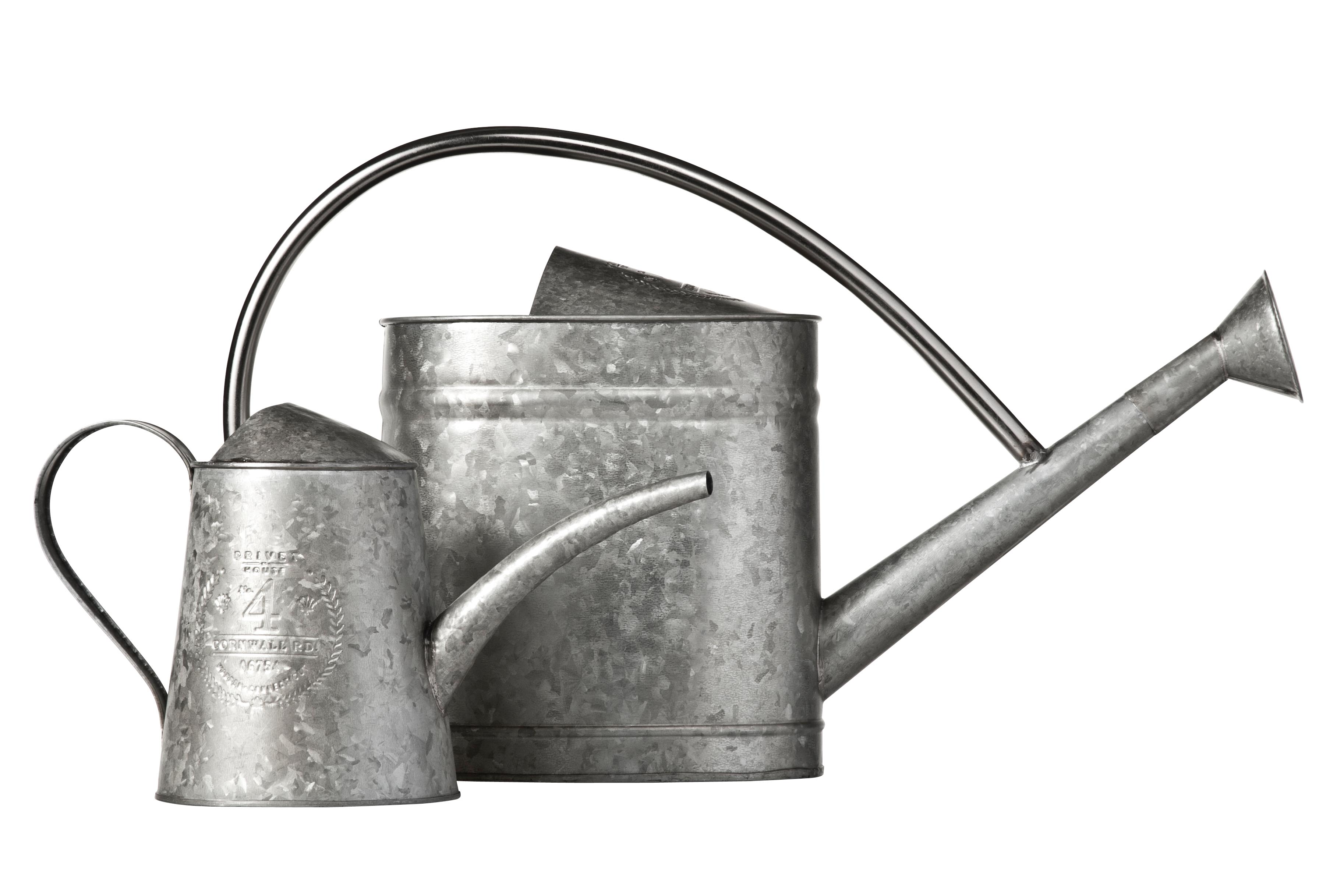
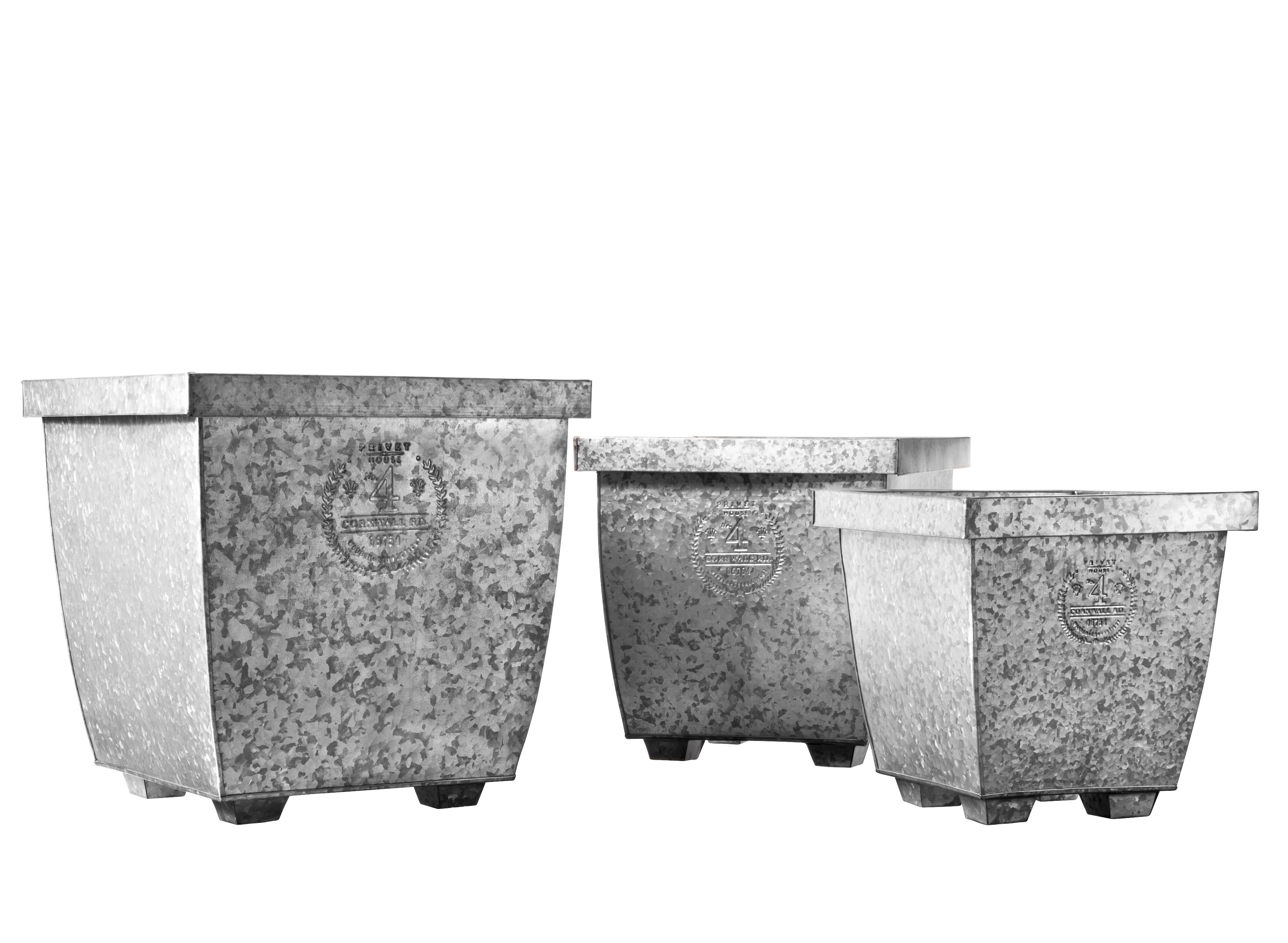
But the good news is that the Privet look is available to the masses at The Shops at Target - they have a branded line there right now full of lots of things I love including galvanized tin garden supplies.

Dishes galore, including many funky pattern melamine ones, perfect for patio meals…

…and these embossed white china ones which may be my perfect summer home basics!

So in addition to the antique shops, I have also managed to make it over to Target (but still not the supermarket) and loaded up on Privet House items – all on sale too!

Jet lag fugue state closing in so it is time to go sit on the porch. And my children want dinner – the nerve of them! Here’s one more image of wonderful things here at the house – my hydrangeas are gorgeous and look so pretty in the transferware bowl. And you can see how similar the wall paint color is too!

Happy Summer!

Image credits: 1-4 & 14-15. me, 5-7 & 9. via Privet House, 8. via Good Bones Great Pieces, 10-13. via Target

Read Full Post »

Indigo abounds here in Tokyo, and while I love it, not everything can be blue. Finding porcelain, like the pieces in yesterday’s post, or textiles, like the one in this post, in other colors tends to be more unusual. So lucky me found this amazing pieced and sashiko-stitched blanket recently, in the most unusual colors of pink and grey. The blanket is a four block grid, over stitched in white thread. I brought it home and changed out our duvet for summer. Ironically, for all that it is Japanese, it looks so much like an American quilt, even an Amish one. And perhaps even funnier, I have it on a very French bed.

It’s perfect simplicity really is reminiscent of late 19th and early 20th century Amish quilts, like this one from an old Christie’s auction.

Kinda apropos with this pillow, isn’t it? Not just color, but the mix of American quilt block and Japanese obi, all on a French settee.

And the room already had another mash-up, with a late Federal American birds-eye maple and cherry dresser, paired with sconces and a pastel portrait from the Paris flea market.

Nothing like a little multiculturalism, is there?

Related Posts:
A Not Quite DIY…An Obi and Quilt Block Pillow Tale
Quick and Easy DIY…Trimming a Lamp Shade with Ribbon
Artist Spotlight…Kazuko Yoshiura and Sashiko Fever


Read Full Post »

Today was slim on the ground for shrine sales being the second Sunday of the month, but Tomioka Hachiman did not disappoint. It was a day full of friends from out-of-town and extraordinary porcelain, including a few cute and very atypical Japanese pieces bought for the beach house. The small green iris pickle dish will be perfect on the dresser or night table in the beach house guest room for holding jewelry and other trinkets.

It reminded me of the Korin Ogata screens and the garden at the Nezu Museum.

The small Imari-meets-lustreware dish has all the pretty colors in the downstairs rooms of the beach house. Don’t know how I’ll be using it – perhaps as part of a wall display, perhaps on a stack of books on the coffee table to hold olive and cherry pits.

But the person who had the most fun today was my elder daughter who happened upon a stall selling vintage matchbooks from the 1930s-1950s. We have often seen matchbox covers mounted on pages, but not often the entire matchboxes. The dealer had hundreds of them in three big boxes and she spent significant time sorting through them and putting together a charming collection which we plan to place in a shadow box frame. You’ll note her signature colors of lavender and blue.

The story comes as she was choosing her boxes. Much to her chagrin, another man came up behind and offered to buy zenbu – everything – from the dealer. It hadn’t occurred to us and we were immediately sad to see the entire collection go! Luckily, the dealer offered us a few as “service” gifts for making a purchase before he sold off the boxes. We managed to grab a few historical gems.

The first matchbox, dated 1939, features Frank Lloyd Wright’s famous Imperial Hotel, with its stylized logo on one side and Mt. Fuji and an early version of the Shinkansen (bullet train) on the other.

Finished in 1923, the hotel was one of Wright’s masterpieces, famously surviving the Great Kanto Earthquake that year, and in use as the premier Tokyo hotel until 1968 when it was deemed outdated and tragically torn down.

The other matchbox could not have been more timely, featuring the 1948 London Olympics on one side and the 1952 Helsinki Olympics on the other.

Wondering what they might fetch among collectors. Ebay maybe?

Image Credits:  Iris photo by Joseph Keating, via Atsuko & Joe, Imperial Hotel postcard via Old Tokyo, all other photos by me.

Read Full Post »

“Instead Armani’s interiors possess the formal grace of a Japanese ryokan, only darker in tone and significantly more luxurious.”
-Mitchell Owens in Architectural Digest March 2012

While working on my sayonara series of posts, I had photos of fashion designer Giorgio Armani’s ski chalet in Switzerland from the March issue of Architectural Digest queued up for use. The design featured some tansu used in dramatic ways, but something about the entire home struck a chord with me and I decided to set it aside until I could figure out what it was. It came to me in that magic way ideas can just germinate in a passive mind in a calm moment, that the home felt Japanese in more ways than just the few pieces of furniture. It reminded me of a similar spread on author and Japanologist Alex Kerr’s famous renovation – or more accurately rescue and restoration – of an old Japanese home, also featured in AD, but about ten years ago.

Since then I have managed to read the article accompanying the Armani photos and it makes no bones about the parallel to Japanese design. Armani’s La Punt, Switzerland winter getaway is a restored 17th century barn that has been converted into a sleekly modern ski home, in a very Japanese vernacular. It is not surprising that the gleaming mahogany walls, floors and beams and streamlined furniture coupled with Japanese antiques, including half of a tansu hiding behind the sofa in the photo below, in the soaring cavernous space, remind me of…

Alex Kerr’s restored 18th century farmhouse in the Iya Valley. In addition to writing Lost Japan and Dogs and Demons, Kerr has become one of the standard bearers in the movement to preserve Japan’s vanishing arts, culture and traditional lifestyle in the face of globalization and modernization.

Beamed details and grid-like wall pattern around the hearth at Armani’s…

…beamed details and grid-like built-ins around the hearth at Kerr’s.

Upstairs at Armani’s place, a pair of fraternal twin tansu stand guard on either side of the window in the bedroom.

Upstairs at Alex Kerr’s there are at least a quintuplet of tansu siblings, including the kaidan tansu on the left and assorted mizuya tansu around the room.

Simple beds, low to the ground and fireplaces with little adornment are common…

…at both homes.

I think Kerr’s place is more romantic, but I am sure Armani’s is more comfy!

Related Posts:
What’s Cooking? Tansu in the Kitchen
Where Do You Tansu?
Where Do You Tansu? Part II

Image credits: Giorgio Armani’s home in Architectural Digest March 2012, photo credits: Roger Davies, Alex Kerr’s home in Architectural Digest August 2002, photo credits: Erhard Pfeiffer

Read Full Post »

Expat circles here in Tokyo are all abuzz about a new jewelry artist named Lynn Cooper and her line of handmade silver charms, as are her growing base of Etsy customers too. Kanoa Pure Silver, romantically named after the Hawaiian word for wanderer, is the name of her new company and fast becoming the sayonara gift of choice!

Cooper makes all her charms by hand using gin nendo, a malleable silver clay, and her techniques include hand hammering and texturing, stamping and carving. Each and every piece is physically individual, even when using the same stamp, as the hand work creates slight variations. She burnishes them to have an aged glow, with oxidation left in the crevices, giving them a feeling of age.

Her goal is not only to make fine jewelry, but to create a talisman for each wearer. So in that sense each grouping is emotionally different – perhaps representing the shared experience of a gift giver, the memory of an adventure or a connection to a culture different from one’s own.

Before we launch into all her lovely work, I must show you her ship-shape (no pun intended!) colorful work space. She has all the tools of her trade at hands reach, displayed with other sentimental objects. And look how she has chosen to use her vintage enameled laundry hanger – part lamp shade, part display rack.

The kamon stamps are the same vintage ones spied at the Setagaya Boro-ichi. And talk about re-purposing! The black cubbies are actually the old telephone cubby holders from the American Embassy that she spray painted and lined with washi paper. Reminds me of another great display case I have written about before.

Cooper uses the kamon stamps to make her larger charms which can stand alone on a chain or cord.

Her other technique involves hand carving her own blocks, often including a kanji, in this case tomodachi – the word for friend – on a cherry blossom. She adds vintage beads sourced from shrine sales and other semi-precious stones too.

Nostalgic images, an onigiri (rice ball) and Mt. Fuji, are also popular.

I just love the little stone lantern and teapot on this grouping. Customers can mix and match their own charms and beads and she can even custom carve (when she isn’t crazy busy) a specific image. She’s not limited to Japanese icons either!

Here’s my own little cute grouping – those who know me well will not be at all surprised about the accent beading color!

And last night I got this charm – another one featuring the tomodachi kanji- from a friend to add to my collection. You can really see the woodblock-like carving on these kanji charms.

Lynn’s packaging for gifts is also just adorable, she has such an eye for colors – like the card above using two contrasting traditional Japanese patterns, or her standard gift box, shown below.

And if you think only ladies can get in the fun, think again! With Father’s Day coming up, she also has gifts for men, like these fun cufflinks. Inspired by everything from katagami to woodblock prints, they allow your menfolk to wear their hearts on their sleeves.

You can contact Lynn directly on Luckycheri@gmail.com or visit her Etsy shop. You can also follow her on Facebook too. Thanks to Lynn Cooper for all her spectacular photos!

Read Full Post »

Follow

Get every new post delivered to your Inbox.

Join 405 other followers

%d bloggers like this: