Feeds:
Posts
Comments

Archive for April, 2012

If you’ve been to an antiques market in Tokyo or one of the area’s many shrine sales in the past few years, it’s likely you’ve come across Jacqueline Wein — or Tokyo Jinja as she’s known to her dedicated band of online followers.

-Lisa Jardine on CNNgo

So today was a fun day! I was featured in an article about antiquing at the Kawagoe shrine sale on CNNgo. I’ve been getting positive feedback and lots of love all day! When I started this blog a year and a half ago, I never expected it to grow into the incredible place it has become – a crossroads of East and West – for design lovers around the world. I want to thank all my lovely readers and friends, and in particular the article’s author Lisa Jardine, who has her own blog - Wasabiwabi - where she chronicles her experiences here in Japan.

To read the article in full, click here. For more posts about shrine sales, click that topic under the categories list on the right. For information, dates and times of sales, click the Shrines Sale/Antique Show tab at the top of the blog. And as always, I am happy to answer questions and help you find the antique object of your dreams! I can be reached via email at jacquelinewein[at]yahoo.com.

About these ads

Read Full Post »

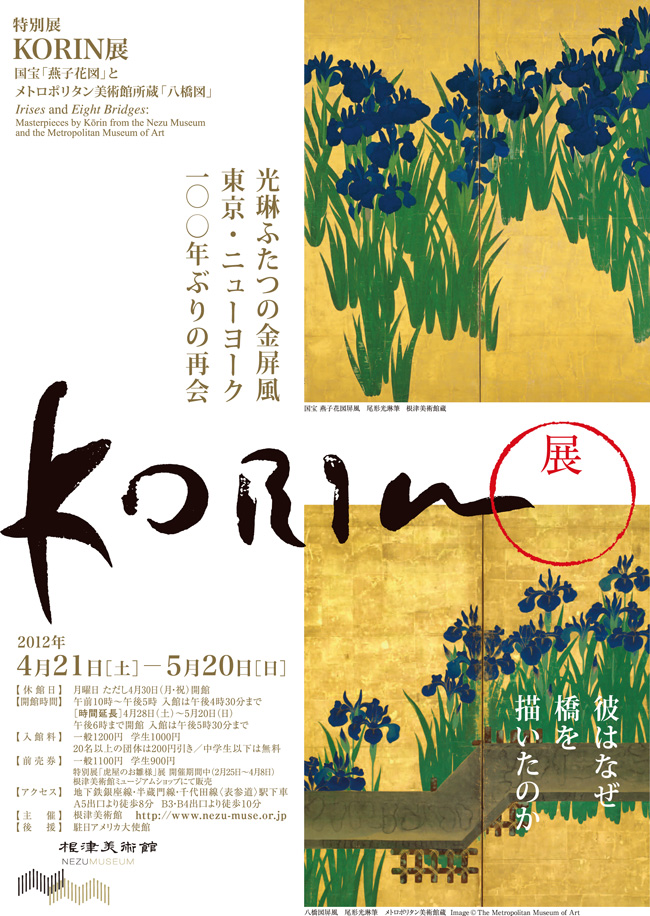
In honor of the just opened exhibit Irises and Eight Bridges: Masterpieces by Kōrin from the Nezu Museum and the Metropolitan Museum of Art, I have gathered some images of Japanese byobu (screens) in Western interiors. If you are looking for more details on these extraordinary screens, take a look at a post I wrote last year, Ogata Korin’s Iris Masterpieces Reunion Postponed, when the exhibition was originally supposed to have taken place. I didn’t think there was any reason to recreate the wheel, so this post is going to be pure eye candy.

Byobu literally means “wind wall”  which gives a clear sense of their original purpose – to block drafts. Over time their mobility and flexibility allowed them to be used almost anywhere, to block unsightly objects or repurpose a room, as well as serving as beautiful backdrops for tea ceremony and ikebana. Ornate screens and those using gold and silver leaf helped proclaim the status of their owner. Like much of Japanese artwork, screens originated in China but were slowly but surely domesticated and changed in Japan, with a high point being the introduction of paper hinges, allowing the artist a single large canvas to create an image, rather than completely divided panels.

Today, screens are more likely to be hung on the wall rather than stood on the floor and like blue & white porcelain, they work in almost any design style. Here John Saladino places a simple 2 panel screen with other traditional Japanese items – an incredible mon covered lacquer trunk and altar candlesticks.

In a completely contemporary room with a strong Japanese vibe (note the shoji screens) Jonathan Straley hangs an Edo period byobu above the bed.

Meg Braff uses an ukiyo-e style screen depicting everyday business in this room filled with modern casual Chinoiserie details.

In Renny Renolds and Jack Staub‘s dining room we also have some modern Asian touches like the quirky bamboo chandelier and woven chairs.

I adore Bruce Shostak‘s little banquet with its golden screen highlighted by moody colors.

Changing gears entirely, there are other byobu made with squares of silver leaf that tend to be very simple, sometime even entirely plain. This dining room by Windsor Smith positively glows with its fabric covered walls and silver screen.

Michael Smith uses a simple silver-leafed screen as a highlight behind his sofa, placed on the floor and used as a backdrop. I love that he has layered a small painting on top of it.

Jerry Jacobs uses a similar screen in a similar fashion in this San Francisco living room.

Caitlin Creer uses a Japanese screen on the wall behind her bed. While it functions to highlight the headboard and lamps, its real purpose in being there is to block an off-center and unsightly window. For more on her bedroom, click here.

This entry hall by Mallory Marshall and James Light uses a giant peacock screen in much the way it might have been used originally.

Here it is yet again, demonstrating its decorative power. I assume the stylist and the photographer couldn’t resist re-using it or it is blocking something they would rather not have in the photo.

Another John Saladino vignette with an amazing Edo period screen, this time mixed in with European antiques. For more of this amazing house, click here.

The placement of a screen on the wall allows a designer to alter the volume of the space, whether it be to enlarge it or make it smaller. This screen may not be Japanese, but I had to include it for its extraordinary placement in antique dealer Peter Hinwood’s giant high-ceilinged room. It unifies a disparate set of objects hung gallery style below and brings the ceiling down to make the room cozier. This is cluttered at its best!
Here stylist Peter Frank has hung not a Japanese screen but instead a Korean one, working in a similar but opposite fashion, pushing up a low ceiling.

This golden screen is such a focal point in this eclectic room by Lazaro Rosa-Violan you almost can’t look at anything else as it pulls your eye back and upwards. As a result, the volume of the space is what is emphasized.

Volume in Erin Fetherston’s loft bedroom is emphasized in the reverse, with the screen low down on the floor, the empty space above it is what you notice most.

I can’t say it enough, if you are in Japan over this next month, make the effort to get to the Nezu Museum as this exhibit should not be missed and the exhibit is only running until May 20. I don’t know if these National Treasures are likely to be reunited again anytime soon.

And speaking of those bridges, a few readers have had trouble understanding their depiction on the screens. Korin has painted them with that flattened perspective unique to Japanese art. I think this live example helps make it clear.

Let me know what you think of the exhibit!

Related Posts:
Ogata Korin’s Iris Masterpieces Reunion Postponed

Image credits: 1. & 12, House & Garden June 1998, photo credit: William Waldron, 2. via Jonathan Straley, photo credit: Matthew Millman, 3. House Beautiful June 2007, photo credit: Simon Upton, 4. Elle Decor March 2008, photo credit: William Waldron, 5. New York Spaces 12-1-11, 6. House Beautiful December 2010, photo credit: Victoria Pearson, 7. Metroplitan Home?, date unknown, 8. via Jerry Jacobs Design, 9. via Caitlin Creer Interiors, 10-11. House Beautiful January 1999, photo credit: William Waldron, 13. via Stylebeat, from Rooms to Inspire in the City by Anne Kelly, photo credit: Tim Street-Porter, 14. House Beautiful October 201o, photo credit: William Abranowicz, 15. via Lazaro Rosa-Violan, 16. Vogue May 2011, photo credit: Claiborne Swanson Frank

Read Full Post »

So my subconscious kept percolating about this little book on my coffee table – The Relaxed Home by Atlanta Bartlett – and the idea of links between it and my last post on mirrors. A little gift from a friend for design inspiration after we bought our beach house, I have enjoyed its photographs of pretty vignettes and romantic rooms. I decided to do a little research about Ms. Bartlett and it turns out that she and her husband Dave Coote are both bigwigs in the world of styling and interior design. She is a stylist with a series of books under her belt and he is an interior and furniture designer known for his use of reclaimed materials. Between the two of their websites and portfolios, I seem to have hit the mother lode of grouped plateaus and other vintage mirrors. At this point, if you had no interest in yesterday’s post, you might stop reading, but if you loved it, time to open up your Pinterest page, because you will surely be pinning!

His portfolio is full of simply styled rooms chock full of detail, like these three engraved mirrors hanging above a bed.

There is a sparkling all white and silver Christmas mantle.

I guess Dave Coote saw and loved the 2003 Martha Stewart Living cover too.

Another mirrored grouping in an entry hall.

And again, above a daybed in a rustic cabin.

Together they also have an online store called Pale & Interesting, where this incredible antique mirror is for sale.

While their aesthetic is definitely linked to Martha Stewart and Rachel Ashwell of Shabby Chic, they add their particularly casual Aussie-Kiwi white sensibility to the spaces they design. You can just tell that all of the following kitchens are not found in the USA.

They paint floors white or pickle them a light color in many of the spaces for a dreamy look, like this white bedroom…

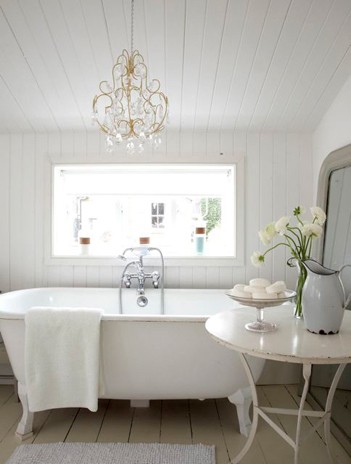
…and bath. If some of these spaces seem familiar to you it is because they also run a photographic locations agency and many of their spaces have been styled in advertisements and shelter magazines.

This painty white aesthetic is also hugely popular in Japan and you see it in styling at clothing and home goods stores and even at some charming antique market booths, like these at the Oedo market.

This one is more French, but similar in overall feel.

I love these white spaces, but I am not sure I could give up color…What about you?

Related Posts:
Perfectly Pale…Megan Morton’s Australian Home
More Pale Grey From Abroad

Image credits: All photos via Dave Coote or Atlanta Bartlett except the first and final two from me.

Read Full Post »

My last post finished up with a comment on charming vignettes of objects with handles, but as I lay in bed last night I kept feeling I had forgotten something. This morning I realized that I had – and not only from that post – but one prior as well. I had found this photo from Anne Kelly’s new book Rooms to Inspire by the Sea and meant to include it in the post on her book. After I had forgotten it there, I decided to use it in yesterday’s post as it was yet another example of display with handles, but I forgot it once again. So a double oops has spawned its very own post.

Anyway, to make a long story short, I love this image of grouped mirrors over the painted vintage dresser, although I am a little less excited by the heads.

Groupings of mirrors can be easy and inexpensive to create, adding a sense of jewelry to any room. Etched and engraved round plateaus are my favorites, made not only to hang on the wall, but also to place on dressing tables to hold bottles of lotions and perfumes, keeping wood surfaces safe. This tear sheet from Martha Stewart Living, dating to the early 1990s, shows a few beautiful examples up close. You’ll notice a little pen note written in the corner – I actually tracked down the dealer of the small oval mirror and tried to buy it – but I couldn’t wrest it away from one of the stylists on the shoot who bought it for themselves.

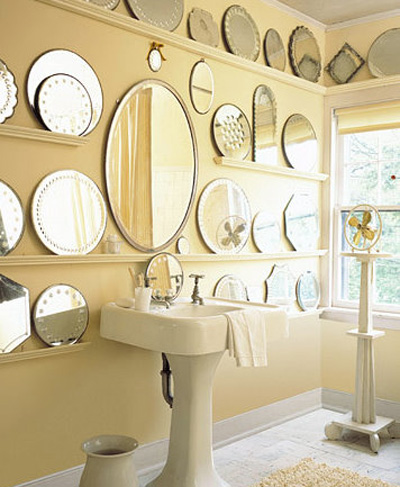
About ten years later, the magazine featured plateaus again in this stunning bathroom lined with shelves to hold the largest collection I have ever seen. The variety of shapes and sizes just takes my breath away!

I have been collecting similar antique etched mirror plateaus for years and I am hanging them on the wall in our bedroom at the beach house. I have placed the mirrors so that they reflect the ocean and the beach back into the room. The larger one engraved with stars is one of my very early antique purchases, which I believe I bought in 1992 in Annapolis, Maryland. Unfortunately, I can’t seem to find the others, only two have surfaced so far, so I am hunting for some more, both in my own boxes and out in the marketplace.

I have my eye on this one…

…and this one.

A few years ago Williams Sonoma sold modern versions of the mirrors, but they lack that certain something that you only get with an antique. Call it patina, call it personality, call it whatever, but definitely missing.

The round plateaus are not the only etched mirrors to catch and keep my attention. I love the long floral engraved ones common to old medicine cabinets and bathrooms. I love the tongue in cheek placement of this pretty vintage one.

Etching or engraving isn’t even necessary – just a great bevelled edge will do – especially if you have the little glass star bolts. You can reinvigorate an old mirror by adding them, easily found at hardware stores according to this article. I have passed up many mirrors in my day because they were missing them.

A scalloped or ruffled bevelled edge paired with an unusual shape makes this one a winner too. I bought this for my hall bath, but it was the wrong size so I am using it in my daughter’s bedroom instead.

Small decorative mirrors like these are wonderful on dressing tables and in the bath. They are commonly found in Asia, so keep your eyes open at the shrine sales.

Irregular gallery walls filled with a variety of old mirrors are another favorite.

Love the hanging chains on all these frameless ones.

The variety and coloration here are outstanding. Love the mix in with other objects and images.

Image credits: 1. Rooms to Inspire by the Sea, by Anne Kelly, photographs by Tim Street-Porter, 2-3. Martha Stewart Living, photo credits unknown, 4. me, 5-6, 10. via Etsy, 7. Williams Sonoma Catalog, 8.House Beautiful April 2009, photo credit: Lisa Romerein, 9. Country Living Magazine November/December 2001, 11. New York Magazine October 7, 2002, 12.  Haskell Harris in Southern Living, April 2009, photo credit: Charles Walton IV, 13. Ben Brougham in Lonny Magazine Aug/Sept 2010, photo credit: Patrick Cline, 14. via Pinterest.

Read Full Post »

Hanetsuki, Chikanobu 1896

Art can tell us a particular cultural and historical tale.  If you look up the origins of badminton, surprisingly enough, Wikipedia credits its founding to British Army officers stationed in mid 18th century India. Somehow they forget to mention its much earlier roots in similar games throughout Asia, such as a game called hanetsuki in Japan. If you click on the ukiyo-e print above, you’ll see that the characters are all holding a wooden paddle, called a hagoita, used to hit a shuttlecock in a game much like badminton, although without a net.  Traditionally played by girls and women on New Years, the gaily decorated paddles are still sold today, and vintage and antique ones can be found by hunting around markets and shrine sales.

Because of their quick turnaround time, mass production and inexpensive prices, ukiyo-e prints depict just about anything and everything in Japanese society, hanetsuki not withstanding, and examples abound. I love the pale Edo period examples, such as this Utamaro print from 1804.

Women Playing Hanetsuki at New Year, Kitagawa Utamaro I, c. 1804

None of the women seem to be playing very actively.

Hanetsuki, Musume shichihenge no uchi, Utagawa Toyokuni I

Although, here she really does seem to be getting into her game.

Hanetsuki, Kunisada-Utagawa-Toyokuni-III

Make sure to look at all the textile details on the kimono too.

Girls Playing Hanetsuki (Battledore and Shuttlecock), Kitao Shigemasa 1775

A little photographic proof is nice. I love the way the photographer modeled this picture as if it was a print.

Young women playing hanetsuki, hand colored albumen 1880s by Kusakabe Kimbei

And a late 19th century page from The Illustrated London News has a joyful New Years Day in Yokohama full of hanetsuki and kite flying.

The later prints seem to depict children playing more often than women.

Battledore from Series Life of Children, Shuntei Gyoshi 1896

They are really sweet.

Shuttlecock and Battledore from the series 'Children's Games', Kobayashi Eitaku 1888

There has always been a great connection between kabuki actors and ukiyo-e, with many different artists depicting those characters and stories. I always imagine that the prints were the equivalent of modern posters of pop stars and the like.

Three Kabuki Actors Playing Hanetsuki, Utagawa Kuniyasu, c. 1823

Toyohara Kunichika literally got his start painting the designs for hagoita before going on to become a great Meiji period ukiyo-e artist. Born in 1835, he was demonstrating his artistic talents by the age of 10, working in a shop near his father’s bathhouse where he helped in the design of Japanese lampshades called andon (the same kind of lantern as shown here) and around the age of 12 he began more formal apprenticeship with Toyohara Chikanobu while at the same time designing actor portraits for actual battledores. As he started as a child, it is no wonder to me that his interest in this form never waned.

Rather than designing a scene in which people play hanetsuki like the prints above, these three prints of his depict kabuki actors actually within the frame of a hagoita and date from the 1880s.

These small koban (5 x 7) sized prints show his use of the bright aniline dyes imported into Japan from Germany in the 19th century. They feel almost garish to our modern eye, but the color red signified progress and enlightenment in Meiji Japan. Many thanks to Alex of Toshidama Gallery for sharing these images from an upcoming Kunichika exhibition.

Recently, at the newly re-opened Oedo Market at the International Forum, I have spotted some truly excellent hagoita. Its fun to compare them with the prints above.

It is rare that you see so many unusual old ones together. Prices were quite steep as a result.

And of course I can’t resist adding a modern decorative application. A friend has been collecting vintage hagoita for a wall display in her daughter’s room. You’ll notice she has stuck to sweet kewpie-pie girls – no scary kabuki actors found here – as it might very well give her nightmares.

What is it about decorative display with handles? It is always charming…see the fans and kashigata below.

Related Posts:
Hanga 101…a Quick Primer on Japanese Prints

Image credits: 1. via Ukiyoe-art, 2-5. collection of Museum of Fine Arts Boston, 6 & 9.via Floating Along, 7. The Illustrated London News, source unknown, 8. via Ronin Gallery, 10. via The Metropolitan Museum of Art, 11-13. via Toshidama Gallery, 14-15. me, 16. L. Jardine, 17. via Little Emma English Home, 18. Amy Katoh Japan: The Art of Living, photo credit: Shin Kimura.

Read Full Post »

As a child in Japan, I used to go to a temple and write out a wish on a piece of thin paper and tie it around the branch of a tree. Trees in temple courtyards were always filled with people’s wish knots, which looked like white flowers blossoming from afar.”

Yoko Ono: “All My Works Are A Form Of Wishing”

Yoko Ono has picked up on and modernized a 2000 year old tradition called tanabata wherein people write their wishes on tanzaku (colorful, small strips of paper) and hang them on trees. These temple wishes can be seen throughout Japanese art history, from this circa 1675 byobu (screen) by Tosa Mitsuoki now held by the The Art Institute of Chicago, to this 1852 woodblock print by Hiroshige, from his Thirty-six Views of Mt. Fuji series.

Ono’s project, begun in 1996, is to have wish trees placed all over the world and those wishes for peace gathered together for her Imagine Peace Tower. From the courtyard of the Museum of Modern Art in New York City…

… to the United States Ambassador’s residence here in Tokyo. It was my first viewing of this wish tree that inspired me to do something similar for my daughter’s Bat Mitzvah. How about a wish tree for her, and while we were at it, why not have it be cherry blossoms, in tune with both the season and event?

As the idea progressed in my mind, I thought it would be lovely to actually have the tags be shaped like sakura blossoms. Unfortunately, no matter where I looked I could not find any already made and thus this became a DIY project. Luckily for me, the uber-talented Alisha of Felt So Cute had moved to Tokyo this year and become a great friend! She is a crafting maestro and has all the tools that go with the title including some kind of vinyl cutter called a Silhouette. She found a cherry blossom shape and set the program to cut out the blossoms from three shades of pink cardstock.

We used a pretty hemp twine to make the tie strings and put a sign (using our logo again) in a silver photo frame.

I used one of my antique Seto porcelain planters to hold the pot and bought some moss to cover the not-so-attractive soil.

Here’s what it looked like set up before the party.

And here is what it looked like about halfway through the evening.

So pretty!!

We are going to harvest the wishes tomorrow and plant the tree behind our house. I thought about sending them to Yoko, but we may just have to keep them for our scrapbook.

Related Posts:
A Little Bat Mitzvah Inspiration…Sakura Season in Japan

Image credits: 1. via The Art Institute of Chicago, 2. via Wikipedia, Dominique Browning, Slow Love Life, all other photos by me.

Read Full Post »

For the very first time in almost two years, I actually didn’t post for about ten days as this past Saturday was my elder daughter’s Bat Mitzvah. With 18 guests from the US, plus other friends who came in from Hong Kong and Singapore, all the last-minute party planning details and everything else going on, there simply wasn’t time. Since this event has been occupying so much of my attention for months, I thought it would be fun to share the party design details!

The theme of the party came quite easily. As springtime suggested sakura (cherry blossoms), my daughter’s favorite color is blue, she loves Japanese kamon (family crests) and the party would be held in the evening, we decided sakura at night would have just the right feel and that we would use a kamon in the party logo.

Lovely invitations from Karissa at Kiss and Tell Cards on Etsy were custom colored to navy and pink.

I had noticed that kids seem to love these cinch saks, using them for everything from their gym clothes to everyday bags. I also thought they would be perfect for carrying home any loot from the party. Using a classic Japanese sakura kamon (that also might masquerade as a soccer ball if the boys didn’t look too closely), the lovely Kristen Hager helped me create a logo for the party. Jeff Ward over at Rach Inc. supplied the bags and the printing and made the whole process easy, including shipping directly to me here in Tokyo.

We used the logo again on the cover of the program. Thanks to blogger Aimee Weinstein of Tokyo Writer for her help with that!

I had long had the idea of using traditional Japanese fabric for the yarmulkes, the traditional head covering worn by men in the synagogue. I had thought about sending them out to be made in Hong Kong by my seamstress, but we all know how long she took to make my quilt and obi throw pillows. In the end I found a company back in good old Brooklyn called Zion Judaica, bought and shipped the fabric to them and they shipped the finished product to my parents who then carried them over. I chose a simple indigo with scattered cherry blossoms, not wanting to worry about large-scale repeats and pattern matching.  It is also reminiscent of…

…petals floating by on the water or the wind.

As the things I ordered started to arrive, I loved the way they coordinated!

I ordered pink and blue M & Ms and bought small organza bags in the same colors for the candy toss. For the other old fogeys out there, this is a new tradition that didn’t exist when we were kids.

The amazingly talented George of PaperGlueBamboo painted dozens of paper lanterns for the table centerpieces. These tiny ones with battery operated votive candles we put inside were for the kids tables…

…while these larger andon shaped lanterns had real candles in them on the adult tables.

Lanterns lining the banks of the Meguro river are a staple of sakura season. We also had garlands of sakura draped on the two interior trees at the restaurant, but as it was raining, all the beautiful lanterns we had planned to hang in the trees on the outside terrace did not get used.

For the kids (and plenty of the adults who could not resist) there was very hard to get American candy favorites on the candy bar, all served in my vintage senbei canisters! You can see the rest of the pink and blue M & Ms made it there too, but the Swedish fish were the most popular!

My daughter loves the fabulous photo booths, called puri kura, that they have here in Japan, but we were not able to get one brought in to the restaurant. Luckily, the crafty Tai Dirkse of Darksea Studios created his own DIY photo booth. I spent weeks trying to figure out how to get a cherry blossom backdrop as custom ordering one was prohibitively expensive. I had started contemplating tearing down some giant advertising posters with sakura on them when I found these great cloth photo banners in Asakusa-bashi, the paper district. We strung two of them on a pole and voila, a perfect backdrop…

…for these adorable photo strips.

We are all still on a high from the party and I want to thank everyone who helped me make it possible!!

More details on a Yoko Ono inspired wish tree to come in a following post.

Special thanks to the talented writer and photographer Kit Namagura for the use of her sakura season photos!

Read Full Post »

Even though it is finally warming up here in Tokyo and the cherry blossoms are opening more than a week late, I can’t seem to stop dreaming about summer. Perhaps it is the fact that just about everyone else I know here went off to some tropical paradise or another for spring break vacation, while we remained in quite unseasonably cold Japan. That being said, the girls and I did go up north with some dear friends to do relief work in Ishinomaki, a town devastated by the tsunami last spring. I want to give a shout out to the amazing organization that made our experience possible – It’s Not Just Mud – a small grassroots group that makes it easy to volunteer in Tohoku. I want to remind everyone that the work in northern Japan is still very very far from finished, even though it has basically vanished from the news. Every little bit helps, whether it be real-time work or a donation, and we found that most of all, people were just happy to see us. I have some special stories I’ll be sharing soon!

Many of my favorite bloggers have been posting about Anne Kelly’s new book Rooms to Inspire by the Sea and I think that is what has pulled me back to planning the next round of renovation work and decorating at our beach house. As I have scrolled through whatever images I can scavenge on-line, I can’t help but notice lots of inspiration links between some of the homes in the book and choices I have made or plan to make at our house. Some of the houses featured I am quite familiar with and have seen elsewhere, while others are new to me, but almost all of them have that elusive something special – that truly personal and lived in feeling – that I want so badly to achieve in my own home.

One of the first photos to catch my eye is this lovely porch, although I can’t credit which house it comes from. In addition to the all the green wicker, I love the way they have used accessories to really make this space a room.

I have been furiously collecting vintage wicker wherever I can find it, and let me tell you, it has not been easy. I am constantly laughed at when I inquire for the real thing. These days, all the “wicker” out there deserves those quotes as it is some type of plastic or other unnatural material, touted as being more durable than wicker. I find it ugly and actually it gets weirdly dirty and moldy, so I have been tracking down vintage wicker pieces and painting them the same color green. I don’t know if that would have been my first choice of color, but as the house came with a brand new exterior paint job, I decided to go with it and have been very pleased as the paint unifies pieces from different eras.

While the houses in the book that speak most to me are the Hicks-Wood, Scheerer and Derian homes, this cabinet from a project by Martyn Lawrence Bullard caught my eye.

I am still working my way along with my cabinet, trying to decide how I should improve the interior finish (paint? wallpaper? opinions please!) and some better styling, although I don’t have the luxury of space to display decorative coral. My cabinet needs to be a real workhorse, holding serving and eating china, silver, linens and just about everything we need in the dining room.

Having seen many of the interiors of India Hicks and David Flint Wood before, there is one particular new view that I absolutely adore. Perhaps it is the softness of the palette, the palm fronds, the birdcage-like fixture…I can’t quite put my finger on it. (And remind me to tell you about the amazing birdcage I bought at a recent shrine sale. As always the big question is how to get it on the plane!) My color scheme in the photo above looks a bit one-sided and just the blue grey, but elsewhere in the room I manage to capture many of these soft shades. Somehow, I never have the right shot I want for the post!

Similar in color and feel is this view of Chris Mead and Zoe Hoare’s Hampton home, although it is more literal in its seafaring references.

Moving on, the color in Tom Scheerer’s bedroom photo is perhaps a little brighter in this photo than it is in person, based on previous photos I have seen of the room. I do love the replacement of the kitschy legs lamp he had there before with this coral one.

My bathroom color looks a bit washed out in this photo, but I think you can see an inspiration link anyway.

Steven Gambrel’s moody glass display…

…makes me think of mine, only this one is here in Tokyo, not near the sea. Quite a bit has been added since this shot, and I think it has reached its perfect point. Any more, and it might tip…

Which also brings to mind what seems to be an alternative cover, which comes up when I try to order the book in Japan. I know the floats in the giant clam shell is kind of a cliché but I still love it! Driftwood lamp and bottles too!

The big projects looming at our place are the master bath and kitchen. I think I may have found a good vintage door to use in the bathroom to convert the entry to a pocket door. Love the simple panels, especially on a small door.

And I have been inspired by a friend’s recent renovation…

and by Brooke Giannetti as well…

…to pursue my inspiration photo a bit more and possibly use a free standing over mount sink in the master bath after all. It is so easy to convert a cabinet or table to a vanity this way.

As for the kitchen, watch for a big upcoming post on that. I know I keep promising and not delivering, but I am needing to sort out two posts – one for what I really want to do when I gut the whole thing – and the other the shoestring budget DIY plan for the meantime. This is an inspiration photo from Heather Bullard I keep coming back to that works for either scenario.

The next two weeks are super busy for me – I hope you will bear with me if posting is light – as my elder daughter is having her Bat Mitzvah on April 14th. But I will be posting about the sakura (cherry blossom) inspired party details!

Image credits: 1-2, 4, 6-8, 10 & 12. Rooms to Inspire by the Sea, by Anne Kelly, photographs by Tim Street-Porter, some of the images via Mrs. Blandings or Style Court, 3, 5, 9 & 11. me, 12. V. Felgner, 13. via Velvet & Linen, 14. via Heather Bullard

Read Full Post »

A few great shrine sale finds and a good friend’s decorating plans got me to thinking about blue and white porcelain again last night – as if that is an uncommon thing for me to think about…

I had long been saving photos of groupings of porcelain on brackets or corbels, a classic way to present a collection en masse. For example, this 1959 photo of Jayne Wrightsman’s Palm Beach library designed by Maison Jansen, with a grouping of what looks to be Meissen figurines.

Figurines not withstanding, Asian porcelain, whether Chinese or other, blue and white or polychrome, tends to be the most commonly presented in this fashion. Aerin Lauder inherited this collection as well as the house from her grandmother Estée…

…and it still looks fresh today in that East Hampton home.

Carolyne Roehm went completely blue and white in her bedroom, even painting the brackets to fit in with the decor. Can’t imagine doing this in Japan, as the earthquakes would be sure to give you an unpleasant surprise one night.

Thomas Burak went with an all out chinoiserie theme in this Bridgehampton bedroom, pagoda bed, and all.

And another view.

Designer Mary Watkins Wood simplifies the look with a white background, white linens and white brackets, using mainly Chinese ginger jars. I think Japanese jubako (stacked lunch boxes) would give a similar effect. Gotta love that fantastic Portuguese bed!

Did Dallas store owner Betty Gertz have this niche custom designer for this amazing grouping of Chinese vases or was it already there? The vases themselves are Ming dynasty antiques, part of the Hatcher trove. Now how’s that for provenance?

I had never seen this show house hallway by Mary McDonald before – thanks to Jennifer at The Peak of Chic for the photos.

I love the blue and white against the grey.

Not limiting the post to blue & white, here Robert Goodwin uses a collection of Blanc de Chine figurines in a similar fashion. The fabulous wall color is Benjamin Moore’s Iron Mountain.

Miles Redd turns up the modernity a notch in this celadon dining room with a grouping of simple celadon vases on plainer matched brackets.

Here Oscar de la Renta does the same with coral in his Punta Cana home.

And perhaps the most tongue in cheek is this simple bathroom with the grandest of porcelain displays.

My question for you readers, is whether you like this look? Do you find it traditional? Elegant? Fussy? Do you like the brackets to all be the same? Or a variety? Painted like the wall color, contrasting or gilded? I am thinking on it too, considering it for an upcoming project…

Related Posts:
Colors of the Rainbow…Blue and White Porcelain is Neutral

Image credits: 1. via The Peak of Chic, , 2-3. Elle Decor, 4. Veranda via Chinoiserie Chic,  5. via The Enchanted Home, 6. House & Garden via Chinoiserie Chic, 7, 11-12. House Beautiful, 8. scanned by me from magazine tear sheets, but credit unknown, 9-10. via The Peak of Chic, 13. via Habitually Chic, 14. Martha Stewart Living via The Enchanted Home.

Read Full Post »

Follow

Get every new post delivered to your Inbox.

Join 424 other followers

%d bloggers like this: