Feeds:
Posts
Comments

Archive for January, 2012

With the tag line “Be the change. Volunteer,” Hands On Tokyo addresses the critical needs of the community by partnering with other organizations focusing on educational and social issues in Tokyo as well as disaster relief in north-eastern Japan. By collaborating with partners to create projects designed to meet their needs, [they] provide numerous volunteer opportunities for any individual or corporation looking to make a difference in the community. Currently, Hands On Tokyo has over 3,100 registered volunteers, arranges over 300 volunteer activities a year, and has given back more than 21,000 aggregate volunteer hours to the Tokyo community. 

Tokyo Jinja is proud to have donated this amazing rare and valuable glass senbei (rice cracker) canister from the early 20th century with raised glass lettering and original lid to the upcoming event “A Taste for Volunteering” in support of Hands on Tokyo.

There is still time to sign up and attend as well as bid on this senbei jar and a host of other prizes!

DATE:  Friday, February 3, 2012
Reception: 6:30 Party: 7:00-10:00 PM
LOCATION: The Capitol Hotel Tokyu
COST: ¥20,000 per person
DRESS: Semi-Formal
RSVP: hot.tfv.admin@handsontokyo.org

Hands on Tokyo has been doing incredible work in Tohoku and I was lucky enough to have helped on a project to feed 600 people in Iwanuma last June. We made and packaged some of the desserts while having fun together. If you can’t make the event, I highly recommend signing up for some of their volunteer activities which you can do by clicking here.

For more on vintage senbei canisters, see Country Kitchens and Rice Crackers…a visit to Tomioka Hachimangu.

Update:
The senbei canister sold for 73,000yen last night! It was the HOT item of the night. I am so pleased!

About these ads

Read Full Post »

We interrupt our regularly scheduled programming to bring you the Brooklyn apartment of Aya Yamanouchi Lloyd, designed by Nadia Yaron and Ry Scruggs whose design firm Nightwood specializes in refurbished vintage pieces, deconstructed furniture and handmade textiles. Their philosophy is to “design and build with a down to earth yet airy aesthetic and sensibility to convey a modern rusticity that emphasizes hand crafted one-of-a-kind works of functional art… Old things, primitive practices, creative reuse and natural materials inspire us both.” Nightwood never use the term wabi-sabi on their website, but I think their work is the very embodiment of it. For a reminder, the Wikipedia definition is quite good: “Wabi-sabi represents a comprehensive Japanese world view or aesthetic centered on the acceptance of transience. The aesthetic is sometimes described as one of beauty that is ‘imperfect, impermanent, and incomplete.’” Ironically, the apartment’s owner is Japanese  – with a name like Aya Yamanouchi, I can’t imagine that she is not – but again, I don’t think there was any deliberate link to the idea of wabi-sabi.

Many of the vintage pieces were sourced locally, including the bench and column in the entry.

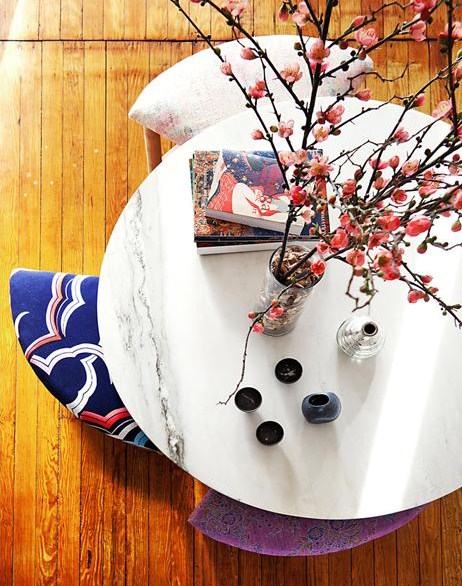
The living room is full of recycled and reimagined pieces, such as the coffee table which had its old laminate top switched out for marble.

Visible upholstery tacks are part of the charm.

Each quarter stool is covered in a different fabric. Such fantastic floorboards too!
I am loving the birdcage and faux shadow painted on the wall – so whimsical!

Ry Scuggs built the frame and Nadia Yaron wove the fabric used to cover the chair.

The settee cushion is covered in kimono fabric, a great juxtaposition with the wire filigree.

The little night table lantern is so creative. I think it makes a great way to use some of the small Japanese milk glass fixtures we find here.

The Nightwood duo don’t have that many other full projects under their belt, although they have been collaborating on pieces since 2003. But there are a few highlights on their website including this Williamsburg loft, which is darker and smokier…

…and more industrial feeling…

…as well as this simple and bright brownstone.

Ladders seem to be a constant feature in their designs.

I couldn’t resist sharing! I’ll be back with more Chinese New Year posts next.

For the full article and more photos, see The New York Times. There are also some great photos in their sneak peak over at Design Sponge.

Related Posts:
Thoughts for 2012…We Are The New Victorians

Image credits: 1-8. The New York Times, January 25, 2012, photo credit: Trevor Tondro, 9-12. via Nightwood.

Read Full Post »

So after you had their portrait painted, where were you going to worship your Chinese ancestors? At your very own altar table of course! Now truthfully, many of the larger pieces come from shrines and temples, but individuals did own them, and they were considered the most important piece of furniture in the home. Portraits and scrolls were hung above them on the wall and offerings such as food or flowers would be placed upon them, as well as decorative objects. During the Cultural Revolution, traditional Chinese furniture became a liability – a connection to the old ways – and much of it was destroyed or carted off, only to be rediscovered and deemed desirable by, you guessed it, westerners!

While we no longer use them for ritual worship, they tend to be incredibly functional and attractive in modern-day homes. The tables could be made of hard or soft woods, sometimes lacquered on top and often having upturned flanged ends. Bamboo pieces like this one tend to come from the Shanxi region of China. Long and narrow, set up higher than a dining table, altar tables fit well in a variety of spaces, perhaps nowhere better than an entryway, where they can hold display pieces, corral shoes and serve as an all around command center for the home. I love the items on display and the high contrast in this photo. All the accessories are linked back to the color black painted above the white beadboard. The fine bamboo table and the floor runner provide just the right amount of warmth.

Perfect along a long narrow hallway, this bamboo piece has a lacquered top. The mullioned window panes seem to mimic the shapes in the bamboo.

I would normally consider painting an antique bamboo altar table to be heresy, but this one looks so fresh against that great Florence Broadhurst peacock feather wallpaper.

I love the mix of the very sharp and spare lines of this simple table with the curvy Thonet stools below. Altar tables are perfect for stashing extra seating in the entry…

…as seen here again. Their height also makes them perfect for holding lamps.

Moving on to the redoubtable Miles Redd, I cannot help but admire the extraordinary combination of color, style and period in this dining room with the bamboo altar table providing the visual anchor amidst all that paleness. It also makes a great buffet, able to hold dishes, cutlery and numerous serving platters along its 7 foot or so length.

Tablescaping is an art that achieves perfection on an altar table, as the height and breadth give it stature while the space below is perfect for tucking just about anything. The contrast here between the symmetrical arrangement on top and the asymmetric one below is genius.

From a practical perspective, they make great bars! Note the blue and white porcelain hibachi, or maybe a fish bowl based on the painted motif, being used as an ice cooler…

…and here again, a lacquer one being put to the same use.

One of the best places for an altar table is running along the back of a sofa as a console table, perfect for holding lamps, books and magazines in easy reach. Unfortunately, I don’t have any photos illustrating that so you’ll have to use your imagination. I do have a few more unusual placements, like this example of a very wide one being used as a kitchen island…

…and this small narrow one being used in the bathroom as a dressing table.

Have you noticed a bias towards bamboo examples in this post? That is because bamboo altar tables from the Shanxi region of China are my favorites as evidenced by this late 18th century one in my home. One piece of advice I give often is to buy less, but buy better. This table was one of my main purchases when I lived in Hong Kong – I was very young so I scraped and saved to buy it. There has never been a moment since in which I did not love it and I know I will have it forever. When I came to Japan 7 years ago I assessed every house and apartment I saw for placement of the table as it is over 7 feet in length and didn’t fit in my NYC apartment. Now it has the pride of place and you see it immediately upon entering.

I hope you are enjoying these Chinese New Year week posts!

Image credits: 1.via Eclectic Revisited, 2. via decorpad, 3. Domino September 2006, photo credit: Corey Walter, 4. Elle Decor March 2006, photo credit: Pieter Estersohn, 5. House Beautiful September 2007, photo credit: Pieter Estersohn, 6. House Beautiful April 2011, photo credit: James Merrell, 7. House Beautiful September 2007, 8. House Beautiful November 2009, 9. Markham Roberts, credit unknown, 10. House Beautiful May 2010, photo credit: Thomas Loof, 11. Elle Decor June 2010, photo credit: Simon Upton, 12. me.

Read Full Post »

In honor of Chinese New Year, I am going to be writing about Chinese antiques this week, starting with one of the more unusual items – ancestor portraits. Commissioned by loved ones of the deceased, they were privately displayed and worshipped as the Chinese believed (and continue to believe) that the spirits of their ancestors could bring them health, long life, prosperity and children. Funerary statues and art date back to early Chinese history, but most of the surviving portraits date from the Qing Dynasty (1644-1911). During the 20th century, westerners began to buy up old portraits as photography became the medium of recording departed family members. In particular, Richard Pritzlaff, a reclusive horse breeder from New Mexico put together an extraordinary collection throughout the 1930s and 40s, which were then acquired by the Arthur M. Sackler Gallery in Washington, DC in 1991. But it was the exhibition Worshipping the Ancestors: Chinese Commemorative Portraits there in 2001 that sparked a changing viewpoint of the portraits as works of art and interest in them rose tremendously as a result. The museum continues to display the portraits fairly regularly, with an exhibition Family Matters: Portraits from the Qing Court just having closed.

Tear sheets of Virginia Witbeck’s apartment from the early 1990s were saved by me in great part for this small image of her in front of an ancestor portrait with a pair of stacking Japanese lacquer tray tables by her side. My interest in them was piqued. When I moved to Hong Kong in 1997, they were not yet that talked about and quite readily available for reasonable prices at many of the antique stores there. Copies and fakes had not become the problem they are today, nor had prices for the real deal risen as high as they have now. But there was great debate about whether or not it was appropriate to hang them as art in a stranger’s home. I had many friends who argued against them, feeling it was a form of sacrilege, while others wanted them for their incredible decorative potential. I was always torn by this argument and decided against one. I think I may rue that decision today.

As the faces in the portraits were painted posthumously, often from verbal descriptions and sample feature books, they are usually impassive and quite similar looking, so it is the fabric of their clothing and the textiles they are seated on that catches my attention. By studying the motifs and details, the iconography of rank becomes clearly readable by scholars and experts. For instance, yellow robes were reserved for the emperor while embroidered badges with different animals and colorful hat knobs proclaim the subjects status and position at court. Ironically, there seems to be an over abundance of high-ranking officials, leading experts to believe that loved ones often fudged and had their ancestors painted with elevated status.

There are some examples of designers using ancestor portraits in their projects throughout the 20th century and Jennifer at The Peak of Chic has a great post showing them in numerous mid-century homes. More recently, they have become even more popular. In this living room designed by Miles Redd, the richness of the color and detail in the furniture and carpet corresponds directly with the paintings. I cannot imagine that he did not have a pair of ancestor portraits in mind when he started.

The same goes for this Santa Monica home designed by Michael Smith. The similarities between the two really stand out.

In paler spaces, the colorful images become vibrant additions, focal points, you might say…

…as shown in these two images from Julian Chichester‘s West London house.

This stylized Chinoiserie room by Michele Bonan uses what looks to be reproduction paintings very effectively. (And who else out there is reminded of my chartreuse dining room in Hong Kong? Wish I had a photo of it!)

Julie Murphy uses bright yellow chairs and a scrubbed wood table to create a casual and cheery kitchen – complete with ancestor portrait – in her home.

As a lover of all things pale and patina-ed, I think this faded portrait is wonderful in this softly subdued space by Kristen Buckingham.

This pair is actually a Korean couple, but I couldn’t resist including them as they also anchor a simple color palette in an elegant London living room. And while we are looking at Korean art in a celadon colored space, I can’t help but mention the Sackler’s current exhibition Cranes and Clouds: The Korean Art of Ceramic Inlay.

So, where do you stand on the issue? Is it disrespectful to display the ancestors of someone you don’t know as decoration? Would you hang one in your home?

For more on the Sackler’s collection and the challenge of restoring damaged paintings, see the fascinating article on conservation in The Book and Paper Group Annual.

Gung Hei Fat Choi!!!

Image Credits: 1. Portrait of Oboi, Collection of Freer/Sackler, 2. credit unknown, 3. Elle Decor March 2006, photo credit: Simon Upton, 4. House Beautiful April 2009, photo credit: Mikkel Vang, 5-6. Elle Decor November 2006, 7. Lonny July/August 2011, photo credit: Patrick Cline, 8. via Design Sponge, 9. via Kristen Buckingham, 10. credit unknown.

Read Full Post »

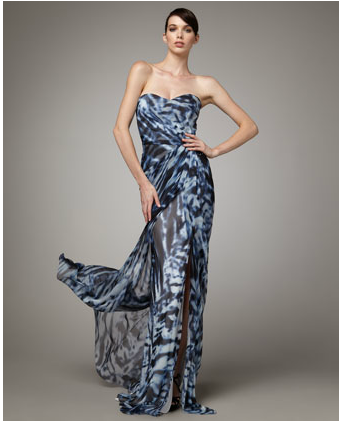
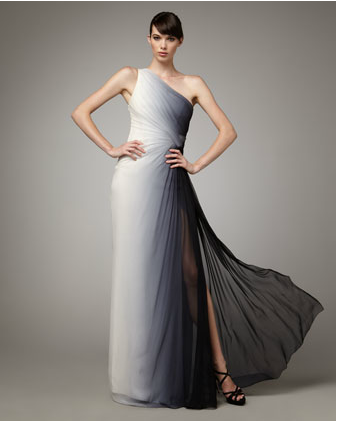
I wasn’t due for another post yet, but the juxtaposition of this extraordinary Monique Lhuillier gown worn by Sarah Michelle Gellar to the Golden Globes last night and a half written post about Eskayel‘s new collection of rugs for Doris Leslie Blau sent me straight to my computer. While I have written about shibori (Japanese tie dye) before I have never seen such a literal and amazingly modern translation of this traditional art form as that dress. Say what you like, and I know some have put this on their “worst dressed” list (although many more on the “best dressed”), it truly is a spectacular show stopper!

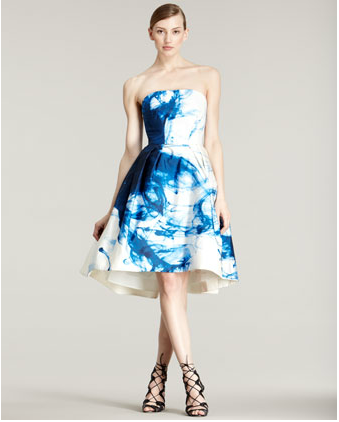
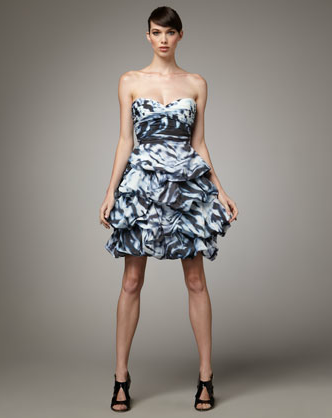
Lluillier has some other dresses with that shibori feeling, but they also remind me of artist Shanan Campanaro’s amazing fabrics and wall coverings for Eskayel.

Having written about them before, it may come as no surprise to see them here again, although this time, translated into carpets for the floor in her new collection with rug doyenne Doris Leslie Blau.

Campanaro’s digitally manipulated watercolors have been re-colored in this new collection. You’ll need to stare closely at her Dynasty wallpaper hanging next to the new Dynasty rug to see that they are the same pattern, just colored and highlighted differently.

She also features some great new projects on the Eskayel blog, including this apartment from Jami Supsic Designs.

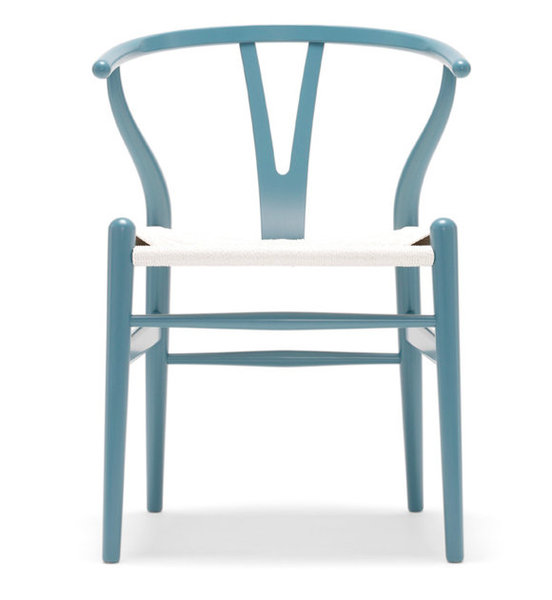
Those Wegner Wishbone chairs again.

They are everywhere and come in the most amazing colors these days…

This dark blue Samui Sunrise paper is so cozy and welcoming in the bedroom.

Another project by designer Sylvia Reyes uses Eskayel’s Aquarius wallpaper to great effect in this Puerto Rico apartment.

And guess what? Eskayel wallpaper is now available in Japan at Walpa. Walpa carries all the “cool wallpaper brands” and is looking to bring a new appreciation for patterned walls to Japan.

Related Posts:
A Little Shibori Feeling From Eskayel and Anthropologie

Image credits: 1. via temptalia, 2-5. via Neiman Marcus, 6. via Eskayel, 7. via New York Magazine November 2011, photo credit: Wendy Goodman, 8-9, 12. Jami Supsic Designs, via Eskayel, 10-11. Danish Design Store,  13-14. Sylvia Reyes via Eskayel

Read Full Post »

Each year for the past 434, a market has been held in the Setagaya neighborhood of Tokyo on December 15th & 16th and again on January 15th & 16th. With over 750 vendors selling everything from apparel to electronics to antiques, things both old and new, as well as food stalls, flowers, and just about anything else you might imagine, the market defines what a “flea market,” as opposed to a “shrine sale” is in Japan. Called the Boroichi, or rag market, there is much to buy beyond rags, although trade in vintage and antique textiles continues to be one of its main draws.

The prices on vintage kimono and obi are unsurpassed, as demonstrated by the free-for-all at this stall selling obi for 500 yen.

New indigo dyed textiles and clothing is also available.

Perhaps my favorite thing was this dealer selling Japanese kamon (family crest) stamps. Easy to pick one up and use it to customize your correspondence, regardless of whether or not you actually have a family crest.

I also loved all the handmade housewares and baskets.

I made a few good finds, including some antique blue and white porcelain platters and interesting textiles. But by far the find of the day belonged to my sweet husband. He picked up a fancy brand, gortex coat with zip-out fleece, list priced here at 68,000yen and found on google in the USA for about $550, for all of 13,000yen. And as a result, it made him perfectly happy to carry my packages!

There is still time to visit tomorrow! Maybe it won’t be so terribly crowded on a weekday…

For more on the history of the Setagaya Boroichi, directions and maps, take a look at this 2009 article in The Japan Times or the Time Out Tokyo listing.

Read Full Post »

My posts on Japanese glass fishing floats are some of my most popular posts. Lately I haven’t had to look far for photos featuring them as readers have been sending me their own displays or those they have seen elsewhere. Hawaii seems to be a common place to find them, which makes sense as they wash up on the beaches. This photo was taken at the historic Shipman House Bed & Breakfast in Hilo, a gorgeous Victorian house on the Big Island.

I also had a mention of the float display behind the bar at the Monkeypod Restaurant in Maui. Impressive!

Most of the recent examples have been charming in their simplicity, with a few floats grouped in a spare interior to great effect. This reader has placed hers under the simplest of lucite tables.

Glass floats and fuzzy sheepskin in the same space – kind of an oxymoron, don’t you think? But so lovely, nonetheless…

…reminding me of this reader’s simple modern arrangement.

South African designer John Jacob has used a few floats in this gorgeous project.  I have only pulled the photos that highlight the floats but his entire portfolio is drool-worthy and well worth perusing.

All stand out in contrast to the only floats I saw over the holidays – these in the gift shop window at Universal Studios (remember those family commitments that kept me from antiquing in Florida?) Ahoy matey!

Related Posts:
Buoys, Bottles and Bargains…the Rainy Day Special at Kawagoe
The Mail is Always Late…more on Japanese Glass Fishing Floats and Sudare
Everyone Loves Japanese Glass Fishing Floats…A Follow Up

Image credits: 1. L. Rogers, 2. via Monkeypod Restaurant, 3. S. Bloomer, 4. Moda Bagno & Interni Store by K-Studio via Design Milk, 5. M. Smith, 6-7 John Jacobs Interiors, 8. me.

Read Full Post »

“There’s No Cultural Divide When It Comes To Design”
-House Beautiful, December/January 2012

Moorish Smoking Room, Worsham-Rockefeller House c1881, Brooklyn Museum

The word Victorian has been rolling around my mind for months, but only partially because that is the official period in which our beach house was built. As an adjective, Victorian means buttoned up and prudish. For most people, when they hear it, they think of ornate embellished houses and furniture, but for me, the word has a different connotation, as seen from a design history perspective. After “trying on” many revivals – Medieval, Gothic, Rococo, Renaissance – in the early Victorian period, the opening of Japan in 1854 , the discoveries of archaeologists in Egypt and an interest in all things exotic and foreign created dramatic new styles in interior design. The Aesthetic Movement in the later part of the 19th century highlighted art in the production of furniture and design for the home, partially as a response against the Industrial Revolution. Maybe it is a stretch to make the comparison, but I feel that for the last decade or so, interior design has been traveling down this same path, only with a much paler and lighter color scheme. For a while, I assumed the desire to weave an eclectic mix of objects from different time periods and nations stood out to me because I was living abroad and doing just that. But the overt prevalence of it everywhere has turned it into its very own style, whether in a modern or traditional context.  Simultaneously, the recent movement towards homemade and authentic goods comes as a similar response to our consumer culture and poor economy.

While not wanting to be overly literal about this idea, the much written about December/January 2012 issue of House Beautiful (the title, by the way, of an influential lecture given by the touring Oscar Wilde in 1882) makes this same point and can be used to illustrate it perfectly. Joni over at Cote de Texas, did an interesting post last month comparing the home below, designed by Mark Sikes and Michael Griffin, with her own (and I thank her for the photos as the magazine is not making them available online), but I am going to use it for my own comparative purposes. The living room, well worth clicking on and enlarging, has influences from around the globe. Blue and white porcelain abounds, from Chinese garden stools to Japanese hibachi as planter, African Zebra skin, French style chairs and a massive gilt console.. The giant antique Chinese lacquer cabinet is the kind of universally useful piece I always recommended purchasing back when they could still be easily found in Hong Kong and China. On that note, you’ll be hearing more from me on Chinese antiques later this month when I do a special series for Chinese New Year week.

Just pages away is another spread, designed by Katie and Jason Maine, whose style proclaims them clearly Michael Smith alumnae, called “The New Global,” featuring an amazing English Japanned lacquer secretary from Therian, a piece that reads similarly to the Chinese cabinet above. Other worldwide influences include an English arts & crafts mantel, Oushak rug, and antique cloisonné lamps, and again, it is worth clicking the photo to see it in detail. Watch for an upcoming post on Japanned furniture too.

Their dining room is an absolute tour-de-force, featuring Indian motif wall panels by Iksel in lieu of…

…the slightly more expected Gracie or de Gournay paper seen just pages before in the Sikes/Griffin home. But in either case, both rooms are an extraordinary mix and actually quite similar in their details – extravagant wall covering, Chinoiserie chairs, statement making chandelier.

I have been following the work of the Iksels for a while, as they represent exactly the kind of cross-cultural trend I am talking about. The living room from their Paris apartment is almost a literal version of a Victorian space, only lighter and softer in color.

And I have always loved this tented bedroom from the apartment, and shown it before here.

Ten years ago, few people had heard of ikat or suzanis. Now there is not a photo spread to be found without them or some other ethnic textile, whether in small doses…

…or large.

Modern design is not left out of the equation either in this project from by Pamela Shamshiri of Commune Design. While using a different set of diverse objects and styles, the mix is still there. It kind of cracked me up that the magazine has full on re-discovered the Japanese aesthetic of wabi-sabi, the beauty of things imperfect, impermanent, and incomplete, although in their desire to throw the term around (they use it at least three times) I am still not sure they truly understand the meaning. The house has the “weathered, organic” feeling they describe, but every detail is utterly and absolutely perfect. For some authentic local wabi-sabi, look back here. That said, the house is beautiful and there is as much going on in this dining room as those above.

For local folks, I’ll be tracking down some modern icons like the Wegner Wishbone chairs above in an upcoming “Shop Talk” post on the mid-century modern antiques and furniture available along Meguri-dori.

Again, the warm rugs, kilim pillows and other global textiles are the perfect counterpoint to all the wood.

The rooms most directly referential to Japanese design are the kitchen (and if you like this you might want to look here)…

…and the bath.

For the full article with more photos, click here. Interestingly enough, this house is shown as being a 2008 project in their portfolio, making it not that new…And as for not that new, I am sure I saw the February issue already on the news stand as I ran through the airport two days ago.

For me personally, this global aesthetic runs rampant through my Tokyo home and is definitely starting to appear in the beach house. I only had a few days in New Jersey over winter break, but managed to move a few projects along and here are a few sneak peaks. Our bedroom is shaping up – remember how I said there isn’t a photo spread without a suzani? We are using a long narrow one as a window valence.

The guest room is still waiting for its lampshades…

…but a bargain vintage find, sent off to be reupholstered will go from hideous yellow moire to lovely linen floral (draped for example in the photo). Guest room chair checked off my list!

Downstairs there is a little Belgian meets Scandinavian meets English floral prettiness going on, but it is temporary, as my Bunny Williams OKL purchase is slated for the kitchen.

I wish I had more to report on from the house, but three days right before Christmas is not a lot of time…More details on these rooms soon!

Here’s to 2012!

Related Posts:
Some Resolutions for 2011 and Bamboo in January

Image credits: 1. via Brooklyn Muesum, 1,4, & 7. House Beautiful December/January 2012, photo credit: Amy Neusinger, via Cote de Texas, 2-3, &8. House Beautiful December/January 2012, photo credit: Victoria Pearson, 5. Elle Decor December 2006, photo credit: Simon Upton, 6. Domino February 2008, photo credit: unknown, 9-13. House Beautiful December/January 2012, photo credit: Amy Neusinger, 16-18. me.

Read Full Post »

Follow

Get every new post delivered to your Inbox.

Join 405 other followers

%d bloggers like this: