Feeds:
Posts
Comments

Archive for June, 2011

The only big house project that looms on my horizon is renovating the kitchen here in Ocean Grove. Always an expensive proposition, I don’t want to undertake it lightly. Basically everything has to go – flooring (bad yellowish linoleum), appliances (almond!), and cabinets (1970s) – but I want to replace them with things that feel both special and as if they might have always been here. The key to it all is coming up with a special island that is not from a kitchen cabinet company, whether it be a baking table or my favorite, some kind of repurposed item.

I am not sure what the island in this Swedish kitchen is made from, but I love it and the whole room.

A friend across the street uses an old butcher block that belonged to her grandfather as a small island, much like the one in the photo below.

On the right side of Rachel Ashwell‘s Malibu kitchen, she uses some sort of old counter or bar as an island, with baskets holding supplies on a lower shelf.

Speaking of shabby chic, this painted work table is another favorite.

Striking a completely different note, Darryl Carter‘s kitchen with its gorgeous marble-topped antique table is to die for, although clearly a bit too formal for a beach cottage.
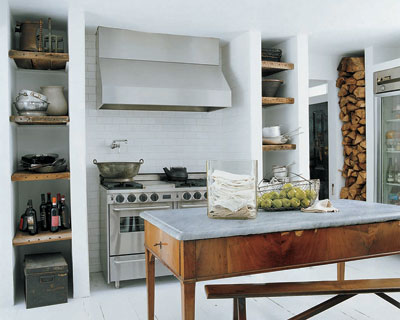

I do love a marble topped island though…The DIY master, Jenny Komenda at Little Green Notebook, has used an old dresser and the marble top from a vintage coffee table to make one of the most stylish (and inexpensive) repurposed islands I have seen. Check out her other recent projects, including the most amazing reupholstery tutorial here.

In my ongoing hunt to complete my house, I spent a full day up at the antique stores in Red Bank, NJ. There are numerous multi-dealer shops with great merchandise, and I’ll be doing a full “Shop Talk” post on them soon. At Monmouth Antiques Shoppes I saw this red industrial cart which would make a funky but functional island.

And while surfing, I did notice this great desk turned island over at Remodeleze.


But the piece I have been obsessing over is this vintage printer’s table currently on eBay. It has an amazing thick slab of a marble top and a few shelves and cubbies.  It even still has its original letter drawers!

I think it would be perfect in creating a kitchen with the feel of Kristen Buckingham’s, but no matter how many times I measure, it is just too big. Unlike her huge beauty, my entire kitchen is only about 9 x 12…

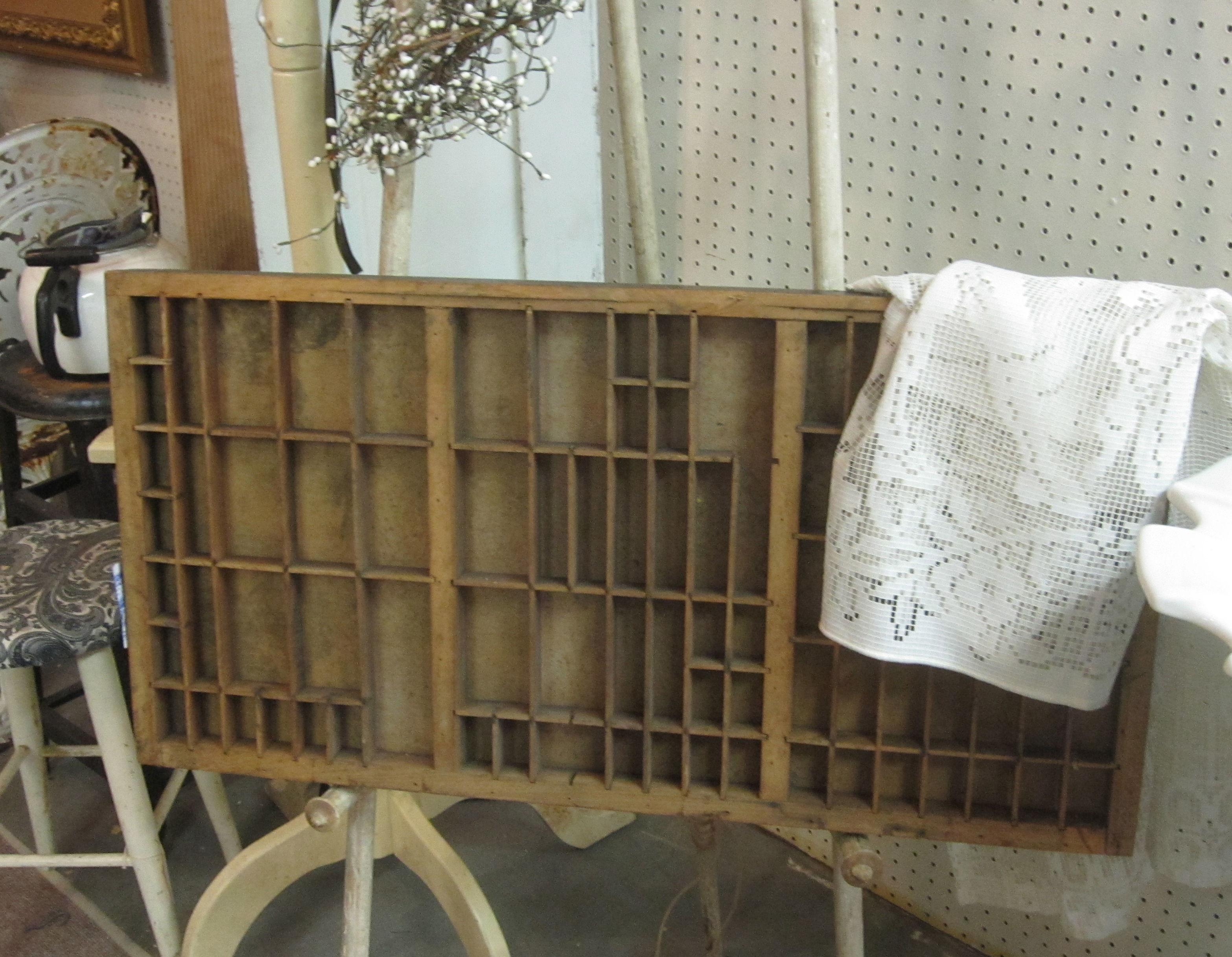
And speaking of the printer drawers, I saw them everywhere at the Point Pleasant and Red Bank antique shops. They have always charmed me, but have really come to my attention of late.


My friend Jamie Edwards, a former Tokyoite, is making these adorable display cases for children from vintage printer drawers, lined with washi paper and custom colored to suit your decor. You can find her EllaBeanBoxes on Etsy.

And another friend mentioned that her mom uses one flat in the narrow top dresser drawer to store jewelry. I found this photo of a great storage solution in my files too.

Ingenious, no?

Image credits:1 & 2. credit unknown, 3. via Cote de Texas, 4.via Elements of Style, 5.Elle Decor May 2008, photo credit: Simon Upton, 6. via Little Green Notebook, 7. via Remodeleze, 8, 11-14. me, 9. via eBay, 10. Elle Decor March 2009, photo credit: Simon Upton, 15-16 EllaBeanBoxes via Etsy, 17. credit unknown.

About these ads

Read Full Post »

My neighbor E. knocked on my door early this morning and offered me a little antiquer’s crack cocaine…a low entry number to an estate sale at a big house a few blocks away. Rumour had it that it was chock-full of furniture, books, memorabilia and a few generations of general accumulation. With four floors to cover, I was hoping for some great scores. While US flea markets are akin to shrine sales, I don’t think the estate sale has a comparable entity in Japan. And speaking of items made for the export market the other day, I was hopeful there might be some lurking in the 100+ years of stuff.

Unfortunately there was no luck on the Asian goods. As you might expect, the house was full of heavy Victorian furniture, like this massive Renaissance Revival bookcase and velvet covered chair.

Less expected perhaps, although less so on reflection, was this. Need a buffalo head anyone?

Most of the more valuable items were traditional antiques. There were a few tables covered in Wedgwood Jasperware, including this rare domed cheese dish. There were many other tables full of crystal and china.

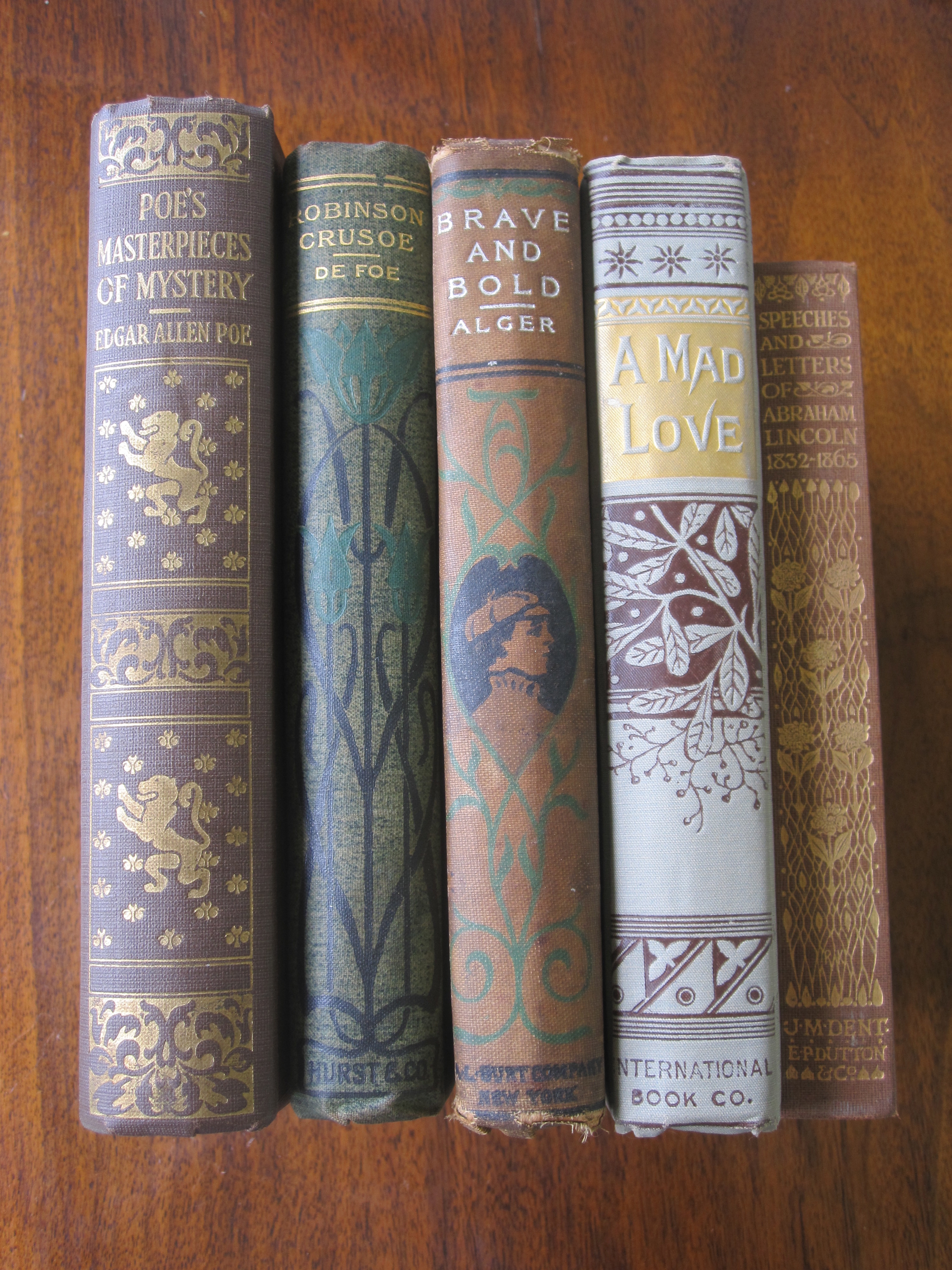
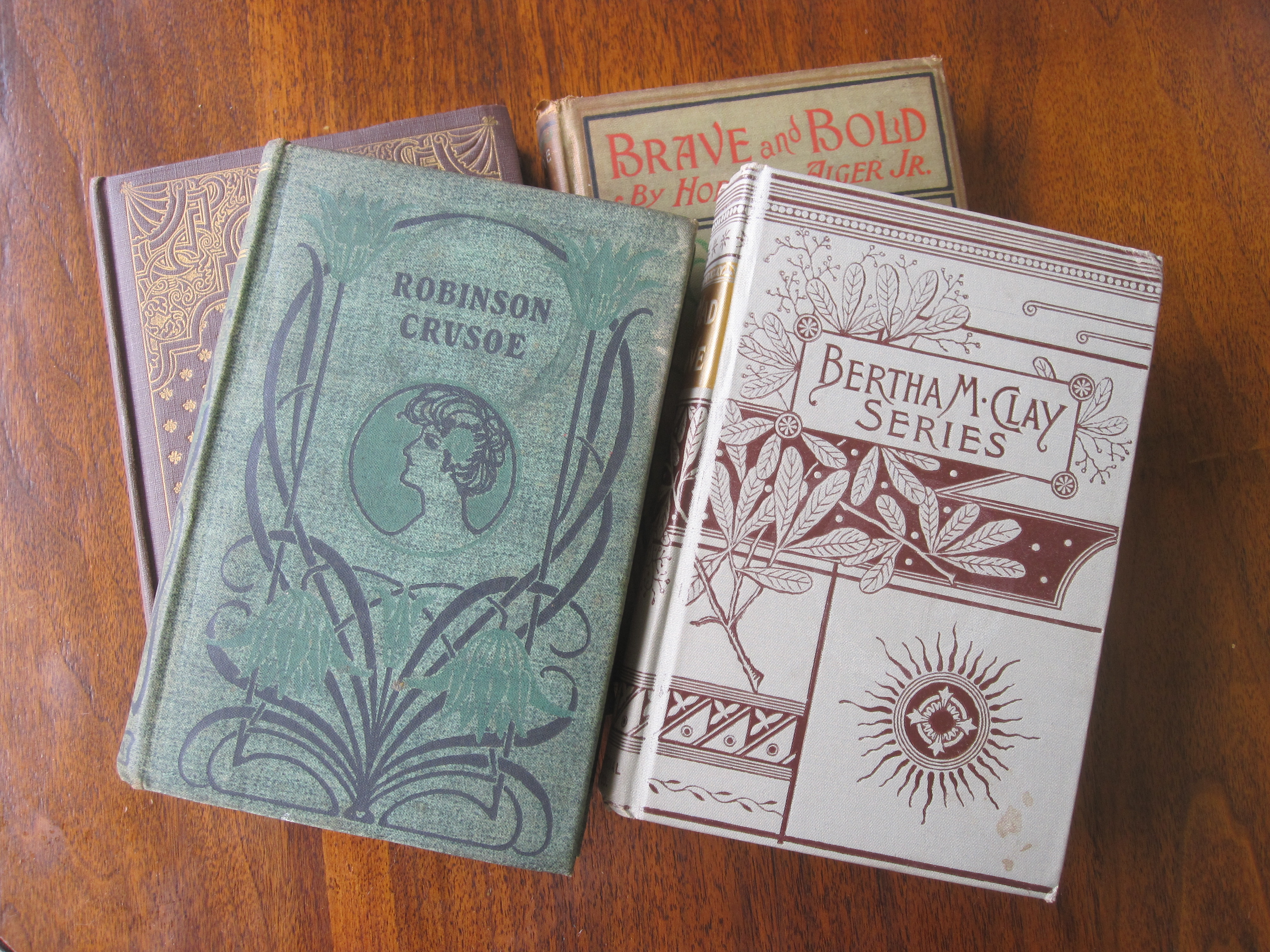
All of those giant bookcases were full of books. Even though I have taught my daughters not to judge a book by its cover, I am definitely weighing books for their physical appearance these days. I want my bookshelf here in Ocean Grove, which I have yet to find by the way, to be visually beautiful. That being said, I don’t want a bunch of fake things picked just for their appearance so I do try to pick up classics and others things that sound like they might be interesting to page through. I am sure my husband will be excited by Speeches and Letters of Abraham Lincoln.

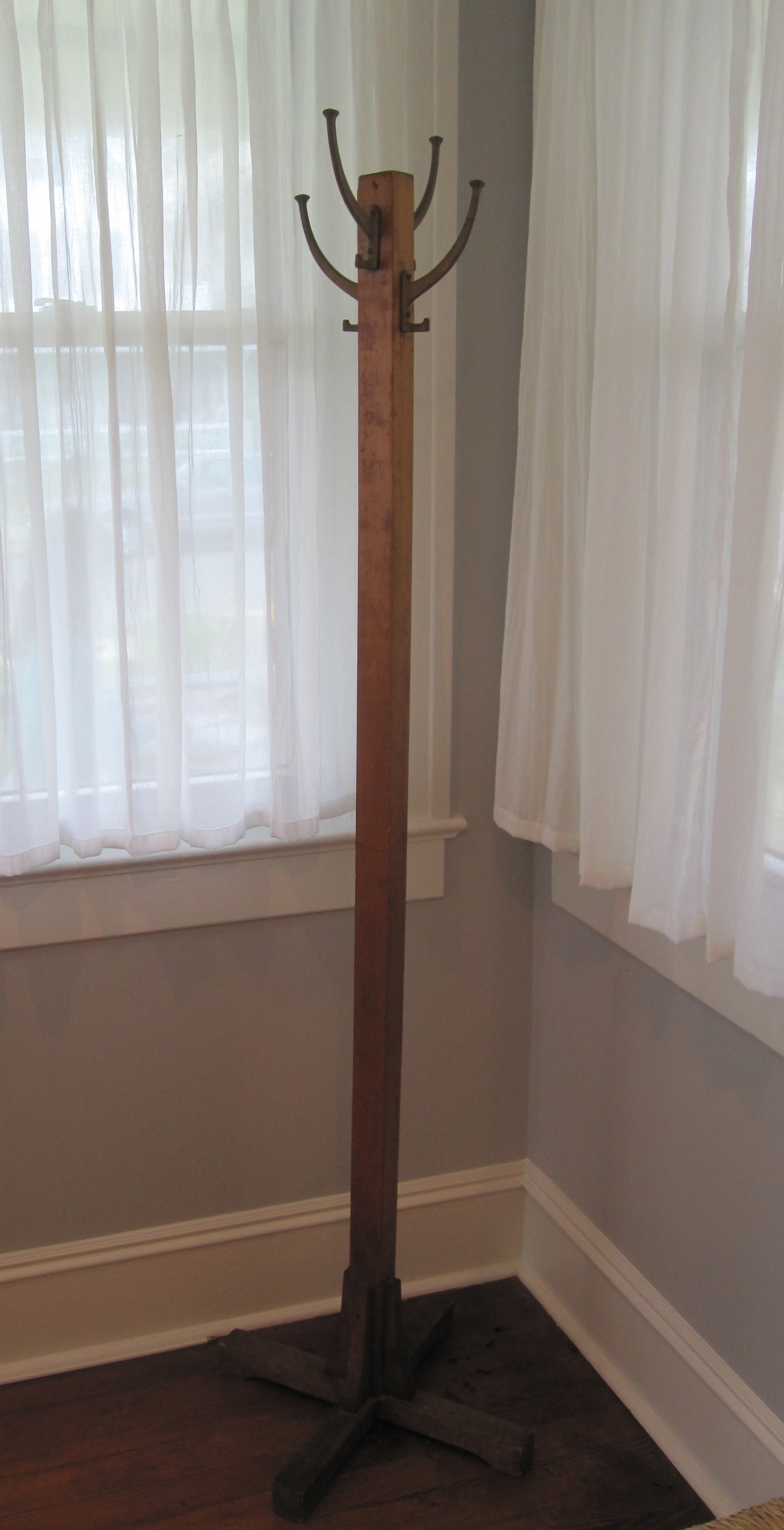
My house has no coat closet in the front so I have been keeping an eye open for a coat/hat rack. I had been thinking about a Thonet bentwood style, but stumbled across this simple Mission oak one at the sale. I think it will do to hold an occasional sweater and sun hats, if only it would warm up and stop raining, that is.


I also picked up a little silver plate and glass condiment basket to add to my bits and bobs of antique silver. There is nothing like the patina of old silver.

And no groaning, those of you who are bored with this topic, but for those who aren’t, I got this mid size glass fishing float for ten bucks. You know how sad I was to leave my big ones behind in Tokyo, but I think I can ft this one into my tiny bathroom. To give a sense of its relative size, I have put a few of my tiny ones into the photo. Still searching for the perfect basket or container for those, so styled photos yet to come!


Rumour has it everything will be half price tomorrow. Let me know if you want me to run back and get the buffalo head!

Read Full Post »

As I wandered through the stuffed-with-junk antique stores here in New Jersey last week, I stumbled across this small Japanese Seto porcelain tea-cup and saucer. Based on its traditional Western style and shape, it was most likely made for the export market somewhere around the turn of the 20th century. This reminded me once again, that although I am a blue and white porcelain junkie in Tokyo, many of my best finds have been made abroad in the US and England. And those finds are not limited to ceramics, but also glass, silver and just about anything that could be exported.

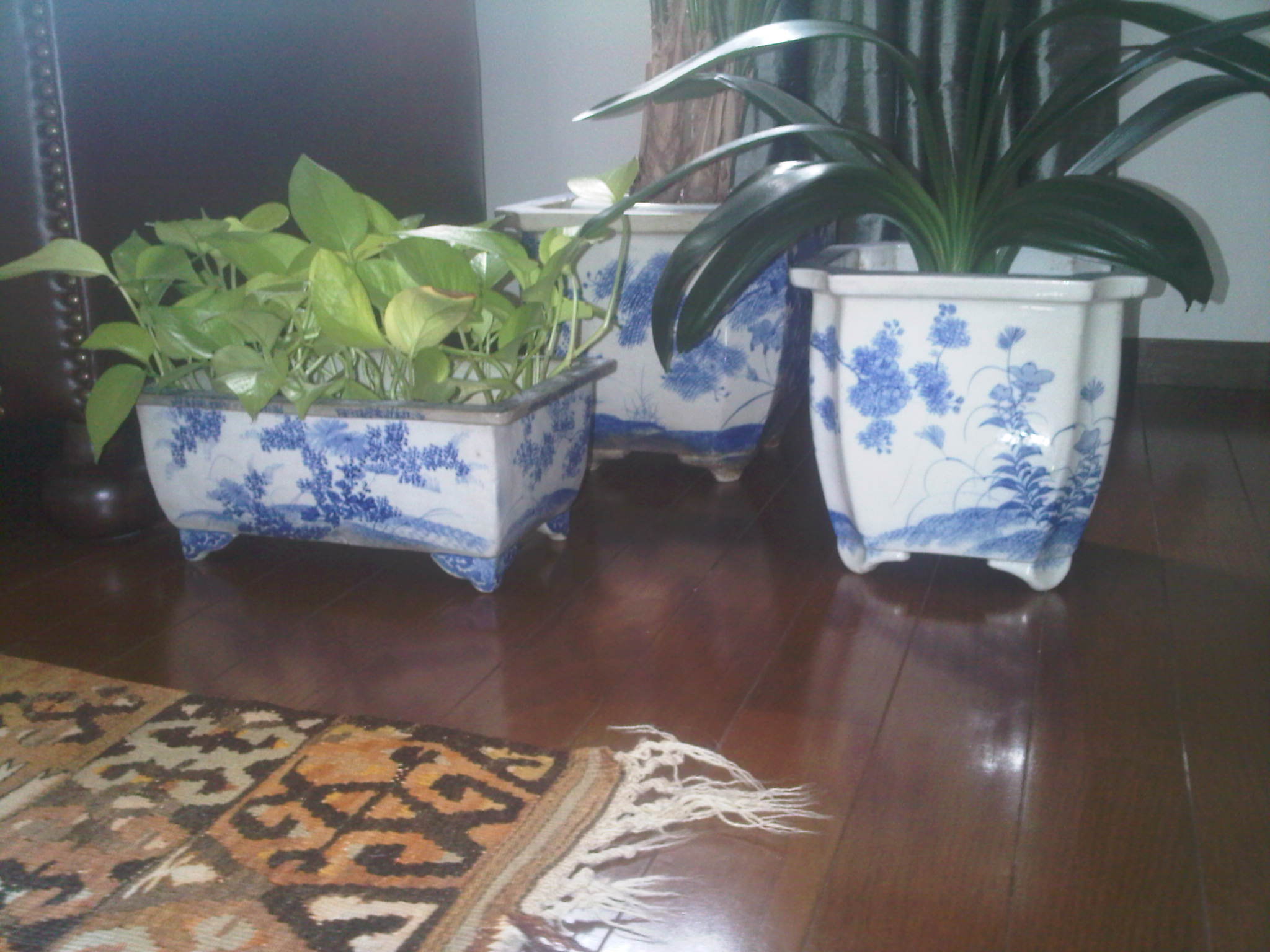
Fine sometsuke (underglazed cobalt porcelain) has been produced in Seto City and Aichi Prefecture for about the last 200 years, although the region boasted one of the six old kilns of medieval Japan and produced pottery since the 14th century. I bought my first piece in Hong Kong 14 years ago, a square planter, drawn to the brilliance of the cobalt and the feathery painting style of the artist. Ironically, I got it for a great price as the Chinese don’t tend to value Japanese porcelain. That piece lives happily in my Tokyo living room with two siblings, found at shrine sales.

Over the years I have accumulated many more pieces, including these lovely jubako (stacked food boxes)…

…and this cricket cage and covered fan box.

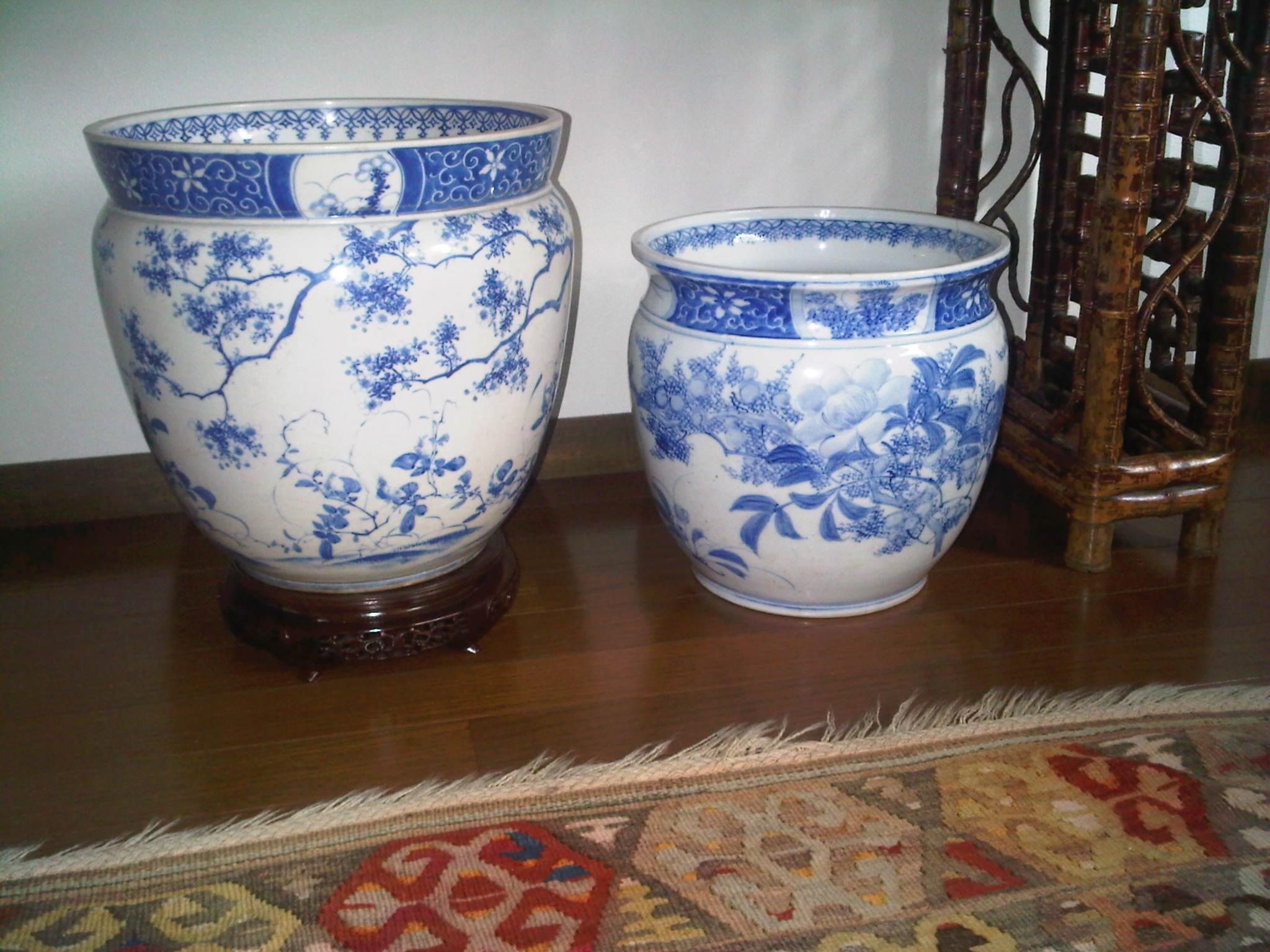
Thanks to a recent Kawagoe trip, I now have 2 big fish bowls.

One of the most beautiful and rare Seto items are garden stools. A fixture in China for 1000 years, porcelain garden stools have become one of the basic staples of home decorating, but they were actually used in gardens originally. Some find them ubiquitous these days, but they continue to fill that niche between seat and table and their variety of color and design means there is a place for them everywhere. I could do a 20 photo post on amazing rooms with them, but I’ll limit myself to some blue and white ones. All Chinese as there are many more on the marketplace, and I have yet to see a Japanese one in a magazine spread.

A few posts ago, I featured the home of Brazilian designer Sig Bergamin, but did not include this photo. A blue and white garden stool sits at the edge, ready to hold a drink for the person lounging in the white chaise.

Jeffrey Bilhuber is one designer who uses them all the time to great effect. This one has lovely open fretwork on the side.

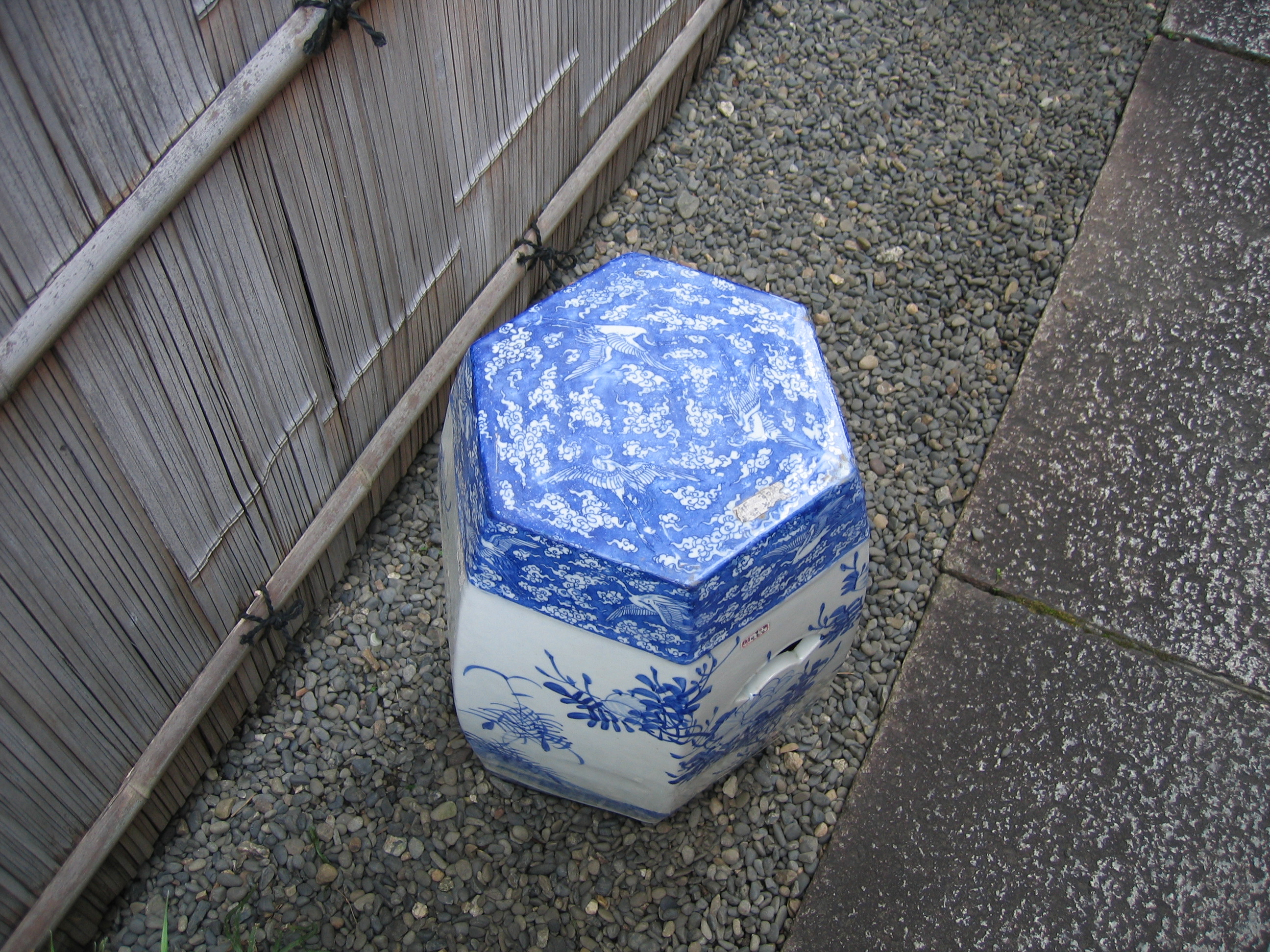
Back in 1997-1998 there was a pair of Japanese stools at a shop in Cat Street in Hong Kong that I couldn’t afford. I had never seen any like them and I fantasized about them for years. No photo of course, but they live in my memory as being hexagonal. In 2005 I found one on my first trip to Kyoto, not long after we had moved to Japan. I didn’t buy it then either, but I did take a photo! Not a great photo, but it shows you how seriously I was thinking about it. Although in retrospect, it wasn’t that great of a garden stool either.

So the tea-cup at the top of the post reminded me of the amazing find I made last summer, that somehow I had forgotten about in all the hullaballoo and busy-ness of my life.

I went down to the basement and found this. What do you think is in here?

This!

I haven’t stopped to clean it or anything but am absolutely bowled over by it! It has so many of my favorite motifs – cracked ice, fan vignettes, open fretwork - and the form and painting is spectacular. And I had literally forgotten that I had ever bought it! My swiss cheese brain is starting to worry me….

Now the question is, how do I get it back to its family and friends in my Tokyo living room?

Related post: Colors of the Rainbow…Blue and White Porcelain is Neutral. And more on porcelain garden stools at Apartment Therapy.


Image credits: All photos by me except 6. Elle Decor April 2011 photo credit: Simon Upton, 7. design by Jeffrey Bilhuber, Photo credit unknown.

Read Full Post »

Jet lag and general reorientation (disorientation?) have kept me from posting this past week, but not of course, from antiquing. I have managed to visit most of my usual haunts here on the northern New Jersey shore before even making it to the supermarket, which luckily for my children, I finally did today. The sad news for me is that I have not managed to find anything on my “need” list for the beach house, nor anything on my “just want” list, which means I will have to cast my net further afield. Hopefully that will yield some good posts too.

One item that did catch my eye at many of the shops I visited were antique/vintage glass insulators. I know I have a strong following of blue-green glass and fishing float junkies, so I thought these might satisfy an itch. I have seen them on occasion, but not particularly noticed them until I saw this group lying in a trunk amidst vintage rolling pins at the Point Pleasant Antique Emporium.

Once I noticed them, I saw them all over the Emporium…

…as well as other places, such as the Point Pavillion Antiques Center.

Historically used to insulate telegraph wires (glass does not conduct electricity well), these glass insulators are no longer in use and have become collectible. As you might expect, there are entire websites devoted to their study and sale. At The Insulator Store, some of the rarer pieces are described in language that makes them sound like diamonds or champagne; ”An absolutely dazzling Roman Helmet, in a brilliant shade of green. This particular piece has loads of charm - a few faint amber wisps, great color variation and some light fizz in the ears.”

The beauty shown and described above is $173 at the Insulator Store, one of many unusual ones stocked there, including a Mickey Mouse shape! Most of the insulators I saw were basic blue or clear and quite simple, priced in the $3-$5 range.

What should you do with them, you ask? Well, one of the simplest ways to display them is along a window ledge, allowing the sun to shine through.

Turning them into small pendant lights seems to be popular too.

And another version with the insulator hanging upside down.

The Lamp Shop sells a conversion kit for glass insulators which I found in a post on Katy Elliot’s blog. There is also a link for cork sockets, perfect for turning glass jugs into lamps, so I plan on doing that to one of my great finds back in Tokyo.

And since I am now in New Jersey, why not show you how weird and wonderful it can be? Stanley Hammell has been collecting glass insulators for the past 15 or so years, but more importantly, he has been displaying them around his property in Pomona.

Trumps the windowsill display…

Image credits: 1-3 & 5. me, 4. via The Insulator Store, 6. available at Railroadware, photo via Remodelista, 7. via Retro Renovation, 8. via Weird N.J.

Read Full Post »

I am a bit of a porcelain proselytizer, particularly of the blue and white variety. My faith lies firmly with the clear blue cobalt of Japanese Seto porcelain, and its more sophisticated cousin Imari, but I am open to decorating with blue and white of any kind, may it be Chinese, Dutch Delftware, English Staffordshire or any other. I preach the gospel often and have converted many to its charms. Sometimes my difficulty lies in convincing others of the true neutrality of blue and white and the undeniable truth that it can work with any color decor and any style of furnishings.

Having had this post living in my queue for months, adding a photo to it every now and then, I’d like to finally share a visual rainbow of the possibilities of color with blue and white porcelain. There are certain designers who could furnish the full spectrum on their own, but I have attempted to present a variety of styles and suppliers. For the most part, I have limited myself to porcelain from Asia and homes from America as it would be easy to trot out the stately homes of Europe and their incredible collections, but not that diverse.

Red – Mary McDonald

Orange – Mary McDonald

Yellow – Christopher Spitzmiller

Chartreuse Green – Markham Roberts

Hunter Green – Jeffrey Bilhuber

Laquered Cobalt Blue – Miles Redd

Blue Venetian Plaster – Allison Caccoma

Pale Blue – Milly de Cabrol

Lavender – Aerin Lauder

Pink – Mary McDonald

Brown – Ned Marshall

Grey - Grant Gibson

White and Modern -Kristen Buckingham

Rustic Elegance- Cathy Kincaid

Classic – Miles Redd

Glamorous – Daniel Romualdez

Have I converted you?

Read Full Post »

Some antique stores always have primo stock while others are of the hit-or-miss variety. Yamamoto Syoten, a neighborhood antiques shop in Yoyogi-Uehara is the latter. A few visits will yield nothing of interest, and then “kapow!” and you want to buy the whole place. I had been hearing about it from local friends for years, but not actually visited until these past weeks, when I went with friends who are leaving Japan this year and want to stock up on memories. The key to visiting such a shop is a discriminating eye to help you sort through the mixture of vintage, truly antique, not actually old and just plain junk. Japan is not the only country that abounds with shops like these – they can be found all over the world -and they make for some of the most fun shopping around.

One thing found in abundance at Yamamoto Syoten is tansu (Japanese chests). Stacked 3 high in some places in the shop and arranged in tight rows, it is difficult to get a good look at them. I was happy there were no aftershocks while we were in there because I worried they would topple over on us. In addition to large mizuya tansu (kitchen cupboards) and iron strap isho tansu (clothing chests), they also have a large selection of smaller decorative burlwood tansu from the 1930-1940s era. Prices are reasonable and condition is good, although perhaps not excellent. In addition they had lots of vintage lighting, wonderful bevel-edged framed mirrors, piles of porcelain hibachi and many other bits and bobs. The tight quarters made photos difficult, but you can get the flavor of the place from these.

Perhaps the best way to show you what can be found is to highlight my friend’s purchases. She came through and plucked the best pieces and that is the way it always works with stores like this. It will take a while for them to recharge, at least on items like the ones below, but remember, every customer has their own eye, so you may see your own jewels there.

Neither of the light fixtures show to advantage sitting around back in her house. The wooden one on the table cast a soft glow when lit, with patterns coming through the fretwork. The larger iron and glass chandelier will be perfect hanging in her breakfast nook back in Atlanta. And the ceramic geisha pillow (used to preserve elaborate coiffures) is a great conversation piece.

My friend also purchased a big mizuya tansu with some nice details, a rustic ladder on which she is planning to display her vintage quilt collection from India and two huge blue-green glass bottles like mine that she will have turned into lamps when she gets home. And of course there is the requisite glass fishing float too. Sometimes I wonder if I have accomplished anything with this blog other than to turn all of the Tokyo expat community fishing float crazy!

She bought two huge senbei (rice cracker) canisters as well which I forgot to photograph, but they looked much like the big rounded ones in this photo. And don’t forget, I got my fabulous and funky green lamp shade there too!

Read Full Post »

This is a post about a decorating detail that may seem small, but actually is not. Lamp shades, a seemingly innocuous subject, is one I feel strongly about.  Great lamp shades can make a room, while ignoring their significance can leave a room boring and bland.

The problem is that good, let alone great, lamp shades are very difficult to find, particularly at a reasonable price. I adore a colored, patterned or trimmed lamp shade, especially one that does not “match” the room it is in. A perfect balance between complementing and contrasting is hard to find – both in terms of the lamp to the room and the lamp to its shade. Proportion and size requirements only add to the complexity. Custom making shades is one solution, but finding a craftsperson can be difficult. Vintage shades are another, as those from earlier eras have unusual shapes and lots of detail, but condition can be tricky.

It seems to me that the British have always had the hang of this better than any other nationality, just open any World of Interiors and you’ll agree. Robert Kime has some of the most beautiful shades around anywhere, softly gathered fabric ones made from his fabric line, ikats and antique textiles. Unfortunately, they run about £350 and if that was in my budget I wouldn’t need to write this post.

His shades are positively dreamy.

Soane, the UK design firm, which recently had a pop-up shop in New York City I would have loved to have visited, also makes beautiful but pricey ikat shades.

While visiting the UK last year I stopped into Soane and Robert Kime, but my favorite spot was a wonderful romantic antiques shop in Bath, Antique Textiles and Lighting. Filled with vintage chandeliers and gorgeous antique fabrics, the owner made bespoke shades from her antique textiles. I have a deep and lasting purchasing regret from that trip and wish I had bought some, even without any idea of where I would use them.

This all brings me to my personal conundrum. I have purchased many charming vintage lamps for the beach house in New Jersey, but almost none of them have come with shades. While they are all fabulous and absolute bargains, coming up with shades is proving to be a daunting task. The lamp stores seem to be full of nothing other than mass-produced low quality dull white and cream shades. Searching the web, eBay and Etsy has not yielded anywhere near as many options as I might have expected.

I have been scoping out two different ikat shades at Anthropologie, reminiscent of the Kime and Soane shades. I can’t quite figure out which lamps they might look good on, but as they have gone on sale, I am tempted to buy them anyway. I often do that, although regretfully not last year in Bath, so I am loath to let them sell out and slip away.

The first is the Pleated Ikat Shade

…and the next is the Wandering Ikat Shade.

One of my lamps that needs a shade is this alabaster beauty. While quite tall, it has a short harp and would look best with a wider shallower shade.

I recently bought this dark grey pleated shade on mega-sale at Laura Ashley (the Japanese love Laura Ashley!), thinking it might be perfect for the alabaster lamp. It is wider and shorter than it appears in the photo, so it has the right proportions. But perhaps it is too formal for the beach? Maybe instead of carrying the shade home this summer, I should carry the lamp back to Tokyo. It would look great with its little sisters somewhere in my bedroom here. I would also definitely consider the two Anthro shades for this lamp and I think the dark ikat one would look beautiful, but unfortunately I belive it to be too big.

Not all the lamps need fabric shades. I’d also like some casual paper ones too. I had been hoping to find time to visit Susan Schneider’s shop Shandell’s in the Hudson Valley this summer. Having first read about her custom lamp and shade shop on Eddie Ross‘ blog and then visited her own, I knew she is a master of the lamp/shade combo, like this pair of flea-market mid-century lamps she topped with wallpaper covered shades.

She makes tons of charming covered paper shades from vintage wallpapers.


Continuing my search, I’ve turned to the other major catalog brands and actually had a bit of luck. For the upstairs guest room I have a pair of twisted milk glass lamps and was hoping for a shade covered in a Kathryn Ireland/Carolina Irving/Lisa Fine type pattern. All the shades in Kathryn’s One Kings Lane sale were too big as are the ones in her online shop. Surprisingly, I got extremely lucky with these Indian block print shades from Pottery Barn, on sale to boot!!

Here is one, in situ. Maybe a little too big? It will have to do for now.

Another lamp in my daughter’s room was purchased entirely for its lavender gingham shade. I wasn’t sure I would even use the lamp, but ended up liking it. It is sitting on the floor because I don’t as yet have a night table. One of the many things the house is missing…

In the last few weeks I have been doing a lot of antiquing with friends moving away from Tokyo and looking to take away decorative objects that will remind them of their time here. Personally, I have made some fantastic finds in the lighting department along the way. I mentioned vintage shades with their charming quirkiness earlier in the post – here are a few examples.

First, I finally visited Yamamoto Syoten. Friends on the other side of town had raved about this shop, crammed to the brim with a wide range of merchandise, from fine tansu to vintage bric brac. I’ll be doing a full “Shop Talk” post on it soon, but I thought I’d show you what I got there. I had to have this wonderfully shaped green shade, as I have just the right lamp for it, a converted Chinese famille rose vase. I have searched my files for a photo to show you but can’t find one, so it will have to wait for the summer. I did not actually want the lamp it was on, so it took a bit of persuading to get them to sell me just the shade.

Days later I walked into Kanarusha to pick up the ceiling fixture I wrote about here and this was staring right at me.

How had I missed it the week before? I don’t know, but it caused me to do a jig of joy. I have been looking for a tiny jewel of a lamp to place atop a bookcase in the upstairs hall, lit at night as the hallway night-light. This was one of those shopping fantasies come to life.

My takeaway from this post? Custom lamp shades are a business to get into! And I plan on doing some more DIY lamp shade posts this summer, including covering a pair of sconce shades with this gorgeous washi paper.

Not traditional washi design at all, the tiny print resembles an Indonesian batik made for the Japanese market.

I have posted many photos of rooms with wonderful lamp shades, but rather than trot them all out I prefer this quick litmus test. A glance through the current House Beautiful demonstrates the importance of lamp shades with examples on almost every page. Here for instance, Anne Wolf uses shades covered in a tiny Lisa Fine print to update glass lamps in a cheery dining room.

Another example is this Carrier and Company living room, where a pair of vintage lamps are activated with bright shades. Many other examples can be found throughout the issue.

Image credits: 1-3. Robert Kime, 4. Elle Decor June 2010, 5. Antique Textiles and Lighting, 6-7. Anthropologie, 8-9, 12, 14-18. me, 10-11. Shandell’s, 13. Pottery Barn, 19-20. House Beautiful June 2011

Read Full Post »

Lately I seem to be passing up amazing indigo textiles at markets all over town, like this antique katazome futon cover, with scrolling floral and arabesque design.

This giant furoshiki (wrapping cloth) with sashiko stitched corners was purchased by someone else, perhaps at my urging. Am I turning into my grandmother if I am talking to strangers and pushing them to buy things?

And it is fairly rare to see such a fantastic boro futon cover. This one was so artistically patched that I went back and looked at it numerous times before leaving Kawagoe. I am sure purists would decry that tiny bit of red, but I think it is the perfect touch.

My reasoning for not purchasing, besides the usual “I can’t have everything,” is that I am not sure what to do with them. Not usually my problem…

But lately, I have been seeing indigo textiles in design projects everywhere and I have been craving some of that organic deep blue as it has such a cooling effect in warm weather. Many of the textiles in these projects are not Japanese but are instead Indonesian batik or even French Provencal fabrics, but they all have the same visual effect. In the best spaces, textiles from all over the world have been blended together!

I spied what looks to be a Japanese textile thrown over the sofa on the cover of the newest House Beautiful.

April’s Elle Decor featured the Brazilian beach house of designer Sig Bergamin, always a master of the global textile mix. The most unusual fabric placement? The indigo piece on the wall, serving as a backdrop/frame to the painting!

One guest room has beautiful batiks as extra coverlets at the foot of the beds.

Another is such a riot of color, country and pattern all piled on an amazing antique Chinese bed. Click the photo to enlarge and you will see textiles from almost every continent!

Stylist Peter Frank’s house was featured last fall, but I had to include his living room. That perfect blue patchwork pillow, made from antique Japanese textiles, the blue grasscloth on the walls and the amazing 18th century Korean screen, all on a woven paper tatami mat rug from Merida, exude an elegant cool. His entire Hudson Valley house is well worth looking at here.

Interested in cooling down and adding a bit of indigo to your life? I have been cruising the internet for throw pillows and found these made from vintage kimono at Jayson Home & Garden. That might be a good DIY!

Want a bigger swath of blue? Madeline Weinrib, famous for her ikat pillows and Moroccan motif flatweave rugs, also does a denim patchwork line, combining the look of patched Japanese textiles and vintage dhurries.

While we are mentioning Ms. Weinrib, here are a few photos of her New York apartment, resplendent with her textiles and also a great collection of Japanese inban (transfer printed porcelain) and other porcelain.

For those of us in Japan, it is easy to add a bit of indigo to our lives, and what better way to do it than by helping those up north in Tohoku? Amy Katoh’s Azabu Juban shop Blue & White is selling special “Genki Japan” tenugui. The checkerboard motif (remember it here?) is interspersed with encouraging kanji phrases, such as “Let’s Join Hands” and “The Power of Everyone.” All profits from sales will be donated to relief agencies. I think everyone needs one!

And speaking of tenugui, I promised to devote some time to them in my last post, but my dear friend and quilting master Julie Fukuda has beaten me to it and written a great piece on her blog My Quilt Diary. Take a look! Julie often pieces tenugui to create the backs of her quilts and while it may look random, there is always a masterful artistic hand at work. Julie, don’t be angry with me, but sometimes I love the tenugui backs as much as the amazing quilt fronts!

Which brings me to one last indigo image from recent press – this bedroom in Maine by Tom Scheerer. The quilt on the bed must be American, but it is reminiscent of a patched Japanese textile or even Julie’s tenugui quilt back.

Stay cool wherever you are! And stop in to Blue & White for your “Genki Japan” tenugui!

Image credits: 1-3 & 14. me, 4. House Beautiful June 2011, photo credit: Francesco Lagnese, 5-7. Elle Decor April 2011, photo credit: Simon Upton, 8. House Beautiful October 2010, photo credit: William Abranowicz, 9. Jayson Home & Garden, 10. Madeline Weinrib Atelier, 11-13. Elle Decor December 2008, photo credit: Simon Upton, 15. Julie Fukuda at My Quilt Diary, 16. House Beautiful April 2011, photo credit: Francesco Lagnese.

Read Full Post »

Follow

Get every new post delivered to your Inbox.

Join 424 other followers

%d bloggers like this: