Feeds:
Posts
Comments

Archive for December, 2010

After that Christmas orgy of William Merritt Chase, I can’t resist adding just a few more paintings by his contemporaries for your viewing pleasure this New Year’s Eve…

James Abbott McNeill Whistler (1834-1903)

La Princess du Pays de la Porcelain

Purple and Rose The Lang Leizen of the Six Marks

Symphony in White, No. 2 The Little White Girl

The Balcony, 1864

The Artist's Studio, c. 1865

James Jacques Tissot (1836-1902)

The Fan

Young Woman Looking at Japanese Objects

Gustave Leonard de Jonghe (1829-1893)

The Japanese Fan

Edmund Charles Tarbell (1862-1938)

Cutting Origami

Jules Joseph Lefebvre (1836-1911)

The Language of the Fan

Roberto Fontano (1844-1907)

A Young Girl Holding a Fan

When I was a child, my mom and I would always play “pick your favorite” about any decorative item, whether it was a painting in a museum or a ballet costume in a performance. So my end of year question: If you could choose 1 painting to own, from this post or any of the others this month (check hereherehere and here), which would it be and why? Please leave me a comment!

Happy New Year all!! Here’s to 2011!!!

About these ads

Read Full Post »

One of the charms of flea markets and shrine sales is the large number of vendors all grouped together in one place at one time. As it is always unlikely that any particular dealer will have just what you are looking for, there is great “synchronicity” in numbers.  Antique stores, art galleries and car dealerships often subscribe to this rule – sometimes because they take over inexpensive real estate in fringe neighborhoods.  Antique Row along Dixie Highway in South Florida is an outstanding example of this kind of antique synchronicity. Between Southern Boulevard in the south and running up to Belvedere in the north, about 50 antique stores and related services line both sides of the street. I can’t possibly mention them all, so I am only going to touch on my favorites and those that seem particularly significant.

Partially because I often use their parking lot, and also because they always have something interesting, one of my first stops is Wardall Antiques and Decorations. They have a diverse mix of European and American antiques representing a wide range of periods including furniture, artwork, great chandeliers, and decorative items. They can be relied on for trendy items – a fair amount of mirrored furniture there this visit – but also for basics. The big find this time? Three 1968 horse prints by master artist Tadashi Nakayama, for a great price at about $650 each. Someone should snag them!

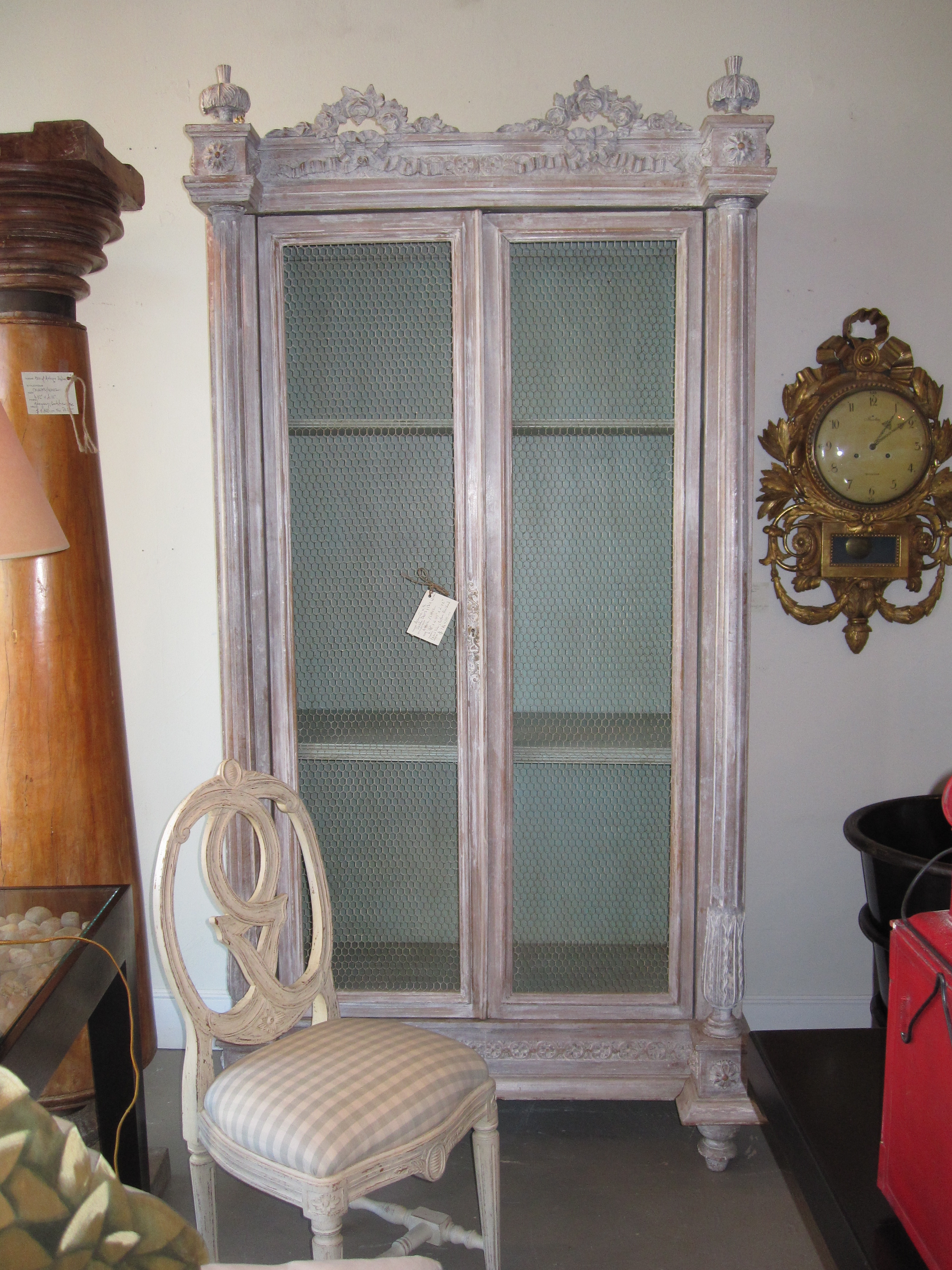
The big man on the block is Lars Bolander, who has multiple shops and a design studio, in addition to his New York showroom. The store is full of his signature Swedish pieces, but also some quirkier Asian and industrial items too. On one hand, there was this gorgeous Swedish armoire with chicken wire panels and on the other, there was an enormous Buddha in the window.

Michael MacLean Antiques had its usual selection of small exquisite European pieces, with a few international touches thrown in like these Kuba cloth pillows. This is a trend that has been brewing – perhaps as a suzani replacement? – see Thomas Hamel’s project in House Beautiful this month for a beautiful use of African cloth pillows.

For serious museum quality antiques with provenance and 5 digit prices, head to N.P. Trent Antiques. Full of gorgeous 17th, 18th and 19th century European furniture and accessories, I like to play “imagine” with myself…as in imagine what I would take home if I could. Most interesting there today was this extraordinary Flight & Barr Worcester Imari partial dessert set, circa 1800. At first glance one might think it was Japanese, but in the center is an armorial crest with a stag’s head and the motto “Virtuti“, marking it (along with the incised marks on the reverse) as irrevocably European made.

New to the strip, although long in business, is Artmosphere, carrying rough-hewn furniture from Brazil and Bolivia, both antique and new. I can see these pieces feeling fresh in a Palm Beach Mediterranean.

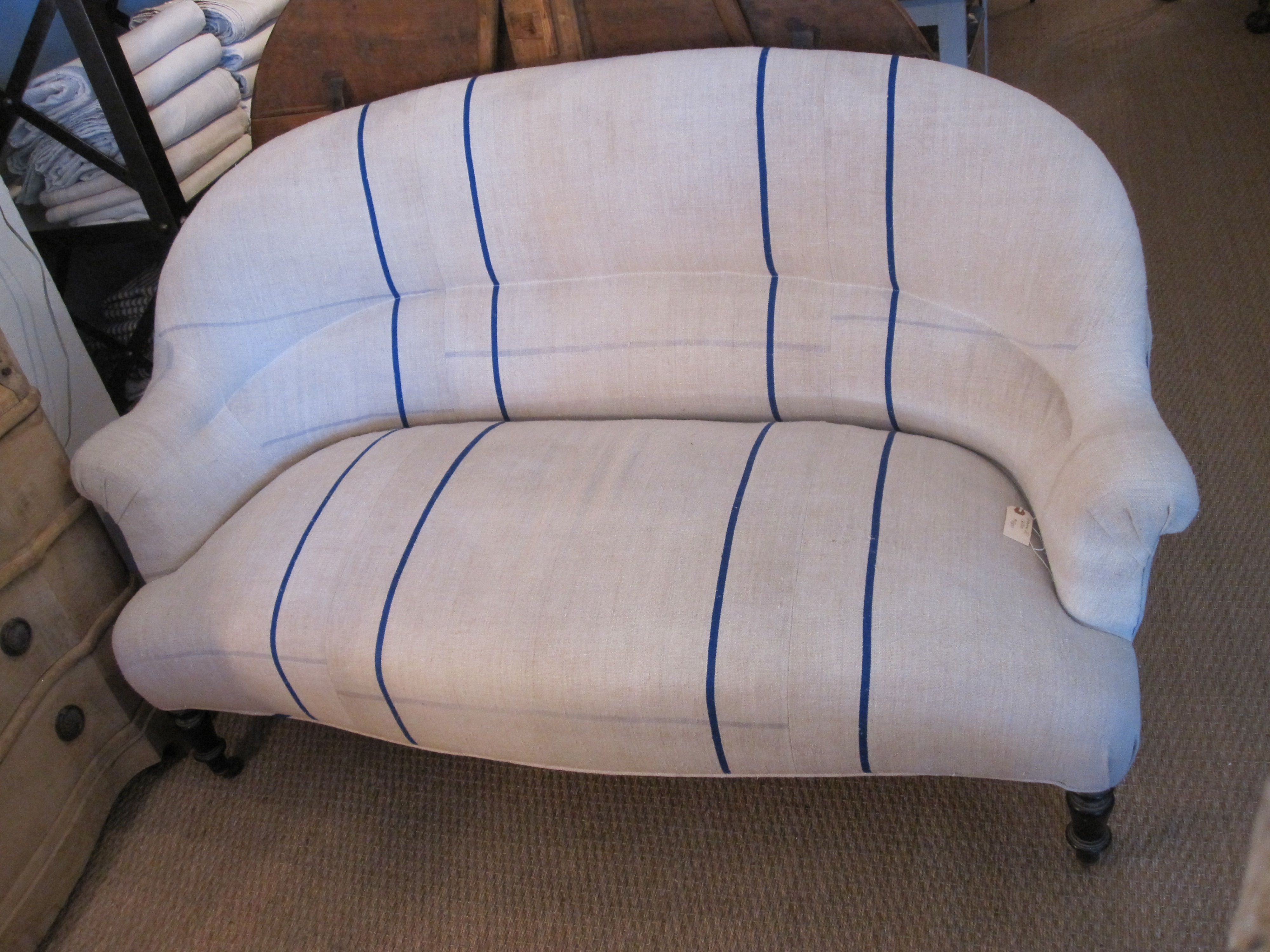
Faustina Pace Antiques and Interiors had simple on-trend French pieces from the 19th and 20th centuries, like this antique Napoleon III settee covered in homespun, big industrial lights, and large-scale accessories like these huge demijohns for holding olive oil. Surprisingly, the bottles were remarkably similar to my Japanese bottles. Texture, in the form of baskets, rough painted pieces and homespun grain sacks, gave the store great character and style.

Unfortunately, Hampton Antiques, one of my favorite group shops at the corner of Dixie and Southern seems to have vanished (although I believe they are related to the huge Hamptons Antique Galleries in Stamford, CT). Last December I found a great pair of Napoleon III armchairs there. They were not even muslined, instead had only their original burlap.

Here is where the professional and geographic synchronicity went to work.  I wanted these chairs, but would be leaving for Tokyo in a few days and not returning until the summer. They were of no use to me in the state they were in. Across the street is Parkers fabric store (better known as Silk Surplus, and related to the well-known one in NYC), which carries super discounted remnant bolts, discontinued designs as well as “to order” fabric from major fabric houses. In one of the sale bins I found a great Scalamandre check called Brompton Plaid for $9 a yard. (Shall we say that again? $9 a yard. Normally it retails for $125 a yard!) Around the corner was an upholsterer, used by many on the block. Chairs…check! Fabric…check! Upholsterer…check! Purchase completed….Take a look at the chairs in situ at the beach house!

If like me, you are a junkie for really good but threadbare Persian rugs and suzani scraps, my “secret” favorite shop that I have been patronizing for years is Joseph Malekan’s Antiques and Oriental Rugs on the corner at Roseland Drive. You never know what you will find scattered around his store, but I have a beautiful 19th century Tabriz and two small Lavar Kirman’s that I picked up there for very reasonable prices. This time he had a great pair of Moroccan stools, some beautiful framed fan coral in distressed vintage frames and a huge selection of copper lanterns.  I love this faux boix console table too. Joseph can also now be found on 1stdibs !

There are too many shops to mention them all, but head to Dolce and Re Vue for eclectic Palm Beach and Hollywood Regency style, The Elephants’s Foot for English antique and reproduction furniture as well as a huge selection of antique silver, European porcelain and Imari, John Prinster for art deco and art moderne. Mecox Gardens has a big outpost on the row, right near Southern Boulevard.

There are a number of related services in the area in addition to the ones mentioned above, including more fabric stores and interior designers.  There is a Sherwin Williams and a shop called The Paint Store which carries hard to find brands such as Farrow & Ball, Fine Paints of Europe, and Christopher Peacock Paints.

Antique Row no longer feels like an insiders secret like it did 15 years ago, at least at these core shops, and the prices reflect that. Off of the “official” Row, there are quite a few shops south of Southern Boulevard that I haven’t had time yet to explore. Next time!

For more information and some gossip on who shops there, take a look here and here. And for lunch, I recommend a great diner called Howley’s, on the east side of Dixie Highway, a few blocks south of Southern Boulevard.

Read Full Post »

I am not going to say a lot about about this Christmas treat post, other than that the very prolific William Merritt Chase, long considered America’s “Best Impressionist,” was also fascinated with Japanese art and motifs. For your enjoyment, I have gathered a large grouping of his paintings which include clear references to Japonisme through props such as prints, fans, kimonos, and screens. In addition to these obvious references, the compositions of these later paintings – with their high horizon lines and uptilted foregrounds – reveal the more significant role Japanese art had on his artistic style.

Hall at Shinnecock, 1893

Child With Prints

The Japanese Book

Japanese Print, c. 1888

The Kimono, 1895

The Blue Kimono, 1898

Spring Flowers, c. 1889

Making her Toilet, 1889

Girl in a Japanese Kimono

Back of a Nude, 1888

Modern Magdalen, 1888

Connoisseur

Weary, aka Who Rang, 1889

Woman in Kimono Holding a Japanese Fan

Enjoy and Merry Christmas!!!!!
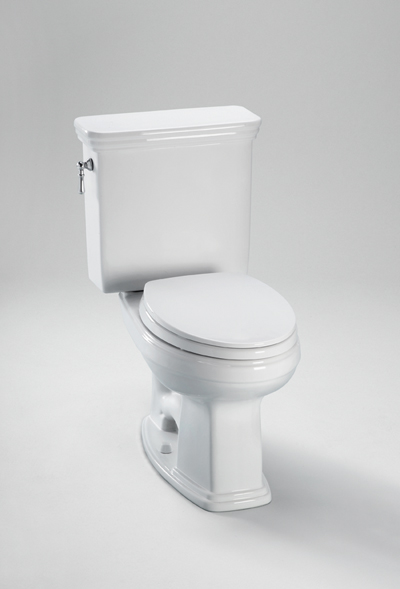
Image Credits: Thanks to Pagina Artis for uploading so many of these images into one place!

Read Full Post »

So I have to gather my courage to show you the “before” photo of one of the ugliest bathrooms in the world! Unfortunately, the lucky owner of this beauty is me. It is the downstairs bathroom in our beach house and serves as the powder room for guests and a full bath for the guest room. The ceiling is low, the room is dark, and the floor is yucky linoleum. It is tiny and everything is cheap and old – 1970s old, not good old! As an antiques dealer I am always looking for old, wanting patina. This was not it. The challenge was not just to update but to take this bathroom back in time…

In addition to being tiny, the bathroom layout was a straight railroad, which limited the floor space. The shower was a pre-fab 36 inch square, but the remaining unused 7 inches was useless. The opaque shower doors limited the visual size of the room by seeming like a solid wall. We won’t even bother discussing the color, the fittings or that wallpaper border. There were no redeeming qualities whatsoever!

Changes to the original floor plan below include sealing the door into the bathroom and moving it to where the sink is shown. The sink will be relocated to the where the door was. The shower pan will be 42 inches wide and fill the whole back wall. The shower doors will be frameless glass so that the line of vision goes all the way to the back wall, making the bathroom feel visually larger.

The layout of the whole downstairs was one of the problems as well.  The bathroom was entered through the back bedroom/TV room (which was itself entered through the kitchen). Our first step was to change the entrance to both rooms, sealing the kitchen entrance (and gaining a pantry) and turning the doors of both rooms to enter directly into the main house. Here is the back corner under the stairs before the renovation.

Here it is with the two new doors. The door on the left opens into the TV room/extra bedroom. The door on the right is the new bathroom door.

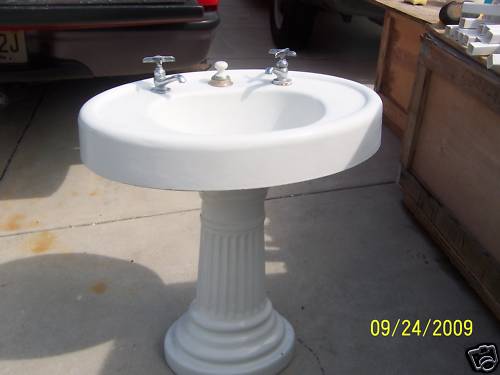
The house is a very simple 1880s Victorian cottage. Neither the budget nor the room itself calls for anything fancy and I want the bathroom to look as if maybe it was always just like that. My inspiration for the design came from a small French watercolor that I love, the historic pharmacy turned ice cream shop in town, and other original fixtures in the house made of aged brass.  I had already bought a salvaged white pedestal sink from the turn of the century in anticipation. So that means simple white fittings – 1 inch white hexagon tiles for the floor and subway tiles for the shower enclosure – and unlacquered brass faucets and fixtures. Planning for Farrow & Ball Pale Powder on the walls, which is the second lightest color in the second column of the paint chart on the inspiration board below.

Natural or unlacquered brass is definitely on its way back – take a look at the droolicious Henry Collection at Waterworks – but try convincing the locals around here. Everybody was worrying about polishing! It took a lot to convince them that I wanted that deep oxidized caramel color and that my only worry was how long it would take to stop being “brassy” looking. The Waterworks collection was both budget busting and frankly, too stylized to suit my house, which was actually a relief to not have to want it! Nickel or chrome fittings also felt too 1920s art deco.

Here are a few photos from my inspiration files. This bathroom had just the kind of exposed shower I was looking for, but the color and the shelves also really caught my eye.  No chance of opening the sheetrock in my tiny space, but I think it is a great idea. Sometimes shells and sea motifs can feel trite in a beach house, but this is charming. It also has a single plain framed window, similar to my bathroom.

This next photo has the hexagon tiles, vintage sink and natural unrenovated, undecorated look I want. We have discussed beadboard to death too, as the house has some original in the kitchen, but in the end, simplicity won out and not the beadboard. Again, space was a big issue and giving up half an inch to beadboard on the walls felt like it would make the room smaller.

The renovation was well on its way when the Dec/Jan issue of House Beautiful came out, featuring a gorgeous Windsor Smith project with this bathroom. While dressier that I plan and significantly more glamorous, this has the closest feel, with thick white molding, a beautifully shaped white tub, and pale wall color. It has a wood floor, not tile, which adds a dark note, which I am hoping to add to my room with a wooden mirror and accessories.

We assembled the pieces – the vintage sink, a round profile Promenade toilet from Toto, which has just the right amount of vintage feeling and is very compact and well priced, an exposed shower from Baths From the Past and an unlacquered brass faucet from Sunrise Specialty to retrofit the sink. I was the only one in the family who voted to keep the original separate hot and cold taps on the sink for authenticity! I also bought a salvaged 24 inch door from Recycling the Past in Barnegat, New Jersey as the original door is too large for the new entrance.

Here is the (almost) finished project. I got into town 3 days ago and was lucky enough to find the perfect mirror at a favorite antiques store (antiquing on the Jersey shore is fabulous – and I am sure I’ll post about it this summer). The frameless shower doors will be installed soon and there is no styling or accessories yet, but you can get the basic idea….

I am planning on small shelves in the cutout above the toilet, like the ones behind the bathtub in the Windsor Smith bathroom. Not sure how long the oxidation will take, but some of the brass is tarnishing already.  I also bought a great vintage brass towel bar for a song on eBay, and that will go up on the wall opposite the toilet.

The bathroom is so light and pretty – even more that I expected – and it feels roomier too. I’d love to hear from you all and know what you think! Styling and accessories will have to wait until the summer as we leave for Florida tomorrow, but it gives me something to hunt for.  Oh, and I am still considering wallpaper (and can pull out inspiration photos of quirky wallpapered bathrooms too) so let me know what you think of that…

Image Credits: 1-5, 9, 13-16. me, 6. via The Lettered Cottage, 7. from Found Style by David and Amy Butler, 8. House Beautiful December/January 2011 photo credit: Victoria Pearson, 10. Toto, 11. Baths From the Past, 12. Sunrise Specialty

Read Full Post »

While great rooms with exposed kitchens have become the norm, and loft living has it advantages, I can still see the need to shut the cooking area off from the dining area sometimes.  Designer Thomas Hamel has come up with one of the loveliest and most ingenious ways of doing this that I have seen in a while. Using lacy fretwork Indian style jalis – in this case laser cut stained oak panels – he has installed sliding doors that can be used to separate the two rooms, while allowing light and air to flow between them. Jalis are common in both Indian and Islamic architecture, and Hamel’s project has influences from all over the globe – he calls his style  ”international eclecticism”.

This design is very reminiscent of Japanese architecture too – reminding me of the shoji screens used as room dividers in traditional Japanese houses. As space is at such a premium here, most rooms have multifunctional purposes, and space is highly configurable. Shoji screens are covered with rice paper, which also lets light and sound flow through. One of the “go to” books on everyone’s’ coffee tables here is Japan Style: Architecture Interiors Design by Geeta Mehta and Kimie Tada, with great photos by Noburo Murata. I highly recommend it!

For a look more like Hamel’s, this antique fretwork panel door with its “seven treasures” pattern featured in an earlier post would work perfectly.

Image credits: 1. House Beautiful December/January 2011, 2. Japan Style: Architecture Interiors Design photo credit: Noburo Murata, 3. courtesy of Kanarusha Antiques

Read Full Post »

All my work is based to some extent on Japanese art…
Vincent Van Gogh, in a letter to his brother Theo 1888

Japan is no stranger to Van Gogh exhibitions.  In fact, they are routinely the most popular, drawing crowds large enough to liken them to the morning commuter trains.  This current exhibition at The National Art Center, on the 120th anniversary of his death, sets out to answer the question of how Van Gogh learned his painting techniques and established his signature style. While visiting the exhibition today – on one of the final days of the show – was almost unenjoyable because of the crowds, it did do a good job of demonstrating its premise.

Van Gogh did not arrive effortlessly at the style we all know and love. For him it was a long and laborious process. Beginning with the traditional painting and drawing techniques Van Gogh studied during his time in Holland, the color theory he learned from Eugene Delacroix and his experimentation with Impressionism, Pointillism and other new styles he encountered in Paris, he slowly worked his way towards his visionary style.


Yet most influential on Van Gogh’s vision were the Japanese woodblock prints (ukiyo-e) that he, like so many of his contemporaries, collected. Van Gogh and his brother Theo amassed hundreds and even dealt in them early in their careers. The bold compositions and vibrant flat color planes, truncated perspectives and naturalistic themes informed his later work. Elsewhere on the blog I have shown his copy of Hiroshige’s “Bridge: Sudden Rain at Atake”. He also copied a number of other Japanese prints, including Hiroshige’s “Flowering Plum Tree” and “The Courtesan” (inspired by Keisai Eisen).

Hiroshige/Van Gogh Flowering Plum Tree 1887

The Courtesan (after Eisen) 1887

Absorbing all of these elements, Van Gogh moved to Arles in 1888 where his style blossomed almost overnight into the individualistic style that today we all recognize as distinctly his. One of the highlight of the show is “The Bedroom” displayed opposite a life-size recreation of his actual bedroom.

The Bedroom 1889

Van Gogh truly learned by making his own copies of artwork that interested him. In addition to the ukiyo-e copies above, he attempted many studies of Jean-Francois Millet’s 1850 painting “The Sower” early in his career with no success. I think my favorite piece in this show is his much later version, painted in 1888. I had never seen it in person before and it is riveting.

The Sower 1888

A.R.H.Smith Moon, Flower and Hawk Moth 1917-18

Elsewhere in the blogosphere, Courtney Barnes of Style Court had a great post about the woodblock prints of Alice Ravenel Huger Smith, a “Charleston Renaissance” artist who made Japanese-influenced prints in the early 20th century along her adventure in becoming an artist. Barnes links to a really cute interactive presentation from the Gibbes Museum of Art in Charleston. While the mispronunciations of the narrator are intense,  it certainly does demonstrate the long arm of Japanese artistic influence. I do think the presentation underestimates the influence of art movements at the time, such as art nouveau, nor notices the parallel between Smith’s work and the Japanese shin hanga (new prints) movement. Instead it focuses solely on the influence of the much earlier ukiyo-e. For instance, compare Smith’s “Cotton Picker at Twilight” to Kawase Hasui’s “Fisherman at Sunset” below, and then think about how much they both stylistically owe to Van Gogh, by revisiting “The Sower” above.

Cotton Picker at Twilight c. 1920s

Fisherman at Sunset c. 1930


And more local news, Monet and the Artists of Giverny: The Beginning of American Impressionism has opened at Bunkamura in Shibuya, running until February 17, 2011. The show highlights Giverny’s emergence as an artists’ colony, with painters from all over the world, but particularly from America. Ironically, I am in the middle of reading Charlotte in Giverny by Joan MacPhail Knight to my girls, which is the story of a little American girl who moves with her parents to Giverny for a year as her father is an Impressionist painter. Along the way she meets many of the historical and artistic figures of the time and their paintings are the illustrations to the story. We haven’t gotten to the end yet, but I highly recommend it so far. My just-turned 7-year-old loves it, but my 11-year-old middle-schooler is very interested in listening too.

I don’t think I have thought this much about Impressionism since one of my very first art history courses at University! But revisiting these extraordinary works has been amazing. If you too have been enjoying these recent posts on Impressionism and Japonisme, make sure to check back on Christmas and New Years as I have a few special holiday posts planned.  Grab some mulled wine and be prepared for beauty.

Image Credits: 1, 3, 6-7. Van Gogh Museum Amsterdam, 2. via About.com, 4-5. Wikipedia, 8-9. Gibbes Museum of Art, 10. via hanga.com, 11. via Bunkamura, 12. Amazon.com

Read Full Post »

Today I went hunting for kashigata (sweets molds) at a few shrine sales and got lucky at Tomioka Hachimangu. A utilitarian but charming folk craft easily found and inexpensive to collect, most of the readily available molds are from the Showa era (1926-1989), and most are not particularly old at that. In use since at least the Edo period, the higashi (dry sweets) made by them are not what we would consider oishi (delicious), but they are very pretty.  They were designed to last long periods of time and to suit a very different palate. Because they were sometimes left as funerary commemoratives, some have designs and writing to honor the departed. Other common designs include fruits and vegetables (great for kitchen display), fish and turtles (rarer and harder to find), and botanical motifs (plum, cherry, lotus, pine), as well as more unusual shapes (figures, kamon, etc).

Today, a number of dealers had bins of medium quality molds in common botanical motifs.

This dealer had a few unusual ones, such as the fan in the lower right.

In this picture you can see a fish, most likely tai (sea bream) and a turtle. These are highly covetable motifs.

A friend displays her fish on a small easel, with the cover resting in front.

Amy Katoh’s Japan: The Art of Living has a great photo of a kashigata grouping hung on the wall in a more traditional Japanese style house.

I have one older kashigata, in a stylized chrysanthemum pattern.  I have been waiting, holding on to it, thinking I needed a group like that above to display it properly. Then I came across actress Kim Raver’s charming “undecorated” Bridgehampton home that she shares with her mom and family. Propped on the rustic brick fireplace is a single kashigata. Hard to see, but peer very closely at the mantlepiece…The fireplace is original to the 100+year-old house and where the first residents did their cooking.

I can’t resist adding one more photo of this home. I always love mismatched chairs and tables in a dining space and these bentwood ones painted blue are so charming with the scrubbed pine and simple kilim. The key to this house is that it has been assembled over time by Raver’s mother. “She gathered things from her whole life and created an accessibility and warmth in every room,” says Raver. Go to In Style to see more pictures of this house and Raver’s very different West Coast home.

Sweets and candy molds seem popular right now and not limited to those made in Japan. Barry Dixon has this vintage candy mold in his current One Kings Lane sale, with no provenance information listed.

Eddie Ross tweeted about his newly purchased German cookie presses a few weeks ago. They feel very reminiscent of the Japanese molds. I wonder if there is any relation between them?

For more on kashigata, pick up back-issue 50 of Daruma Magazine. They have a great article on them, with photos of rare examples and details on how the sweets are made.

Image Credits: 1. yukkimura, 2-4 & 7. me, 5. P. Huxtable, 6. Japan:The Art of Living photo credit Shin Kimura, 8-9. In Style Magazine November 2010 photo credit: David Mushegain, 10. One Kings Lane, 11. Eddie Ross, 12. Daruma Magazine

Read Full Post »

Ballet: The Star 1878

So I’ll start with the eye candy – this Edgar Degas masterpiece from the Musee D’Orsay is the headliner of his exhibition at the Yokohama Museum of Art along with 50 or so other loaned works from that extraordinary French museum. It is the first major retrospective of Degas’ work to be shown in Japan in 21 years, totalling about 120 pieces. The exhibition has a large smattering of everything – the ballet, the horse races, the cafe singers, the nudes, portraits, sketches and some bronze sculptures. It is well worth seeing.

One of the more recent ideas about Degas’ nudes is that his painting style was highly influenced by early Japanese prints (ukiyo-e). Unpopular with the Academy when originally shown because they were so matter-of-fact and almost voyeuristic – in contrast to the idealized nudes in more traditional painting – Degas’ realism was quite shocking at the time.  But depicting women going about their bath is a common theme in 18th century ukiyo-e, particularly in prints by Hokusai and Kiyonaga. Care is not taken to make women look beautiful in these prints – they are shown naturalistically, as if through a peep-hole, washing themselves. The same can be said of Degas’ nudes, of which there are many in this show.

The Tub 1886

It is believed that Degas had a copy of Torii Kiyonaga’s Women at Bath, shown below. Degas uses these poses in many of his paintings of nudes, for instance, compare the crouching woman in the blue and white yukata (cotton kimono) in the forefront of the print to the woman in The Tub above.

Women at Bath, late 18th century

While there tends to be a lot of analysis of the stylistic influence of ukiyo-e on Degas, I actually think the subject matter of ukiyo-e is the more influential as it freed him from the typical subjects of late 19th century paintings. Degas painted the demi-monde - ballet dancers, jockeys, cafe singers – people who existed outside the realm of class structure but were patronized by the rich. Ukiyo-e depicts “the floating world” of much the same people – kabuki actors, geisha, courtesans, and sumo wrestlers. I am sure this is not a particularly new insight, but one that really stood out to me as I toured the exhibition.

  • Edgar Degas at Yokohama Museum of Art, until December 31, 2010. (03) 5777-8600, 3-4-1 Minatomirai, Nishi-ku, Yokohama; 3-min. walk from Exit 3, Minamomirai Station, Minatomirai Line. 10:00 a.m.-6 p.m. (till 8 p.m. on Fri.) ¥1,500. Closed Thursday. www.degas2010.com.
  • Interested in knowing more about ukiyo-e? Check out Hanga 101.

Image credits: 1. ibiblio, 2. Wikimedia, 3. Jim Breen’s Ukiyo-e Gallery

Read Full Post »

Caprice in Purple and Gold No. 2 -The Golden Screen, James Abbott McNeill Whistler 1864

It doesn’t get better than this – Whistler’s mistress Joanna Hifferman in kimono, gazing at prints by Hiroshige, in front of a gilded scenic Japanese screen. Proving that Hiroshige’s work was not yet well-known in London when the painting was first exhibited, critics in 1865 didn’t understand what they were seeing – one referred to Joanna looking at “”a picture, drawing, fan or whatever it may be” – never even realizing she was looking at Japanese prints.  It was just 10 years since the opening of Japan, five years since the first visit by Japanese to the West, yet the aesthetic influence of Japan had begun, coming to the West like an unstoppable steamroller. Japonisme was the term coined for this influence and considering the other posts I have in the hopper, it looks like it will be a common theme this month.

The painting itself is a commentary on these ukiyo-e prints, with its flattened point of view and the mimicking of a traditional pose.  Whistler even designed a special frame, with kamon-like (Japanese family crests) decorations around  the edge, to extend the Japonisme effect.

For a modern-day replication of this scene, go out and pick up a vintage kimono, but more importantly, this book –  Hiroshige: 100 Views of Edo - by Melanie Trede and Lorenz Bichler. Measuring a huge 17 inches by 14 inches, it reminds me of the very funny Seinfeld episode when Kramer creates a coffee table book (about coffee tables) that has small fold out legs and is a coffee table. I think you could do that with this book. But this really is no ordinary coffee table book and the photos below do not begin to give a sense of how large and special it is! The outer binding is separate, covered in pink silk. The interior book pages also have a silky cover and look hand-stitched. It is held closed with two small toggles. The 120 images are reprints of an original set of woodblock prints belonging to the Ota Memorial Museum of Art in Tokyo. Each print has details and descriptions and it would be amazing to sit with a glass of wine and just absorb a few here and there.

The cover…

the interior…

and some sample pages.

It makes a perfect holiday gift for anyone interested in ukiyo-e, Japonisme or just beautiful books!!!! From a decorating point of view, this could be the lynchpin of a well styled coffee table.

Caprice in Purple and Gold: The Golden Screen is one of the Whistler highlights (from among a collection of 1300) at the Freer Gallery of Art in Washington D.C., along with the reconstructed Peacock Room and other paintings. A definite “bucket list” item.

The Ota Memorial Museum of Art in Tokyo in Omotesando runs an ever changing series of exhibits from their huge (12,000) collection of ukiyo-e.

Image credits: 1.  Freer/Sackler Museum, 2-3. Barnes and Noble, 4-5. Taschen Books.

Read Full Post »

After the post on Michael Smith interiors the other day, I received a couple of requests for the photos of the early homes of Cindy Crawford and James Belushi.  The world was so different in the days before digital images and if these have not been published elsewhere, then they are not out there in cyberspace.

Cindy Crawford had owned her apartment for a number of years before she decided to enlist her friend Michael Smith to decorate it. Built in 1909 and converted to condos in 1987, this “exuberant Edwardian Baroque” Police Headquarters Building at 240 Centre Street is at the meeting point of Soho/Little Italy/Chinatown. The architects carved out a variety of apartments, many of which have giant windows, high ceilings, lofts and unusual architectural details.  Cindy’s apartment appears to have a large double height living room/dining room and some sort of loft area bedroom, although I can’t be sure from the photos.

The cover photo shows the dining area with its signature Michael Smith large check on the wing chair and a mix of seating – both chairs and a banquet. Smith describes her as an old-fashioned heroine, but also pegs her taste as somewhat masculine in that she likes substantial wood pieces. I do love that patchwork pillow!

This is the shot that leads me to believe there is a loft or mezzanine floor over one side of the living room. My apartment in New York is in a converted school building and has much the same kind of architectural challenges (and advantages) as this building.

The corner of the living room shows a close-up of the simple upholstery.

This view of the bedroom highlights her Bennison upholstered bed and a fantastic leather screen.

After marrying Randy Gerber and having her son, Cindy moved to the Upper East Side into a classic pre-war apartment in 2001.  Smith came and helped her decorate, but she showed great practicality and re-used most of her furniture. You can see the couch, armchairs, small Moroccan table and even the green check wing chair from the old apartment peeking out in this living room.

Her beautiful bed is reused in the guest room, with a strong striped wallpaper and a suzani.  Even the nightables and lamps are the same!

In contrast to Crawford’s “masculine” taste, James Belushi unabashedly admits to liking very feminine bedrooms. I couldn’t find the rest of his house in my files, but I did find the master bedroom and guest room. Again, I am unsure of the original publication date on these, but I would think they are from similar time period (later 1990s) as the ones above. Belushi’s decorating mandate was no “gaudy Louis stuff” and colors and feelings you get from “Italian paintings”. Smith delivers in this softly romantic master bedroom.  Still, it is hard to picture Belushi sleeping there…

Stucco walls throughout the house have carefully thought out colors and finishes, like the lime green in this guest bedroom, inspired by an 19th century Venetian damask. The overall feel is pan-Europe, a little heavier on the Italian side.

Like Crawford’s apartment, the dining room has a mix of bench seating and chairs, Indian chintz and a similar check on the chair cushions. It all feels very relaxed and casual.

Belushi’s new house is built from the ground up on a double plot in Brentwood Park. Less obvious re-use of furniture to be found, but this project is at least a decade later than the photos above. He did keep with a similar Italian/European villa feel in the architecture and the interior design, but I also see a lot of Michael Smith’s more recent style peeking through, particularly in the palette change in the bedroom. Unfortunately, most of the photos are not available digitally, so I had to scan these too.

Smith specifically mentions re-using many of their existing furniture on the lower level, like this games table and chairs.

The rug in the dining room looks familiar and even if it is not the exact same one, it is very similar in color and style to those used in his earlier home.

One more thing to check out if you are interested is Cindy Crawford’s Malibu home, designed by Smith too. It has a great pan-Asian/Balinese vibe. The photos can be found in the March 2006 Elle Decor.

Image credits: 1. nyc-architecture,  2-5. Elle Decor October/November 1997 photo credit: Thibault Jeanson, 6-7. Architectural Digest March 2001 photo credit: Scott Frances, 8-10. credit unknown, but possibly Architectural Digest, 11-13 Architectural Digest November 2010 photo credit: Scott Frances

Read Full Post »

Older Posts »

Follow

Get every new post delivered to your Inbox.

Join 424 other followers

%d bloggers like this: