Feeds:
Posts
Comments

Archive for November, 2010

“Why does everything have to be so perfect? Nothing in real life is, you know.”
Min Hogg

Thanks to An Aesthete’s Lament for the quote above, but I do believe Min Hogg’s new line of wallpapers and fabrics is absolutely perfect.

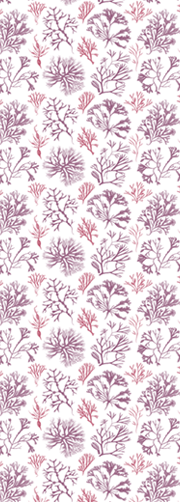
First, this photo caught my eye because I have been thinking about using antique porcelain in the bathroom. But the wallpaper held it and sent me looking for more!

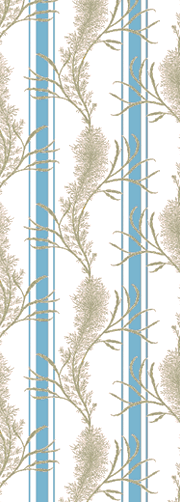
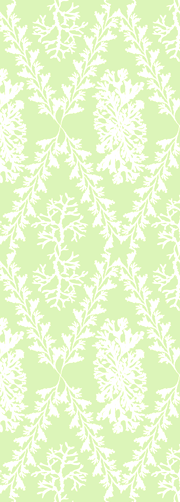
Sea Antler Blue on White

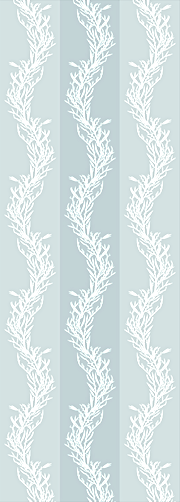
This particular pattern comes in other colorways including the White on Pigeon Grey below and White on Pigeon Pink.  I am obsessed with any color with the word pigeon in it – as they are always perfect softly grayed colors.
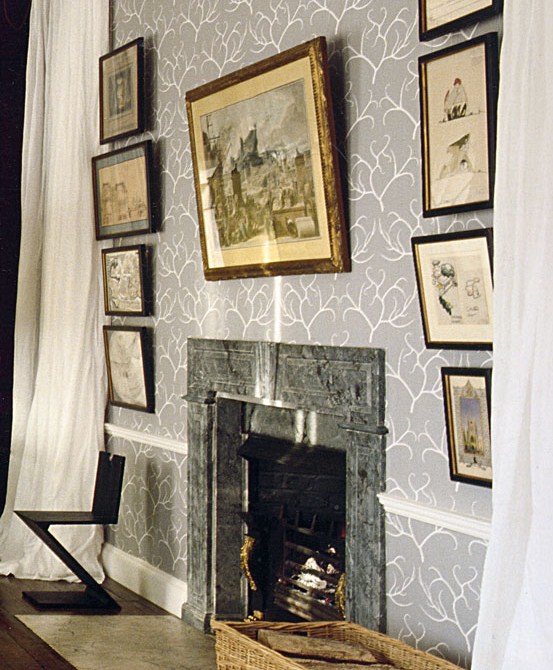
Sea Antler White on Pigeon Grey

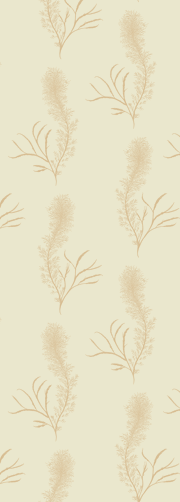
And I have to include this quintessentially English room – it comes alive with its sea feather patterned wallpaper.

Sea Feather Stripe, pink and grey

As many of you know, I am in the thick of a bathroom renovation in our beach house in New Jersey. It is a late 19th century Victorian cottage and the bathroom fittings are simple and white. I had been planning on using Farrow & Ball’s Pale Powder on the walls, but now I might be headed in a different direction….towards Min! Add my blue-green glass and the coral I found in Guam this weekend and I am done!

I could post them all, but there are too many colors and patterns.  They can also be printed on fabric and custom colored. But best of all, the prices are extremely reasonable!

For those of you who may not know who she is, Min Hogg was the founder and editor-in-chief of The World of Interiors for over 20 years. I look forward to reading that magazine like none of the other interiors publications as it often surprises but never bores me. It is exciting to see this new venture of hers!

My original obsession with coral and sea feather prints comes from early 19th century transferware. But this past year I have been turning to this photo from Ben Pentreath’s London shop again and again for inspiration in decorating my beach house. So I jumped over to check his website…

and this is the current post I found there!

Take a look at his website, or better yet, visit the shop on Rugby Street in London like I did last May!

Image credits: 1-11 via Min Hogg, 12-13 via Ben Pentreath

About these ads

Read Full Post »

Outside of o-hanami (cherry blossom viewing), the ginkgo trees turning gold is one of the most important botanical moments in Tokyo. Traffic comes to a screeching halt, out come the cameras and the crowds. In general, I am a cool colors person. I tend to decorate with cool colors, dress in cool colors and my eye rarely responds to warm tones. But this autumn I am irresistibly drawn to the gorgeous golden ginkgo trees and the carpet of leaves they have strewn around Tokyo.

So how to add a bit of that golden goodness to my life? I went through my tear sheets to find some ideas.

Michael Maher’s New Jersey home has long been in my favorites. I love the pieces in the room and the soft buttery wash of the walls and fabrics.

This elegant New York City apartment designed by Paula Caravelli layers warm tones against a cool background. I love the formal furniture with the large modern abstract.

Grant White gives us a bit of gold and traditional fanciness in this apartment at the Dakota in NYC.

Strong lines and strong color in this modern Pennsylvania country living room from Jeffrey Bilhuber.

Strong lines with softer color in this modern Connecticut living room from Michael Leva.

Painted a soft yellow, Carol Glasser’s charming entry hall makes me feel all warm and sunny.

Brazilian fashion designer Carlos Miele’s bedroom has an ethnic mix with a bit of everything thrown in – Portuguese bed, ikat pillow, hide rug, modern painting and mirrored wall – but it is the coverlet that has me riveted.

Or how about this tropical paradise, elsewhere in South America?

And the color doesn’t have to come from fabric or paint, as shown here by designer Jonathan Berger. How about a bit of beautiful golden Biedermeier? I have been missing the glow of wood from the current trends in interiors.

Perhaps my favorite – Stephen Shubel’s bedroom with its luscious curtains and gilded accessories.

For a simple non-permanent solution, a bouquet of bright yellow flowers will do. I would happily take the Gracie wallpaper too…

My current solution for my craving for gold? This antique bamboo basket filled with the mikans I picked last week out in the countryside. Mikans are like mandarin oranges or tangerines, but not exactly like either, and more delicious!

Happy Thanksgiving! I am off to Guam (which is basically the equivalent of saying off to Florida) for family fun in the sun. Cheers!

Image Credits: 1-2 & 14, me, 3. Elle Decor, July 2007, photo credit: William Abranowicz, 4. Elle Decor, March 2010, photo credit: Simon Upton, 5. Grant White, 6. House Beautiful, March 2009, photo credit: Julian Wass,  7. Elle Decor, October 2004, photo credit: Pieter Estersohn, 8. Carol Glasser via Cote de Texas,  9. Elle Decor, October 1010, photo credit: Simon Upton, 10. Elle Decor, October 2007, photo credt: Simon Upton, 11 House Beautiful, July 2009, photo credit: Francesco Lagnese, 12. Stephen Shubel, 13. Elle Decor, September 2007, photo credit: William Waldron

Read Full Post »

I have had a half written post called “Can Imari’s Reputation Be Resuscitated” sitting around in my drafts folder for weeks and now it is time to bring it out, rewrite it, and change its title to the one above. I am not talking about the simpler blue and white underglaze only Imari (which has never gone “out” of style), but instead Ko-Imari (old Imari), the polychrome and gold in-your-face with color Imari. Sometimes accused of being “old-fashioned” and “traditional,” I think it is finally having a well deserved revival in modern settings.

Let’s be clear – People are still collecting Imari, beautiful pieces are in demand and it is often featured in classic interiors. Some designers have been using it all along. You can often catch a glimpse of a piece in a Michael Smith interior. I am referring to using Imari in a new way by pairing it with unexpected partners.

This is the more “expected” model of porcelain display – a bit hard to pull off  if you don’t have a grand country manor with generations of accumulation and original paneling.


First to catch my eye was the October 2010 House Beautiful apartment of Nancy Tilghman designed by Daniel Sachs. Amidst the ethnic mixed but modern living room of this Park Avenue apartment sits an Imari bowl on a side table, filled with citrus fruit. Underneath the same table stands a large Satsuma urn (which is basically the same thing for my intents and purposes here in this post).

Then there was the Eddie Ross Thanksgiving tablescape in the October/November issue of Lonny Magazine which featured Imari plates and serving pieces that I wrote about in my last post.  The color and design of the decor took its cues from the vibrant colors in the Imari, but what makes it unusual is the unexpected combinations Ross uses. While a crystal chandelier is an expected pairing, rustic wooden beams are not.

The beginning of November brought this Miles Redd designed bedroom featured in New York Magazine. I believe I spy a large Imari charger from John Rosselli above the closet door in the riotously colored bedroom designed for David Keiser.

This third week of November brought the Wendy Haworth Tastemaker Sale on One Kings Lane. She had a number of Imari dishes and bowls listed. All sold out immediately!

I’d love to hear from you with your ideas on how you have or would use your Imari. And don’t limit it to that….What other design ideas or decorative items have you “resuscitated”?

Image Credits: 1. The World of Interiors, February 2009, 2. House Beautiful, October 2010, photo credit: Ngoc Minh Ngo, 3. Lonny Magazine October/November 2010, 4. New York Magazine, November 7, 2010, photo credit: Thomas Loof/Art Department, 5. One Kings Lane

Read Full Post »

I have always thought that polychrome Imari porcelain sets a stunning table for the winter holidays. Stylist and flea market guru Eddie Ross agrees in this month’s issue of Lonny Magazine. He uses a mix of antique Imari plates with some great do-it-yourself projects to set a lovely Thanksgiving table. The usual Imari colorway of orangey red, mixed with the cobalt underglaze, and highlighted by greens and yellows is perfect for Thanksgiving – and can be pulled out again at Christmas. 

Ross says “The key is restraint. You don’t want a floral fabric and a floral china.” I am not sure I’d call this a restrained table setting, but that is exactly why it is so fabulous.  He loves to mix color and pattern in every way he can. 

Sweet Mizue Sasa, proprietor of Okura Oriental Art, let me have fun playing with antique Imari plates and serving pieces at her shop. I layered Imari on Imari, but it works with the calm obi table runner and the simple floral arrangement. I think it would also be lovely paired with simple white dishes on a deep orange cloth. A great feature of Imari porcelain is that you can mix and match all kinds of pieces and patterns (and I have even squeezed in a tiny orange-red sake cup) and it looks great together. And mixing is almost always necessary as most “sets” in Japan are sold in groups of 5 (as the number 4 is unlucky).  You can change the look and feel of your table simply by highlighting a different color - for instance, playing up the blue instead. 


Imagine your turkey and mashed potatoes served on these giant beauties…

Dish your stuffing out of this fluted bowl…

Thanks to Sasa-san and her assistant Eiko for this post. Watch for an upcoming “Shop Talk” about Okura.

Image credits: 1-3 Lonny Magazine October/November 2010, 4-6 me, courtesy of Okura Oriental Art.

Read Full Post »

Shosha Amerikajin (True Picture of Americans), c. 1861

Last week, The New York Times ran an article on the first visit by Japanese envoys to America in 1860. The article is part of a larger historical series on the Civil War, but what I found so interesting were the artistic renderings of their trip by the visitors and the gifts they brought with them to present to the President. This first diplomatic mission was led by three Japanese officials and completed by a retinue of 77 others (including 6 cooks). For President Buchanan, on the cusp of political crisis, the visit was a popular and welcome diversion and the visitors took the country by storm.  Newspapers and the paparazzi of the day recorded every move, while the Japanese themselves also recorded their impressions and images of America.

Delegates and NY Lady, Stereoscope view, hand-colored, Studio of C.D. Fredricks & Co. Collection of Tom Burnett

The impressions of the Japanese were filtered through the lens of their experience. Drawn by a member of the Japanese delegation, one would think that this sketch of Washington D.C. was some pleasure garden or village back in Japan. Closer viewing reveals the Capitol, the base of the Washington Monument and the bridge across the Potomac to Virginia.

sketch of Washington D.C., 1860

Repairs to the ship meant to carry them back to Japan were delayed and as a result, the delegation was treated to quite a tour, including a balloon ascension in Philadelphia. Clearly, it impressed them and they recorded it in great detail as shown in this woodblock print circa 1865.
The envoys brought many gifts from the Emperor of Japan as well. Most interesting to me is the lacquer chigai-dana (staggered shelf cabinet) that can be seen in the far right corner of the etching below (from an 1860 newspaper). It shows President Buchanan and his niece unwrapping all the gifts they received from the delegates.
The white house inventory shows this chigai-dana, which actually turns out to be a different one, gifted earlier to President Franklin Pierce by Commodore Perry when he returned from his fateful voyage in 1855.
Currently, it resides in the sitting room adjoining the Lincoln Bedroom in the White House. You can just see it in the left corner of this photo. It is believed that the 1860 chigai-dana is stored in the Smithsonian somewhere…
This small early 19th century lacquered and gilded shelf cabinet is currently for sale at Naga Antiques in New York.
And I recently saw a simple two shelf version heavily decorated with maki-e (sprinkled gilding) and fans at the Oedo Market at Tokyo International Forum.

Back in Japan, foreign traders were now allowed under the “Treaty of Friendship and Commerce”. They set up in the port city of Yokohama and were limited to a 25 mile radius. The foreigners were fascinating to the local population and a new form of ukiyo-e, called Yokohama-e, emerged. It depicted these strange new people and their dress, their weapons, their customs and so on.  Earlier works, such as this 1855 print, were based on much speculation and little real information, and as such, the rendering of the faces and dress is clearly not that accurate.

Tagawa Hiromichi, Appearance of Foreign Barbarians "England"

This print, from “A Series of the European Countries,” was made only 6 years later and also depicts an Englishman, but in this case both faces and dress reflect a fairly accurate view.

Utagawa Yoshikazu, Englishman with A Dog

While rarer and more expensive than ordinary ukiyo-e, these Yokohama prints can still be found in markets, antique stores and on-line. I saw this print on Sunday at the Tomioka Hachiman shrine sale. If you click to enlarge it you can see more easily the mixture of people and activities, including the American/European couple in red at the bottom towards the right. The combination of  Western and Japanese style buildings next to each other is great too. Unfortunately I do not know the name of the print or the artist.

Back in my hometown of New York, the exhibition “Samurai in New York: The First Japanese Delegation 1860″ has just closed at the Museum of the City of New York. It was one of a number of “Heritage of Friendship” events planned this year to commemorate the 150th anniversary of the 1860 visit. Currently running at the Yokosuka City Museum (in Japanese) is the sister exhibit “Japan and America in 19th Century-Technical Revolution and Diplomacy” . If you would like to read more in-depth information I recommend reading Guests of the Nation:The Japanese Delegation to the Buchanan White House by Dallas Finn on the White House Historical Association website. The Library of Congress also has an amazing collection on this topic. Other resources inlcude Ann Yonemura’s book Yokohama:Japanese Woodblock Prints from the 19th Century.

A Quick Addendum:
A few days after this post I stumbled across this ballon ascension print from the same series as the one shown above. It is missing its third panel, but is clearly by the same artist, Yoshitora Utagawa. Such a rare image in ukiyo-e! And you gotta love the inaccurate rendering of the U.S. Flag! This one is currently for sale at Okura Antiques.

Image credits: 1, 3 & 4. Library of Congress collection via The New York Times, 3. via The Museum of the City of New York , 5-7. The White House Historical Association, 8. Naga Antiques, 9. me, 10. Library of Congress Exhibits. 11. Hotei Japanese Prints, 12. me.

Read Full Post »

I couldn’t resist this beauty at Tomioka Hachimangu today. Yes, it is looking like I might need some intervention…


Related Post: Buoys, Bottles and Bargains…The Rainy Day Special at Kawagoe

Read Full Post »


Kyoto has a few major shrine sales each month – two at Toji Temple just south of the train station and one in the northern end of the city at the Kitano Tenmangu Shrine. The two very big markets have been happening on the grounds of the shrines for centuries. I think it is well worth planning a visit to Kyoto to include one!

1st Sunday of the Month

  • Garakuta ichi at Toji - 15 minute walk south of Kyoto Station or take the Kintetsu Railway local train one stop from Kyoto Station to Toji Station. Walk two blocks west. This is a much smaller market than the other two (about 80 dealers), but it is focussed exclusively on antiques. My first choice for serious antiquing.

21st of the Month

  • Kobo-ichi at Toji- 15 minute walk south of Kyoto Station or take the Kintetsu Railway local train one stop from Kyoto Station to Toji Station. Walk two blocks west. This is a huge market with over 1000 vendors selling everything from antiques to crafts to vegetables.

25th of the Month

  • Tenjin ichi - Another very large market on the grounds of historic Kitano Tenmangu Shrine in the Nishijin area of Kyoto, selling antiques and other merchandise. Take Keifuku Railways train to Kita no Hakubaicho, walk two blocks along Imadegawa Dori or the number 59 bus from Shijo or Sanjo in downtown Kyoto.

Ongoing updated information on shrine sales and antique shows can always be found on the “Shrine Sales” tab at the top of the blog.

Read Full Post »

God gave us our memories so that we might have roses in December.
J.M. Barrie

Pierre de Ronsard, St. Cecilia, Baron Girod de l’Ain, Septer’d Isle…these are some of the roses that grow both literally and figuratively in Risa Hirose’s garden. The beauty of the flowers is matched by the beauty of their names and Hirose finds her inspiration in them. Rose is also a play on her name and that is often reflected in the titles of her pieces such as in her print Hi rose-essence- shown above. In her second and final year in the Master’s program at Tokyo Zokei Univeristy, Ms. Hirose’s wood engravings have already won numerous competitions and she has held solo exhibitions and been selected for the CWAJ Print Show for the past two years.

Wood engraving is a type of relief printmaking in which an image is cut away, leaving a raised surface on which the ink is applied and then transferred to paper. Traditional wood blocks are carved with the grain of the wood and the prints often display or even feature the grain as a part of the artist’s vision. On the other hand, wood engraving uses wood cut across the grain of the wood – like a slice of tree trunk. The prints tend to be small, as they are limited by the size of the trunk or branch (about 15cm in diameter), as in the example below.

Hirose uses the traditional tsuge (boxwood) for her blocks, which is very hard, very slow-growing and perfect for carving incredibly fine detail. Her small works are often single images in the round, using the shape of the block as the outermost border, such as in Passion ToKei, her first print to be exhibited at the 2009 CWAJ Print Show. Look very closely at the image below – it is not a print – it is actually the carved block used to make the print. Her technical mastery is amazing.

To get the meticulous detail she is known for, Hirose hand prints the blocks onto super fine translucent gampi paper. Thicker paper would not yield such detail. After drying, each one is carefully trimmed and attached with a natural based glue to heavier paper. Here is the artist herself, standing in front of drying gampi paper impressions of one of her newest works Things That Day. This new print is a memory of her trip to Okinawa and adds bougainvillea and coral to her repertoire.

To make a large wood engraving, an artist will align a group of blocks like a parquet floor, one square next to another. This is not the system Hirose uses.  She uses (and re-uses) her blocks like modular components, placing them in her compositions. Unlike most traditional wood block prints, where uniformity is prized, each one of hers is different as placement cannot be exact. The large work below, Diary-pale,moisture-, is 110cm x 75cm, an unfeasible size for a regular wood engraving. Her collage-like approach and use of empty space is one of the thing that makes Hirose’s prints unusual.

In another large print, Document 1-one prior fragment-, shown below, you can see some of the components repeated from the print above. You can also see certain images repeated within the print, for example the hyacinth bulb, the small rosebuds and daisies.

Hirose’s artistic themes revolve around the idea of “sealing down time”, yet ironically, the prints themselves contain an impermanent and changeable  material. After glueing each small print to the larger paper, she crushes rose petals directly on each piece, creating a wash of soft pigment. The color starts out as a rich purple and fades over time to a champagne-like color. In each step of her work she layers on the small differences giving each print in the edition a unique quality. Below is a close-up of the center of Document 1-one prior fragment- when it was originally created a few months ago.

Here it is faded as it currently appears now. I think it is amazing to watch a normally static art form develop and mature over time.

Risa Hirose will have a print at the upcoming annual exhibition of the Daigaku Hanga Gakkai (Committee of Universities of Art for Print Studies in Japan) held at Machida City Museum of Graphic Arts from December 5-19, 2010, along with other print work by more than 280 students. There will small prints by the students available for sale – some for only 1000yen each.

And her new day job when she graduates this spring? Ms. Hirose will be an engraver at the Japanese Mint. So each time you hold a fresh yen bill, you too can have your own Risa Hirose engraving.

N.B. I am a little frustrated with this post as none of the photos begin to show the elusive quality of her work, or even the absolute excellence of her technique. I guess it is simply a limitation of the medium.

All images copyrighted by Risa Hirose. Please do not re-post without writing to me for permission. Thank you.

Read Full Post »

While not actually a secret, no one ever seems to list or mention the small shrine sale held in the patio square of Azabu Juban. I guess in all fairness, it isn’t an actual shrine sale as there is no shrine, but the feel is the same.  No more than 12 dealers come every first Saturday of the month and they usually pack up by 3 p.m. As it is just down the hill from my house, I go regularly and always get lucky. There is something about small sales that makes shopping easier – like going to a favorite boutique instead of a large department store – it just gives you a more focussed view.

There was a bit of everything this past Saturday – lacquer serving pieces and small chests perfect for holding jewelry.

This set of really pretty Imari plates with tiny diapered patterns.

I can imagine them hanging on the wall in Olya and Charles Thompson’s richly colored Brooklyn brownstone.

An adorable collection of tiny shoyu (soy sauce) dishes, particularly the more unusual blue and white and celadon ones, looks like a plate wall display in miniature…

I loved this tiny wooden hibachi (charcoal brazier) with inlaid wisteria. It had its original copper lining and would be perfect for autumn flower displays. I’ve not seen this wooden style so small – it was about the size of a pineapple.

I also loved these two fabulous huge iron hibachi…

…perfect for planting palms in the Schuyler Samperton style. (And if you love palm trees and layered eclecticism make sure to look through her portfolio).

And for myself? OK, I admit I have gone a little crazy – glass crazy that is. Ever since my finds at Kawagoe I am obsessed with blue-green glass, old bottles and floats! I am not sure if my huge bottle will fit where I want it, so what about a small collection of little bottles, just in case?

These two had visible bubbles in the glass and an older hand blown feel.

The smaller bottle had a threaded neck. When I bought it, I hoped to be able to add a spout or pump and use it for liquid soap.

Kind of like this!

More information on the shrine sale schedule can be found in the tab at the top of the blog. Feel free to email me if you have any questions!

Image credits: 1,2,4,5, 6, 8 & 9. me, 3. Vogue January 2010 , photo credit: Francois Halard, 7. Domino April 2007, photo credit: Paul Costello, 10. Unknown

Read Full Post »

The October/November issue of Lonny Magazine featured this photo from popular decorator Celerie Kemble’s Central Park South apartment. The glamorous interiors included this dining room, with suits of samurai warrior armor standing guard.

Popular culture has given us an idealized view of samurai living their lives by the codes of Bushido (Way of the Warrior) and committing seppuku (ritual suicide) if dishonored.  By the time this photo was taken during the peaceful Edo period, many samurai like this fellow below no longer needed to fight and became bureaucrats and administrators instead.

A fair number of antique dealers here specialize in war related items – there is always someone selling swords, tsuba (sword guards) and other paraphernalia at a market or antique show.  While not completely uncommon, you don’t see armor everyday though. However I did see this set a few weeks ago and took this photo because I knew sooner or later this very question would need to be addressed.

Classic estates in Europe routinely display suits of armor, but what say you all to samurai in New York? Brilliant or creepy? Or something else entirely?

I am holding my opinion until the votes are in…Please comment on this post and let me know what you think!

Image credits:1. October-November 2010 Lonny Magazine, 2. Spacious Planet, 3. me.

Read Full Post »

Older Posts »

Follow

Get every new post delivered to your Inbox.

Join 424 other followers

%d bloggers like this: